The ROI of Claude Code: How Growth Teams are Reducing CAC by 45% in 2026
Discover how Claude Code is driving a 4:1 ROI and 45% CAC reduction in 2026 through agentic AI, automated funnels, and high-velocity marketing engineering.
In the high-stakes landscape of 2026, the traditional boundary between engineering and growth marketing has effectively collapsed. As Anthropic’s revenue surged to an astounding $14 billion this year, the catalyst wasn't just another chatbot—it was the industrial-scale deployment of agentic coding systems. For growth teams, the arrival of Claude Code has signaled a paradigm shift from manual campaign management to architecting autonomous GTM engines. By leveraging terminal-native agents, enterprises are no longer just shipping code faster; they are fundamentally rewriting the economics of customer acquisition.
Understanding the 4:1 ROI Ratio: Output Value vs. Subscription Costs
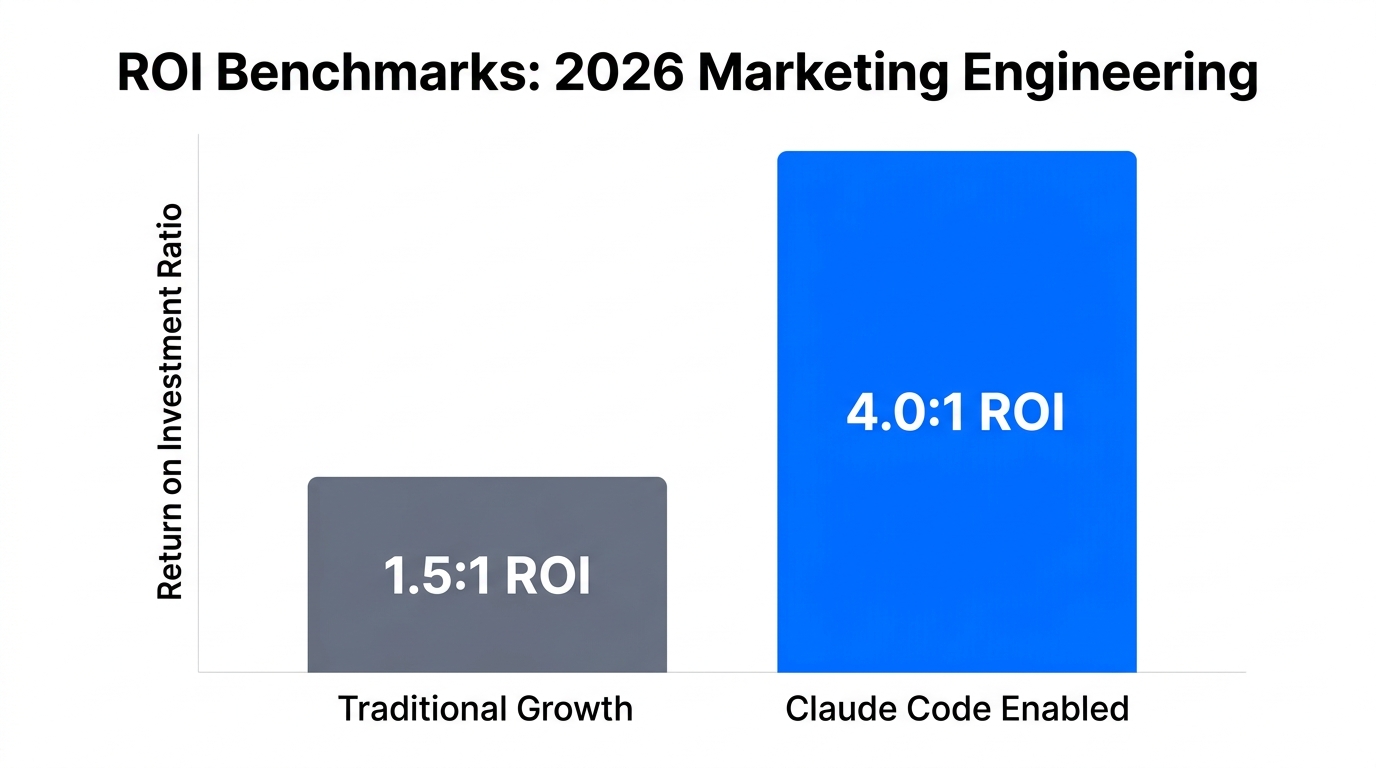
The primary question for any CMO or Growth Lead in 2026 is no longer "Does AI work?" but "What is the incremental value of an AI seat?" According to data from Faros.ai, enterprise teams utilizing Claude Code Max plans are seeing a standardized 4:1 ROI ratio. This metric is derived from the cost per incremental Pull Request (PR). When a team of 50 developers or growth engineers utilizes the Max $200/month tier, they contribute approximately 3,200 additional PRs annually compared to non-AI baselines.
This efficiency is driving massive adoption across the Fortune 500. Anthropic now serves over 300,000 business customers, with Claude Code accounting for 20% of the company's total revenue. The ability to merge code at this velocity allows growth teams to test 10x more landing page variations, attribution models, and data pipelines than was humanly possible just two years ago.
"Claude Code has transitioned from a developer tool to a GTM multiplier. It’s the difference between running a campaign and building a self-optimizing system."
The 45% Reduction in CAC: Real-Time Personalized Funnels
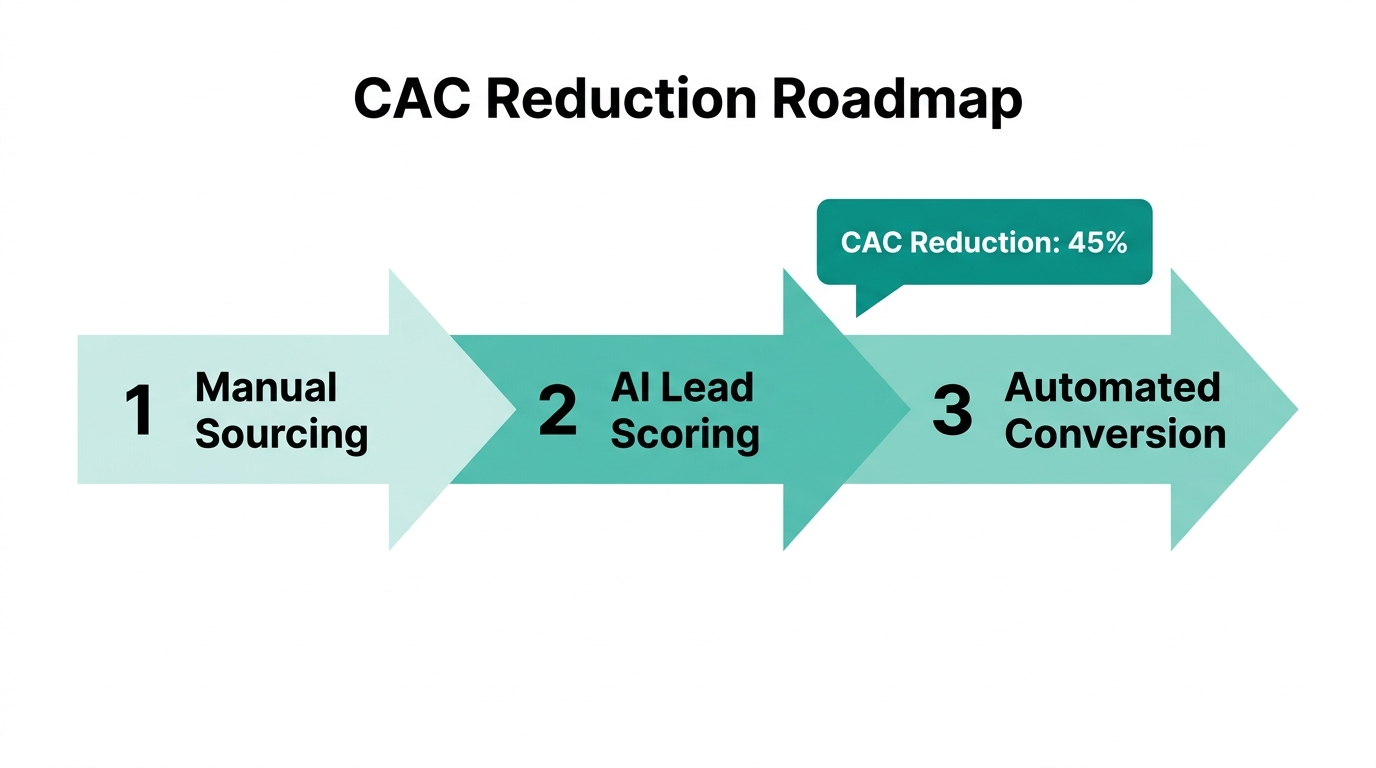
In 2026, the most successful brands have moved away from static ad funnels. Instead, they use Action AI pipelines to create hyper-personalized user experiences. By connecting Claude Code to business data via the Model Context Protocol (MCP), growth teams can build dynamic landing pages that rewrite their own React components based on the specific referring keyword or social media influencer.
Research indicates that brands utilizing these AI-orchestrated funnels report an average 23% lift in conversion rates and a 45% reduction in Customer Acquisition Cost (CAC). For instance, when sourcing creators through Stormy AI, marketing teams can now use Claude Code to automatically generate custom tracking modules and dedicated landing pages for every single influencer in a 1,000-person campaign, a task that would have previously required a dedicated engineering squad.
This programmatic approach to GTM is also visible in the rise of GEO (Generative Engine Optimization). Growth teams are now using Claude Code to build internal engines that monitor how different LLMs cite their brand, automatically updating website schema and structured data to ensure they remain a preferred source for AI answers. This proactive technical SEO strategy ensures that as more users move to AI-native search, the brand's visibility remains unshakeable.
The Deloitte Deployment: Automating the Mundane to Free the Growth Resources
One of the most significant case studies in AI agentic scale comes from Deloitte, which rolled out Claude to 470,000 employees. While many viewed this as a simple productivity play, the strategic value lay in the automation of internal documentation and code maintenance. By offloading these "high-friction, low-creativity" tasks to Claude, Deloitte was able to reallocate thousands of engineering hours toward high-impact growth initiatives.
Similarly, the enterprise customer Augment Code reported completing a project originally estimated at 4–8 months in just two weeks by utilizing Claude-powered agents. For a growth team, this velocity means the difference between catching a market trend and missing it entirely. Whether it's integrating a new payment provider like Stripe or building a custom dashboard in Mixpanel, Claude Code acts as the "Methodical Architect" that ensures clean, maintainable execution.
"The goal isn't just to write code faster; it's to eliminate the technical debt that prevents growth teams from experimenting at the speed of thought."
Max Plans vs. API Billing: Maximizing Marketing Automation ROI
As we navigate 2026, the tactical cost of running these agents has become a math problem. Growth teams must choose between direct API usage or subscription-based plans. For high-volume professional use, the subscription model is almost always the winner. Developers using more than 200 million tokens per month—typical for full-time agentic workflows—can save roughly 90% by choosing the Claude Max 20x plan at $200/month compared to raw API billing.
| Plan Level | Monthly Cost | Best For | Primary Advantage |
|---|---|---|---|
| Claude Pro | $20 | Individual GTM Managers | Basic script automation |
| Claude Max 5x | $100 | Small Growth Teams | Multi-file marketing site refactors |
| Claude Max 20x | $200 | Enterprise Engineering | 90% savings vs. direct API billing |
| Devin (Enterprise) | ~$500 | Full Autonomy | End-to-end SWE task completion |
Teams must also be wary of the "200K Token Trap." Under the current Sonnet 4.6 pricing, input tokens cost $3/million up to 200k context. However, if a complex marketing site refactor pushes the request beyond that 200k limit, the cost for the entire request doubles to $6/million. Utilizing Claude Code’s built-in context caching is essential for maintaining the 4:1 ROI target.
The Agent Team Playbook: Executing Refactors in Days
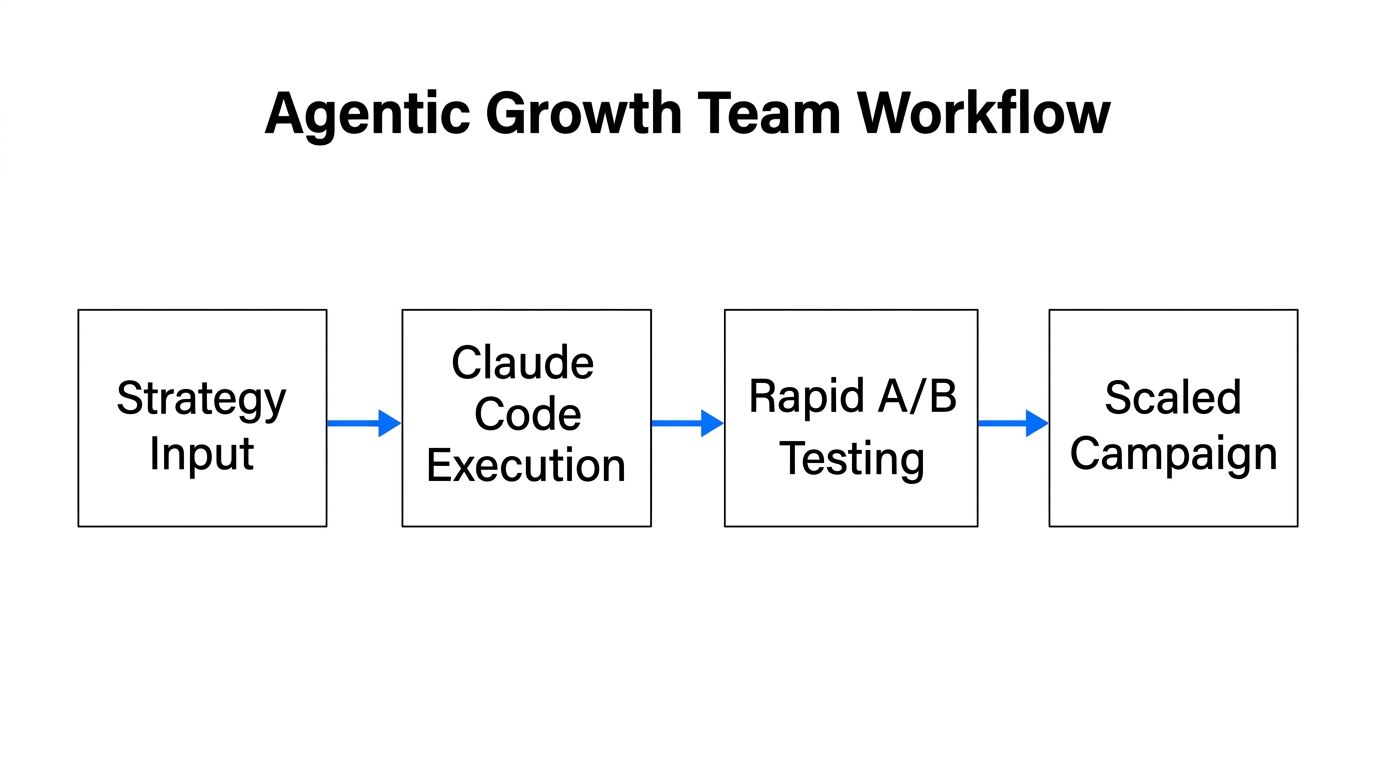
In 2026, 57% of organizations have moved beyond single-prompt interactions to "Agent Teams." This involves spawning parallel sub-agents to handle specific roles. This is particularly effective for marketing site refactors or implementing complex tracking across Meta Ads Manager and Google Ads. Here is the practitioner’s playbook for orchestrating an Agent Team:
Step 1: The Architect (Planning)
Use the command claude plan to generate a high-level strategy. The Architect agent reviews the existing codebase, reads the `CLAUDE.md` file for project-specific rules (e.g., "Always use Tailwind CSS"), and outlines the dependencies. This ensures that the "context drift" common in 1M+ token windows is minimized by having a clear roadmap from the start.
Step 2: The Coder (Execution)
The Coder agent takes the plan and executes it via terminal-native commands. Unlike traditional assistants, Claude Code can read files, run tests, and fix its own bugs autonomously. This "Action AI" capability allows the agent to work through the night, notifying the team via Discord or Telegram channels when the task is complete.
Step 3: The Reviewer (Quality Control)
Finally, a Reviewer agent (often running a different model variant like Claude Opus) performs a final PR diff. This is a critical safety step, as AI-generated code is still 2.74x more likely to introduce XSS vulnerabilities if left unvetted. The Reviewer ensures that the 45% CAC reduction doesn't come at the cost of a security breach.
"The shift from 'coding' to 'orchestrating intent' is the defining skill for growth engineers in 2026."
Navigating the Risks: Security and the Trust Gap
Despite the massive productivity gains, growth leaders must remain vigilant. 46% of developers still express distrust in AI accuracy, and for good reason: recent reports found that AI coding agents produced security issues in 87% of Pull Requests when no specific security guidance was provided. The Feb 2026 "Cybersecurity Flash Crash"—where stocks for legacy security firms dropped 10%—highlights how quickly the market is moving, but it also underscores the need for robust internal guardrails.
CLAUDE.md configuration to prevent the agent from hardcoding secrets or creating XSS vulnerabilities.To mitigate these risks, many enterprises are now using autonomous vulnerability scanning as part of their CI/CD pipeline, ensuring that the velocity of Claude Code is matched by the rigor of modern security standards.
Conclusion: The Future of Growth Engineering
The ROI of Claude Code in 2026 is undeniable. For growth teams, the combination of 4:1 output value and 45% CAC reduction represents a fundamental upgrade to the marketing stack. By moving away from manual workflows and embracing agentic orchestration, brands can build GTM engines that are faster, more personalized, and significantly more cost-effective. Whether you are managing creator relationships on Stormy AI or refactoring your entire web presence, the era of the autonomous growth engineer has arrived. The only remaining question is: how fast can you orchestrate?