The digital advertising landscape is currently witnessing its most significant evolution since the advent of Real-Time Bidding (RTB). For years, marketers have relied on "automation"—a series of rigid "if-this-then-that" rules designed to manage bids and budgets. However, as we approach 2025, a new paradigm is taking hold: autonomous media buying. Unlike their predecessor tools, autonomous AI agents don't just follow instructions; they use reasoning engines and large language models (LLMs) to negotiate deals, optimize creative assets, and shift budgets across fragmented channels in real-time. This isn't just a technical upgrade; it is a financial necessity for brands looking to maintain a competitive edge in an increasingly automated world.
The Surge of Agentic Advertising: From $5.4B to $7.6B
The numbers telling the story of this transition are staggering. According to market research from Warmly.ai, the global AI agent market is projected to grow from $5.4 billion in 2024 to $7.6 billion in 2025. This represents a compound annual growth rate (CAGR) of 45.8% through 2030. This growth is driven by the realization that manual intervention in media buying has reached its limit of effectiveness.
By 2025, it is estimated that 85% of digital display ads will be purchased programmatically, according to data analysis by DigiConnekt. Within this ecosystem, AI agents are serving as the primary logic layer. They are no longer just tools in the hands of a media buyer; they are becoming the media buyers themselves, operating at a scale and speed that humans simply cannot match. This shift toward agentic advertising is redefining the role of the modern marketing department.
"The shift from execution to governance is the defining movement of the next decade. Media buyers will no longer pull the levers; they will build the machines that pull the levers."Quantifying the ROI of Autonomy: Lower CPA and Higher ROAS
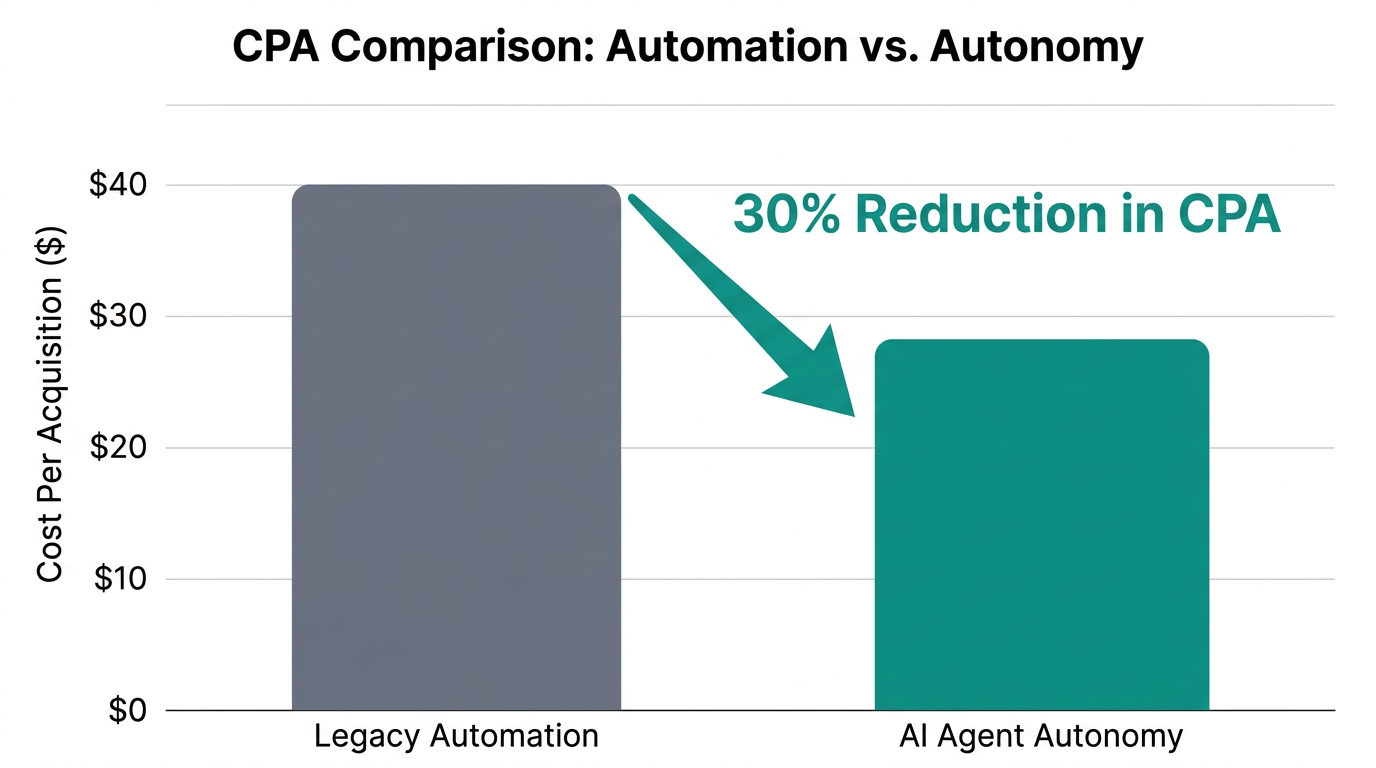
The primary driver for the adoption of autonomous media buying is, unsurprisingly, the bottom line. Marketing teams are under constant pressure to deliver more with less, and AI agents are proving to be the ultimate efficiency engine. Data from Matic Digital indicates that AI-powered campaigns typically see a 25%–30% reduction in Cost-Per-Acquisition (CPA) alongside a 30% increase in ROAS compared to manual bidding strategies.
These gains are not accidental. While a human buyer might check a campaign twice a day, an autonomous agent like Albert AI monitors performance 24/7, making thousands of micro-adjustments to bidding and creative rotation. This constant optimization eliminates waste in real-time. Furthermore, efficiency gains reported by DoubleVerify suggest that companies implementing autonomous workflows see a 20%–40% improvement in overall campaign efficiency.
| Metric | Manual/Rules-Based | Autonomous AI Agents | Net Impact |
|---|---|---|---|
| Optimization Frequency | Daily/Weekly | Real-time (Per Impression) | Significant Gain |
| CPA | Baseline | 25%–30% Reduction | Lower Cost |
| ROAS | Baseline | 30% Increase | Higher Return |
| Efficiency | Variable | 20%–40% Improvement | Lower Overhead |
Breaking the Operational Bottleneck: Expert Perspectives
Industry leaders are already preparing for a world where agents handle the heavy lifting. Ben Hovaness, Chief Media Officer at OMD, suggests that by 2030, the vast majority of media buying will be autonomous, shifting the human role from execution to governance and strategy. This sentiment is echoed by TAU Marketing, which emphasizes that the winners in the next era of advertising will be those who can effectively manage "swarms" of AI agents.
One of the most exciting developments is the Ad Context Protocol (AdCP). Ben Skinazi, CMO at Equativ, argues that this protocol will "break the operational bottleneck" by allowing buyer and seller agents to communicate directly with each other. This reduces the need for middle-man Demand-Side Platforms (DSPs) and accelerates negotiation speeds. According to AgenticAdvertising.org, this shift moves programmatic from mere millisecond transactions to a form of strategic, long-term portfolio management.
Real-World Success Stories: Autonomy in Action
The theoretical benefits of AI in digital marketing are impressive, but the real-world results are even more compelling. Consider the case of Crabtree & Evelyn. By deploying autonomous tools to manage their Facebook social programs, the brand achieved a 30% increase in ROAS without increasing their total media spend. This was possible because the agent identified high-performing audience segments that manual testing had overlooked.
Similarly, the Dole Food Company utilized autonomous agents to identify niche "celebratory moments" in regional markets like the Philippines. By using AI to match creative assets to hyper-local contexts, they successfully expanded market share for smaller product lines that previously lacked the budget for dedicated human management. Even global giants like Coca-Cola are getting involved, partnering with Bain & Company to launch AI-driven platforms that integrate creative generation directly with media placement decisions.
"The modern martech stack is becoming more like a rainforest than a Ferrari—an ecosystem of independent but interconnected AI agents working in harmony."Multi-Agent Workflows and Walled Garden Interoperability
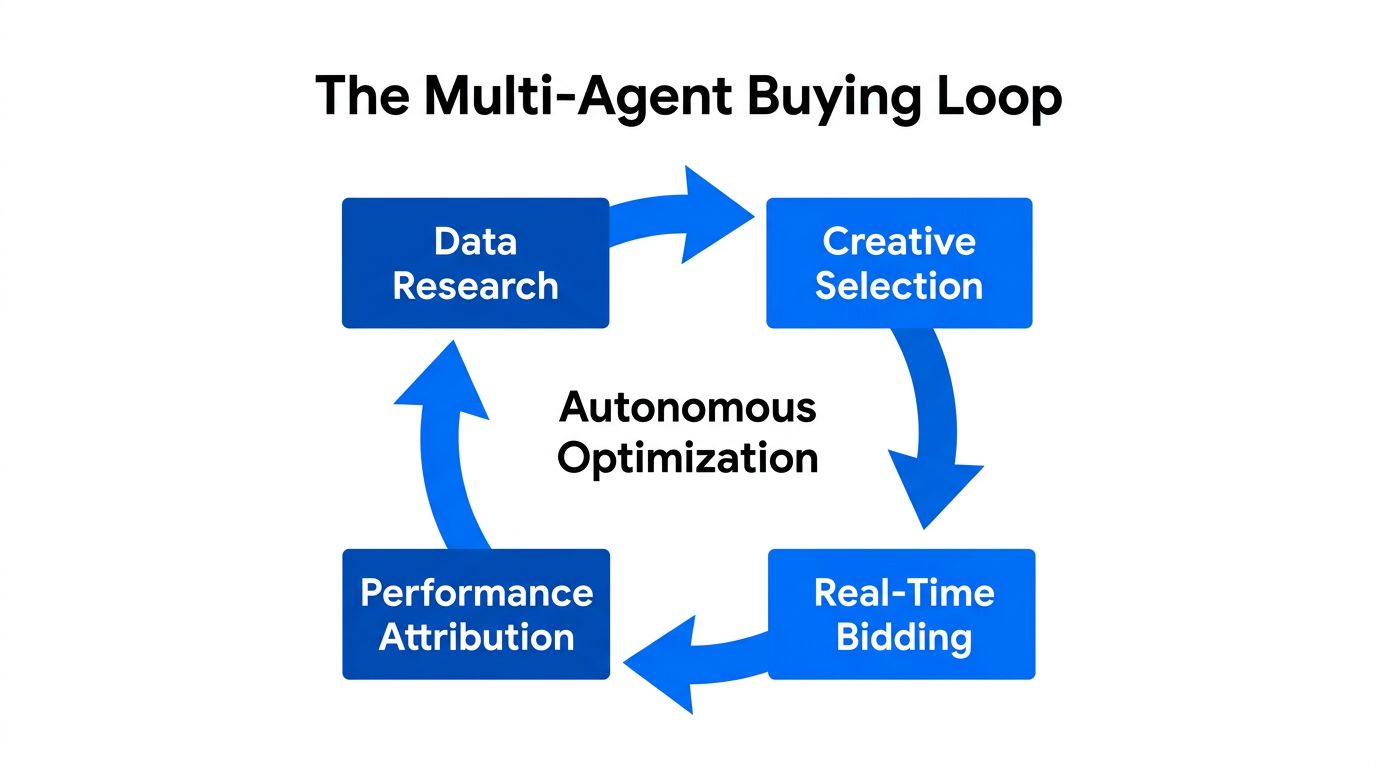
One of the biggest hurdles in media buying has been the siloed nature of "walled gardens" like Meta, Google, and TikTok. Traditionally, managing these required separate teams and separate strategies. However, platforms like Fluency.inc are breaking down these silos. Modern AI agents can now act as a single autonomous control center, optimizing spend across all platforms simultaneously to prevent bid duplication and wasted budget.
As brands scale, they are increasingly turning to tools that manage complex creator relationships alongside their paid media. For instance, while AI agents handle your programmatic display ads, platforms like Stormy AI can help source and manage UGC creators at scale, ensuring your creative pipeline is as automated as your media buying. This synergy between autonomous content sourcing and autonomous ad placement is the holy grail of 2025 growth strategies.
The Implementation Playbook: How to Adopt Autonomy
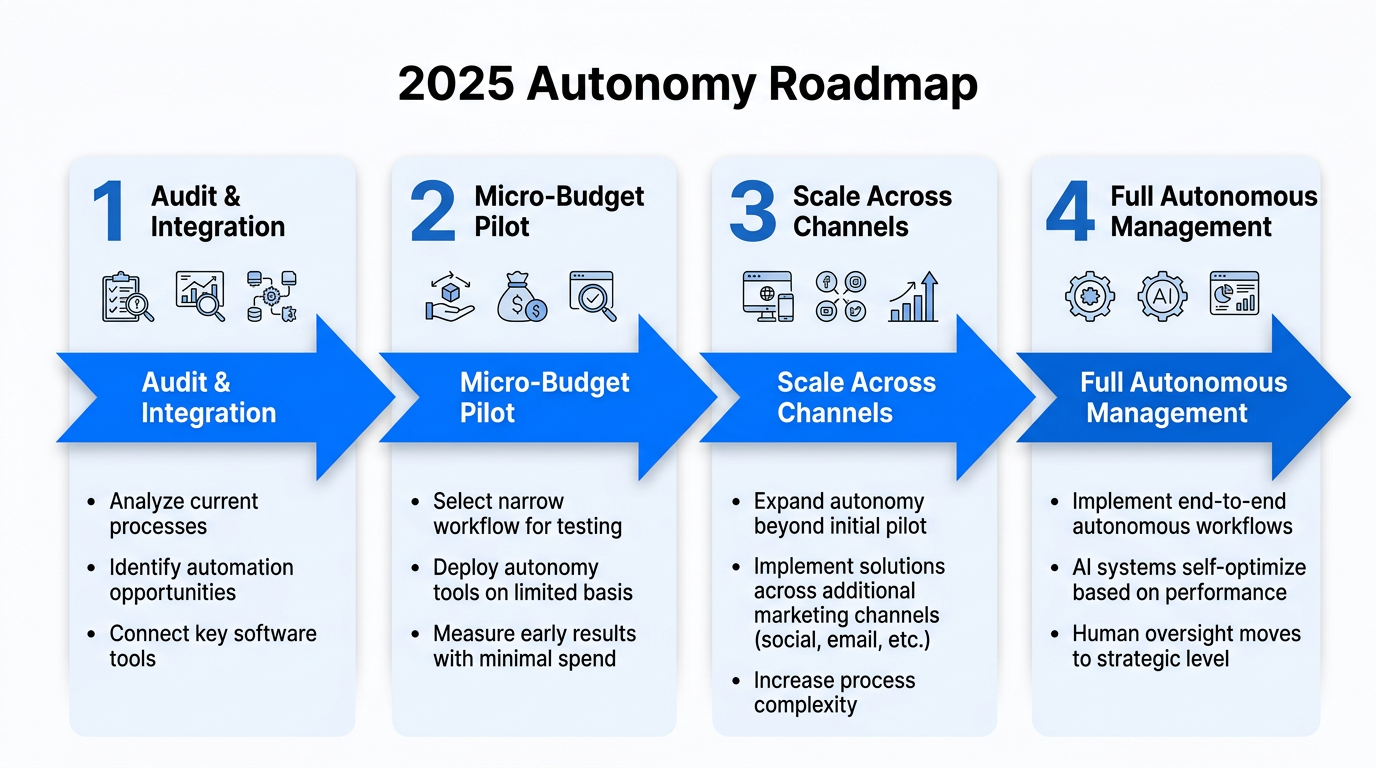
Moving to autonomous media buying doesn't have to be an all-or-nothing proposition. Experts at MINT.ai recommend a "chunk the elephant" approach. Start by automating high-frequency, low-risk tasks before moving to full budget control.
- Build a Data Foundation: Agents are only as good as their data. Centralize your first-party data from your CRM (Salesforce or Pipedrive) and clean it before connecting an agent.
- Set Brand Safety Guardrails: Use a "Human-in-the-Loop" model for the first 30–60 days. Let the agent provide recommendations that require approval before granting full autonomy.
- Focus on Contextual Signals: With the decline of cookies, ensure your agents are optimized for contextual and attention-based signals, utilizing tools like Scope3 to ensure sustainability and quality.
- Scale Your Creative: Use tools like Canva or CapCut to generate assets, then use Stormy AI to find authentic UGC creators that the AI agents can then test across different audience segments.
Common Mistakes to Avoid
Despite the high programmatic advertising ROI, there are pitfalls that can derail an autonomous strategy. The most common mistake is treating AI as a total replacement for human strategy. AI lacks the foresight to understand broader market shifts or cultural nuances. Over-reliance can lead to "short-termism," where agents optimize for immediate clicks at the expense of long-term brand equity.
Another danger is the "set and forget" mentality. Without oversight, agents can fall into creative fatigue—continually showing the same ad to the same audience until it stops working. Furthermore, generic prompts lead to generic ads. It is vital to train your agents on your specific brand voice and guidelines, a point often emphasized by digital agencies like LinkNow.
Conclusion: The Future of Growth is Autonomous
By 2025, the question won't be whether your brand uses AI, but how autonomous your AI systems have become. The shift from manual rules to agentic reasoning offers a clear path to cost per acquisition optimization and sustainable growth. By leveraging the power of autonomous agents for media buying and pairing them with sophisticated tools for creator management, brands can finally achieve the scale they’ve always been promised. The ROI of autonomy is clear: lower costs, higher returns, and a marketing team that is finally free to focus on the big picture. The time to transition from automation to autonomy is now.