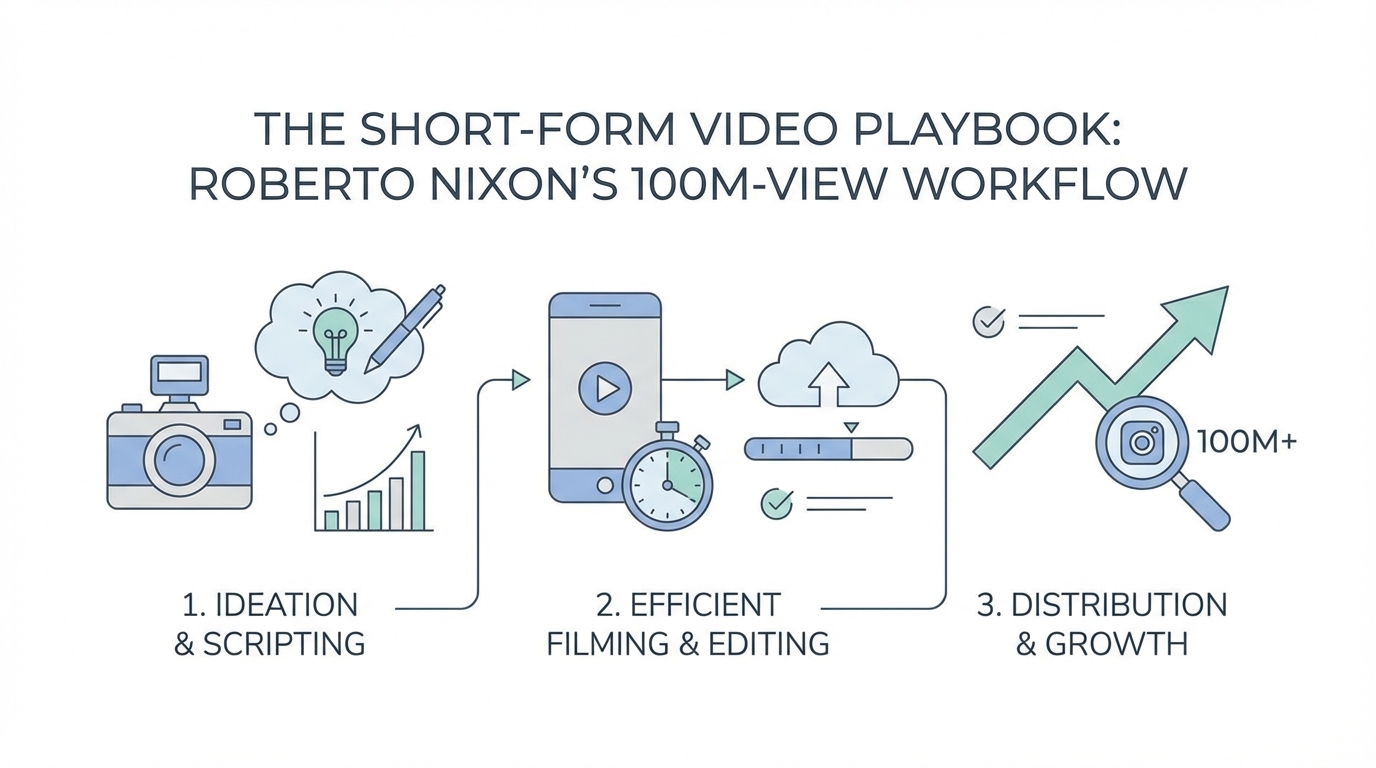
In the current digital landscape, short-form video isn't just a trend; it is the absolute top-of-funnel for all human attention. Whether you are building a personal brand or a multi-million dollar startup, mastering the short-form video workflow is the difference between obscurity and viral success. Roberto Nixon, arguably the internet’s leading short-form creator with hundreds of millions of views, has finally pulled back the curtain on his end-to-end process. This isn't just about flashy transitions—it’s a calculated, psychological viral content strategy that treats every frame as a battle for the viewer’s dopamine receptors.
The Architecture of Retention: The Capture-Maintain-Reward Framework
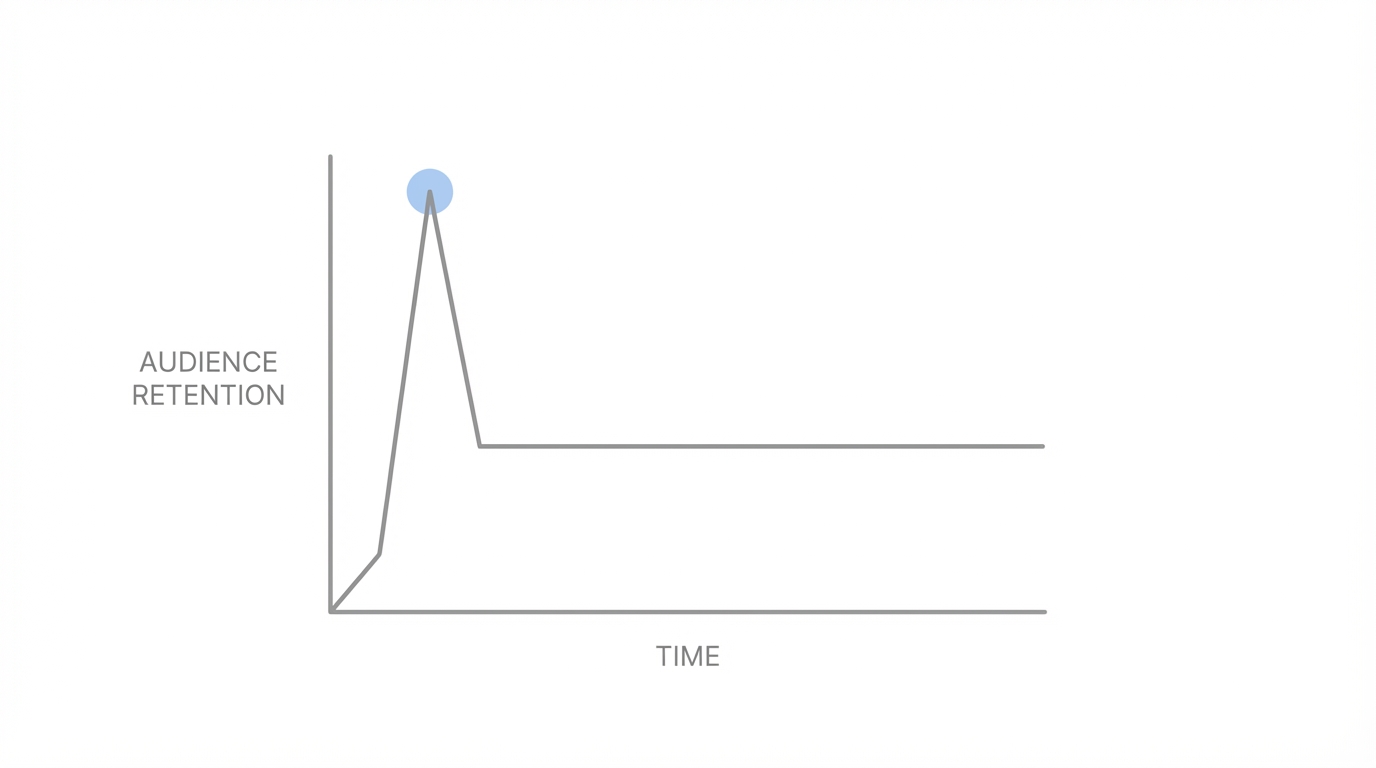
To understand Nixon’s success, you must first understand the psychological framework he applies to every piece of content: Capture, Maintain, and Reward. Most creators focus solely on the hook, but a truly effective video content playbook requires a holistic approach to the viewer's journey. Capturing attention is the price of entry; if you don't stop the scroll in the first two seconds, the rest of your high-production value is irrelevant. However, maintaining that attention requires a constant dance between context and conflict.
According to Nixon, even a legendary director like Christopher Nolan would struggle on social media if he didn't adapt to these constraints. The "Reward" phase is where most creators fail. To get the signals that make the algorithm happy—likes, shares, saves, and follows—the viewer must feel educated, inspired, or transformed by the end of the 60 seconds. This psychological loop is what turns a one-off viewer into a long-term follower.
Scripting for Conflict: Beyond the Information Dump
The first step in Nixon's short-form video workflow starts in Apple Notes. While many creators use complex project management tools, Nixon prioritizes speed and simplicity. The core philosophy of his scripting is the avoidance of the "information dump." In an age where AI can summarize facts instantly, a human creator’s value lies in their unique angle, opinion, and storytelling.
Every script must introduce conflict early. If you are talking about a new software launch, don't just say what it does. Instead, explain why it matters and what problem it solves—or creates. This "conflict" doesn't have to be dramatic; it just needs to be a tension that requires a resolution. By structuring scripts this way, you create a narrative itch that the viewer can only scratch by watching until the final second. This is a foundational pillar of any successful viral content strategy.
The Technical Stack: Professionalism Meets Speed

While Nixon operates out of a $100,000 garage studio, he is quick to point out that a high-end setup is a choice, not a requirement. You can achieve world-class results with an iPhone and Apple Log. However, for those looking to maximize efficiency, his gear list is a masterclass in professional production. He utilizes a Canon R5C for visuals and records audio separately into OBS Studio to ensure redundancy and high fidelity.
One of the most critical short-form video editing tips Nixon shares is the use of a teleprompter. He uses an app called Prompter Pro to read his scripts. This isn't about being robotic; it's about respecting the audience's time. By using a prompter, he can deliver dense information with zero filler, ensuring the pacing remains breakneck from start to finish. This speed-to-information ratio is a key metric in how to go viral on reels.
Lighting and Atmosphere
Lighting is where Nixon truly nerds out. He uses Amaran 150C and F22C lights, often equipped with honeycombs and grids. These tools allow him to control the light precisely, preventing it from bleeding into the background and creating a "shadow side" on his face for added depth. This cinematic approach separates professional creators from amateurs, making the content feel more "expensive" and authoritative to the viewer.
Editing the 'Slot Machine' Effect: Pacing and Pattern Interrupts
Nixon describes the experience of watching high-quality short-form video as being similar to a slot machine. It’s an experience backed by psychology and dopamine. To achieve this in Adobe Premiere Pro, he employs several aggressive editing techniques. The most notable is the removal of the "Millennial Pause"—that split second of silence at the start of a clip. Nixon goes a step further by overlapping audio tracks, where the audio of the next line begins slightly before the video of the previous line ends. This creates a relentless forward momentum that makes it nearly impossible for a viewer to find a natural breaking point to scroll away.
Another essential part of his video content playbook is the "Pattern Interrupt." Every 3 to 5 seconds, something on the screen must change to reset the viewer's attention span. This could be a change in camera angle, the appearance of a caption, a sound effect, or a transition to B-roll. These interrupts act as a physical pulse for the video, keeping the brain engaged through constant novelty.
Leveraging AI for Contextual B-Roll: The End of Stock Footage
Nixon has largely abandoned traditional stock footage in favor of AI-generated visuals. When he needs a specific visual that doesn't exist—like Sam Altman building an AI agent on a laptop—he turns to tools like FreePik and its Nano Banana model. He then animates these static images using video generation models like Kling AI or the OpenAI Sora API.
For technical walkthroughs, he recommends Screen Studio. Unlike standard screen recording software, Screen Studio automatically adds smooth zooms, cursor following, and professional padding. This allows creators to produce high-quality technical content with a fraction of the manual keyframing usually required. To source external assets quickly, he uses Downie, which allows him to instantly download video clips from any social platform for fair-use commentary.
Scaling the Workflow: Managing Content Like a Startup
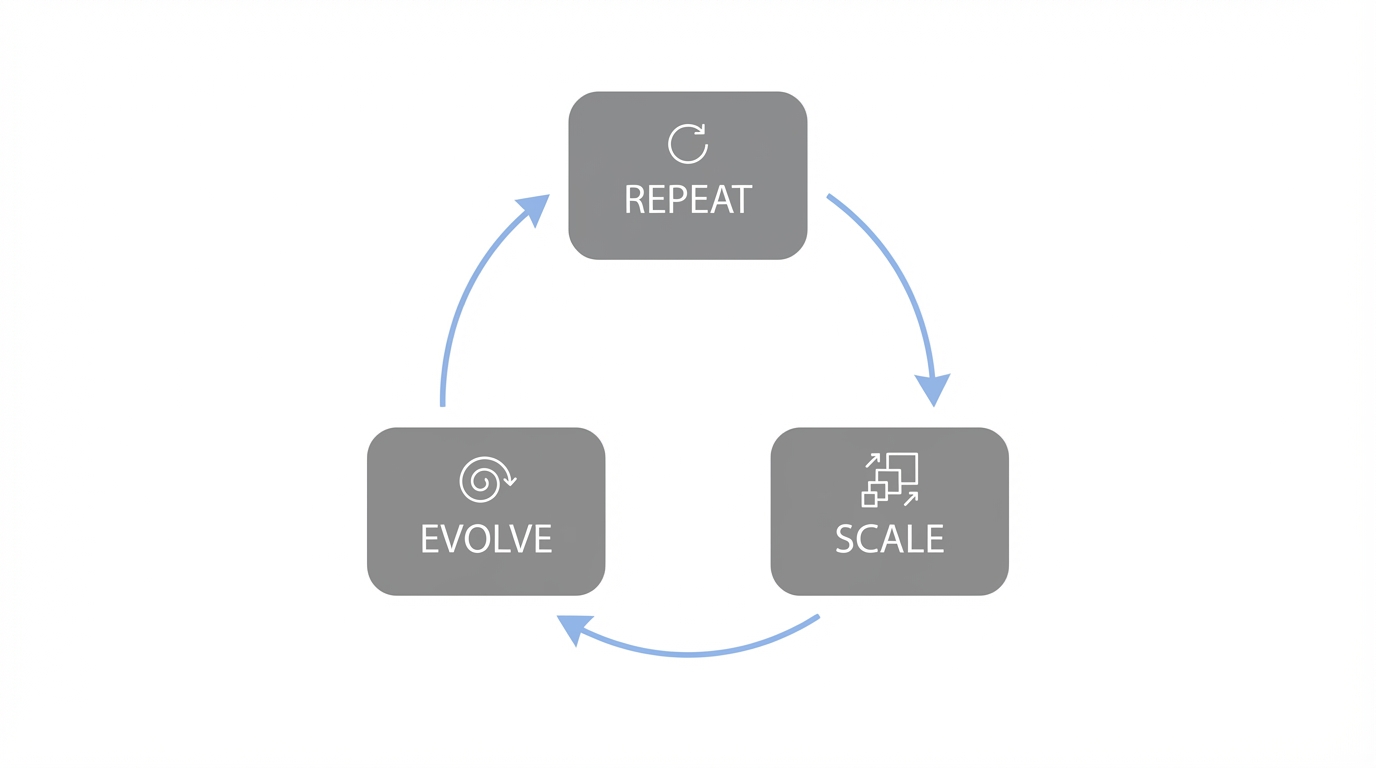

As your short-form video workflow matures, the challenge shifts from production to management. For brands and agencies looking to replicate this success at scale, the manual process of finding the right talent becomes the bottleneck. This is where modern infrastructure comes into play. Tools like Stormy AI can help source and manage UGC creators at scale, allowing brands to find influencers who already possess the "muscle memory" Nixon describes.
Using Stormy’s AI-powered search and discovery, marketing teams can instantly find creators who fit a specific aesthetic or niche, ensuring that the "Capture-Maintain-Reward" framework is being applied across every brand touchpoint. Once you find these world-class editors or creators, managing those relationships through a dedicated Creator CRM is essential for maintaining a high-volume output without losing quality control.
Final Takeaways: Building Your 100M-View Playbook
The transition from a casual poster to a world-class creator requires treating your short-form video workflow as a repeatable science. Roberto Nixon’s success isn't an accident; it's the result of 10 years of muscle memory condensed into a 30-minute editing session. By focusing on early conflict, removing every unnecessary frame of silence, and utilizing AI to create perfectly contextual B-roll, you can compete with the biggest players in the attention economy.
Remember, the goal is to be "the idea guy" who knows how to package that value. Whether you are using a $100k studio or an iPhone, the psychology remains the same. Focus on the viewer, respect their time, and never stop innovating on your pattern interrupts. The next 24 months represent the greatest wealth creation event in history for those who can master the art of the scroll.