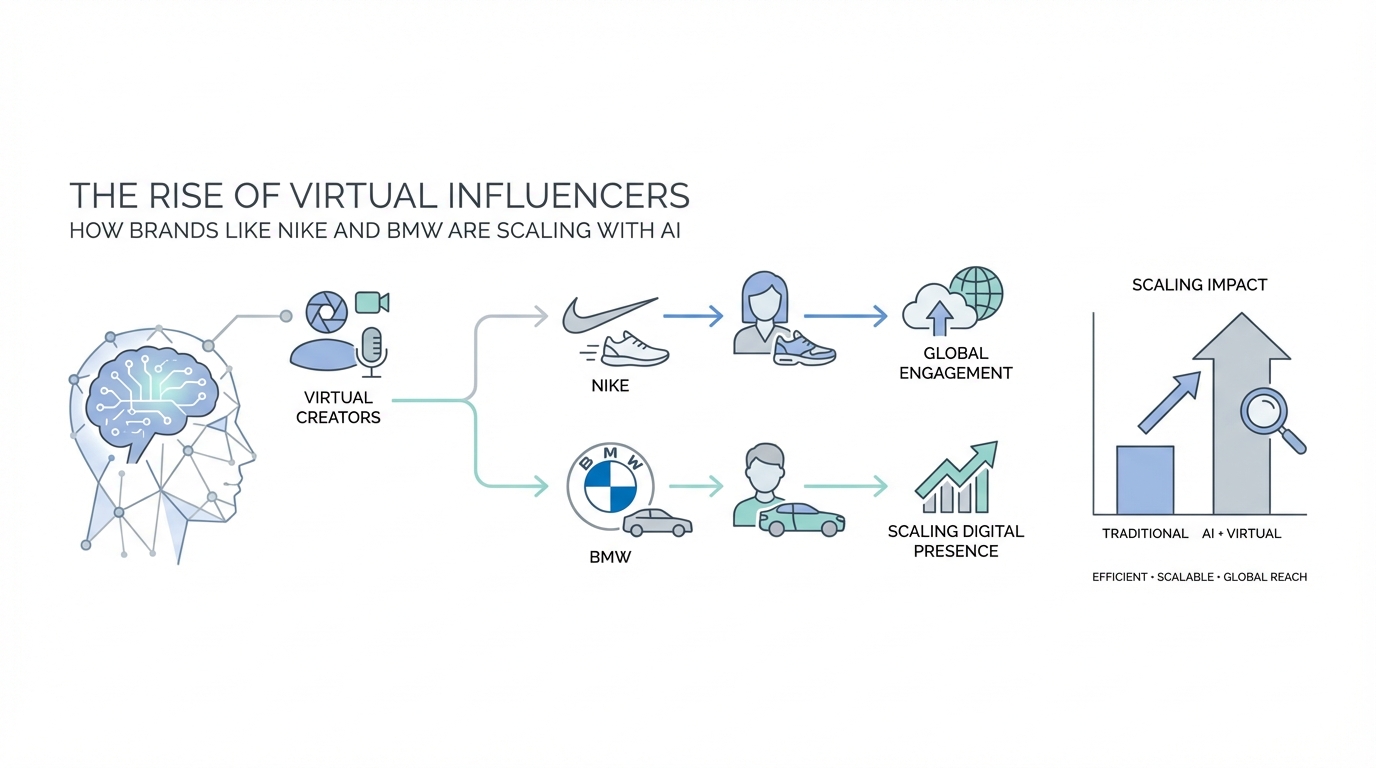
The integration of Artificial Intelligence (AI) into influencer marketing has moved from a "nice-to-have" experimental phase into a mission-critical operational standard. We are no longer simply looking at filters or basic automation; we are witnessing the birth of a new class of digital brand ambassadors that never sleep, never age, and never cause a PR scandal. As the lines between physical reality and digital simulation blur, major corporations are shifting their budgets toward ai in advertising to maintain a competitive edge in an increasingly crowded attention economy.
By 2025-2026, AI is expected to manage the majority of the influencer lifecycle, from discovery and vetting to autonomous negotiation and ROI measurement. This isn't just a trend for tech startups; it is a fundamental shift in how global powerhouses like Nike and BMW interact with their audiences. According to recent market projections from Grand View Research, the AI-powered influencer marketing industry is expected to reach a staggering $108 billion by 2028, growing at a 29.3% CAGR. For brands, the question is no longer *if* they should use AI, but how quickly they can integrate it into their creative DNA.
The Financial Benefits of 24/7 Availability and Zero Risk
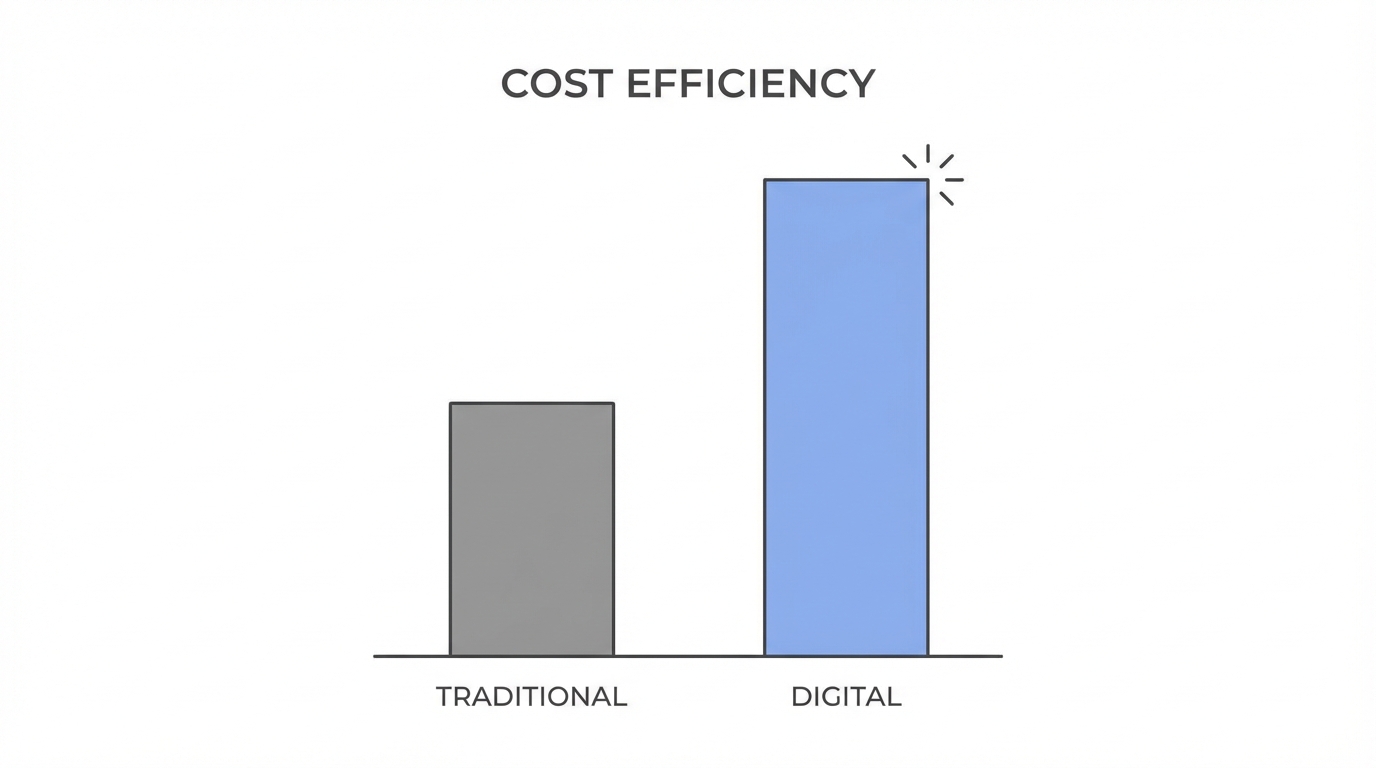
Traditional influencer marketing is fraught with human variables. Schedules conflict, creative differences arise, and personal controversies can tarnish a multi-million dollar campaign overnight. Virtual influencers, however, offer a level of control and consistency that was previously impossible. These AI-generated personas provide 24/7 availability, allowing brands to engage with global audiences across every time zone simultaneously without the need for travel or rest.
The financial impact of this efficiency is profound. While the average ROI for influencer marketing stands at approximately $5.78 for every $1 spent according to the Influencer Marketing Hub, top-tier AI users are achieving returns as high as $18 per $1. This massive delta is driven by the ability to create ai generated content that is hyper-optimized for specific audience segments. Furthermore, 60.2% of marketers now actively use AI for identification and campaign optimization, signaling a broad industry-wide adoption of these high-efficiency models.
"AI won't replace humans, but humans with AI will replace humans without AI." — Karim Lakhani, Harvard Business School
Case Study: Nike's 'Never Done Evolving' Campaign
Nike has always been at the forefront of marketing innovation, but their "Never Done Evolving" campaign set a new benchmark for ai in advertising. To celebrate Serena Williams' legendary career, Nike used machine learning and AI to create a virtual match between a 17-year-old Serena (from her first Grand Slam win) and the 35-year-old version of herself. This wasn't just a video; it was a data-driven simulation of two different eras of an athlete's physical peak competing against one another.
The results were astronomical. The campaign, developed in collaboration with AKQA, generated over 1.7 million YouTube views and a staggering 1082% increase in organic reach compared to previous content. By utilizing AI to resurrect historical data and transform it into a compelling narrative, Nike proved that virtual influencers and AI-driven storytelling can evoke deeper emotional responses than standard commercial formats.
BMW and Lil Miquela: Redefining Automotive Storytelling
Automotive brands often struggle to reach younger, tech-savvy demographics through traditional television and print ads. BMW solved this by partnering with the world's most famous virtual influencer, Lil Miquela. In the "Make It Real" campaign for the BMW iX2 electric vehicle, Lil Miquela was used to bridge the gap between digital and physical sensations, showcasing how an electric vehicle can feel as innovative as a digital-first lifestyle.
This lil miquela marketing strategy allowed BMW to reach her 8.2 million followers, many of whom are Gen Z and late Millennials who might ignore traditional car commercials. By placing a digital brand ambassador in the driver's seat, BMW effectively redefined automotive storytelling for an audience that views the digital world as just as "real" as the physical one. This campaign is a prime example of how ai generated content can be used to humanize a mechanical product through a fictional, yet highly relatable, persona.
Localization at Scale: AI Lip-Syncing and Global Reach
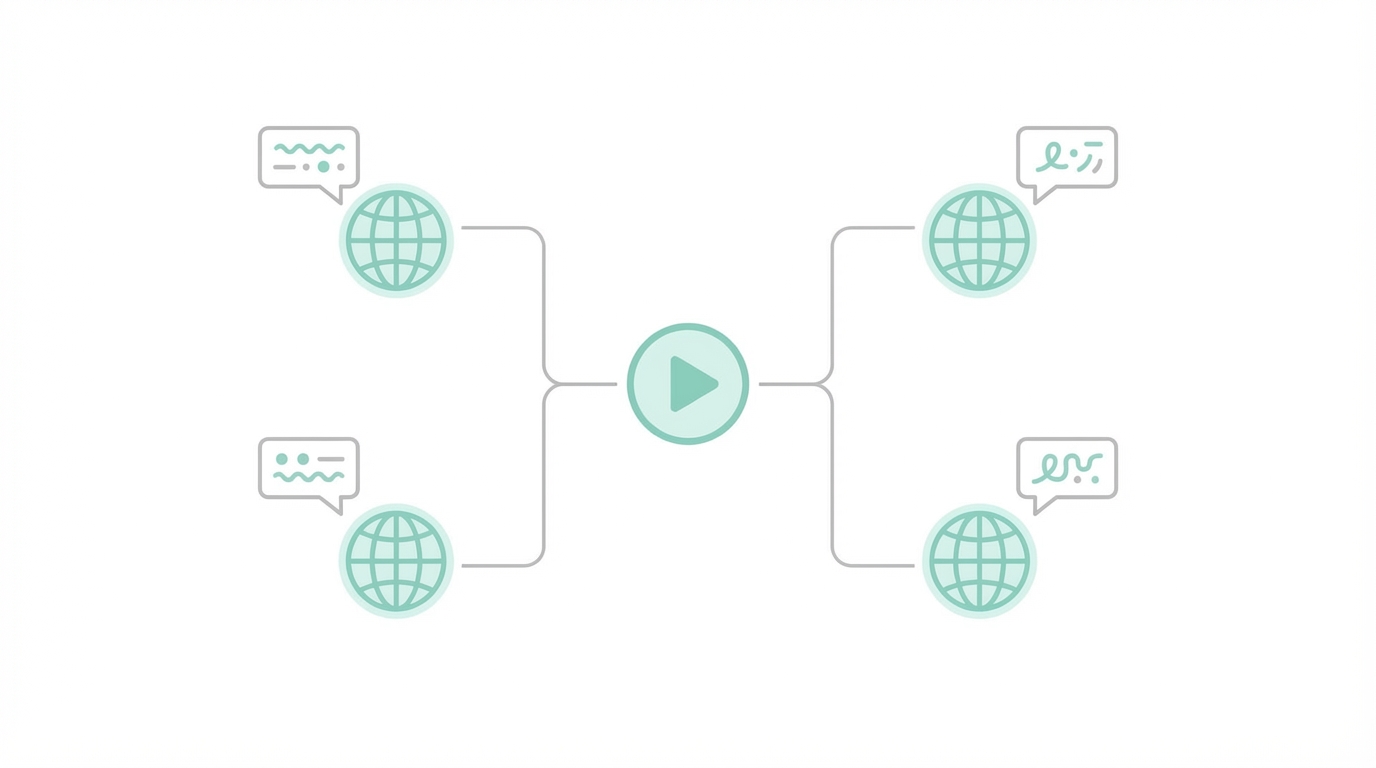
One of the biggest hurdles in influencer marketing is the language barrier. Historically, a successful campaign in the US would need to be entirely reshot or dubbed—often poorly—to work in Japan or Brazil. Today, AI-powered hyper-personalization tools allow a single influencer's video to be "translated" with AI lip-syncing into 10 or more different languages while maintaining the original creator's voice and tone.
This technology enables brands to take a successful piece of UGC or influencer content and scale it globally in a matter of hours. By localizing content at scale, marketers can ensure that their digital brand ambassadors speak directly to local cultures, significantly increasing conversion rates in international markets. This is particularly vital for platforms like Shopify merchants looking to run app install campaigns across multiple geographies without multiplying their production budget by ten.
"The future of AI isn’t human vs. AI—it’s human with AI. The most successful marketers will be those who seamlessly integrate AI while maintaining the irreplaceable human touch." — Angeley Mullins, Forbes Council
Regulatory Compliance: The Ethics of AI Disclosure

As virtual influencers become more indistinguishable from humans, regulatory bodies are stepping in to protect consumer trust. In 2025, transparency is no longer optional; it is a legal requirement. Not labeling AI-generated influencers or content can lead to severe legal penalties and a permanent loss of audience trust. Brands must navigate FTC mandatory AI disclosure laws, ensuring that any content involving ai generated content is clearly marked with tags like #AI-Generated or #VirtualCreator.
Maintaining authenticity in an era of simulation is the "Authenticity Paradox." Using AI to generate every caption or interaction can make a creator seem robotic. The most successful campaigns involve a blend of AI efficiency and human creative oversight. According to experts at the Digital Marketing Institute, transparency actually builds a different kind of trust—one where the audience appreciates the technical artistry behind the virtual character.
How to Scale: Using AI for Discovery and Management
While virtual influencers like Lil Miquela represent the high end of the market, most brands find success by using AI to manage a hybrid fleet of both human and digital creators. The shift toward Agentic Discovery means marketers are moving beyond simple keyword searches. Instead of searching for a "beauty influencer," sophisticated teams now use AI agents to find creators who fit specific brand voices, such as "creators who prioritize sustainable packaging and have a conversion-heavy Gen Z audience."
Managing these high-volume relationships requires a modern tech stack. Modern AI platforms enable brands to handle the entire influencer lifecycle autonomously. For instance, platforms like Stormy AI allow brands to discover creators using natural-language prompts, effectively cutting discovery time by 90%. Once creators are found, AI can handle the hyper-personalized outreach and follow-ups, ensuring that your digital brand ambassadors are always active and your pipeline is never empty.

Avoiding Common Pitfalls in AI-Driven Campaigns
Even with the most advanced ai generated content, brands can fail if they fall into common traps. One major issue is the obsession with vanity metrics. Since 25% of influencers have been found to purchase fake followers, relying on "likes" is a recipe for wasted budget. Instead, marketers should focus on deep vetting—using AI to analyze "comments-per-post" and conversion rates rather than just total reach.
- The Authenticity Paradox: Avoid publishing AI-generated text without human editing.
- Brand Safety: Use AI to scan an influencer’s entire historical feed for "risky" content before signing a contract.
- Failure to Disclose: Always include mandatory AI disclosures to avoid legal repercussions and audience backlash as highlighted by Pragmatic Digital.
Conclusion: The Future of the $108 Billion Industry
The rise of virtual influencers and ai generated content is not just a technological gimmick; it is a response to the growing need for scalable, high-performance marketing. Brands like Nike and BMW have shown that when AI is used to enhance human creativity rather than replace it, the results are transformative. As the market nears its $108 billion valuation, the businesses that will dominate are those that leverage digital brand ambassadors to tell more diverse, localized, and emotionally resonant stories.
To start scaling your own creator campaigns with the power of AI, consider how tools like Stormy AI can streamline your discovery and outreach processes, allowing you to focus on the high-level strategy while the AI handles the heavy lifting of influencer management.