The marketing landscape is undergoing a tectonic shift. For years, growth hackers focused on 'prompt engineering'—the art of coaxing specific words or images out of generative AI. But a new era has emerged, characterized by the "vibe coder." This term describes a new breed of non-technical founders and marketers who aren't just writing copy; they are shipping functional products, complex automations, and entire marketing systems using natural language. By leveraging the Claude Code CLI, growth teams are evolving from creative generalists into high-velocity engineering units, effectively blurring the line between marketing and software development.
Defining the 'Vibe Coder' Era: From Copy to Systems
Vibe coding represents a fundamental transition from writing copy to shipping systems. In the traditional workflow, a marketer might use an AI to generate ten variations of a Facebook ad. A vibe coder, however, uses an agentic tool like Claude Code to build a system that monitors ad performance in real-time, adjusts bids, and generates new creative variations based on winning patterns. According to research from Stormy AI, this shift is defining the 2025-2026 marketing cycle, where the ability to 'vibe' with an AI agent—describing intent rather than syntax—allows small teams to operate with the technical muscle of a venture-backed engineering department.
"The vibe coder era isn't about learning to code; it's about learning to communicate complex intent to an AI that already knows the syntax."
This movement is fueled by the democratization of development environments. Tools that were once reserved for senior engineers are now accessible via a terminal window and natural language instructions. The goal is no longer just a 'finished piece of content,' but a reusable framework or a persistent digital asset that continues to provide value long after the initial prompt is sent.
Claude 3.5 Sonnet: The Engine of Hyper-Personalization
At the heart of this transformation is Anthropic’s Claude 3.5 Sonnet. While many marketers are familiar with the web interface, the true power for growth hackers lies in its API and CLI capabilities. One of the most significant advantages is the massive 200k token context window. As noted by The Caio AI, this allows growth teams to feed entire brand libraries, years of historical performance data, and comprehensive customer personas into a single session.
This capacity solves the biggest problem with early-stage AI marketing: generic output. When the AI has access to every successful email you've ever sent and every brand guideline document you've ever written, the 'slop' disappears. Instead of a generic sales pitch, you get a system that understands the nuance of your brand's voice and the specific pain points of your segment. This level of anthropic claude business use cases is what separates elite growth teams from those simply hitting 'generate' on a chatbot.
The Voice-to-Strategy Workflow: Building the MARKETING.md
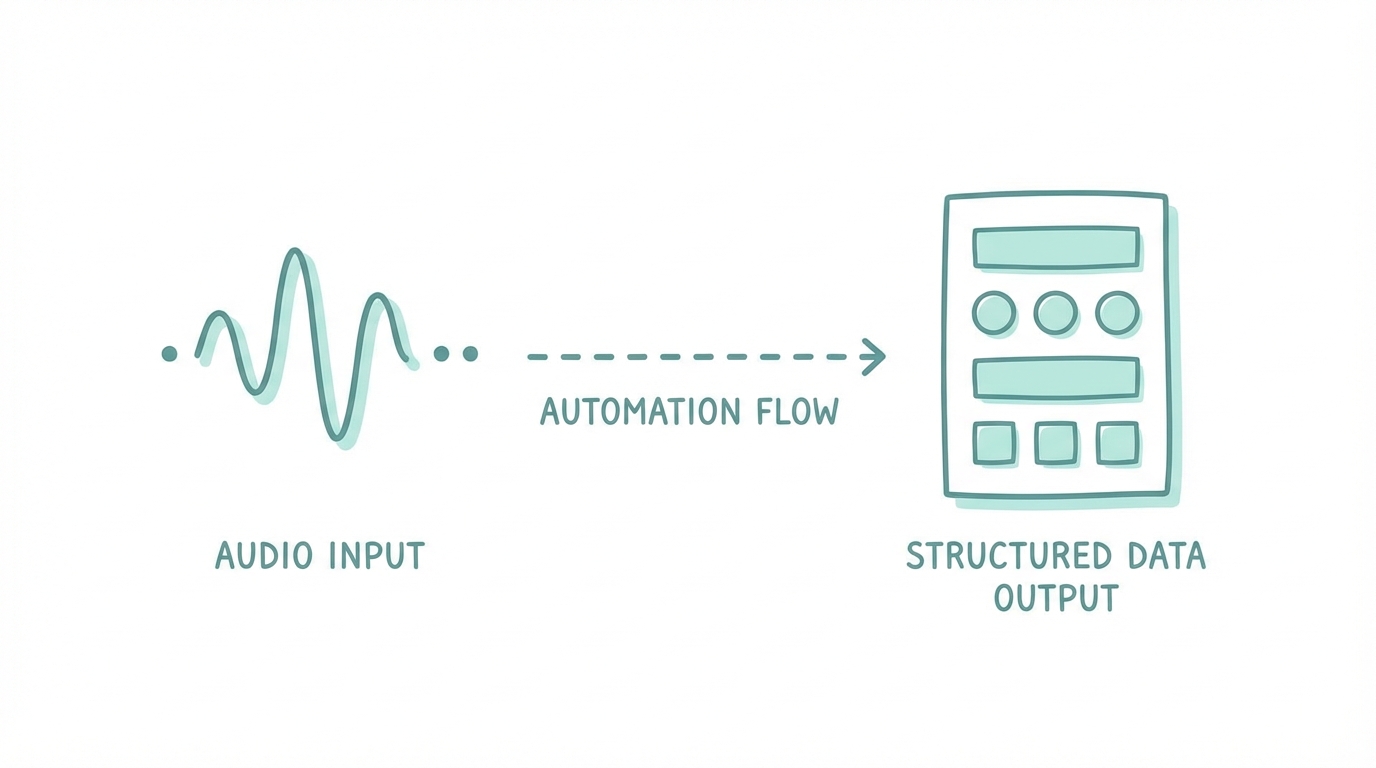
The biggest hurdle for many growth hackers is the 'blank page' of a code editor. Vibe coders solve this by moving away from typing altogether during the strategic phase. The recommended playbook involves a "Voice-to-Strategy" workflow. Instead of struggling to outline a complex campaign, you can record a 15-minute verbal brain dump of your strategy. Tools like Whisperflow can then transcribe this raw audio into a structured format.
Step 1: The Brain Dump
Speak freely about your goals, your target audience, and your technical requirements. Don't worry about structure or grammar; focus on the 'vibe' of the campaign.
Step 2: Generating the Source of Truth
Pipe that transcription into Claude Code with a command like: "Analyze this brain dump and generate a persistent MARKETING.md file in my root directory. Include our North Star metrics, brand voice guidelines, and a 30-day execution roadmap."
Step 3: Execution via CLI
With a persistent MARKETING.md file, Claude Code now has a permanent memory center. Any subsequent code it writes—whether it's a landing page or a tracking script—will reference this file to ensure alignment with the overall strategy. This prevents the "context death spiral" where the AI forgets your goals in a new chat session.
"Your MARKETING.md isn't just a document; it's the persistent memory of your AI marketing agent."
The Productivity Gap: Why AI-Enabled Teams are Winning
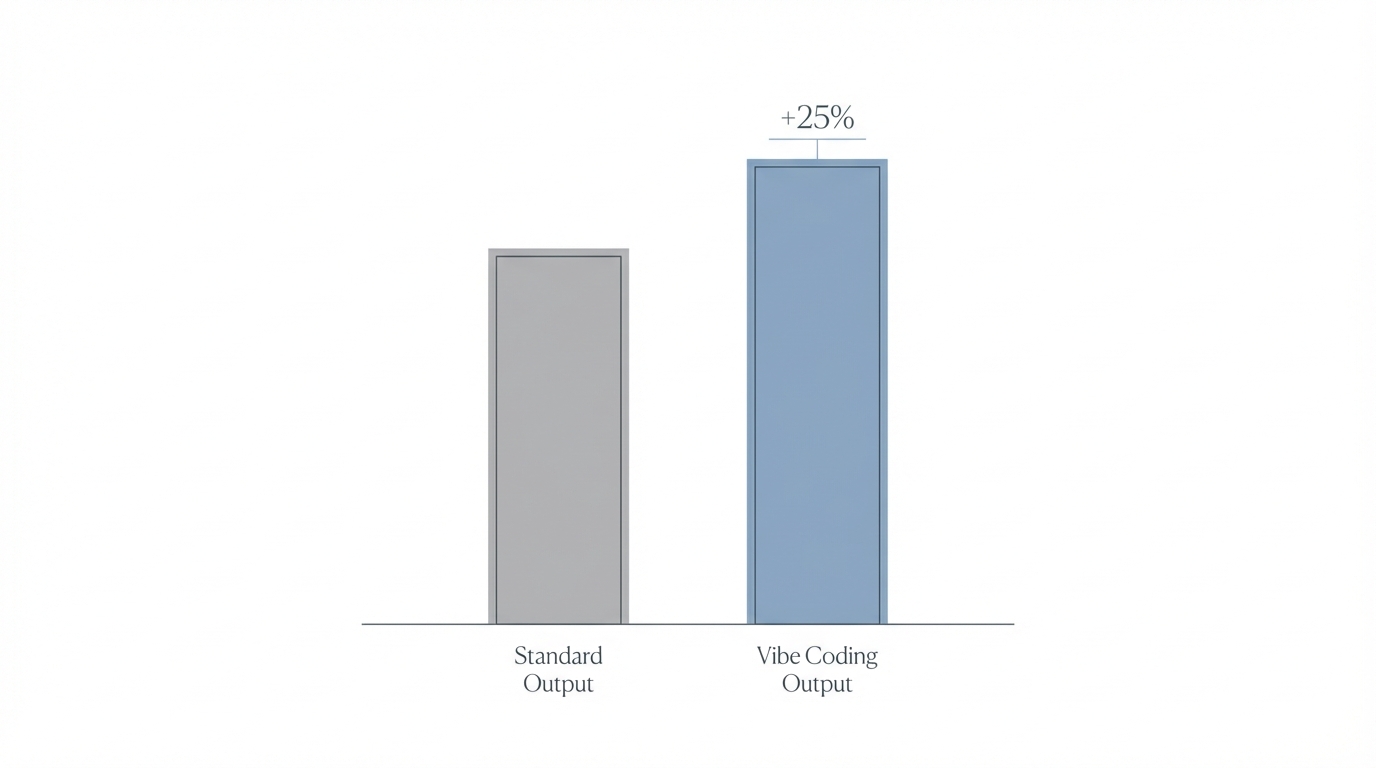
The data suggests that the gap between 'traditional' marketers and 'vibe coders' is widening rapidly. According to a report by daily.dev, developers and technical marketers using AI coding assistants are reporting a 25% boost in productivity. Furthermore, a staggering 92% of developers are now utilizing these tools to automate the repetitive parts of their workflow.
For growth hackers, this efficiency manifests in the ability to build "Engineering as Marketing" tools. Instead of paying for a SaaS subscription for a simple ROI calculator, a vibe coder can instruct Claude Code: "Build a React-based SaaS ROI calculator using Tailwind CSS and deploy it to Vercel." In minutes, the team has a custom lead magnet that would have previously required weeks of coordination with an engineering department.
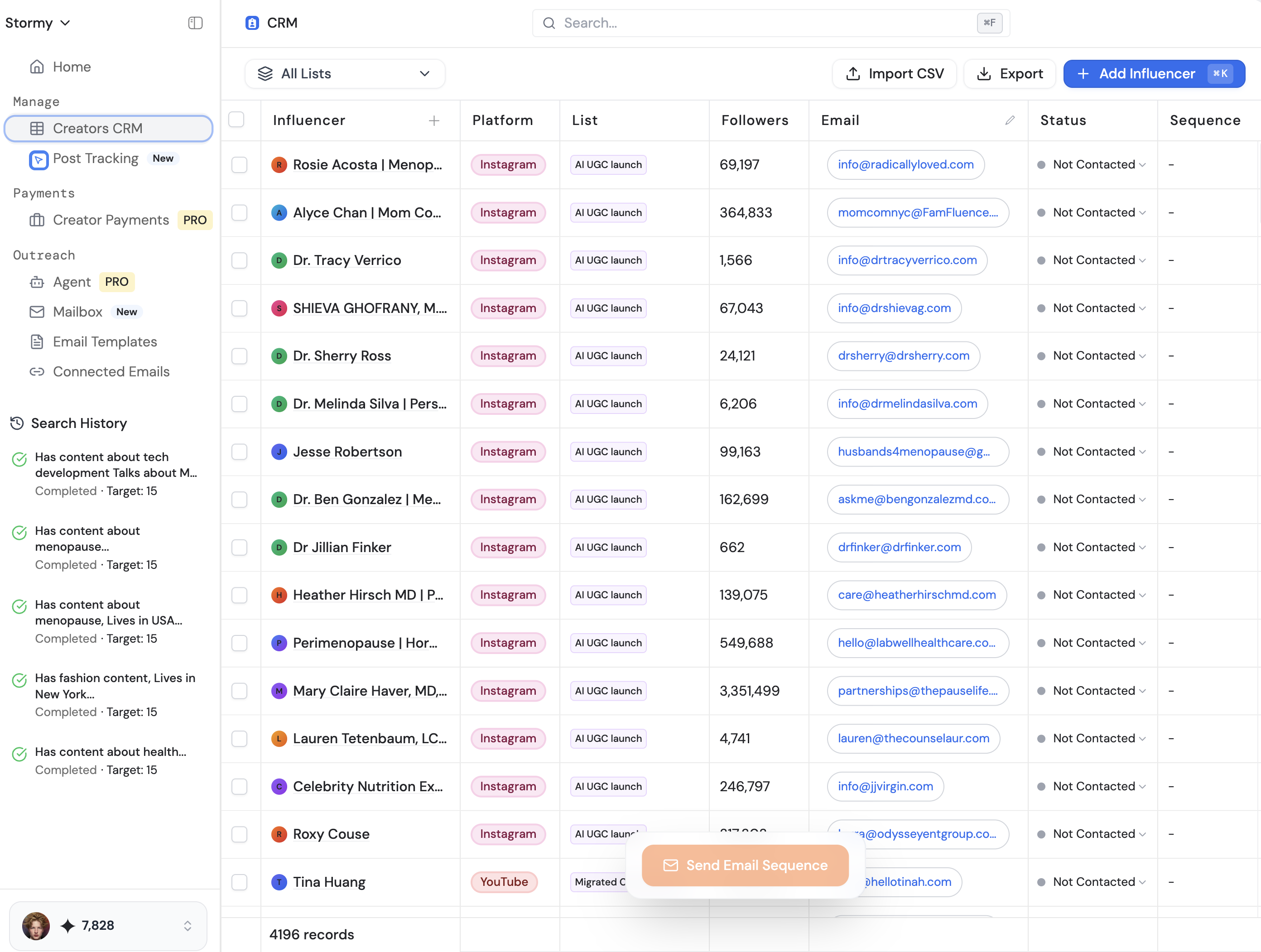
This speed allows for a higher volume of experiments. As growth teams scale these technical assets, managing the resulting influx of data and relationships becomes the next challenge. Modern tools like Stormy AI can help manage these creator relationships and track the performance of the various 'vibe-coded' assets in a unified CRM, ensuring that the engineering speed is matched by organizational clarity.
Avoiding 'AI Slop' with Marketing Skills and MCP
A common pitfall in the vibe coding era is the production of 'AI slop'—content or code that is technically functional but lacks soul, brand alignment, or strategic depth. To avoid this, growth hackers must move beyond basic prompts and start installing domain-specific skills. Expert Corey Haines suggests using a Marketing Skills Pack for Claude Code. This gives the AI pre-defined frameworks for conversion rate optimization (CRO), SEO, and high-conversion copywriting.
Furthermore, the use of the Model Context Protocol (MCP) is a game-changer for ai for growth hackers. MCP allows Claude to connect directly to your existing toolstack. As Prashant Sridharan explains, you can use MCP to link Claude to tools like Notion or Linear, allowing the AI to read your project tasks and update documentation automatically. You can even connect the Figma MCP Server to automate the creation of social media ad variants directly within your design files.
"Stop prompting and start installing. Specialized skill packs turn a general AI into a senior marketing engineer."
Common Mistakes in the Vibe Coding Workflow
While the barrier to entry is lower than ever, the risks are higher. Vibe coding requires a manual approval step before deployment to ensure quality and security. Here are the most common mistakes growth teams make:
- The Context Death Spiral: Starting fresh chats for every task instead of maintaining a
CLAUDE.mdorMARKETING.mdfile that stores historical brand data. - Security Risks: Accidentally allowing Claude Code to include API keys or secrets in client-side code. Always use
.envfiles and security scanners. - Over-Automation: Letting an AI agent push ad campaigns live without human QA. AI is a co-pilot, not the pilot.
- Ignoring Compliance: Failing to verify that AI-generated tracking scripts or lead forms comply with GDPR or CCPA regulations.
Conclusion: The Future of Marketing Engineering
The rise of the vibe coder is not a threat to traditional marketers; it is an invitation to upgrade. By embracing the claude code cli and marketing engineering principles, growth teams can move faster, build better tools, and achieve unprecedented efficiency. The statistics are clear: those who integrate these agentic tools into their workflow are seeing massive gains in both output and quality. Whether it is saving 70 hours a month on SEO content as seen in real-world case studies, or launching complex campaigns in hours rather than weeks, the era of the vibe coder is here to stay. Start by defining your 'vibe,' building your marketing skills pack, and turning your strategy into code.