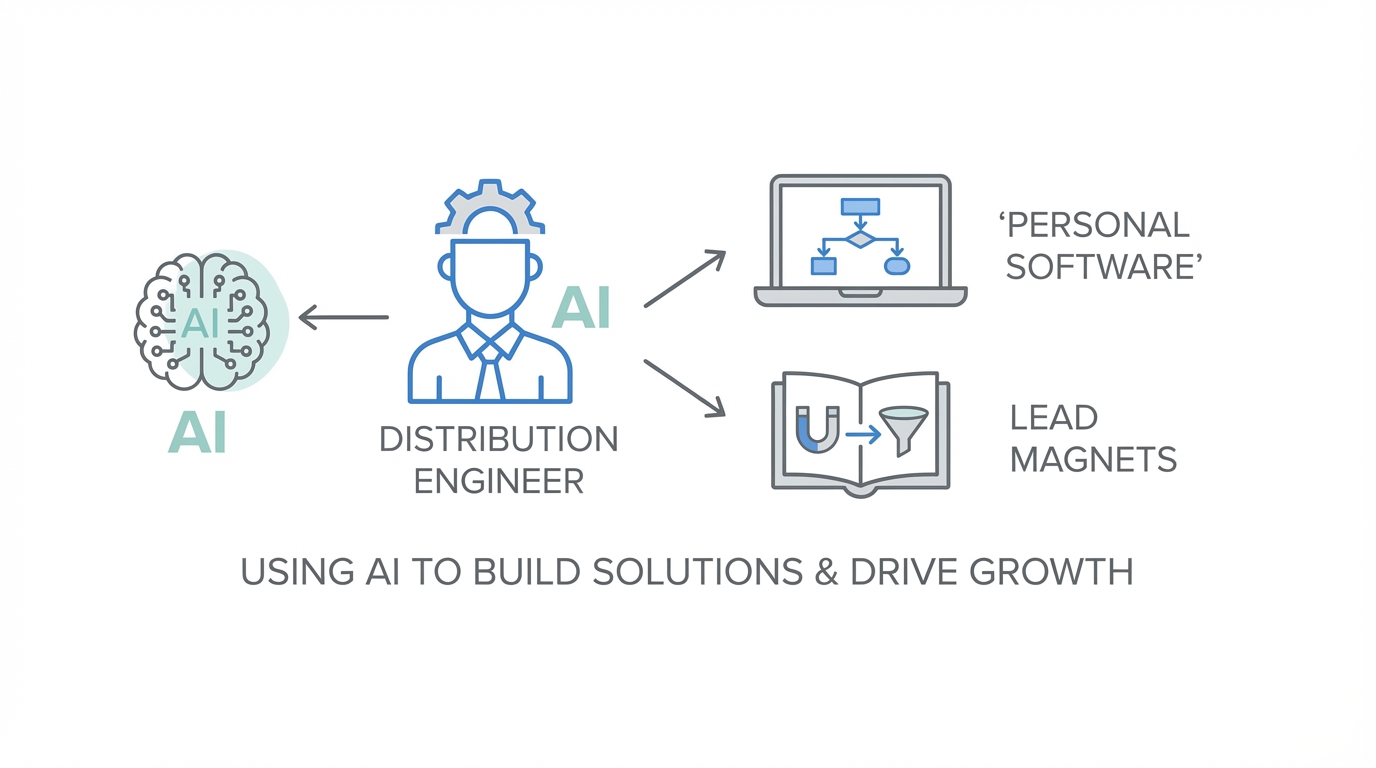
The era of the $100,000 Minimum Viable Product (MVP) is officially over. We are entering a paradigm shift where the marginal cost of coding is plummeting toward zero, giving birth to a movement known as personal software. For decades, the primary bottleneck for any entrepreneur was the technical execution—finding a co-founder, hiring an agency, or spending months learning to code. According to research by McKinsey, generative AI could add trillions to the global economy by automating these technical tasks. Today, that bottleneck has evaporated, replaced by a much more difficult challenge: distribution.
As software becomes a commodity, the value shifts from the lines of code to the attention they can capture. This has created a new breed of professional—the Distribution Engineer. These are growth-focused builders who use Cursor and AI agents to create "disposable" software, custom vertical tools, and high-utility lead magnets that drive viral growth. In this new world, software isn't just the product; it's the marketing engine itself.
The Death of the Marginal Cost of Code

For most of the history of Silicon Valley, code was expensive. It required specialized labor, long development cycles, and significant capital. However, as Lee Robinson from the Vercel team points out, we are reaching a point where coding is becoming effortless. With the rise of AI agents that can write, debug, and even deploy code, the cost of creating a functional application is nearing the cost of writing a detailed email.
This shift allows for rapid prototyping with AI that was previously impossible. Entrepreneurs no longer need to build for the "mass market" to justify the development cost. Instead, they can build personal software—tools designed for a single user, a single company, or a single specific problem. When the cost to build is negligible, the software becomes "disposable." You build it, use it to solve a problem or capture a lead, and move on.
This is a fundamental shift in AI for entrepreneurs. Instead of asking, "Is this a billion-dollar SaaS idea?" founders are now asking, "Can I build a tool in two hours that will get me 1,000 email signups tomorrow?" This is the essence of low code app development evolved into AI-driven creation, often utilizing platforms like Replit to deploy in seconds.
The Personal Software Revolution
What exactly is personal software? As detailed in Lee Robinson’s exploration of the topic, it is software built for the individual, often with a one-time use case. In the past, if you had a messy database that needed a custom visualization, you would spend hours in Excel or pay a dev to build a dashboard. Now, you can prompt an AI agent to build a custom visual GUI (Graphical User Interface) just for that specific debugging session.
This applies to business growth as well. Imagine you are targeting a very specific vertical, like architecture firms in San Francisco. Instead of sending a generic cold email, a Distribution Engineer builds a custom AI tool that analyzes an architect's portfolio and generates a 3D structural report in seconds. The software is the lead magnet. Because the cost to build it was nearly zero, the conversion rate doesn't need to be astronomical to make the ROI make sense.
Vertical AI: The NanoBanana Opportunity
One of the most exciting developments in this space is the release of highly capable, lightweight models like Google’s Gemini Nano. As indie hacker Peter Levels recently noted, these models have opened a window of opportunity for "mini startups." If you aren't building a vertical-specific AI app today, you might be missing the opportunity of a lifetime.
Vertical AI apps take a general capability—like image generation or text analysis—and wrap it in a hyper-specific use case. Examples include:
- Architecture: AI that turns 2D floor plans into 3D renders using models like NVIDIA's generative research.
- Fintech: Personal software that audits a company's Stripe data for specific churn patterns that general tools miss.
- E-commerce: "Try-on" apps that allow users to see clothes on their own avatars, a trend recently highlighted by Shopify as the future of retail.
The key to AI for entrepreneurs in this space is speed. You aren't building a platform; you are building a solution. When you can use rapid prototyping with AI to go from idea to launch in 24 hours, you can test 10 different niches in the time it used to take to write a technical spec.
The Rise of the Distribution Engineer
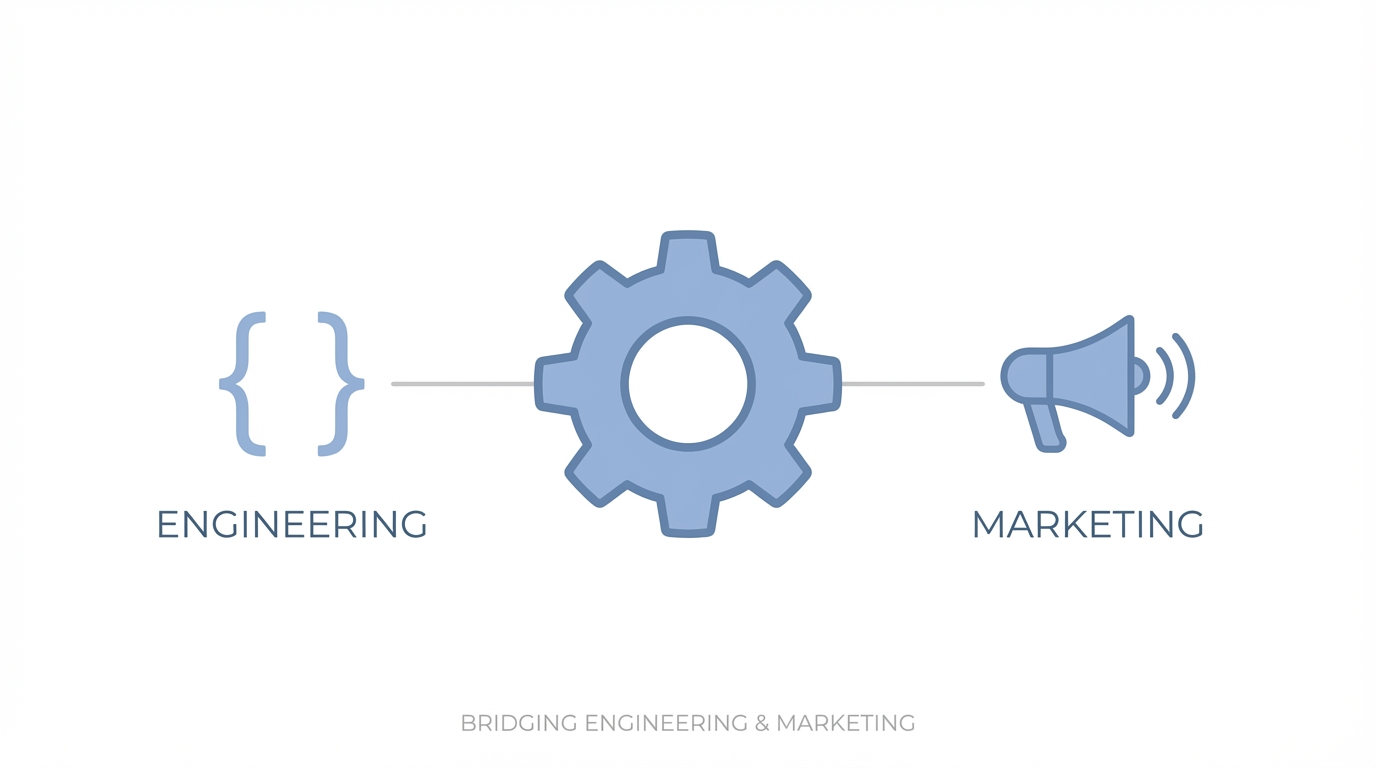

As the barrier to building software falls, the role of the developer is evolving. We have moved from the "Full-Stack Engineer" to the "Product Engineer," and now to the Distribution Engineer. This person doesn't just care if the code works; they care if the code spreads.
A Distribution Engineer asks: "How can I build a piece of software that people will want to share on TikTok or LinkedIn?" They understand that high-utility tools are the best form of marketing. Instead of running expensive Meta Ads, they build a free calculator, a generator, or an analyzer that provides immediate value and naturally encourages sharing.
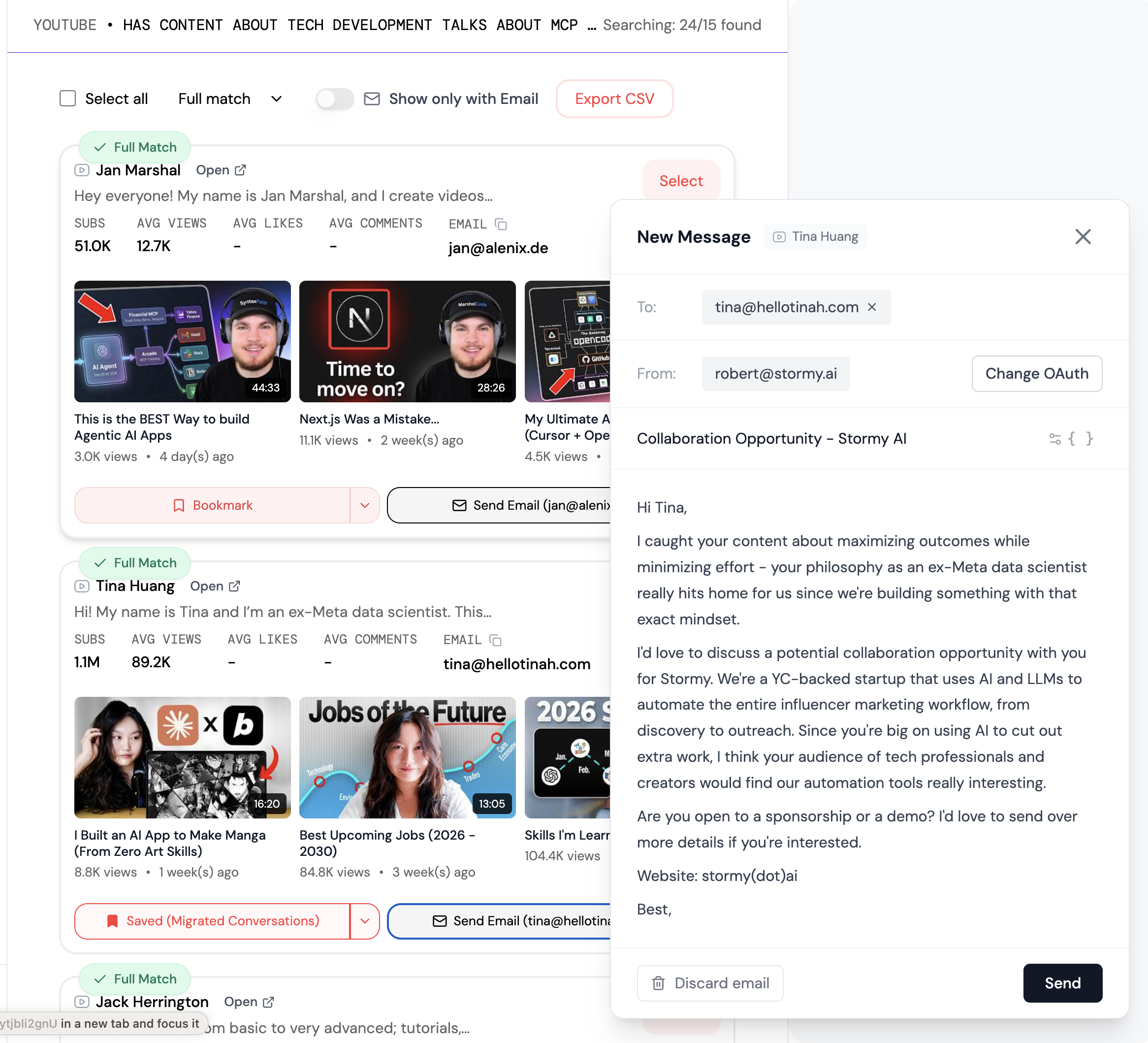
In this ecosystem, managing the creators who distribute this software is vital. Modern platforms like Stormy AI are essential for Distribution Engineers because they allow for the discovery and management of UGC (User-Generated Content) creators who can take these "disposable" tools viral. If you've built a vertical AI tool for fitness, you can use Stormy's AI search to find micro-influencers in that niche and automate the outreach to get your tool in front of their audiences instantly.
Internal GUIs: Software as a Debugging Tool
One of the most overlooked use cases for personal software is internal tooling. Historically, developers have avoided building custom internal dashboards because the time investment didn't justify the "one-off" nature of the task. They would rely on terminal logs and text-based debugging.
Now, AI agents can generate a complete visual interface for debugging a specific issue. For example, if you are migrating data from one system to another, you can have an AI agent build a side-by-side comparison tool that allows you to visually verify every record. This level of low code app development for internal use cases, often compared to tools like Retool but built instantly with AI, dramatically reduces errors and speeds up development cycles for production-ready software.
Playbook: How to Build Software as a Distribution Engine
If you want to capitalize on this trend, follow this step-by-step playbook to use software as a lead magnet and growth lever.
Step 1: Identify a High-Frequency Pain Point
Look for a task that your target audience does repeatedly but finds annoying. It shouldn't be a massive problem—just a small, friction-filled one. For example, "calculating the ROI of a specific ad spend" or "formatting a bio for five different social platforms."
Step 2: Build a "Disposable" Solution
Use a tool like Cursor to build a single-page app that solves that one problem. Don't worry about user accounts, databases, or complex architecture. Focus on the core utility. If you are a non-developer, use the AI agent to handle the entire codebase.
Step 3: Engineer for Virality
Add a "Share result" button that generates an attractive image or a unique URL. Ensure that when the user gets their value, they are one click away from showing it to their network. This turns your software into a distribution engine.
Step 4: Scale Outreach with AI
Once your tool is live, you need to get it in front of the right eyes. This is where Stormy AI becomes a force multiplier. You can source hundreds of relevant creators, use AI to send personalized emails about your new tool, and manage the entire relationship within the Creator CRM. This automated discovery and outreach loop ensures your software doesn't just sit on a server—it gets used.
Step 5: Analyze and Iterate (or Delete)
Use Post Tracking to see which influencers are driving the most traffic to your tool. If the tool takes off, consider turning it into a full product. If it doesn't, you've only lost a few hours of work. Delete it and move to the next experiment.
Why You Should Embrace Disposable Software
The fear many entrepreneurs have is building something that doesn't last. We are trained to think of software as an asset that must be maintained for years. But in the age of AI for entrepreneurs, the value of software is increasingly found in its immediate utility.
By building "disposable" software, you can:
- Lower your risk: You aren't betting the company on one big idea; you're betting on 20 small ones.
- Increase your speed: You don't get bogged down in technical debt because the software isn't meant to last forever.
- Capture niche markets: You can build tools for audiences that are too small for major SaaS companies to care about.
Whether you are using Google Ads to drive traffic to a calculator or using Apple Search Ads to promote a vertical AI utility, the strategy remains the same: lead with utility, follow with distribution.
Conclusion: The Future of Growth
The rise of the Distribution Engineer marks the end of the "build it and they will come" philosophy. In a world where anyone can build, according to modern product development theory, the only thing that matters is who can distribute. By leveraging personal software and rapid prototyping with AI, entrepreneurs can create a continuous stream of high-value lead magnets that cut through the noise of traditional marketing.
The tools are here. Whether you're using Cursor to write the code or Stormy AI to find the creators to promote it, the barrier to entry has never been lower. Stop trying to build the next giant platform and start building the next great distribution engine.