By 2026, the distinction between human and digital talent has effectively vanished from the consumer psyche. We have entered the era of the "Influecreator"—a hybrid landscape where AI-generated personalities command millions of followers and secure seven-figure contracts with the world's most prestigious brands. As the global influencer marketing industry surges toward a $32.55 billion valuation (source: Statista), the integration of generative AI isn't just a trend; it has become the standard operating system for high-growth marketing teams. This year, success depends on how effectively you can navigate the virtual talent market using a sophisticated AI influencer marketing platform to bridge the gap between pixel-perfect aesthetics and genuine audience connection.
The Economics of Virtual Influencers: Why Budgets Are Shifting
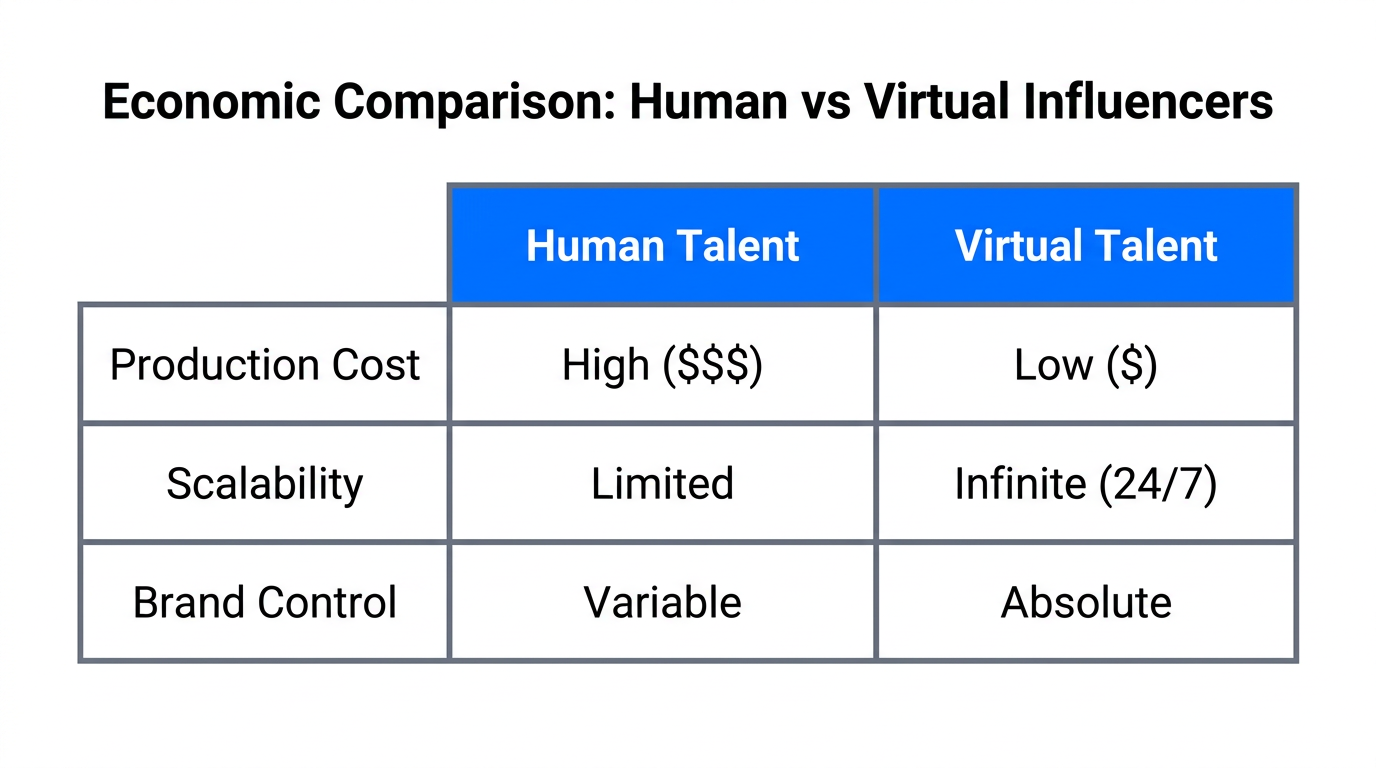
In 2026, the financial logic behind virtual influencers has become undeniable. According to research from Influencer Hero, the virtual influencer market is now valued at $4.6 billion, maintaining a blistering 26% annual growth rate. Brands like Prada, Samsung, and Sephora have led the charge, shifting significant portions of their content creation budgets to digital-only creators like Lil Miquela and Aitana López. The appeal is rooted in total brand safety and 24/7 availability; a virtual creator never tires, never ages, and never finds themselves involved in a PR scandal unless it is carefully scripted by their management team.
The efficiency gains are equally staggering. Data from indaHash suggests that the total market has expanded significantly from 2024 to its current 2026 heights, driven largely by the lower production costs associated with virtual assets. Unlike human creators who require travel, stylists, and physical shoots, "Influecreators" can be rendered in any environment at any time. This allows brands to maintain 37% higher engagement rates because content can be tweaked and optimized in real-time based on live audience data. As reported by Stormy AI, this shift has resulted in a 60–70% reduction in manual coordination time for agencies managing large-scale campaigns.
"The future of influencer marketing lies in authentic storytelling backed by data-driven decisions, whether the face behind the story is biological or digital."
Compliance and Transparency: Navigating the 2026 FTC Guidelines
As the line between human and AI blurs, regulatory bodies have stepped in to protect consumer trust. The 2026 FTC guidelines for generative AI in marketing are stricter than ever. Brands are now required to provide clear, unambiguous disclosure whenever an AI-generated persona is used for endorsement. Failure to comply doesn't just result in heavy fines; it can lead to a total loss of brand equity in an era where Gen Z and Gen Alpha consumers value radical transparency. Advanced influencer platforms have integrated enterprise-level governance tools to ensure every post meets these latest legal standards.
Transparency isn't just about a hashtag like #AIInfluencer; it involves the disclosure of the AI Influencer Marketing Platform used for generation and the data sources utilized for personalization. Industry leaders like Harmelin Media have noted that virtual personalities are now securing sponsorships that include specific clauses regarding "algorithmic ethics." When utilizing modern discovery tools, brands must verify that their virtual partners aren't just collections of bot-followers, but possess real reach among human audiences.
| Feature | Human Influencers | Virtual "Influecreators" |
|---|---|---|
| Scalability | Limited by time/physicality | Infinite |
| Brand Safety | High risk (Human behavior) | Low risk (Fully controlled) |
| Engagement | Personal/Emotional | Analytical/Visual |
| Cost per Unit | Higher (Travel, gear, fees) | Lower (Rendering, AI compute) |
| Authenticity Score | Inimitable | Engineered / Transparent |
Leveraging Stormy AI to Find Niche Virtual Talent
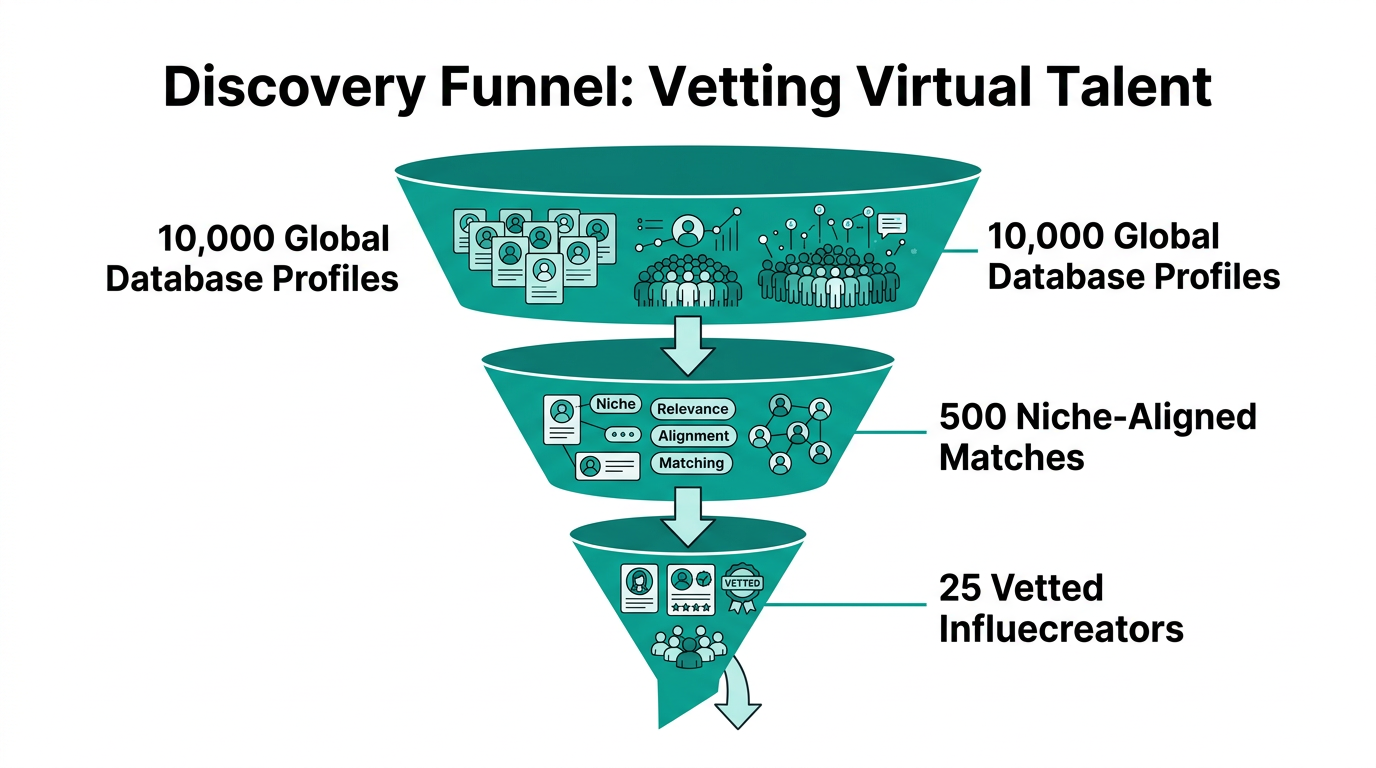
In the vast sea of digital personas, finding the right virtual talent is a needle-in-a-haystack problem. Modern growth teams no longer rely on simple follower counts; instead, they utilize semantic search capabilities. By using an AI influencer marketing platform like Stormy AI, marketers can type natural-language prompts such as "virtual eco-conscious creators with a high audience overlap in the Pacific Northwest fashion scene." This level of precision ensures that the virtual persona aligns with the brand’s core values and reaches a vetted, human audience.
Successful discovery in 2026 involves looking beyond the aesthetics to the engagement quality score. As NetInfluencer reports, the most successful campaigns of the year utilize "cluster analysis" to identify micro-communities that traditional tools might miss. For example, Sephora achieved a 30% increase in engagement by targeting niche AI-driven communities rather than broad macro-influencers. Modern audience auditing tools allow brands to analyze these creators' 1st-party audience data to confirm they aren't just shouting into an AI-driven echo chamber.
"AI is an accelerator, not a replacement. While it handles the complexity of discovery and data, human authenticity remains the inimitable aspect of the industry."
Managing the Human-AI Hybrid: The Authenticity Gap
While 95% of brands have utilized AI in some form by late 2025, the industry consensus in 2026 is that human authenticity is more valuable than ever. Ismael El Qudsi, CEO of SocialPubli, emphasizes in Forbes that AI's primary role is to fix the operational complexity of the creator economy. The most successful strategies today use a "Human-AI Hybrid" model: AI manages the data, logistics, and rendering, while human creative directors focus on the storytelling and emotional resonance.
This hybrid approach is evident in how brands like L'Oréal use AI diagnostics alongside human influencers to achieve 3x higher conversion rates. According to Pragmatic Digital, the goal is to use AI to enhance the human element, not overshadow it. If an "Influecreator" feels too sterile, they lose the trust of their audience. Therefore, brands must leverage social intelligence tools—even legacy ones like Tagger—to monitor sentiment and ensure the digital persona is evoking the intended emotional response. The magic happens when the data-driven precision of AI meets the messy, relatable nature of human experience.
Operationalizing Hyper-Personalization at Scale
One of the most revolutionary shifts in 2026 is the rise of agentic systems. We have moved past simple SaaS databases into autonomous AI agents that handle the heavy lifting of outreach. Platforms such as Stormy AI allow marketers to send thousands of personalized outreach emails simultaneously. These aren't templates; they are generative AI communications that reference an influencer's specific recent posts, captions, and even the sentiment of their comment section.
This hyper-personalization can increase creator response rates by up to 43%. This is critical when working with "Influecreators" who may have thousands of incoming collaboration requests per day. By automating the negotiation and contract management phases, brands can scale from managing 30 influencers to 3,000 without increasing their headcount. Case studies from the industry highlight how brands like BURGA have scaled to managing thousands of influencers per quarter by utilizing these automated workflows alongside tools like Shopify for fulfillment.
"AI fixes the operational complexity that once prevented influencer marketing from being a true performance channel."
Playbook: Your 30-Day Virtual Influencer Strategy
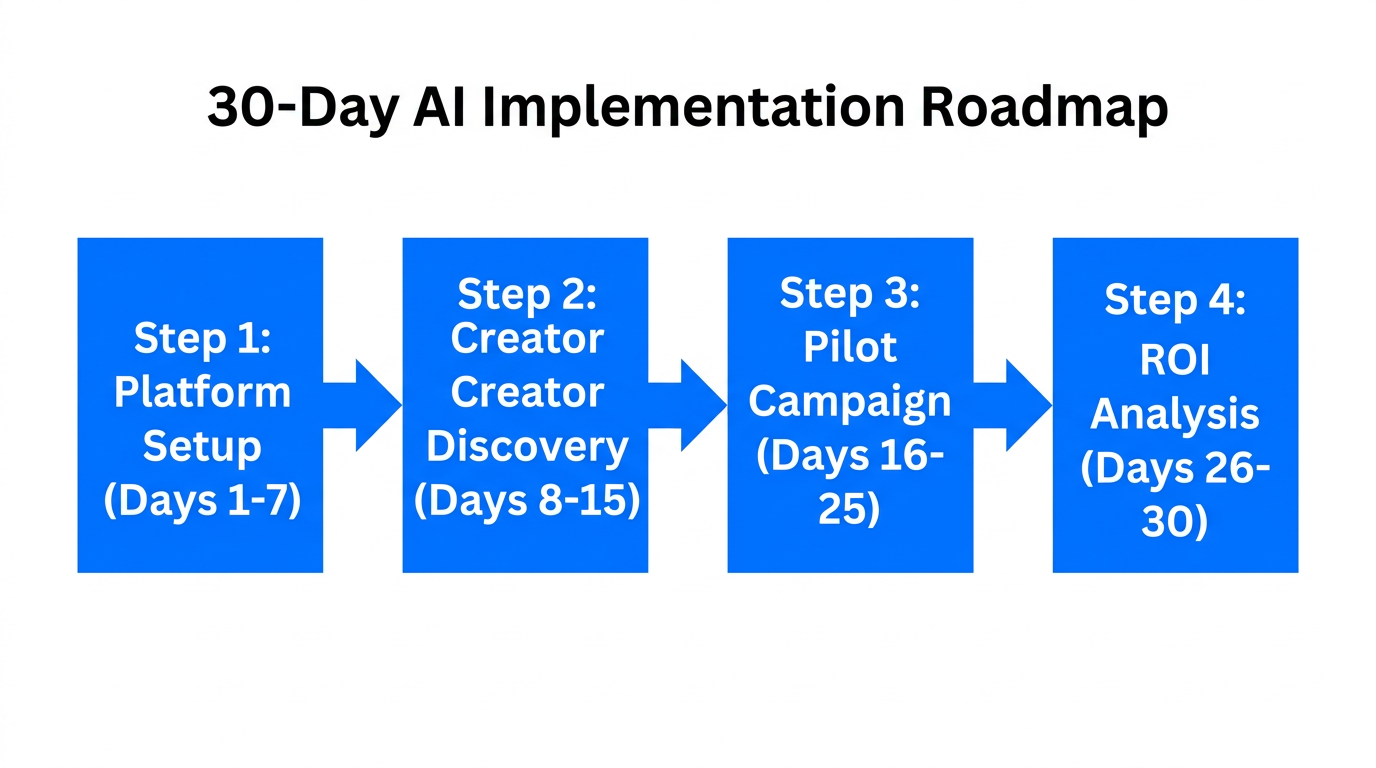
To successfully integrate virtual talent into your growth mix this year, follow this AI-driven roadmap:
- Days 1-10: Discovery & Vetting. Use an AI discovery tool to find 100+ niche virtual or hybrid creators based on audience overlap rather than vanity metrics like follower count. Leverage Stormy AI's search engine to identify creators who have actually discussed your specific product category.
- Days 11-20: Automated Outreach. Deploy an AI agent to send personalized, non-templated emails. Focus on the value proposition for the creator and ensure your AI labels are ready for the campaign.
- Days 21-30: Tracking & Iteration. Set up automated ROI tracking via e-commerce integrations. Monitor the engagement quality score to filter out suspicious activity early using Stormy AI's analysis tools.
During this process, avoid the "one-off" campaign mindset. Research from Red Cube Digital and The Cirqle suggests that long-term ambassador relationships—even with virtual ones—outperform transactional placements by nearly 40% in terms of sustained brand sentiment.
The "Bot Trap": Common Mistakes to Avoid in 2026
As the market matures, so do the pitfalls. Many brands still find themselves fixated on vanity metrics. Paying based on follower count is a recipe for failure in 2026. Instead, use advanced vetting tools to benchmark Average Comments per Post and Real Reach. If a virtual influencer has high likes but 80% suspicious followers, your AI influencer marketing platform should flag them before a single dollar is spent.
Another critical error is over-scripting content. Even though "Influecreators" are digital, Gen Z audiences can sniff out corporate-speak instantly. AI should be used for the briefing phase, but the final "voice" of the creator should remain consistent with their established persona. Lastly, ignoring cross-platform repurposing is a wasted opportunity. Brands should use AI to identify high-performing organic content from virtual creators and automatically license it for paid whitelisting or dark posting across Meta Ads Manager and TikTok Ads.
Conclusion: The Future is Synthesized
The rise of the "Influecreator" represents a fundamental shift in how we perceive talent and influence. By 2026, the brands that win aren't just those with the biggest budgets, but those that master the generative AI in marketing tech stack. From discovery via Stormy AI to autonomous outreach with agentic systems, the tools are now in place to make influencer marketing a high-precision performance channel.
As you build your virtual influencer strategy 2026, remember that while AI provides the scale, human intuition provides the soul. Navigate this new world with transparency, data-driven precision, and a relentless focus on audience authenticity. The digital frontier is open—it's time to start rendering your brand's future.