For the last decade, the software industry has been obsessed with efficiency, speed, and clinical perfection. We’ve built tools that are incredibly powerful but feel as sterile as a hospital corridor. We’ve optimized every pixel for conversion, every click for productivity, and in the process, we’ve accidentally leached the soul out of the digital products we use every day. But a quiet counter-culture is emerging: the era of cozy software. This movement isn’t just about making things look pretty; it’s a radical product design philosophy that prioritizes warmth, personality, and the intentional injection of 'weirdness' to build deep, emotional connections with users. In an era where every SaaS tool looks like a clone of the next, emotional user experience is becoming the ultimate competitive advantage.
Cozy vs. Clinical: Defining the New Software Aesthetic
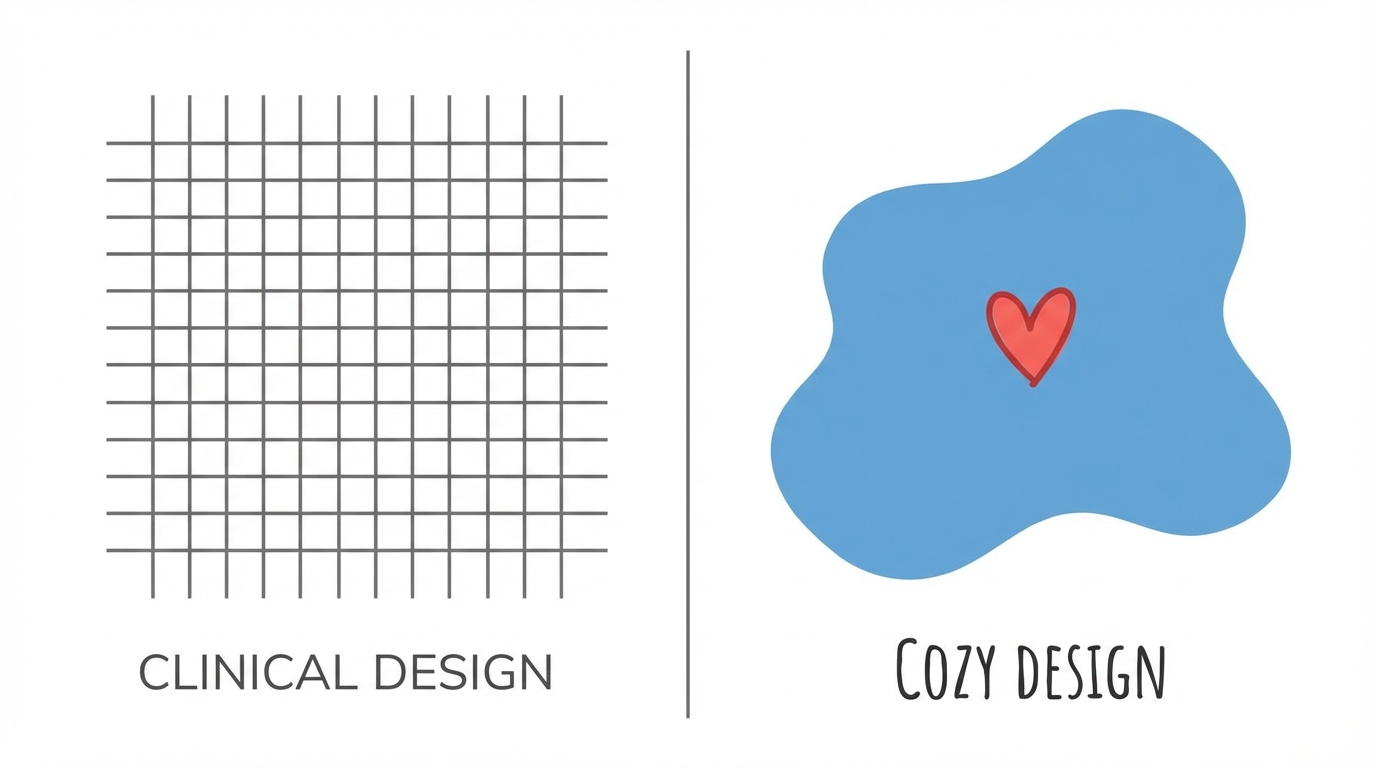
Most modern software is 'clinical.' It’s built on a foundation of white space, sans-serif fonts, and perfectly rounded corners that signal 'professionalism' and 'scale.' While functional, clinical software often feels cold and transactional. As Jason Fried, co-founder of 37signals, notes, the software industry has become far too serious. We’ve replaced the joy of discovery with the rigors of optimization. Cozy software, by contrast, embraces human-centric UX. It feels like a comfortable living room rather than a high-tech lab. It’s software that doesn't just work—it lives with you.
Cozy software isn't afraid of being inefficient if that inefficiency creates a moment of joy. Think about the difference between a traditional bank app and a platform that uses playful typography or unexpected micro-interactions. The goal of user delight in software is to move past the 'user as a metric' mindset and return to the 'user as a human' reality. When products like Basecamp or HEY lean into unique design choices, they are signaling that there is a human on the other side of the screen. They aren't just tools; they are expressions of a specific worldview.
Why the 'Hobbyist Ethos' is Your Secret Growth Weapon
One of the most powerful drivers of the cozy software movement is the 'hobbyist ethos.' In the early days of the internet, people built things because they were curious, not because they were chasing a 10x return. This product design philosophy led to quirky, memorable experiences that felt personal. Today, we are seeing a resurgence of this through minimalist app design that focuses on a single, delightful interaction rather than a bloated feature set. When a founder builds something they genuinely want to use themselves—surprising themselves with the fact that it works—that excitement translates into the product.
This 'goosebumps feeling' in product development is rare. It happens when you stop asking 'how big can this be?' and start asking 'is this idea any good?' Modern product-led growth often fails because it focuses on the mechanics of virality rather than the quality of the soul of the product. If you build something that feels like a personal passion project, like the tools developed at Once, you create a natural magnetic pull. People don't just use these products; they talk about them because they feel different from the endless sea of corporate SaaS.
The 'Margarita Pizza Problem': Mastering the Core
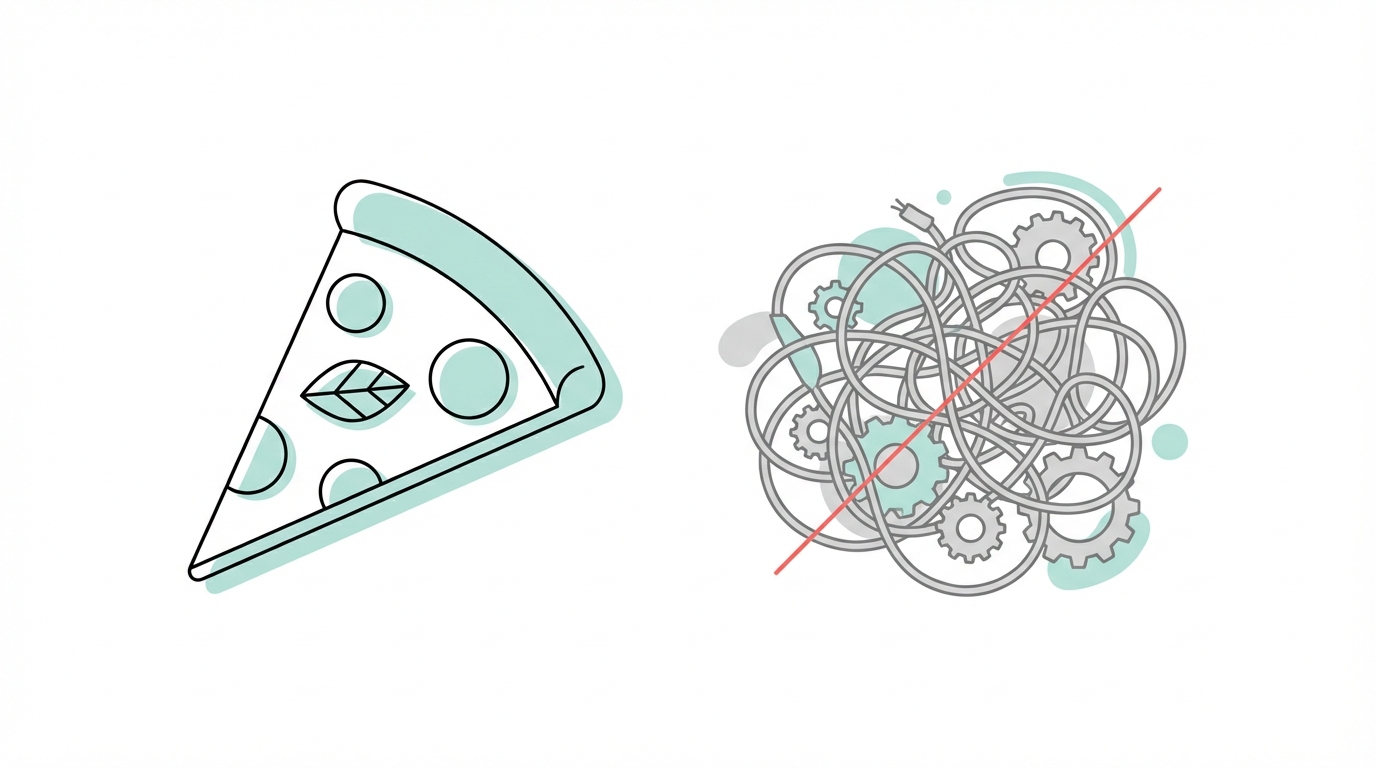
In the world of minimalist app design, we often run into what Greg Isenberg calls the 'Margarita Pizza Problem.' A Margarita pizza is incredibly simple—just dough, sauce, and cheese. But because there are so few ingredients, those ingredients must be world-class. If the crust is soggy or the cheese is cheap, there’s nowhere to hide. Software is the same. When you build a tool with a limited feature set, the quality of your human-centric UX must be impeccable. You have to be the 'Naples' of software, not the 'Domino’s.'
Mastering this problem means focusing on the 'finger dynamics' and the 'texture' of your digital interface. For example, imagine a sketching app that simulates drawing on a steamy shower door. To work, the steam must feel real, the way your finger removes it must feel natural, and the ephemeral nature of the drawing must be preserved. If you get the physics wrong, you fall into the 'uncanny valley.' But if you get it right, you create a user delight in software that is far more valuable than any complex project management feature. High-quality simplicity is significantly harder to achieve than mediocre complexity.
The Tesla Experience: Digitizing Excitement
When we think about emotional user experience, we can look at the physical world for inspiration. Consider the traditional car-buying experience: hours of paperwork, sterile offices, and high-pressure sales tactics. It’s the definition of a 'clinical' experience. Now, compare that to the Tesla delivery process. Everything is handled through an app. There is a sense of mystery, a countdown to delivery, and a streamlined interface that builds anticipation rather than frustration.
By removing the friction and replacing it with a digital-first excitement, they’ve turned a chore into a milestone. This is a blueprint for software founders: how can you digitize excitement? Whether it's through a unique onboarding flow or a notification system that feels like a reward, the goal is to make the user feel like they are part of something special. It’s about creating a 'you had to be there' moment in a world where everything is otherwise available on demand. This type of human-centric UX turns customers into fans.
Tactical Ways to Add 'Warmth' to Digital Interfaces

How do you actually build cozy software? It starts with moving away from the 'everything is an asset class' mentality and returning to 'quirky and weird.' You can inject user delight in software through several tactical shifts in your product design philosophy. Here is a playbook for adding warmth to your product:
Step 1: Humanize Your Copy
Stop using corporate jargon. If your app feels like it was written by a legal team, it will feel clinical. Use a brand voice that sounds like a smart friend. Add Easter eggs in your tooltips. Write error messages that actually make people smile rather than feel like they’ve done something wrong. A strong brand voice is the foundation of emotional user experience.
Step 2: Embrace Ephemerality and Time
Not everything needs to be archived forever. Create moments that only happen once a day, or features that disappear after use. The 'scratch-off' ticket mechanic is a great example: the mystery of what's underneath the 'silver' coating is more engaging than just seeing a discount code. Using scheduled experiences—like a video that only plays at noon GMT—creates a collective moment of focus in an otherwise fragmented digital world.
Step 3: Focus on Micro-Interactions
The 'sound' and 'feel' of your app matter. Use subtle audio cues (like the sound of water or a soft click) and haptic feedback to ground the user in the experience. If you’re building a mobile app, consider how the physical movement of the phone can change the interface. Tools like Stormy AI can help source UGC creators who specialize in demonstrating these nuanced, tactile experiences, making your product's 'vibe' much easier to market to a discerning audience.
Making the Internet Weird Again
We are entering a period where people are tired of 'perfect' software. They are looking for products that reflect human imperfection and creativity. This is why we are seeing a rise in niche social apps and 'limited edition' software. Just as high-end watch brands like Patek Philippe maintain value through intentional discontinuation, software can build prestige through scarcity and time-bound limits. This doesn't mean you should gatekeep utility, but rather that you should celebrate the unique 'now-ness' of a digital interaction.
To succeed in this new landscape, founders must be willing to experiment with ideas that don't immediately scale. You might build an app that only 600 people find interesting, but those 600 people will be your most loyal advocates. Using a human-centric UX approach means prioritizing the depth of the experience over the breadth of the user base. When you focus on user delight in software, you aren't just building a tool; you are building a legacy.
Conclusion: The Future is Cozy
The movement toward cozy software is a reaction to the burnout caused by the clinical, always-on internet. By embracing a product design philosophy that values warmth, ephemerality, and the 'Margarita Pizza' level of quality, you can create products that truly stand out. Whether you are using SEO strategies to reach your first 100,000 users or leveraging Stormy AI to find creators who can articulate your product's unique personality, remember that the goal is the 'goosebumps feeling.'
Key Takeaways:
1. Move from clinical to cozy by prioritizing human-centric UX and warmth.
2. Master the 'Margarita Pizza Problem'—ensure your core features are world-class before adding complexity.
3. Use micro-interactions and ephemerality to create user delight in software.
4. Don't be afraid to be 'weird.' Personality is the best defense against being a commodity.
In the end, the most valuable software won't be the one with the most features, but the one that makes us feel most human. Let's make the internet weird again.