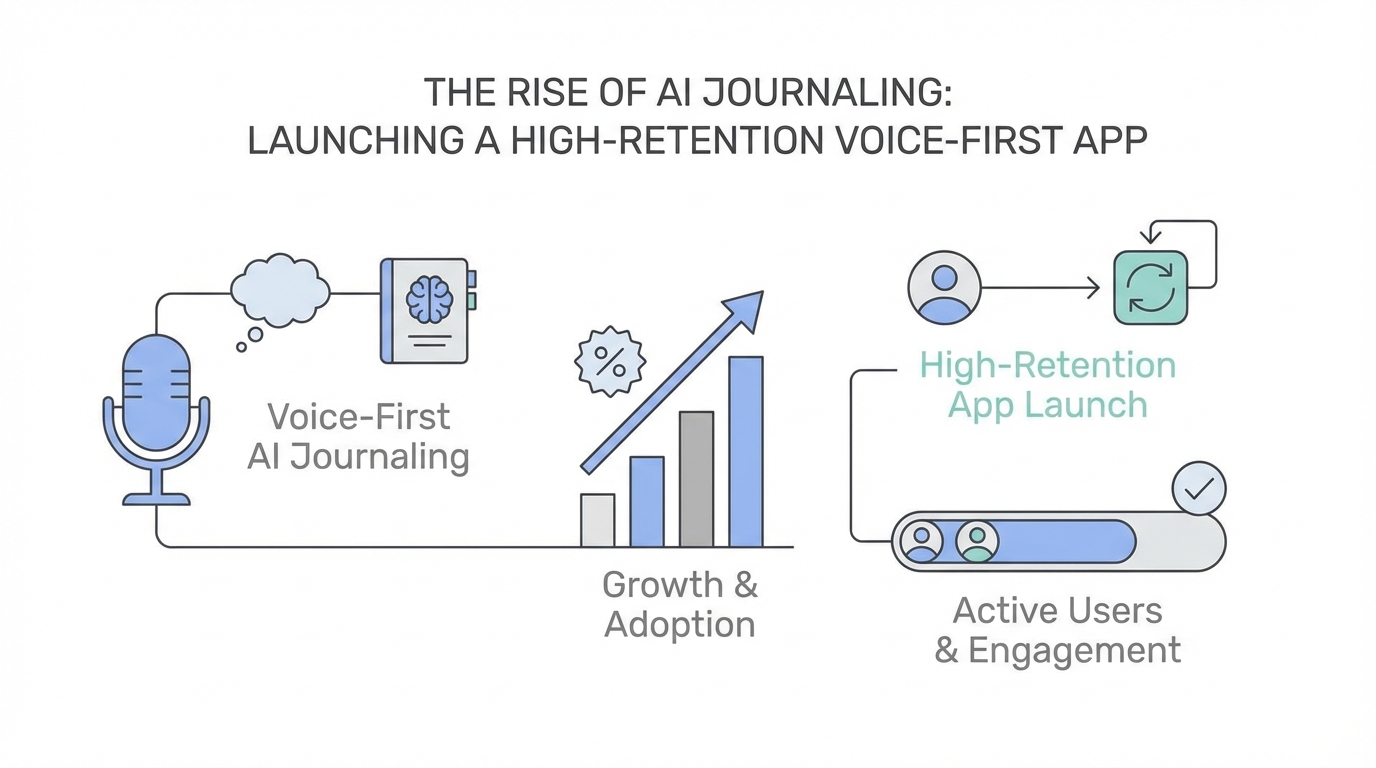
The digital health and wellness market is undergoing a seismic shift, and the numbers tell a compelling story. Currently, there are over 8,100 monthly searches for the term "AI journaling," a figure that is rapidly climbing as younger generations seek more intimate, lower-friction ways to document their lives. We are moving away from the era of tedious typing and moving toward an era of voice-to-text AI where our most private thoughts are captured in real-time and transformed into actionable insights. This isn't just about storage; it's about the promise of a "queryable past," where an AI journaling app doesn't just hold your memories—it helps you understand them.
The Market Shift: Why Younger Generations Choose Voice-to-Text
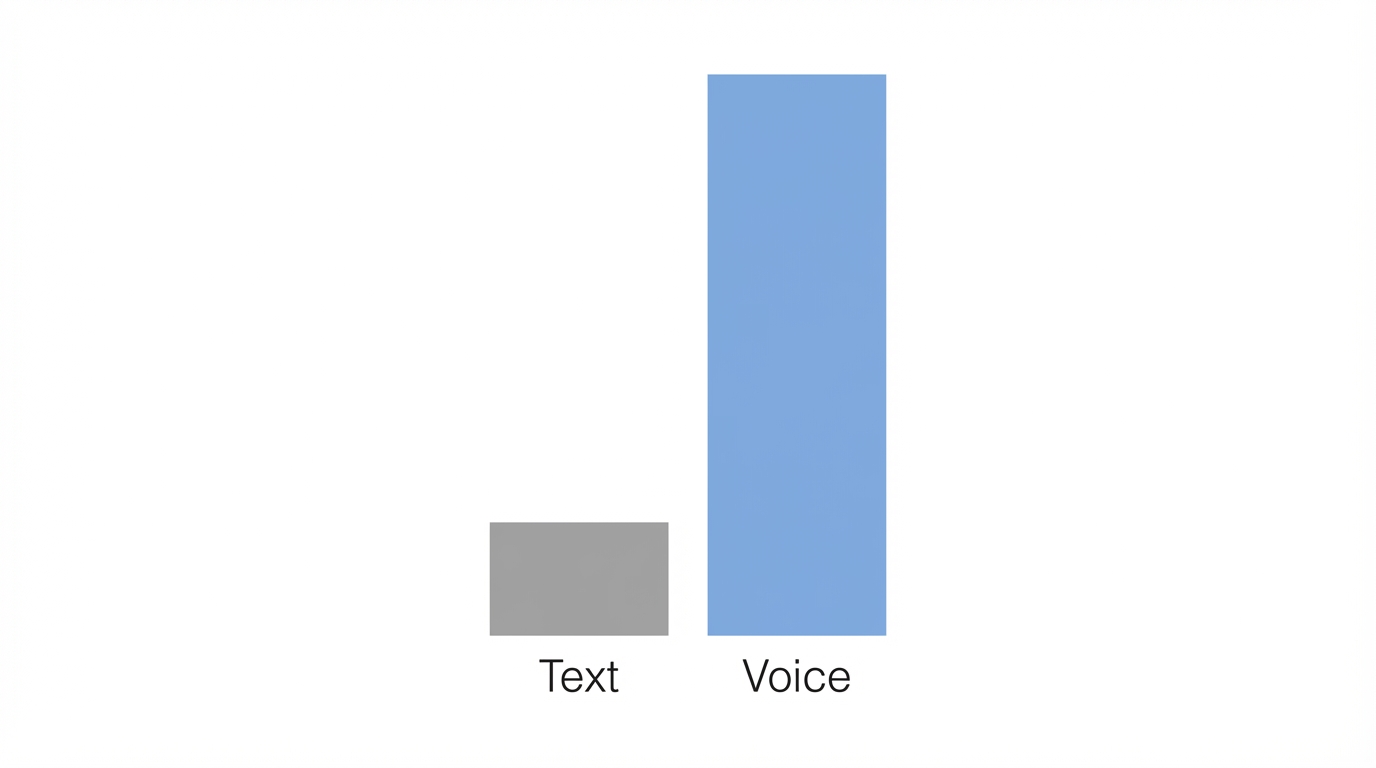
For decades, journaling was a high-friction activity. It required a physical notebook or a blank digital screen, both of which often led to the "blank page syndrome." However, the rise of short-form video and voice-memo culture on platforms like TikTok has socialized Gen Z and Millennials to prefer speaking over typing. This cultural shift is the primary driver behind the demand for self-help technology that feels less like a chore and more like a conversation.
By leveraging advanced voice to text AI, developers are removing the entry barrier to personal reflection. It is significantly easier to record a three-minute "brain dump" while walking to work than it is to sit down and compose a structured entry. As noted by industry practitioners, the opportunity here lies in taking unstructured data—the messy, rambling thoughts of a user—and using AI to provide structure. Tools like Swell AI have already proven that transcription is just the first step; the real value lies in what happens after the words are on the screen.
The Feature Set: From Transcription to a 'Queryable' Past
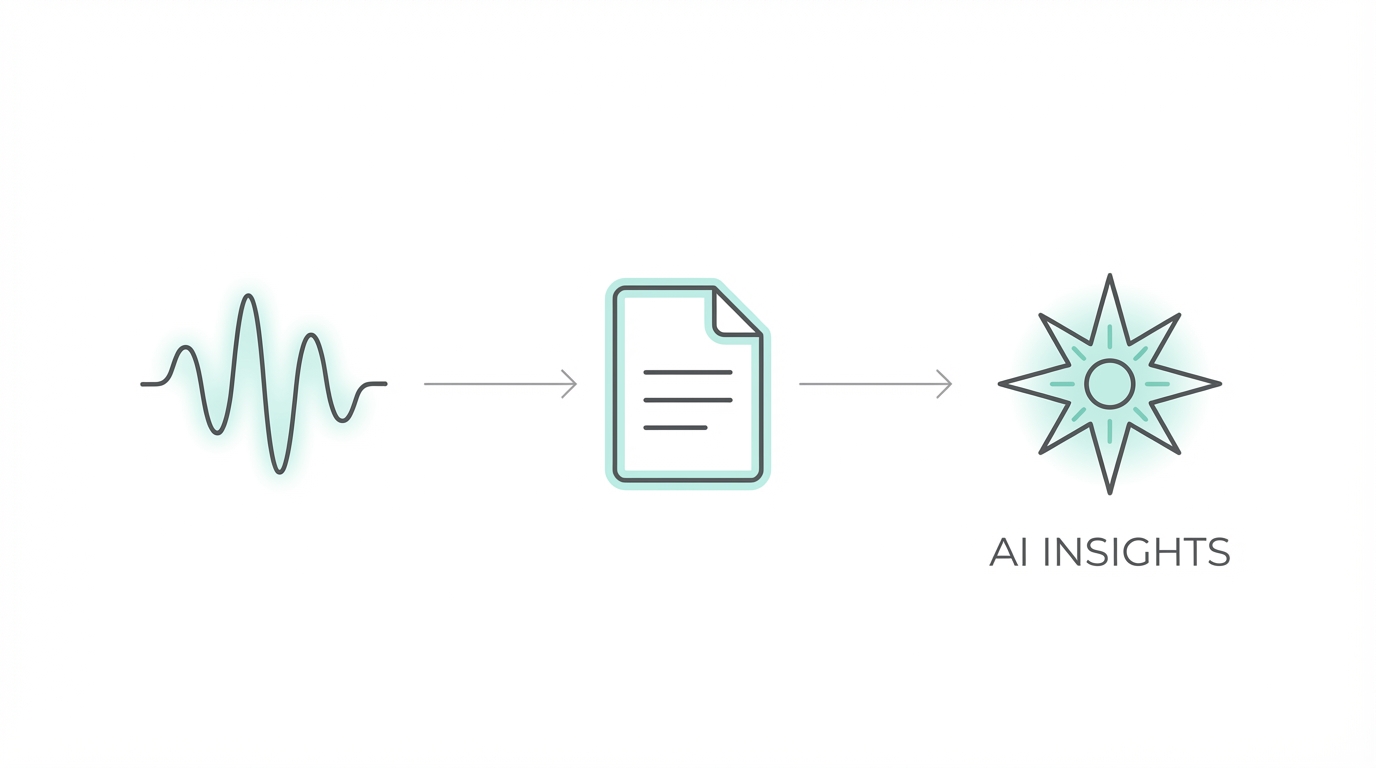
A successful AI journaling app in today’s market must go beyond basic recording. The modern user expects a suite of features that turn their raw reflections into a personalized knowledge base. To build a market-leading product, you need to execute a specific playbook of three core functionalities:
1. AI-Powered Summarization
Users don't want to re-read 500 words of their own rambling. They want the "Too Long; Didn't Read" (TL;DR) version. By integrating LLMs, the app can automatically generate daily summaries, highlighting key emotional themes, recurring names, and major events. This transforms a simple log into a high-value data asset.
2. The 'Query Your Past' Functionality
This is the "killer feature" that creates long-term retention. Imagine being able to ask your journal: "What was my mood like last August?" or "When did I first start feeling stressed about my current project?" This requires a RAG (Retrieval-Augmented Generation) architecture where the AI can search through your entire history to pull back specific memories and insights. This moves the app from a simple utility to a digital brain.
3. Visual Recaps and Trend Tracking
Borrowing from the success of "Spotify Wrapped," an AI journaling app should provide monthly or yearly recaps. Using tools like Boring Marketing strategies to identify what users find shareable, you can create visual infographics of their personal growth. In fact, the term "AI infographic generator" currently sees 9,000 searches per month, indicating a massive appetite for turning data into visual stories.
Retention Mechanics: Borrowing Loops from the Beauty Industry

The challenge with any habit tracking app is the drop-off rate. To solve this, developers must look at "lifestyle" industries like beauty and dental hygiene. The goal is to move the product from a "one-off" tool to a daily cadence. For example, the brand Bite revolutionized toothpaste by turning a mundane product into a visual, sustainable "bit" that fits into a daily ritual.
Your AI journaling app should function similarly. Retention is 90% of the game. By incorporating "streak" mechanics, push notifications that ask specific, AI-generated questions based on yesterday's entry, and gamified rewards, you can embed the app into the user's morning or evening routine. Daily usage is the leading indicator of long-term Lifetime Value (LTV).
Distribution Strategy: Tapping into 'BookTok' and Journaling Aesthetics

Marketing an AI journaling app requires finding the "pockets" of the internet where reflection is already a celebrated value. Two specific subcultures are prime for this: "BookTok" and "Journaling Aesthetics." These creators have built massive audiences around the idea of "living an intentional life."
To scale distribution, you should follow this UGC (User-Generated Content) Playbook:
- Step 1: Identify creators in the self-help, productivity, and "aesthetic" niches. Tools like Stormy AI can help source and manage these UGC creators at scale, allowing you to filter for specific audience quality and engagement rates.
- Step 2: Ship the app to these creators and ask for a "work-with-me" style video. Instead of a hard pitch, they should demonstrate how they use the voice to text AI feature during their morning coffee routine.
- Step 3: Use AI-personalized outreach to contact hundreds of these micro-influencers simultaneously. Automation is key here—you want to cast a wide net to find the 3-5 creators who will drive the most downloads.
- Step 4: Scale the winning creative using paid ads on Meta Ads Manager or TikTok Ads. As practitioner Cody Schneider notes, if you can get your cost-per-click (CPC) down by 10x through testing 100 variations of an ad, you effectively 10x your budget.
Monetization: Subscriptions and the LTV of Personal Data
The LTV (Lifetime Value) of a journaling app is uniquely high because of data gravity. Once a user has three years of their life story stored in your app, the "switching cost" becomes astronomical. They aren't just paying for a tool; they are paying for the storage and queryability of their own identity.
Standard monetization models include:
- Freemium: Free transcription for up to 5 minutes, with a "Pro" tier for unlimited recording and AI insights.
- Annual Subscriptions: Pricing the app at $30-$60 per year. This creates a predictable, recurring revenue stream.
- Data Enrichment: Offering premium "recap" books or physical printed journals based on the AI's summaries.
Conclusion: The Future of Self-Help Technology
The rise of AI journaling is a perfect example of digital journaling trends meeting advanced self-help technology. By focusing on voice-to-text AI, queryable history, and habit-tracking loops, founders can tap into a market that is hungry for meaning and efficiency. The technology to build this—from transcription APIs to AI-powered influencer discovery via Stormy AI—is more accessible than ever before. For those looking to launch a high-retention app, the path is clear: find the unstructured thoughts of a generation and give them back their own story, organized and insights-ready.