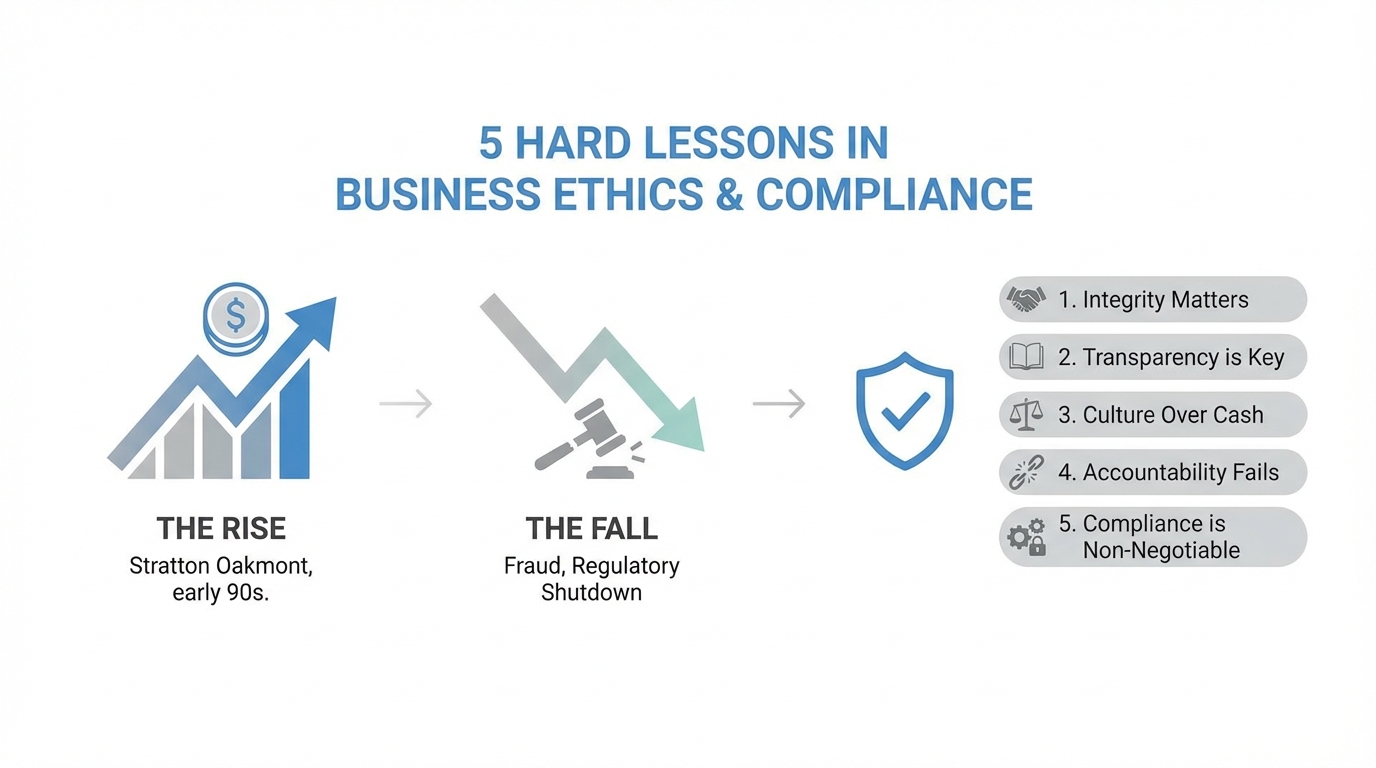
The story of Jordan Belfort and his firm, Stratton Oakmont, has become a modern legend, immortalized by Hollywood and fueled by a fascination with excess. However, behind the cinematic depictions of yachts and frantic trading floors lies a sobering reality of financial devastation. The Stratton Oakmont history serves as one of the most significant cautionary tales in American finance, revealing the catastrophic consequences that occur when corporate ambition outpaces ethical boundaries. Between 1989 and 1996, the firm orchestrated a massive securities fraud that siphoned hundreds of millions of dollars from unsuspecting investors.
The Anatomy of a Pump-and-Dump Scheme

At the core of the firm's operations was a classic pump and dump scheme. This fraudulent practice involved inflating the price of low-value penny stocks through false and misleading positive statements. According to the SEC's investor alerts, these schemes target vulnerable investors by creating artificial demand. Once the price was high enough, the insiders at Stratton Oakmont—who secretly owned large blocks of the stock—would sell their shares at a massive profit, causing the price to crash and leaving retail investors with worthless assets. The firm managed the initial public offerings (IPOs) of 35 companies, most famously including Steve Madden Ltd., where manipulation tactics were used to control the stock's supply and demand artificially.
The mechanics were sophisticated yet predatory. Stratton would identify small companies with little public information, buy up the majority of their shares at rock-bottom prices, and then deploy their sales force to create a buying frenzy. By controlling both the buy and sell sides of the transaction, Belfort and his partners ensured that they were the only ones guaranteed to profit. This securities fraud investigation later revealed that the firm manipulated the stocks of at least 34 companies, extracting wealth from retirees and small-scale investors who believed they were participating in the next great American growth story.
Inside the Boiler Room: The Culture of $200 Million in Losses
Stratton Oakmont was the quintessential boiler room. At its peak, the firm employed over 1,000 stockbrokers on Long Island, all trained in high-pressure sales tactics. These brokers were often young, hungry, and willing to follow Belfort's aggressive scripts in exchange for massive commissions. The firm was estimated to generate between $50 million and $100 million in annual revenue at its height, much of it derived from the spread on manipulated stocks. This success, however, was built on an estimated $200 million in investor losses.
The internal culture was designed to keep brokers focused on the "hard close." Training sessions focused on the "Straight Line Persuasion" system, which Belfort now markets as a legitimate sales tool. In the context of Stratton, however, these techniques were used to bypass the logic of investors and exploit their emotions. Every objection was viewed as a "smokescreen," and brokers were taught to ignore a prospect's financial reality in favor of closing the deal. As noted in several sales methodology reviews, while the tonality and psychological triggers are effective, their application at Stratton was a masterclass in predatory behavior.
The FBI Investigation: Piercing the Offshore Veil


The securities fraud investigation that eventually brought down the firm was a marathon, not a sprint. Led by Special Agent Gregory Coleman, the FBI spent six years (1992–1998) meticulously building a case against Belfort and his associates. This was not a simple task; the firm used offshore bank accounts in Switzerland and "structured" financial transactions—keeping deposits under $10,000—to evade federal scrutiny. Coleman’s persistence was legendary, as he tracked the flow of money through a maze of international shell companies and illicit couriers.
The turning point came when the FBI successfully pierced the secrecy of Swiss banking, a feat that required international cooperation and complex legal maneuvering. Belfort was eventually indicted in 1999 for money laundering and securities fraud. Faced with the evidence gathered by Coleman, Belfort chose to cooperate with the government. He wore a wire and provided testimony that helped convict 29 of his partners and associates, a betrayal that ultimately led to his shortened 22-month sentence at Taft Correctional Institution. This Wolf of Wall Street true story is often remembered for the party, but the investigation highlights the relentless nature of federal law enforcement when systemic fraud is involved.
Restitution and the Financial Aftermath
While the film ends with Belfort starting a new career as a speaker, the legal reality is far more complicated. Belfort was ordered to pay $110.4 million in restitution to the victims of his schemes. As of the mid-2020s, it is estimated that roughly $97 million to $100 million remains unpaid. This has led to ongoing legal disputes between Belfort and the U.S. government regarding his speaking fees, book royalties, and other income streams. The government argues that he should be doing more to compensate those he defrauded, while Belfort maintains that his current earnings should not be entirely garnished.
This lack of full restitution is a recurring theme in major business ethics case studies. It illustrates that once money is funneled through the "boiler room" and spent on lavish lifestyles, it is rarely recovered in full. For the victims, the legal victory was often a hollow one, as they received only cents on the dollar for their lost life savings. Today, the FTC continues to report massive spikes in investment fraud, with losses reaching $12.5 billion in 2024, a 24% increase from the previous year. This suggests that while the names change, the mechanics of the scam remain remarkably consistent.
5 Hard Lessons in Business Ethics and Compliance


The collapse of Stratton Oakmont provides several critical takeaways for modern entrepreneurs and sales leaders. Understanding these lessons is essential for building a company that is not only profitable but sustainable and ethical.
Lesson 1: Integrity is a Non-Negotiable Asset
Belfort famously stated that his biggest mistake was "losing his ethics." In business, ethics are often viewed as a constraint, but they are actually a safeguard. A firm without a moral compass will eventually consume itself. Sustainable success requires a foundation of trust with customers, employees, and regulators. When that trust is traded for short-term gain, the clock begins ticking on the firm's eventual collapse.
Lesson 2: Compliance is a Competitive Advantage
Stratton Oakmont viewed regulators as obstacles to be bypassed. Modern businesses should view compliance as a protective barrier. Rigorous adherence to consumer protection standards prevents the kind of catastrophic legal fallout that destroyed Belfort’s empire. In the digital age, where social media "ramp-and-dump" schemes are on the rise, maintaining transparent operations is the only way to ensure long-term viability.
Lesson 3: The Danger of the "Hard Close" Culture
When a sales culture prioritizes the transaction over the customer's needs, it creates an environment ripe for fraud. Modern B2B sales have shifted toward a consultative approach where trust and value are paramount. Using tools like Salesforce or Pipedrive helps teams manage relationships and focus on long-term client health rather than high-pressure tactics. If your sales system feels like a boiler room, you are likely creating a liability for your brand.
Lesson 4: Vet Your Partners and Influencers
One of the ways Stratton grew so large was by partnering with people who were willing to look the other way. In today's economy, brands often work with UGC creators and influencers to drive growth. However, the rise of modern "ramp-and-dump" stock fraud on social media, which has seen a 300% increase in complaints according to the FBI, makes vetting essential. Platforms like Stormy AI streamline creator sourcing and outreach while providing automated vetting to ensure you are working with ethical partners who won't expose the company to fraud or reputational risk.
Lesson 5: Transparency is the Best Policy
The lack of transparency allowed Stratton to hide its ownership of the stocks it was pumping. In every business dealing—whether it's an IPO or a simple product sale—transparency builds credibility. Using platforms like Gong.io to record and analyze sales calls can ensure that your team is representing your product honestly and staying within ethical boundaries. Transparency protects you from the "boiler room" stigma and fosters a healthier market ecosystem.
Conclusion: The Legacy of Stratton Oakmont
The Stratton Oakmont history is more than just a tale of wild parties and fast cars; it is a blueprint for what happens when greed replaces strategy. The $200 million in losses and the $110 million debt Belfort still carries are reminders that there is no such thing as easy money. For modern professionals, the key takeaway is that the "Straight Line" to success is not found through manipulation, but through the consistent application of value and ethics. As investment scams continue to evolve through social media and AI, the lessons of the past remain our best defense. Whether you are building a startup or managing a sales team, remember that your reputation is your most valuable currency—don't trade it for a temporary pump.