In the high-stakes world of entrepreneurship business building, the most dangerous bottleneck isn't a lack of capital or a missing feature—it’s indecision. Most founders treat every choice like a permanent marriage, agonizing over Go-To-Market (GTM) strategies as if they are etched in stone. However, the secret to scaling a startup at breakneck speed lies in a simple mental shift: recognizing that nearly every decision is reversible. By adopting a "tiptoeing" mindset, you can replace months of stagnant planning with a battery of high-velocity growth hacking experiments that provide real-world data.
The Psychology of Choice and the "Locked-In" Trap
Why do we struggle so much with making decisions? It often stems from the fear of being "locked in." In his landmark research on human happiness, psychologist Dan Gilbert conducted an experiment that every founder needs to internalize. He allowed two groups of students to choose a piece of art. Group one was told they could swap their art later if they changed their minds. Group two was told their choice was final.
Counterintuitively, the group that was locked into their decision ended up significantly happier. Why? Because the human brain is an expert at manufacturing satisfaction once a choice is finalized. When a decision is left open, we fall into a cycle of "what-ifs" that erodes our confidence. In a lean startup methodology framework, this means that making a firm decision—even a potentially wrong one—is often more productive than staying in "research mode" forever.
"Inaction breeds doubt and fear. Get out and get busy." — Dale CarnegieIdentifying Type 1 vs. Type 2 Decisions in Startup Scaling
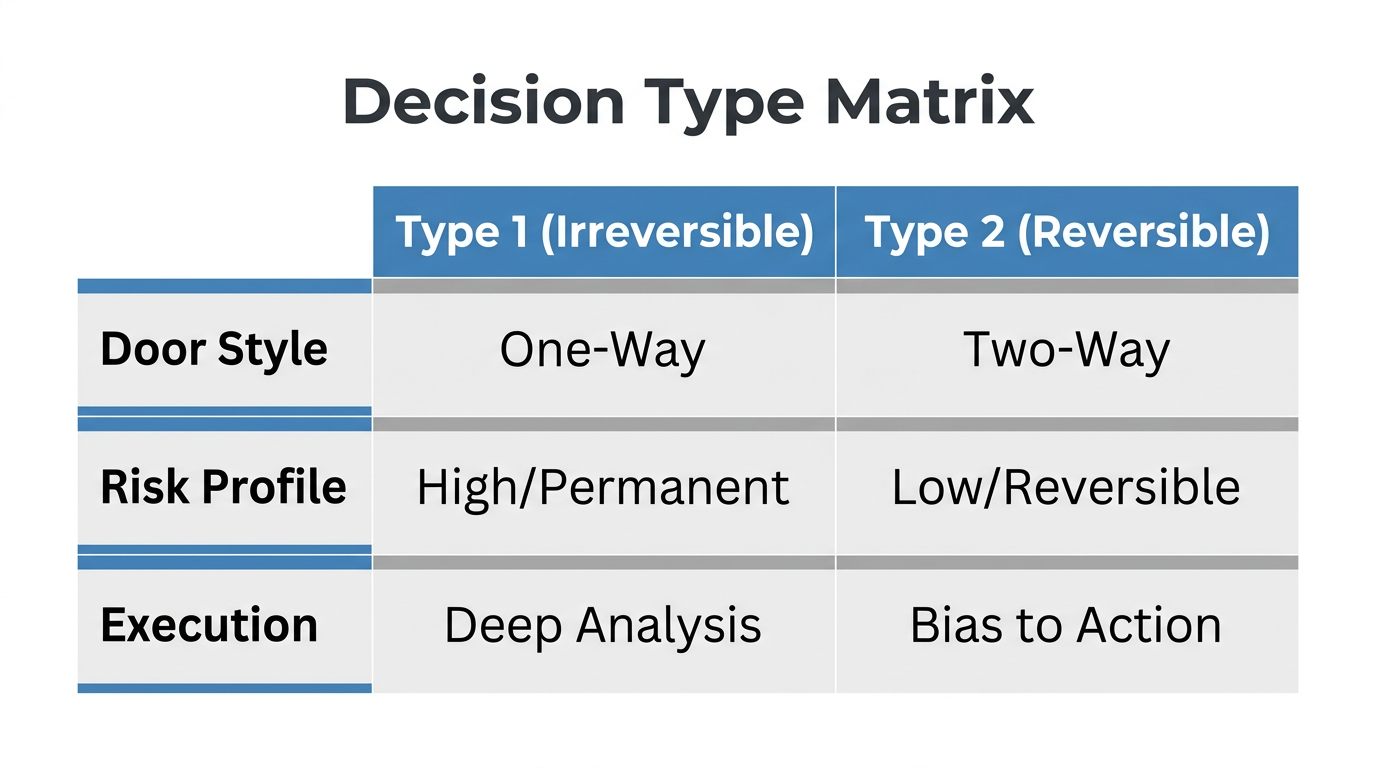
To move fast, you must categorize your founder decision making into two buckets: Irreversible (Type 1) and Reversible (Type 2). A Type 1 decision is a "one-way door"—like selling your company or choosing a co-founder. These require deep deliberation. However, 90% of business decisions are Type 2—two-way doors that you can walk back through if the results don't meet expectations.
| Decision Type | Characteristics | Execution Speed | Example |
|---|---|---|---|
| Type 1 (Irreversible) | High cost to undo, long-term impact. | Slow & Deliberate | Selling the company, legal structures. |
| Type 2 (Reversible) | Low cost to undo, easy to pivot. | Rapid & Experimental | Pricing changes, GTM testing, hiring a contractor. |
When you realize that most GTM strategies are reversible, you stop planning and start acting now. If a marketing channel fails, you turn it off. If a feature is ignored, you sunset it. This mindset is the cornerstone of growth hacking experiments. Instead of asking "Is this the perfect move?", ask "How quickly can we revert if this fails?"
The "Act Now" Philosophy: Why Planning is a Productivity Trap
There is a comforting delusion in a 100-page business plan. It feels like progress, but it’s often just sophisticated procrastination. In the six months a founder spends crafting a "perfect" strategy, an aggressive competitor could have run 20 failed experiments. The difference? The competitor now knows 20 things that don't work, while the planner knows zero.
Successful entrepreneurship business building requires an obsession with tracking. Take a page from John Rockefeller, who at 16 years old started "Ledger A" to track every cent he earned and spent. He realized that you cannot improve what you do not measure. Founders should track their progress with the same rigor. Whether it's your daily caloric intake or your weekly Meta Ads spend, data is the only antidote to the uncertainty of scaling a startup.
"Six months of planning is almost always inferior to six months of failed experiments that yield real market data."Tiptoeing Into GTM Testing: Try Before You Buy
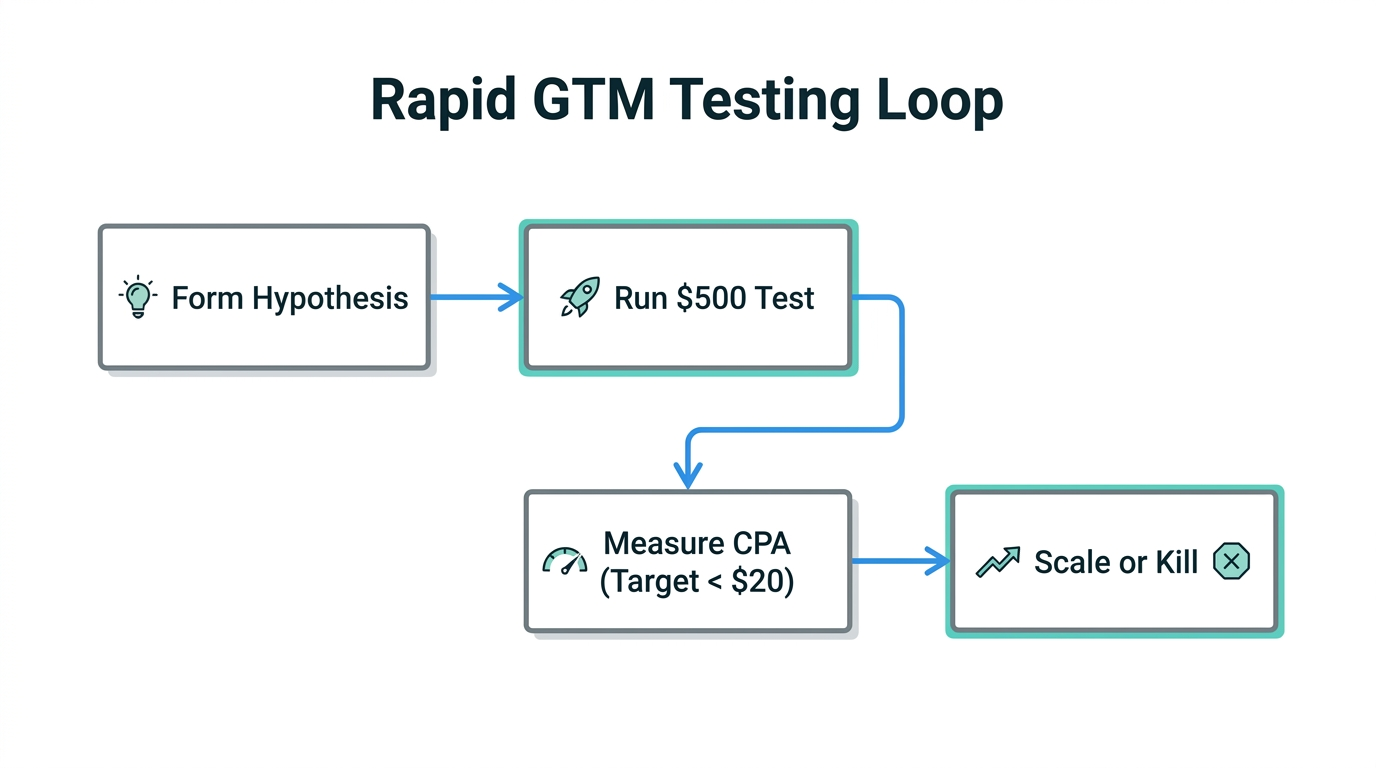
How do you test a major life or business change without blowing up your current operations? You "tiptoe." This is the art of running a micro-pilot. If you're considering a new city for your headquarters, don't sign a five-year lease. Rent an Airbnb for a month. If you're testing a new product niche, don't build a full suite; build a landing page and run $500 of Google Ads to see the click-through rate.
This applies heavily to influencer and UGC marketing. Brands often hesitate to work with creators because they fear the vetting process or long-term commitments. However, platforms like Stormy AI streamline creator sourcing and outreach at scale, allowing you to run small-batch outreach campaigns to see what resonates before committing a massive budget. By using Stormy AI to discover and vet creators, you turn influencer marketing into a reversible Type 2 decision rather than a high-risk gamble.
The Power of Commitment and Mastery
While the ability to pivot is vital, the most successful founders know when to stop "shopping" and start committing. Palmer Luckey, the billionaire founder of Oculus, famously noted that many of his peers fail because they keep too many options open. At a certain point, you must pick a path and double down. Mastery and compounding only happen when you stick with a project long enough to move past the initial "dip."
Consider the story of Eight Sleep. Their founder, Matteo Franceschetti, has spoken openly about how the company nearly died five different times. If they had switched to a new "shiny object" after the second or third failure, they wouldn't be the multi-billion dollar leader in sleep tech they are today. The lean startup methodology isn't about quitting when things get hard; it's about using experiments to find the *right* hard thing to work on.
Setting Time-Bound Decision Windows
To prevent analysis paralysis during founder decision making, you must set strict deadlines. Give yourself a window—say, 30 days—to research a new market or a new hire. At the end of that window, a decision must be made. Even a 70% certain decision acted upon today is better than a 90% certain decision made three months from now.
- Quarterly: Review fitness and high-level business pivots.
- Monthly: Audit expenses and GTM testing results.
- Weekly: Track core growth metrics (e.g., the 3% growth rule).
- Daily: Execute on the "Act Now" tasks that move the needle.
Financial Reversibility: The Index Fund Argument
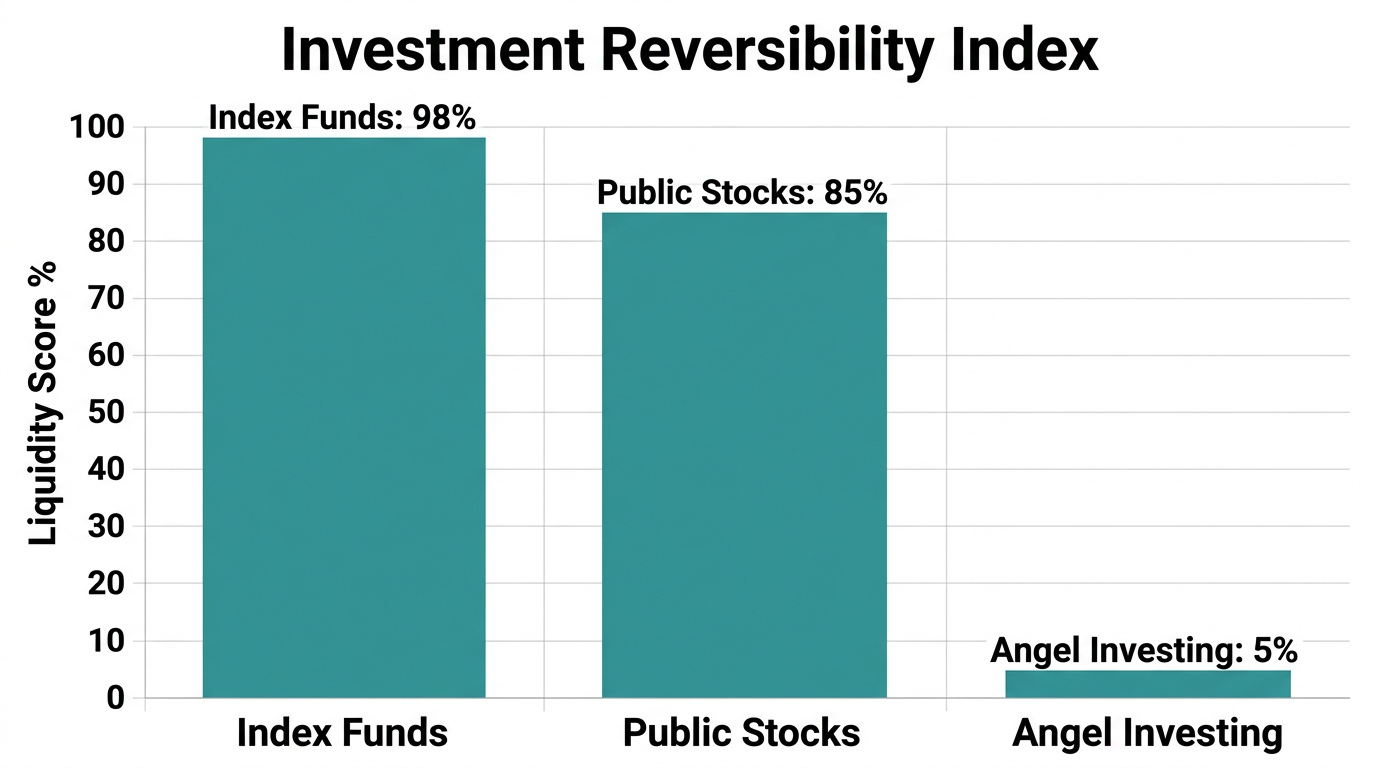
Finally, apply this logic to your personal wealth. While founders love action, the data suggests that when it comes to investing, patience beats activity. Over the last 10 years, 97% of active fund managers—the experts with Bloomberg Terminals and Harvard MBAs—failed to beat a simple index fund. If you want to take risks, take them in your business where you have control. For your savings, use a Vanguard S&P 500 index fund and let time do the work.
"It’s not about timing the market; it’s about time in the market. Missing just the 10 best days in a decade can cut your returns in half."Conclusion: Building a Bias Toward Action
The hallmark of great entrepreneurship business building is a relentless bias toward action. By identifying reversible decisions, you lower the stakes of failure and increase the velocity of your growth hacking experiments. Remember the longest-running study on happiness from The Atlantic: the quality of your life is defined by the quality of your relationships and your ability to act on what matters.
Stop planning for the next six months. Set a time-bound goal, use tools like Stormy AI to rapidly source partners or creators, and start your first experiment today. The market will tell you everything you need to know—but only if you have the courage to ask it.