In the hyper-competitive landscape of 2026, the difference between a market leader and a struggling startup isn't just the size of the marketing budget; it is the speed of intelligence. The era of manual spreadsheets and monthly competitor audits is officially dead. Replacing it is a new breed of "agentic" technology that doesn't just assist with research—it executes it autonomously. At the forefront of this revolution is OpenClaw, an open-source, local-first AI agent platform that has fundamentally changed how growth marketers approach automated competitive intelligence.
The Rise of Agentic Intelligence: Why OpenClaw Matters
Originally known by its development codenames Clawdbot and Moltbot, OpenClaw underwent a massive pivot in early 2026 to embrace its open-source roots. Since then, its growth has been nothing short of meteoric. In a mere three-month window between January and March 2026, the project exploded from 9,000 to over 200,000 GitHub stars. This rapid adoption is driven by a fundamental shift in marketing operations: the transition from "AI as a writer" to "AI as an agent."
Today, the platform boasts an ecosystem of over 13,700 community-built skills on its public registry, ClawHub. Industry titans have taken notice; Andrej Karpathy famously described the OpenClaw ecosystem as the "most incredible sci-fi takeoff-adjacent thing" currently in the AI space. For growth marketers, this means the ability to run a 24/7 intelligence operation that monitors every move a competitor makes in real-time.
"OpenClaw is a true personal AI agent that moves beyond chat to execution, allowing marketers to ship campaigns rather than just write them." — Peter Steinberger, OpenClaw CreatorStrategy 1: Reverse-Engineering Competitor Ad Strategies
The most immediate point of leverage for any growth marketer is competitor ad analysis. Traditionally, this involved manually scrolling through the Meta Ads Library, taking screenshots, and trying to guess which creatives were performing well. With OpenClaw, this entire process is automated through specialized skills.
Step 1: Deploying the Meta Ads Library Skill
By using the Meta Ads Library skill available on ClawHub, you can instruct your agent to scrape every active ad a competitor is running. Unlike manual browsing, the agent can cross-reference ad start dates with estimated reach to identify which creatives are scaling versus those that are being tested. This allows you to identify "winning" hooks before you spend a single dollar on your own creative production.
Step 2: Creative Fatigue & Performance Monitoring
Beyond simple extraction, advanced marketers deploy "Creative Analyst" skills. These agents track CTR (Click-Through Rate) trends over 7, 14, and 30-day windows. By monitoring how long a competitor's specific ad remains active, the agent can flag when a certain visual style or messaging angle is likely reaching "fatigue," signaling an opportunity for you to swoop in with a fresh alternative.
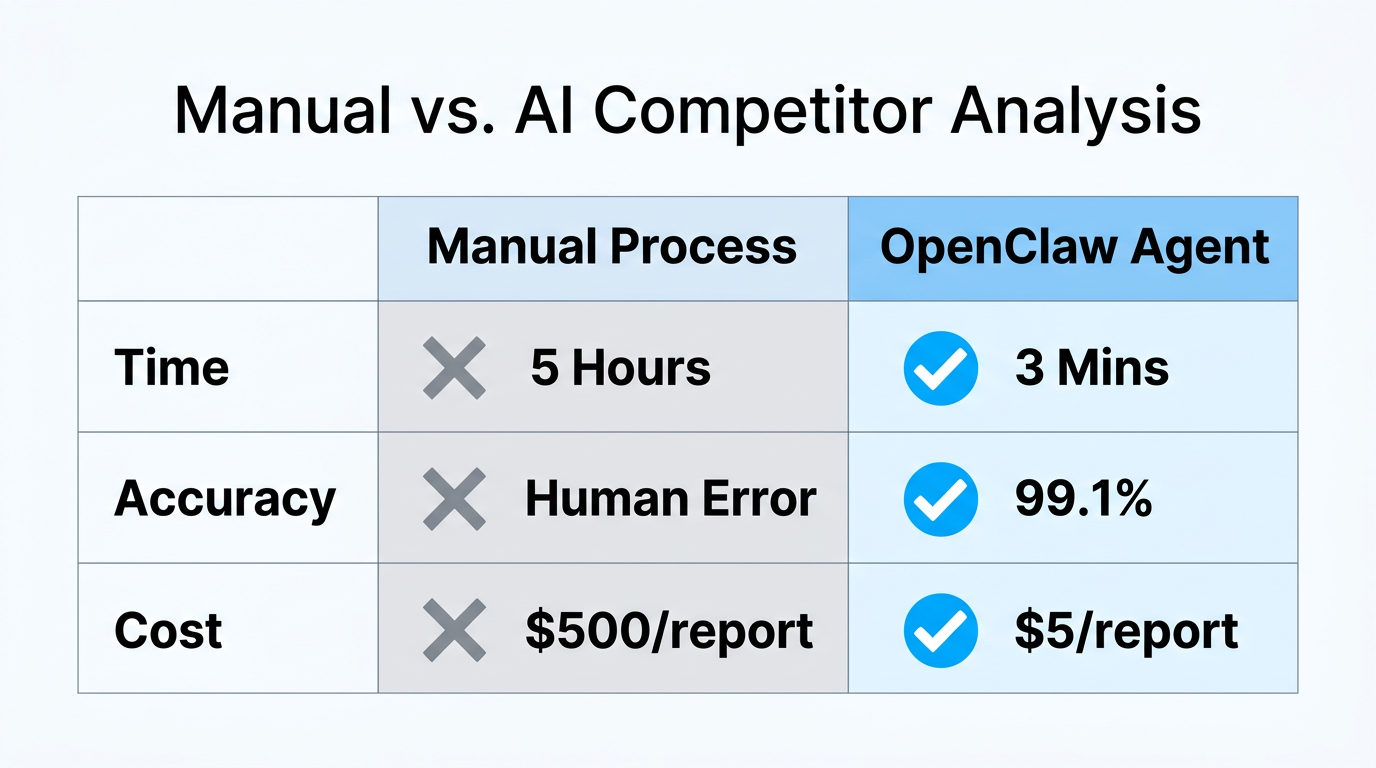
| Research Method | Traditional Manual Audit | OpenClaw Agentic Audit |
|---|---|---|
| Time Requirement | 10-15 Hours / Week | Automated 24/7 |
| Data Depth | Surface-level screenshots | Full funnel & metadata extraction |
| Reactivity | Monthly or Weekly | Real-time triggers |
| Cost | High (Manual Labor) | Low ($5-20 VPS + API) |
Strategy 2: Automating Landing Page Funnel Breakdowns
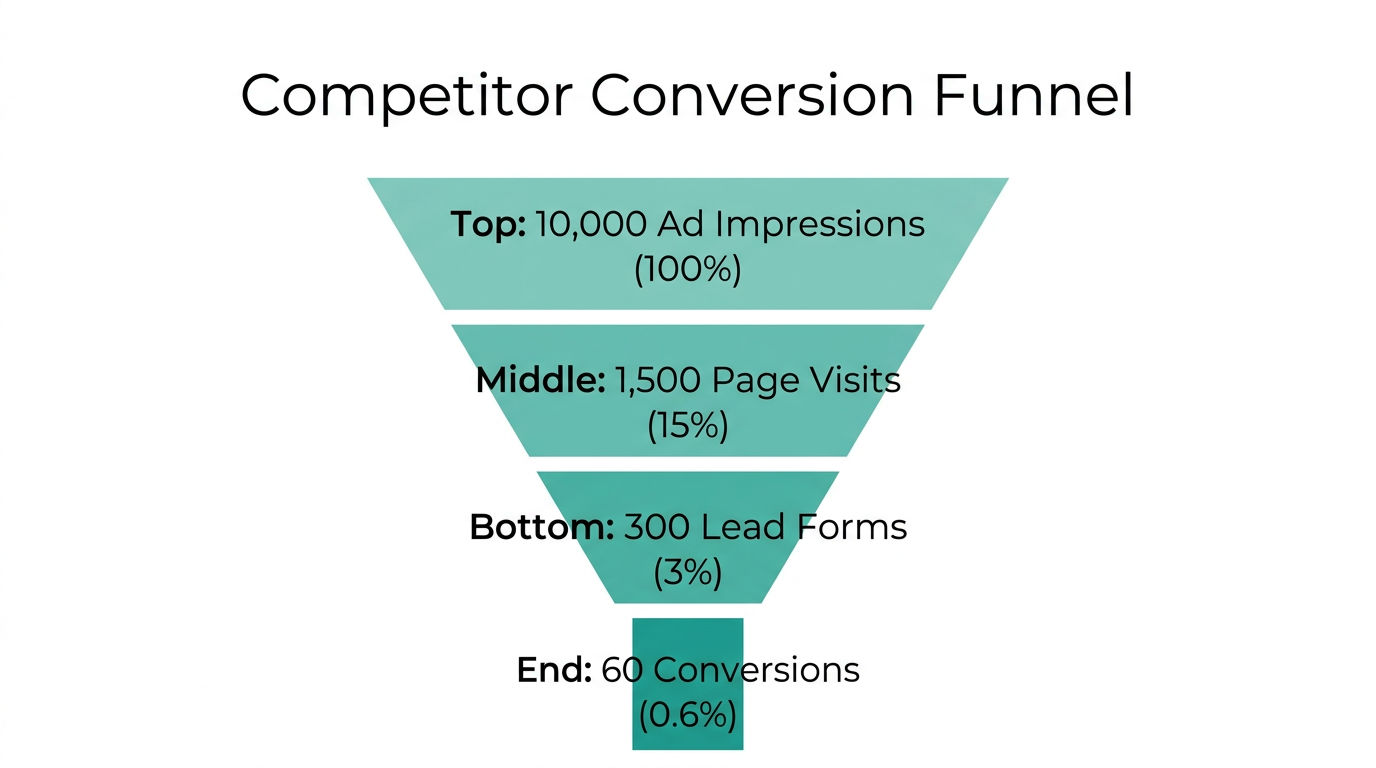
An ad is only as good as the page it leads to. To truly understand a competitor's success, you must analyze their post-click experience. OpenClaw agents can be configured to visit competitor landing pages and perform a technical and psychological breakdown of the funnel.
Using a web scraping API like Decodo, the agent can bypass bot detection to extract copy, CTA placement, and even underlying tech stacks. You can prompt the agent to: "Analyze this URL and identify the primary emotional trigger, the friction points in the checkout flow, and the specific social proof elements used."
This level of market research automation allows you to identify high-converting elements that you can adapt for your own campaigns. For brands looking to scale their creator-led content, tools like Stormy AI can help source and manage UGC creators at scale to produce the high-volume content needed to fill these newly optimized funnels. While OpenClaw handles the technical breakdown of what is working, Stormy AI ensures you have the human faces and authentic voices to execute the strategy.
"A developer turned an old gaming PC into an OpenClaw agent named 'Larry' that generated 500,000 views and $714 MRR in just five days by autonomously posting story-driven hooks."Strategy 3: Setting Up Real-Time Pricing & Reactivity Monitors
In the SaaS world, pricing is a major competitive lever. If a competitor drops their price or introduces a new tier, you need to know instantly. OpenClaw's "Pacing & Price Monitor" skills can scrape competitor pricing pages daily (or even hourly).
When a change is detected, the agent doesn't just send a notification; it can be programmed to trigger a reactive campaign. For example, if a competitor removes a key feature from their entry-level tier, OpenClaw can automatically draft an email sequence for your sales team highlighting that your product still offers that feature at the same price point. This turns passive intelligence into active AI growth hacking.
Strategy 4: Summarizing Competitor Weaknesses from Public Data
Public reviews on platforms like G2, Capterra, or even Reddit threads are goldmines for competitive intelligence. However, reading thousands of reviews is impossible for a human. OpenClaw uses natural language processing to summarize these data sources into actionable "Battlecards."
By feeding your agent a list of URLs, you can generate a report that answers: "What are the three most common complaints about [Competitor X]'s mobile app in the last 90 days?" These insights then become the foundation for your own ad copy, directly addressing the pain points your competitors are failing to solve. Using Ad-specific Playbooks, you can then bridge the gap between this raw data and high-performing creative briefs.
Workflow: Turning Insights into Drafted Ad Copy in Minutes
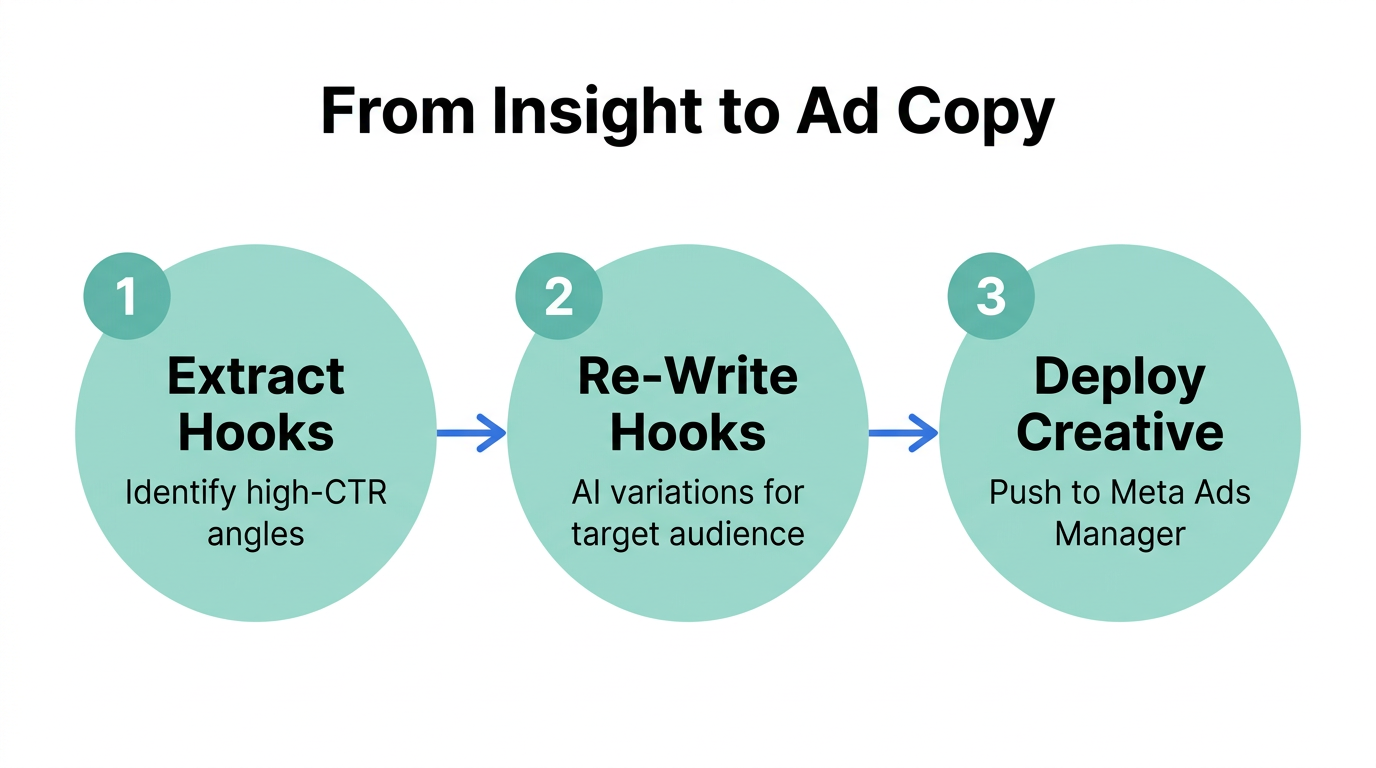
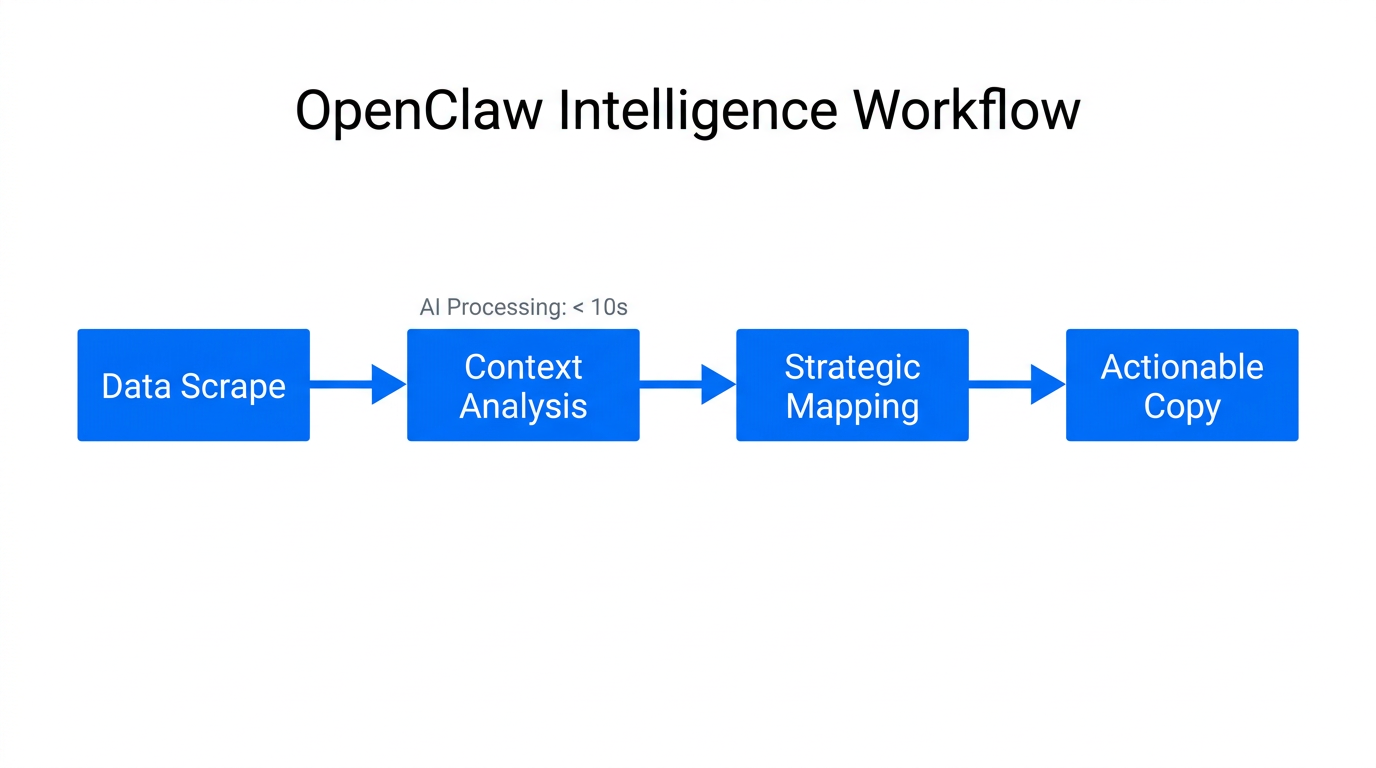
The ultimate goal of openclaw competitor research is to shorten the "insight-to-execution" loop. Here is the standard workflow for a modern media buyer using the **Ad Context Protocol (AdCP)**:
- Discovery: Use the Meta Ads skill to find a high-performing competitor hook.
- Analysis: Use a summarization skill to extract the core value proposition and psychological trigger.
- Drafting: Command the agent: "Using the AdCP framework, write 5 variations of a Facebook ad headline and primary text that targets the same audience but emphasizes our superior customer support."
- Deployment: Use the AdCP skill to push these drafts into a Google Doc or directly into your Meta Ads Manager for review.
For those managing high-budget campaigns, Ryze AI offers a managed version of OpenClaw specifically optimized for paid media, providing a safer, more structured environment for these automated workflows.
The Hidden Risks: Security, Privacy, and Token Burn
While the power of OpenClaw is undeniable, it is not without significant risks. Because OpenClaw is a local-first agent, it requires broad system permissions to function. Microsoft researchers have warned that the platform is "not appropriate for standard enterprise workstations" due to these permissions. Furthermore, the Dutch Data Protection Authority has issued warnings against deploying such agents on systems handling sensitive, regulated data.
Security concerns are real. The "ClawHavoc" malware campaign in early 2026 saw over 1,100 malicious skills uploaded to ClawHub, designed specifically to steal sensitive tokens and passwords. Always vet the skills you download and consider running your agents on a dedicated DigitalOcean VPS or a separate machine like a Mac Mini (as documented on rentamac.io) rather than your primary work laptop.
Conclusion: Building Your Autonomous Marketing Machine
OpenClaw represents a paradigm shift in automated competitive intelligence. By moving away from static tools and toward dynamic, autonomous agents, growth marketers can maintain a level of situational awareness that was previously impossible. Whether you are using it for competitor ad analysis or real-time pricing monitors, the key is to start small, prioritize security, and always keep a "human in the loop" for final approvals.
As you build out your tech stack, remember that different tools solve different parts of the growth equation. While OpenClaw excels at programmatic research and data extraction, platforms like Stormy AI are essential for the human-centric side of the business—finding the right creators, managing outreach, and scaling authentic brand partnerships. Together, these tools form a modern growth engine that is fast, intelligent, and incredibly hard to beat.