The Resilient Founder: Managing High-Growth Anxiety and Risk in the 2026 Business Climate
Master entrepreneurial risk management in 2026. Learn how the 'Cowboy' mentality and 'Lucky General' theory help CEOs manage high-growth anxiety and business resilience.
In the hyper-accelerated market of 2026, the traditional playbook for leadership has been shredded. Founders are no longer just building companies; they are navigating a landscape defined by extreme volatility, AI-driven disruption, and the constant threat of 'losing a comma' in their valuation. To survive, the modern CEO must evolve from a mere manager into a resilient 'Cowboy'—a leader who embraces max risk while maintaining the psychological equilibrium to stay in the game. This approach, pioneered by veterans like Mike Novogratz, suggests that success isn't about avoiding the 'fight or flight' response, but about mastering the anxiety that comes with high-stakes scaling.
The Psychology of Scaling: Managing the 'Fight or Flight' Response
Discover how to manage fear and learn to trust your instincts during high-stakes scaling.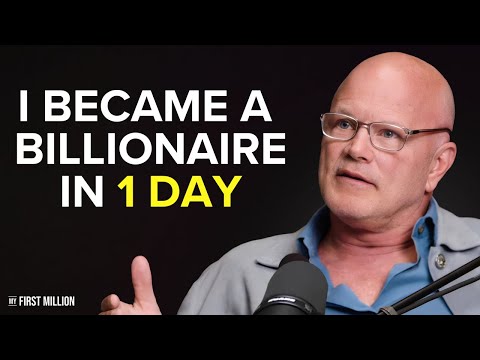
Scaling a business in 2026 triggers a primal neurological response. When you are responsible for 600+ employees and billions in assets, your brain treats a market dip as a physical threat. Novogratz famously noted that anxiety is often what happens when your 'brain is a lot bigger than your balls.' In other words, over-analysis leads to paralysis, while the 'lion' of the market creates a constant state of fear. For many founders, this manifests as a fear of giving back gains or a hesitation to pull the trigger on a massive opportunity. Research from Harvard Health shows that chronic activation of this survival mechanism can severely impair executive decision-making.
"Anxiety management is the silent engine of every great CEO. It’s the ability to see the lion and choose to stand your ground rather than running."
Managing this pressure requires a shift in focus from the outcome to the process. High-performing leaders use tools like Notion to document their internal algorithms, ensuring that decisions are based on data rather than a panicked nervous system. By externalizing the decision-making process, you can objectively view your 'guesses' and ensure they align with long-term goals, even when the market is screaming. Entrepreneurial risk management isn't about being fearless; it's about being functional while you're afraid.
The 'Lucky General' Theory: Why Intuition Trumps IQ in 2026
Explore the fascinating concept of the lucky general and the power of trusting intuition.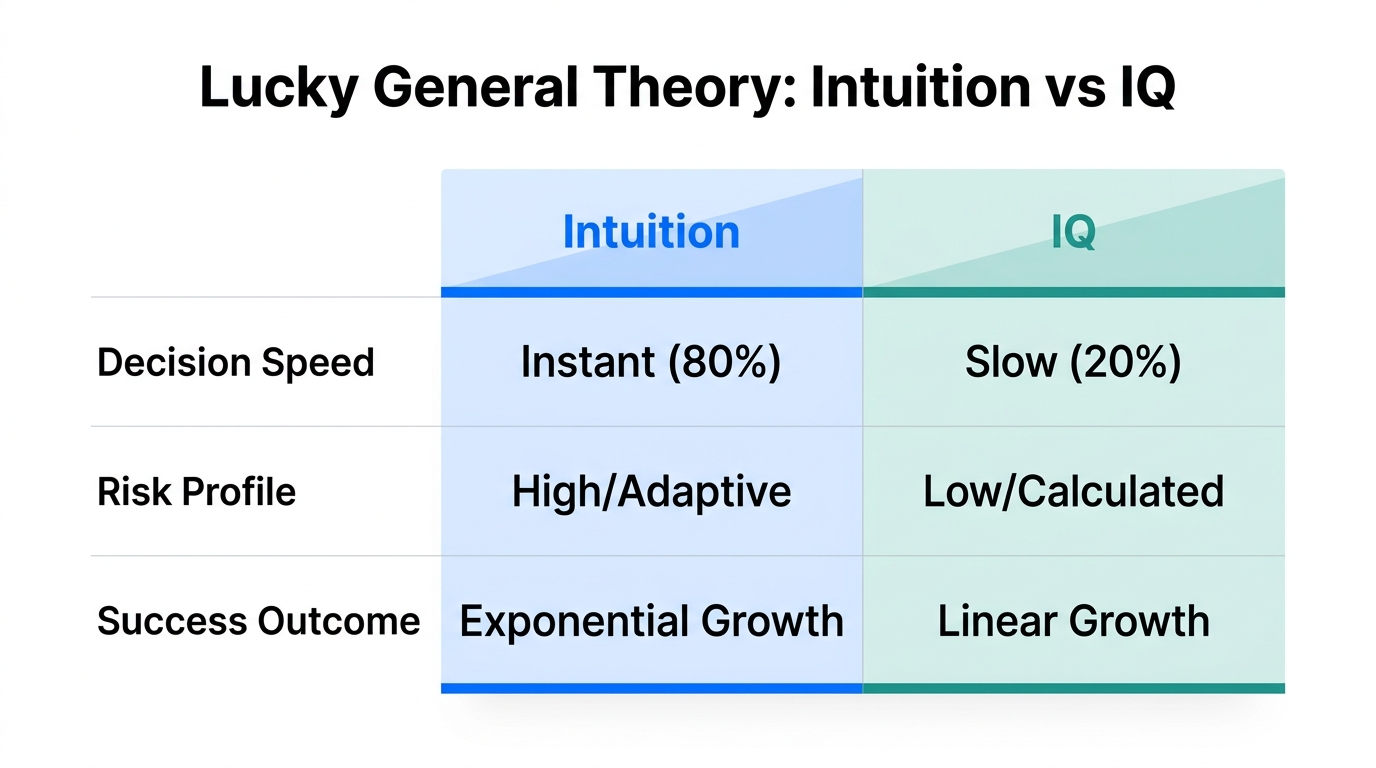
There is a persistent myth that the smartest person in the room always wins. However, in a business climate where data is a commodity, pattern recognition and intuition have become the true differentiators. This is known as the 'Lucky General' theory, a concept referenced by Napoleon and echoed by Novogratz. It suggests that a leader’s ability to 'sense' the future is more valuable than a high IQ or a perfect spreadsheet.
Consider the rise of crypto and AI. The founders who succeeded weren't necessarily the best coders; they were the best storytellers. They saw the 'ballet of the charts' and understood the human narrative behind the technology. Today, we see this in how brands approach marketing. Rather than relying on rigid, old-school metrics, the most successful enterprises use platforms like Stormy AI to identify creator patterns and audience sentiment that a standard algorithm might miss. This 'gut feeling' is actually a highly developed form of pattern recognition—the ability to synthesize thousands of data points into a single, actionable conviction.
| Skillset | Traditional Leader (2020) | Resilient Founder (2026) |
|---|---|---|
| Decision Basis | Historical Data & Logic | Data + Gut Intuition |
| Core Competency | Efficiency & Optimization | Storytelling & Narrative |
| Toolbox | Legacy CRM & Spreadsheets | AI Agents & Network IQ |
| Risk Profile | Risk Aversion | Calculated Max Risk |
The Process of 'Rebirth' After Business Failure
Understand the journey of self-love and finding a new way to live after rock bottom.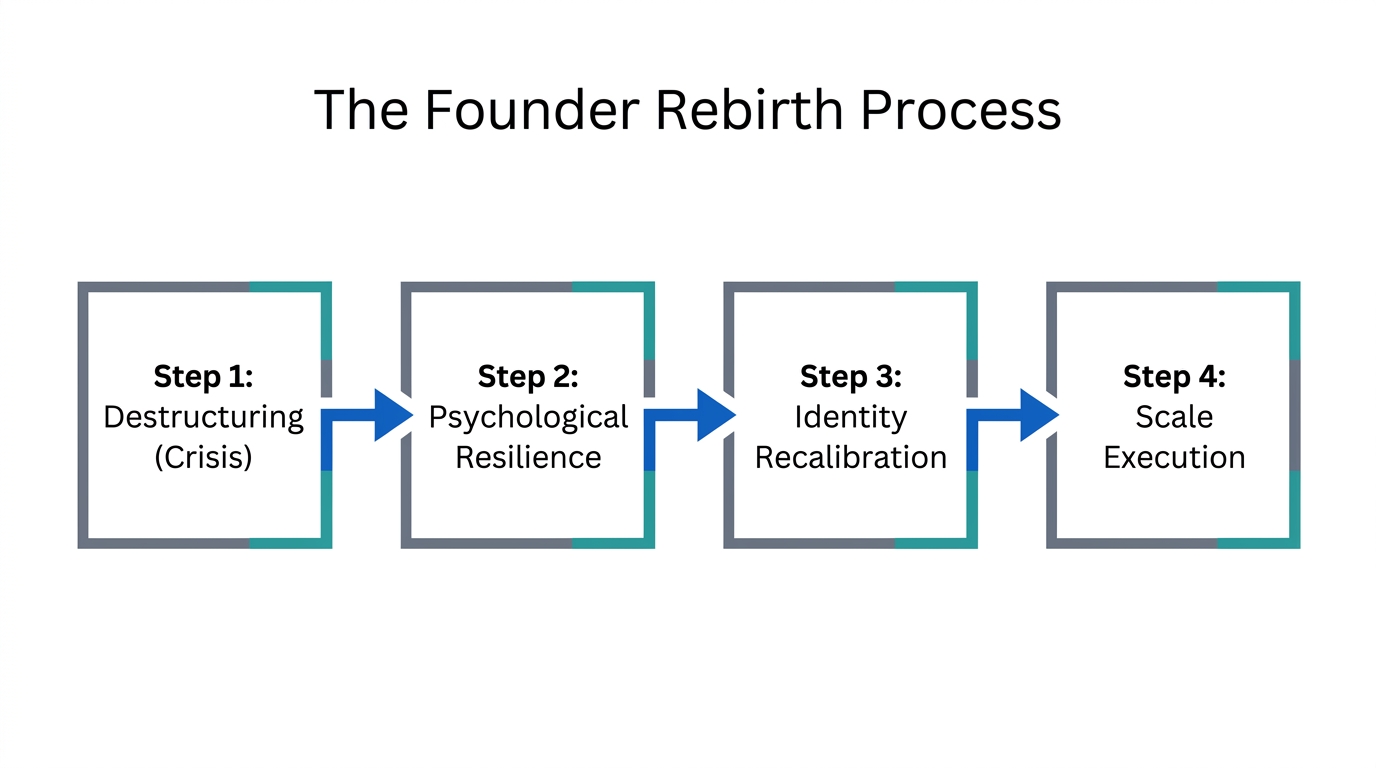
Every legendary founder has 'blown up' at least once. Whether it's a personal scandal, a market crash, or a strategic blunder that results in losing a comma in your net worth, the experience is humiliating. But for a resilient founder, failure is not a terminal state—it is a 'rebirth.' Novogratz’s exit from Goldman Sachs and his subsequent rise at Fortress and Galaxy Digital serves as a masterclass in business resilience strategies.
The process of rebirth involves three critical steps:
- Radical Honesty: Owning the failure without letting it define your identity. Losing a match doesn't make you a bad wrestler; it just means you lost that game.
- Intensive Self-Processing: Investing in mental health through therapy, solitude, or coaching. Many CEOs now use ChatGPT as a thought partner to process setbacks and brainstorm 'what's the lesson to be learned here?'
- Strategic Re-entry: Finding a new chapter where your past failures become your greatest assets. A founder who has survived a 'down round' or an SEC investigation often has a higher 'Risk IQ' than one who has only known success.
"Failure is just a data point in the long-term algorithm of your life. It doesn't mean you're not competent; it just means the market took its pound of flesh."
The ROI of Self-Actualization: Meditation and Solitude
In 2026, the most valuable investment a founder can make is in their own self-actualization. This sounds 'soft' to the old guard, but the commercial results are undeniable. When you spend a week in solitude or engage in deep meditation, you aren't just 'relaxing'—you are clearing the 'cache' of your brain. This allows for better leadership under pressure because you are no longer reacting from a place of insecurity or ego. Studies published in Oxford Academic suggest that mindfulness practices significantly improve cognitive flexibility in high-stakes environments.
Novogratz advocates for a week of solitude every year. Most founders are terrified of being alone with their thoughts, yet that is exactly where the most profound commercial insights are found. When you aren't distracted by the 19,000 emails or the latest TikTok Ads campaign, your brain can finally engage in high-level pattern recognition. You begin to see where the world is going, not just where it is.
The 'Max Risk' Framework: How to Bet Big Safely
Learn why living on the edge and embracing extreme financial risk can be rewarding.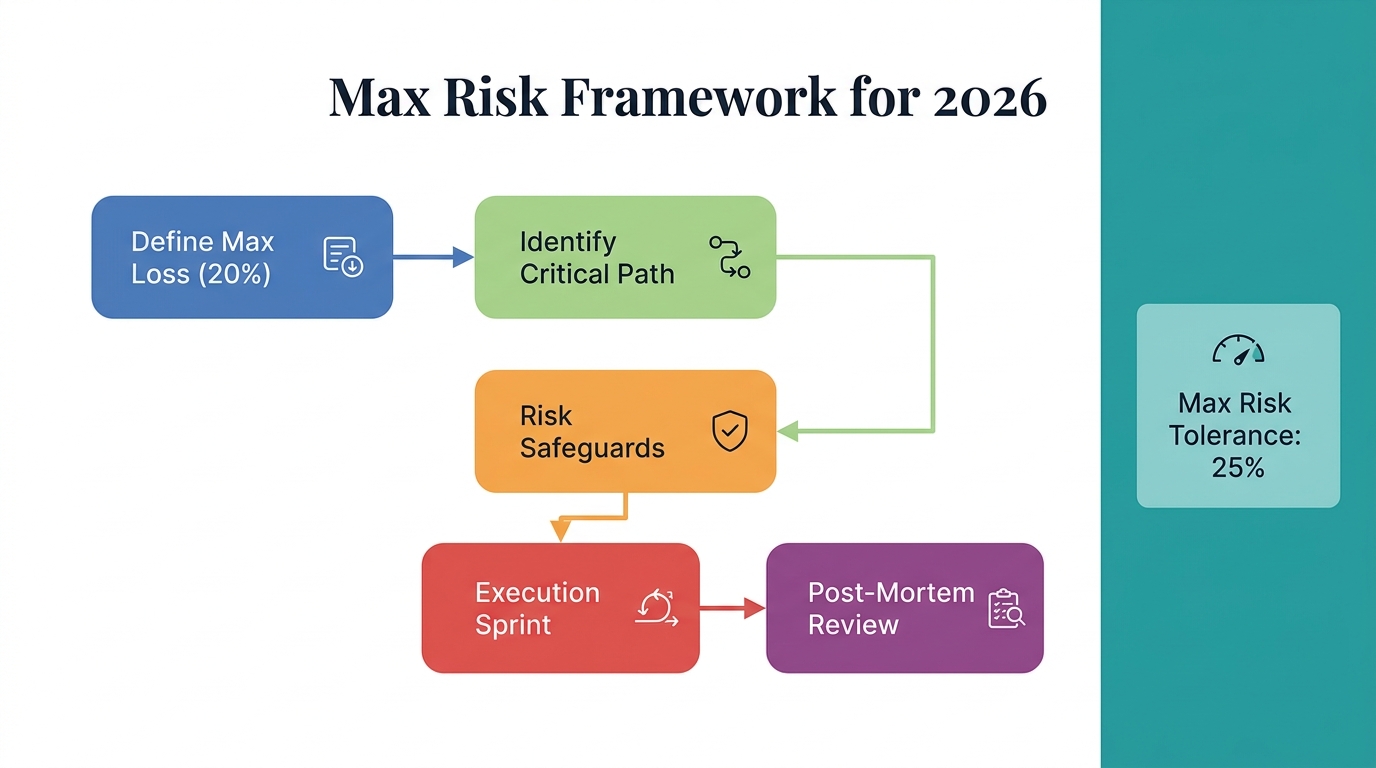
Taking 'Max Risk' does not mean being reckless. It means being comfortable teetering on the edge of ruin because you have built a foundation of resilience. To execute a 'Max Risk' strategy in 2026, founders must leverage their network and capital as a safety net. As the rich-poor gap widens, those with a deep network have a massive advantage: they get the first look at deals like SpaceX or early-stage Ethereum, which act as 'chips on the table.'
A resilient founder manages risk by:
- Living a 'Big Life' with Low Ego: Spending money on experiences and parties, but not letting those things define them. If they lost it all, they’d still be the guy you want to sit around a campfire with.
- Building a Diverse Ecosystem: Using modern growth stacks that include HubSpot for sales and Stormy AI for automated creator discovery. This allows the enterprise to run autonomously while the founder focuses on 'Max Risk' bets.
- Modeling Good Behavior: Understanding that their role is to provide the 'scaffolding' for their team and family to be self-actualized.
"The ultimate competitive advantage in 2026 is feeling comfortable in your own skin. Everything else is just capital and code."
Conclusion: The Future Belongs to the Resilient
The 2026 business climate is not for the faint of heart. It is a world of high-growth anxiety and constant risk. However, by adopting the 'Lucky General' mentality and prioritizing psychological resilience, founders can turn that volatility into an unfair advantage. Whether you are navigating a series C round or managing a 600-person team, the goal remains the same: stay commercial, stay curious, and stay in the game. Success isn't about never falling down; it's about the speed and grace of your rebirth. Start your journey toward automated, high-leverage growth by exploring how Stormy AI can handle the manual labor of creator discovery, leaving you free to focus on the 'Max Risk' decisions that actually matter.