The B2B marketing landscape in 2026 has officially shed its 'boring' skin. If you are still relying on dry whitepapers and static lead magnets, you are essentially whispering in a hurricane. Today, the most successful SaaS founders and agencies are 'fishing with dynamite' using a high-octane mix of vibe coding, hyper-personalized automation, and the LinkedIn Video Tab. By combining the speed of Replit with the delivery precision of Resend, you can build, launch, and go viral with a B2B product in the time it used to take to draft a project proposal.
The New B2B Playbook: Why 2026 Belongs to Short-Form Video
 39:18
39:18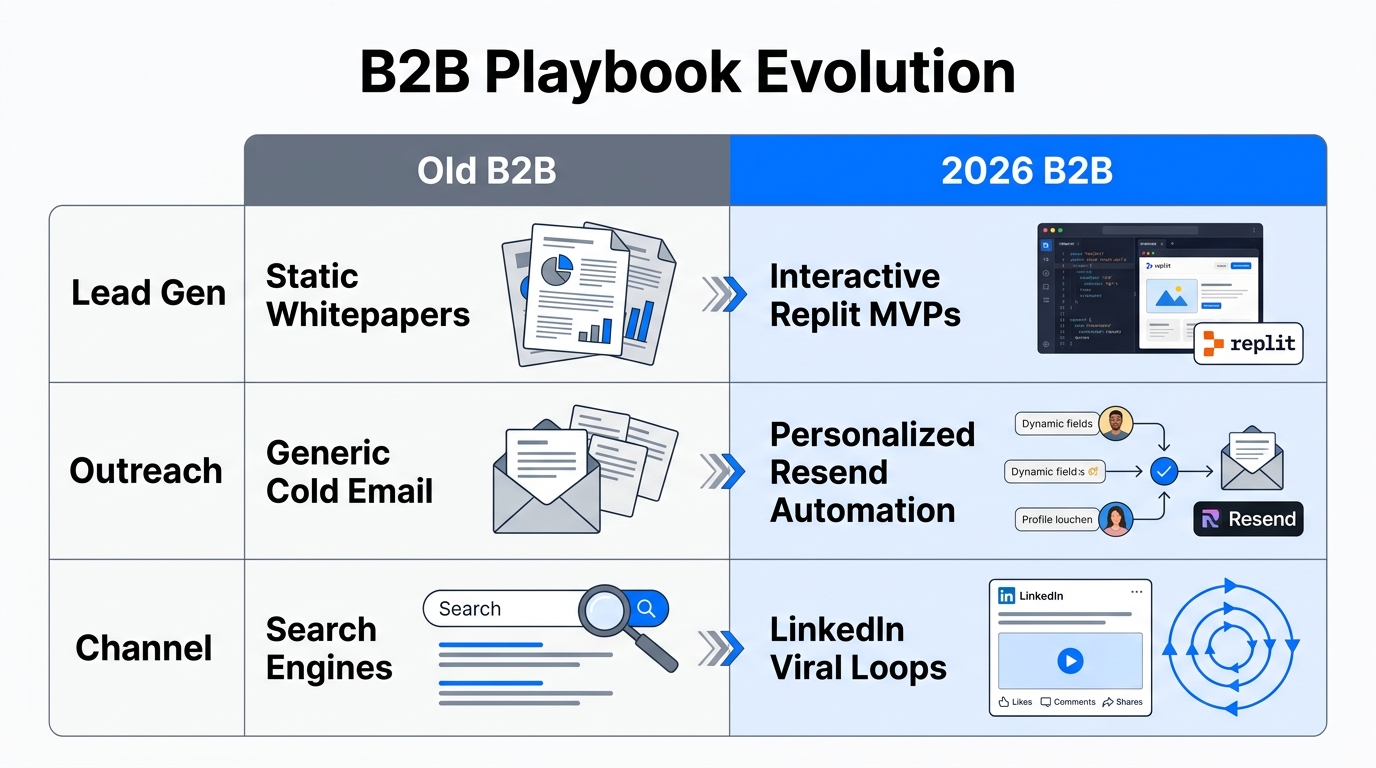
In 2026, LinkedIn has completed its transformation into a video-first platform. The LinkedIn Video Tab is now the primary engine for organic B2B discovery, functioning much like TikTok but for high-intent professional buyers. While traditional text posts still have their place, the algorithm now aggressively prioritizes vertical video content that demonstrates real-world utility in under 60 seconds.
"Video on LinkedIn right now is literally like fishing with dynamite. If you can create half-decent video, you're going to crush it because the platform is starving for high-quality B2B entertainment."
The strategy for 2026 isn't about high production value; it's about visual proof. Founders are using screen recordings of their AI agents in action to stop the scroll. When you show a tool like 'Invoice Nudger' actually sending a follow-up email that results in a payment, you aren't just selling software; you're selling a dopamine hit of efficiency. This shift has created a massive opportunity for 'vibe coders'—non-technical founders who use AI to build functional apps at lightning speed.
Vibe Coding Your MVP with Replit AI
20:52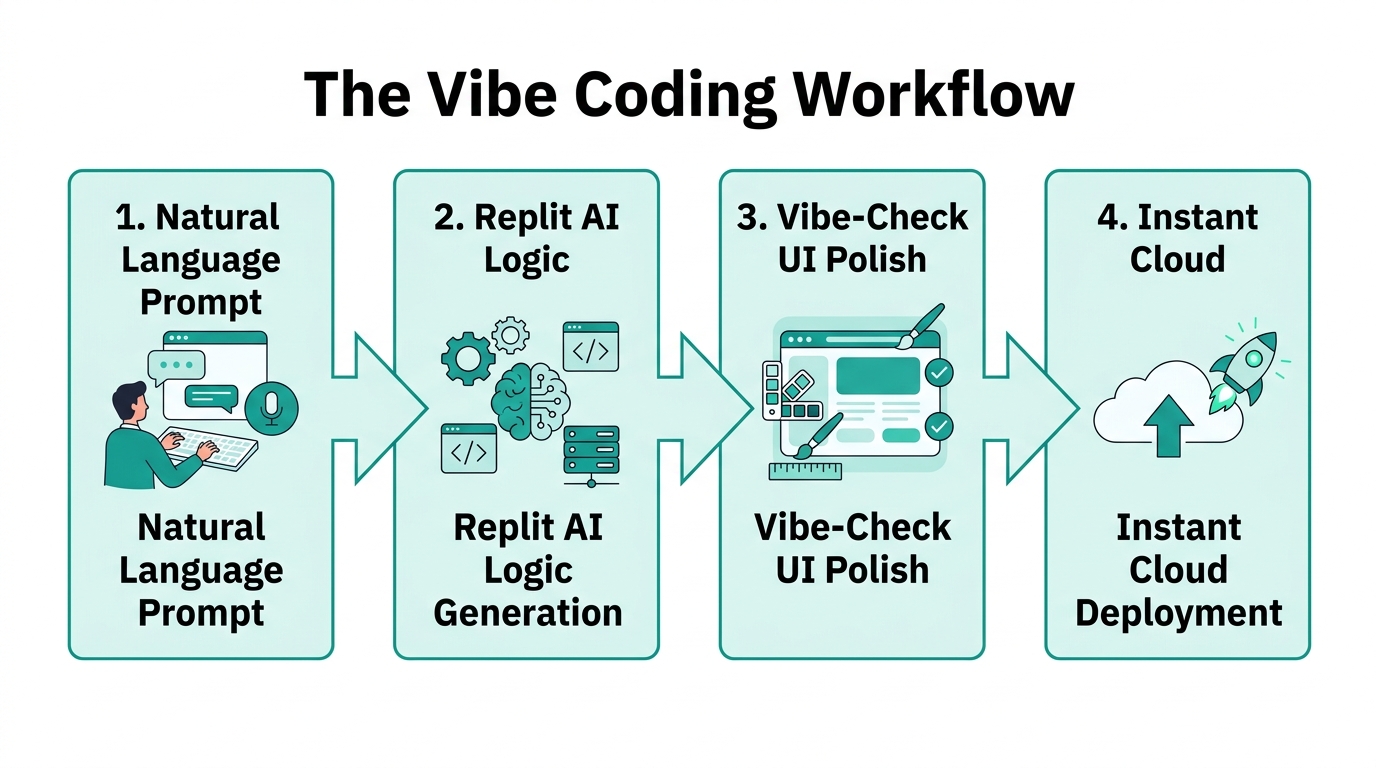
The days of six-month development cycles for MVPs are over. In 2026, we use 'vibe coding'—a process where you describe your product vision to an AI agent and watch it build the architecture in real-time. Platforms like Replit have evolved to the point where the Replit Agent can scaffold entire full-stack applications, including databases and authentication, from a single natural-language prompt. This allows founders to test red-hot pain points, like automating unpaid invoice collection, without writing a single line of boilerplate code.
Consider the 'Invoice Nudger' example: a tool built specifically to solve the 'awkwardness' of freelancers chasing money. By prompting Replit to build an app that connects to a database and sends automated nudges, you can have a working prototype in under an hour. This speed allows for rapid iteration; if the 'Soprano-style' aggressive nudge persona doesn't resonate, you can pivot to a 'Nice Guy' persona in minutes by simply adjusting the AI prompt.
The Prompt Engineering Framework
To build a viral-ready app, your prompt must be specific about the experience, not just the code. Using component libraries like Shadcn UI ensures that your app looks like a premium SaaS product from day one. This is critical for social sharing—users will only 'flex' a dashboard if it looks clean and modern. When prompting, specify your tech stack clearly but allow the AI to handle the 'plumbing' like SMTP and cron jobs for automated sequences.
The Flex: Designing Dashboards That Market Themselves
26:04In the creator economy business models of 2026, your product's dashboard is its own best advertisement. We call this 'The Flex.' Similar to how Beehiiv or Stripe created iconic, screenshot-worthy charts, your B2B tool must have a visual metric of success that users want to share on LinkedIn.
For a tool like Invoice Nudger, 'The Flex' is the 'Cash Collected' chart. By making this chart aesthetically pleasing—using vibrant colors and smooth animations—you encourage users to screenshot their success and post it to their network. This creates a viral loop where your users become your primary marketing engine. Every time a freelancer shares a chart showing $10,000 in overdue invoices recovered by your AI, they are providing the ultimate social proof for your brand.
| Feature Type | The Goal | Viral Potential |
|---|---|---|
| Functional Utility | Solves the core problem (e.g., getting paid) | Low (Utility) |
| The Flex Dashboard | Visual proof of success (e.g., Beehiiv charts) | High (Social Proof) |
| Personalized Branding | Identifiable sender personas | Medium (Brand Recall) |
When building in Replit, explicitly ask the AI to 'include a beautiful analytics dashboard with sharing capabilities.' In 2026, a 'Share to LinkedIn' button that generates a pre-styled image of the user's progress is not a 'nice-to-have'—it is a core growth requirement.
"If your users aren't proud enough of your UI to post it on their feed, your UI isn't finished yet."
The 14-Day LinkedIn Video Sprint: Generating Millions of Impressions
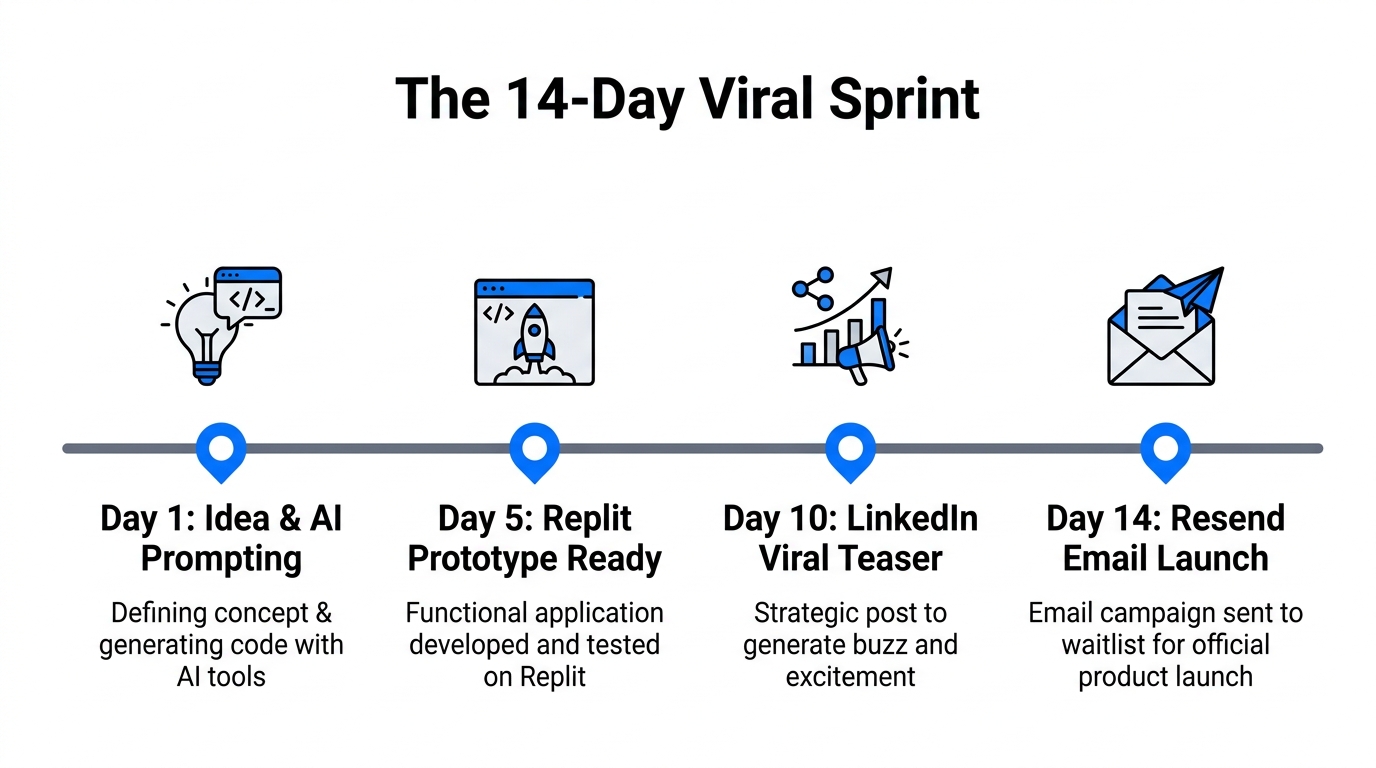
Once your MVP is live, it's time to trigger the 14-day LinkedIn video sprint. This is a quantity-over-quality framework designed to dominate the new LinkedIn Video Tab. For two weeks, you post one vertical video every single day. The goal is to test various hooks and 'vibes' to see what triggers the algorithm's 'viral' switch.
- Days 1-3: The Pain Point. Focus on the misery of the problem. Show yourself struggling with manual invoice tracking.
- Days 4-7: The AI Solution. Showcase the 'vibe coding' process. People love seeing things built 'brick by brick.'
- Days 8-11: The Results. Share 'The Flex' dashboards. Show real data (anonymized) of the tool working.
- Days 12-14: The Community. Share user testimonials or 'the best nudge' generated by the AI.
To scale this beyond your own face, smart brands are using platforms like Stormy AI to discover and vet UGC creators who specialize in B2B content. By finding creators with established audiences in the 'SaaS' or 'Freelance' niches, you can distribute your 14-day sprint across multiple accounts simultaneously, exponentially increasing your reach.
Turning Resend Notifications into a Marketing Moat
13:07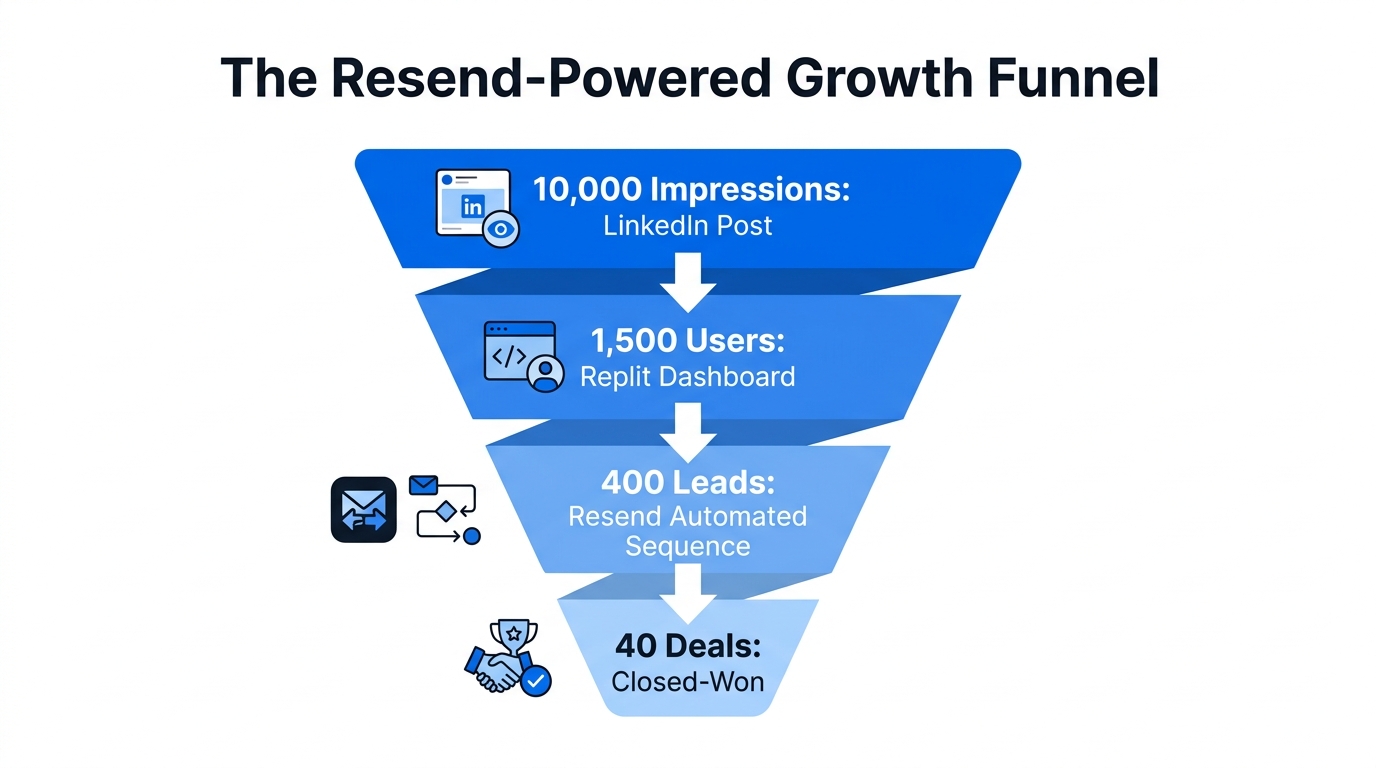
In 2026, transactional emails are the new front line of brand personality. Most automated emails from Stripe or QuickBooks are clinical and boring. By using Resend, you can inject hyper-personality into every nudge. The 'marketing moat' here is creating a sender identity that feels like a real human—or a very specific character.
For Invoice Nudger, the 'Resend Moat' involves an aggression meter. A user can choose between 'The Nice Guy' (a friendly, Post Malone-esque persona that asks politely) and 'The Mob' (a professional but increasingly assertive persona that implies the 'goons' are coming). Because Resend is built for modern React-based stacks, you can dynamically swap these templates based on user settings in Replit.
When these personalized emails hit an inbox, they get opened because they don't look like 'System Notifications.' They come from 'Susan in Finance' or 'The Enforcer.' This level of personalization increases payment conversion rates and makes your product memorable. If you need to find more clients to test these personas on, tools like Apollo or Instantly can help you scrape high-quality B2B lead lists to feed into your system.
Hand-to-Hand Combat Marketing
While the video sprint handles the top-of-funnel awareness, 'hand-to-hand combat' closes the deals. This involves finding 50-100 high-value targets on LinkedIn and entering their orbit. Comment on their posts, share their content, and then reach out with a personalized video (recorded via CapCut or Loom) showing how your tool would specifically help their agency. It's unscalable, but in the early days of a B2B brand, it's how you build your first 10 true fans.
Conclusion: Building for the Future of B2B
Building a viral B2B brand in 2026 is less about having a massive engineering team and more about having a fast feedback loop. By using Replit for development and Resend for communication, you can launch ideas in hours and spend the rest of your time on the LinkedIn Video Tab where the actual growth happens. The winner isn't the person with the most features; it's the person with the most attention.
If you're ready to scale your influencer outreach and find the perfect creators to help your B2B tool go viral, you can discover creators on Stormy AI. Whether you're building a 'Soprano-style' collection agency or the next great productivity tool, the tools are now available for anyone to become a tech mogul from their bedroom.