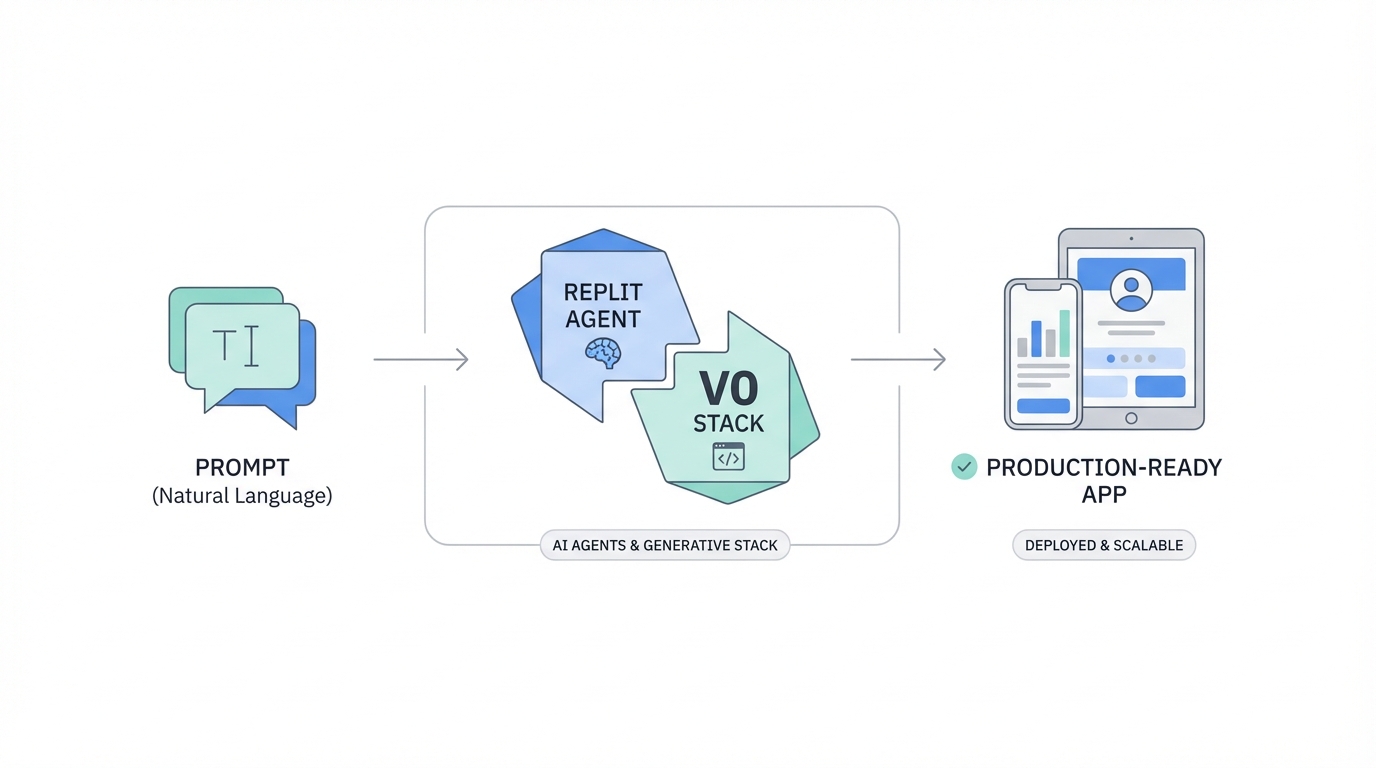
The era of the 'script kiddie' has evolved into something far more powerful: the vibe coder. We are witnessing a seismic shift in custom software development with AI where the barrier between a business idea and a functional, production-ready application has effectively vanished. You no longer need to spend four years in a CS program to build a high-ticket B2B SaaS or a custom internal tool for a client. By combining the logic-heavy capabilities of Replit Agent with the high-fidelity UI generation of V0, solo developers are now closing five and six-figure deals on platforms like Upwork without writing a single line of boilerplate code manually. This article is your comprehensive playbook for mastering this new tech stack.
The Vibe Coding Economy: Turning Problems into Profit

Vibe coding isn't about being lazy; it's about orchestration. The strategy starts long before you open an IDE. As highlighted in recent industry discussions, the most successful AI developers aren't building 'cool' apps and then hunting for users. Instead, they are scouring marketplaces like Upwork to find validated business problems. Whether it's a nonprofit needing a case management system or a tutoring business looking to automate student inquiries, these are high-intent buyers ready to pay for solutions.
When you use a custom software development with AI approach, you can bid on projects that previously required a team of three. The trick is to look for 'CRUD' apps—software that essentially creates, reads, updates, and deletes data. These are the bread and butter of B2B SaaS. While a client might be used to paying for expensive per-seat licenses on platforms like Airtable, you can offer them a bespoke, white-labeled solution built on the Replit stack for a flat fee or a more affordable recurring hosting model.
Step 1: Using ChatGPT to Write a PRD That AI Actually Understands
Before you touch the Replit Agent tutorial workflow, you need a blueprint. Most people fail because they give the AI vague instructions like "build me a CRM." To get professional results, you must feed the AI a Product Requirements Document (PRD). You can use ChatGPT to translate a messy client job description into a technical roadmap.
Copy the entire job post from Upwork and prompt ChatGPT: "Format these requirements as a PRD for an AI coding assistant. Be tech-stack agnostic but ensure it includes data types, user flows, and specific integrations like Shadcn UI components." This structured approach prevents the AI from getting 'distracted' by vague features. A solid PRD ensures the AI understands the Postgres database schema, the specific inquiry forms needed, and the administrative dashboard views required to solve the client's problem.
Step 2: Scaffolding Backend Logic with Replit Agent V2
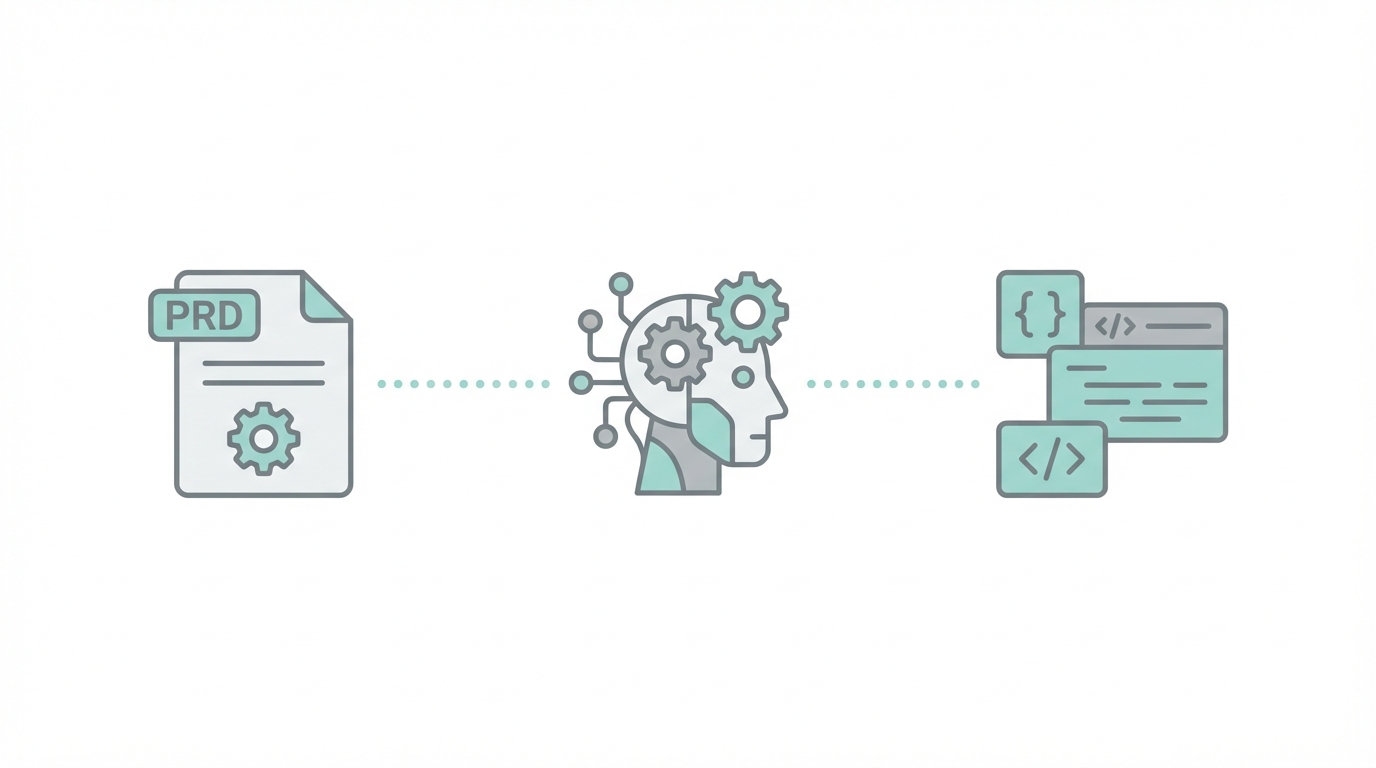
Once you have your PRD, it's time to enter the Replit environment. The Replit Agent V2, powered by Claude 3.7, is currently the gold standard for 'one-shotting' application logic. Unlike legacy tools, Replit handles the environment setup, package management, and database initialization automatically. This is why it is the preferred AI coding assistant for rapid prototyping.
In the Replit Agent interface, paste your PRD and give it a starting nudge: "Build the initial prototype of this app. Use a Postgres database for storage and initialize the schema based on the PRD." As the agent works, you will see it scaffolding the backend line by line. Claude 3.7 is particularly adept at understanding complex logic without getting stuck in 'infinite loops' that plagued earlier models. It can set up authentication, API routes, and database connections in minutes—tasks that used to take a human developer hours of configuration.

Step 3: The Design Hack — Professional UI with the V0 Dev Tool
While Replit is a logic powerhouse, the default UI can sometimes feel a bit 'sterile.' To command premium prices, your app needs to look like a high-end SaaS. This is where the V0 dev tool comes in. V0 allows you to generate stunning React components using simple natural language prompts. You can describe a 'modern analytics dashboard with dark mode' or a 'sleek student inquiry form,' and V0 will produce the code instantly.
The workflow is simple: generate the specific page or component in V0, then copy the code and bring it back to Replit. You can tell the Replit Agent, "I have the frontend code for the dashboard screen. Please replace the existing dashboard.tsx with this code and wire up the logic to the backend." This 'design hack' allows you to create apps that look like they were designed by a professional UI/UX team, even if you don't know the difference between padding and margin. This level of polish is what transforms a simple project into a how to build an app with AI success story.
Handling Complex Integrations: Stripe, DocuSign, and Beyond
The real test of a professional app is its ability to 'talk' to other services. Integrating a Stripe payment gateway or a DocuSign API can be intimidating for non-coders. However, the Replit Agent is remarkably capable of skimming documentation. If you need a specific integration, find the developer docs for that service, copy the relevant API sections, and paste them into Replit with the prompt: "Use these docs to set up a POST request that sends user data to this endpoint."
Be wary of 'date and time' logic—AI often struggles with time zones and complex calendar formatting. For tasks like integrating Calendly or setting up OAuth, it is often better to provide the AI with specific examples of successful GET/POST calls. Replit's 'Secrets' tool is also essential here; it allows you to securely store your API keys so they aren't exposed in your code, keeping your client's data safe and following data privacy laws.
The 15% Rule: When to Use Replit Bounties
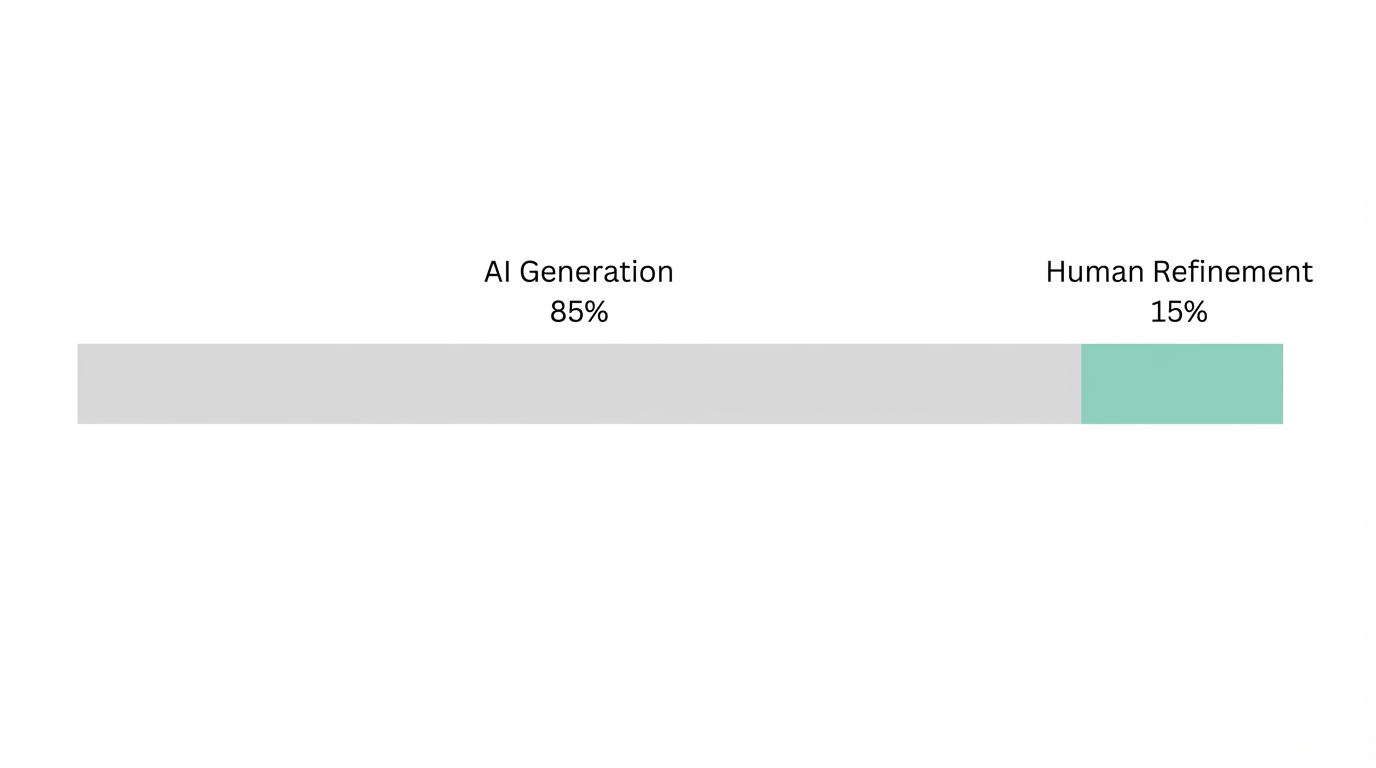
Even with the best prompts, you might hit a wall. This is the '15% Rule'—the final stretch of a project where things like complex time-zone logic or obscure bugs require a human touch. Instead of banging your head against the keyboard, use the Replit Bounties system. For a small fee, you can hire a professional developer to hop into your project and 'kick the tires.'
Posting a bounty for $50 to $100 to troubleshoot a specific integration is often the best use of capital. It ensures your app is production-ready and 'bulletproof' before you hand it over to a client. This hybrid approach—85% AI-generated and 15% human-verified—is the most efficient way to scale a custom software development with AI agency. It allows you to maintain high output without sacrificing the quality and security that business clients demand.
Scaling and Marketing Your Production-Ready App
Building the app is only half the battle; the other half is distribution. Once you've created a successful custom tool for one client, you have a template you can resell. If you've built a specific case management tool for a nonprofit, other nonprofits likely have the same problem. This is where you transition from a freelancer to a SaaS founder. To get the word out, many developers are turning to User-Generated Content (UGC) and influencer marketing.
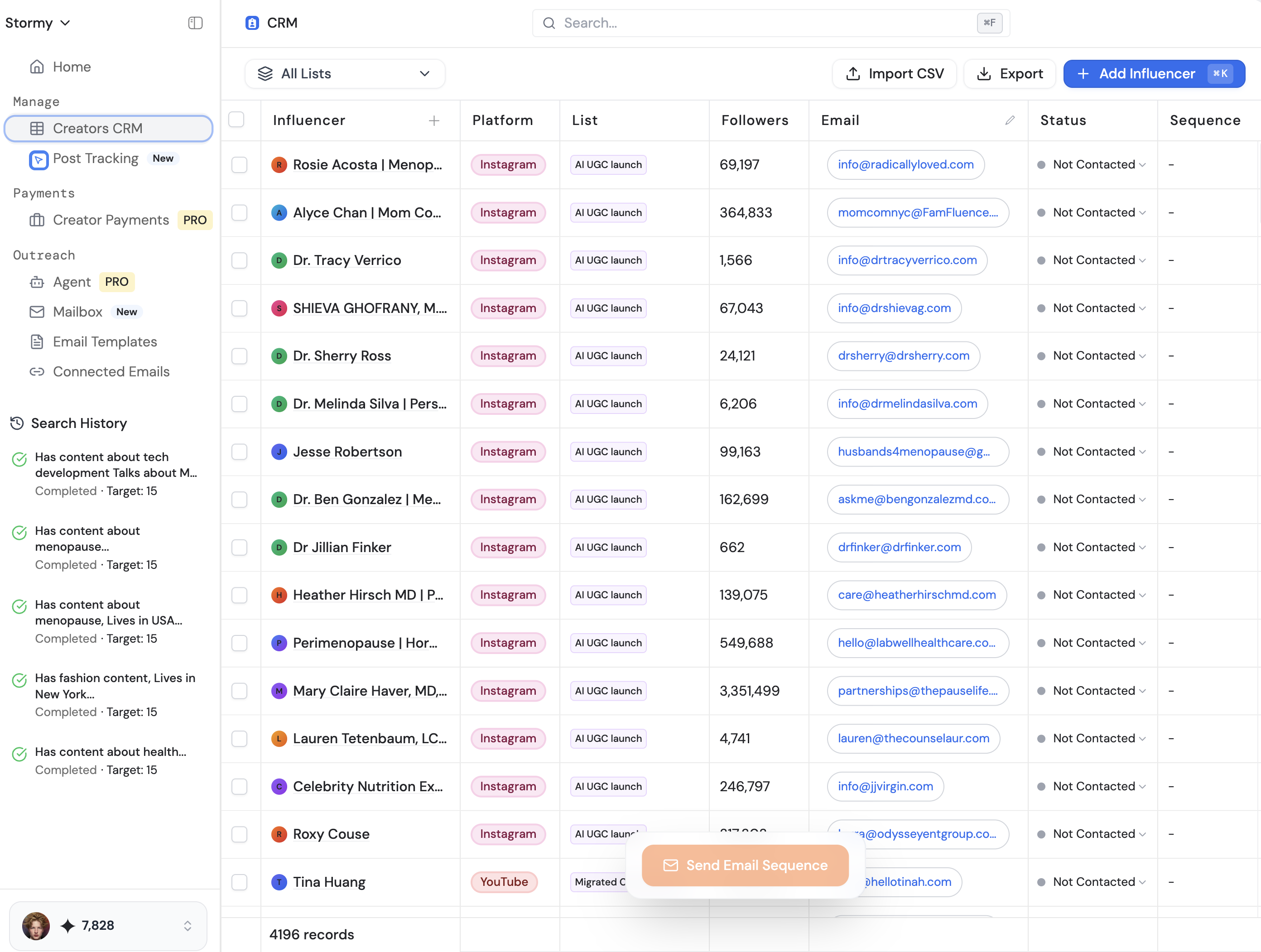
For instance, tools like Stormy AI can help you source and manage UGC creators who can demo your software on social media. By using AI-powered creator discovery, you can find influencers in the B2B or productivity space to show how your app solves real-world problems. Whether you're tracking performance via the Post Tracking section or managing outreach to potential partners, combining your tech stack with a marketing stack is essential for long-term growth.
Conclusion: The Future is Vibe-Coded
The combination of Replit Agent, Claude 3.7, and V0 has fundamentally changed the economics of software. We are moving away from a world of expensive, multi-month development cycles toward a world of rapid, iterative deployment. By focusing on validated business problems and using AI to handle the heavy lifting of coding and design, you can build a highly profitable business as a solo orchestrator.
The takeaway is simple: stop worrying about the 'how' of coding and start focusing on the 'what' of problem-solving. Go to Notion, draft your next big idea, and start vibe coding your way to a production-ready application today. The tools are ready—the question is, are you?