For years, the standard advice for a founder who just hit product-market fit was simple: "Hire a junior marketing associate." The logic was that you needed a pair of hands to scrape Reddit, draft white papers, and manage the repetitive grind of market research. But in 2025, that $5,000-per-month junior hire is no longer a strategic move—it is a massive overhead liability. The new rule of growth is the 'Hire ChatGPT Pro First' rule. For $200 a month, you aren't just buying a chatbot; you are hiring a high-output research department that never sleeps, never burns out, and processes data at a scale no human can match.
The $200 vs. $5,000 Debate: Why Your First Hire Should Be Silicon
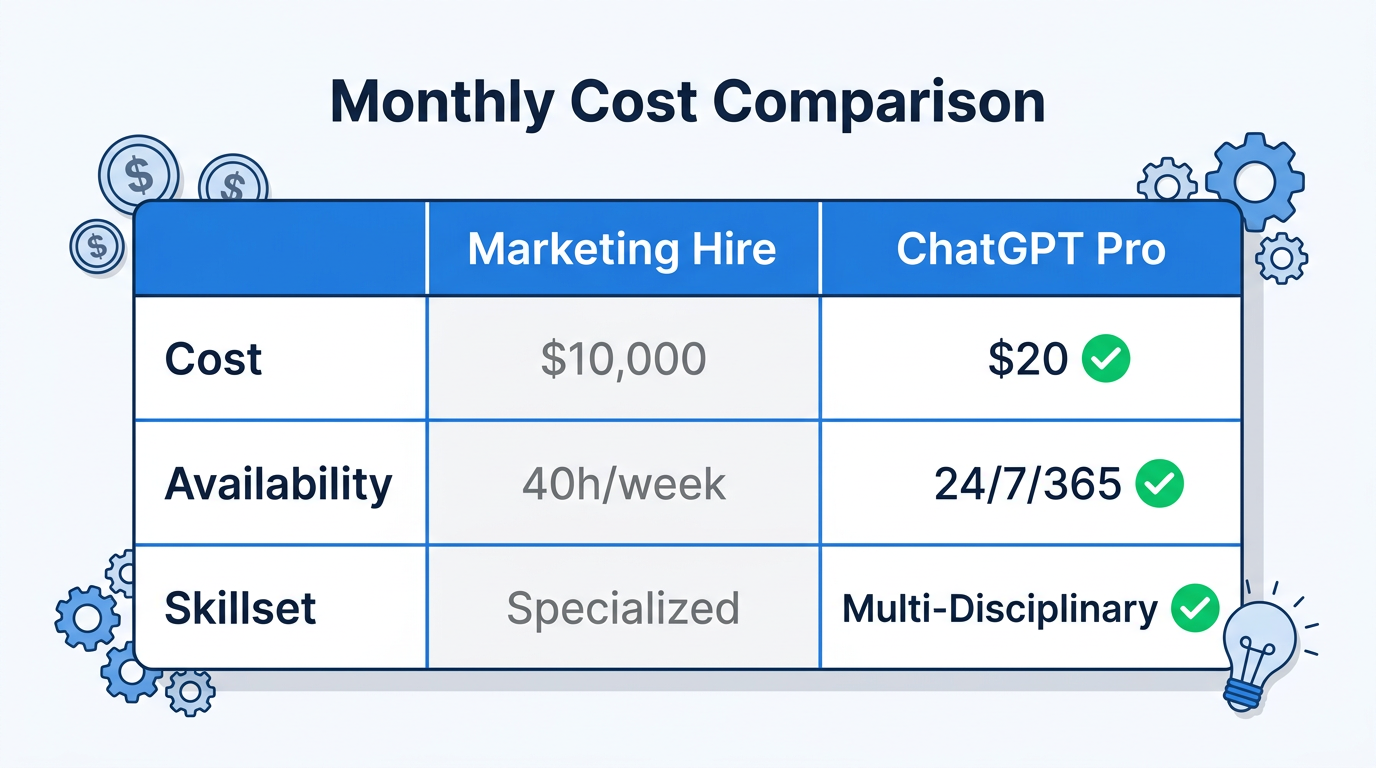
Most founders make the mistake of paying $10,000 to $15,000 a month for their first few employees when they should be investing in the productivity equivalent of a 100-person team for less than the cost of a car payment. Tools like ChatGPT Pro and Claude have shifted the barrier to entry for GTM strategy automation. Instead of waiting weeks for a human to synthesize market trends, founders can now generate validated AI market research in seconds.
The arbitrage opportunity here is immense. While your competitors are busy interviewing candidates and onboarding interns, you can use specialized models like OpenAI’s o3 or 4.5 to map out your entire competitive landscape. This isn't just about saving money; it's about speed. In the startup world, the company that iterates the fastest wins. By using ChatGPT Pro for startups, you are essentially buying time.
| Feature | Junior Marketing Hire | ChatGPT Pro + AI Stack |
|---|---|---|
| Monthly Cost | $4,000 – $7,000 | $200 – $500 |
| Research Speed | 2-3 days per report | 10-15 minutes |
| Availability | 40 hours / week | 24/7 |
| Output Quality | Variable (requires training) | High (requires taste) |
Recreating a $35,000 Research Study in 10 Minutes
One of the most shocking realizations for modern founders is the devaluation of traditional consultancy work. In the research material, one founder noted they spent $35,000 and three months on a single white paper three years ago. Last week, they recreated that entire study using deep research prompts in the o3 model. The result? It was better, more accurate, and took exactly 10 minutes.
"If you know how to set up the machine, all you have to do is open the door at 9:00 a.m. and keep the lights on. That is the power of AI-driven research."
To replicate this, you need to stop asking simple questions and start building "research factories." Instead of asking "What are the trends in my niche?", you should prompt the AI to scour Reddit and niche forums for posts with over 100 upvotes and 40 comments. This ensures you are getting validated data based on actual human pain points, not generic AI hallucinations. This is the foundation of B2B lead generation AI: finding where the heat is and building content that addresses it.
A Step-by-Step Guide to AI-Powered B2B Lead Magnets
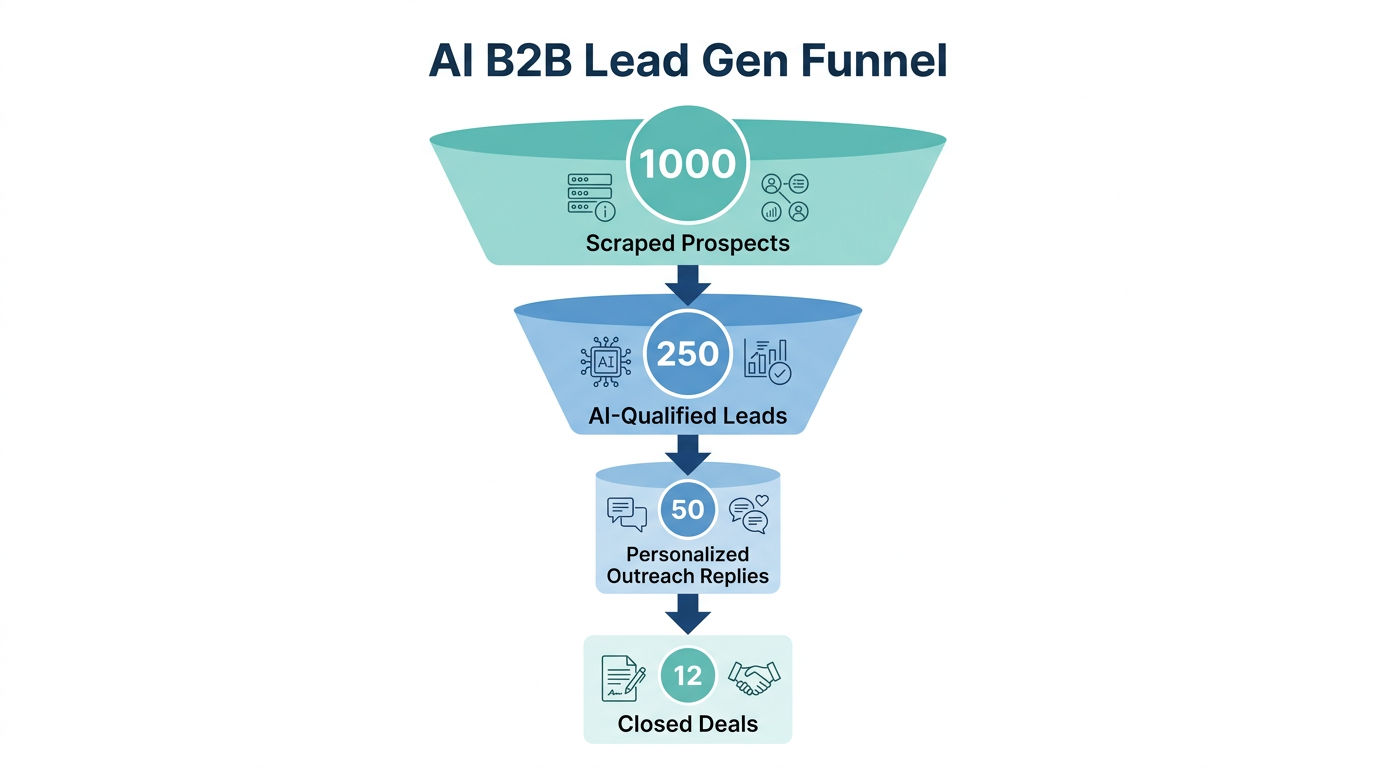
Creating lead magnets—white papers, templates, or calculators—is the engine of B2B growth. Usually, this requires a copywriter and a designer. Here is how to automate the entire process using an AI-first workflow:
Step 1: Data Mining and Sentiment Analysis
Use ChatGPT Pro to analyze customer sentiment across social platforms. Feed it transcripts from your sales calls or feedback from Salesforce. Ask the AI to identify the top 5 'unsolved' problems your target audience mentions. This ensures your GTM strategy is rooted in reality.
Step 2: Rapid Prototyping with 'Vibe Marketing'
Once you have the core pain points, use AI to generate the assets. For visual-heavy lead magnets, tools like Canva or Figma AI features can help, but for the meat of the content, lean on long-form writing prompts. Use the 'Editor' mindset: write the outline yourself to maintain taste, then let the AI expand the sections.
Step 3: Scaling the Distribution
Take your validated research and turn it into ads. Platforms like Meta Ads Manager or TikTok Ads Manager thrive on creative volume. Use AI tools to generate 100 variations of an ad image based on one winning concept. You can even use reverse-engineering prompts to ask ChatGPT: "Analyze this high-performing ad and write me the exact prompt to recreate its visual style."
Developing 'Taste' as a Founder: The Rick Rubin Philosophy
If everyone has access to ChatGPT Pro, why doesn't every company make a billion dollars? The differentiator is taste. Legendary producer Rick Rubin famously said his only real skill is his intuition. He doesn't play the instruments; he listens and says, "That's good, that's bad, do more of that."
As a founder using AI, you are the Editor-in-Chief. The AI provides the raw materials, but you provide the soul. This is especially true when sourcing the human elements of your marketing. For instance, while AI can write your scripts, you still need real creators to bring them to life. Modern platforms like Stormy AI allow you to use that same AI-driven efficiency to discover and vet influencers who actually align with your brand's "vibe." Instead of manually searching TikTok for hours, you use Stormy's AI search to find creators who fit your specific niche, then apply your taste to choose the final partners.
"You have to be like Rick Rubin in front of your AI tools. Your job isn't to write the code or the copy; it's to have the taste to know which output will actually resonate with a human being."
This "Editor" role applies to every part of the funnel. When your AI agent generates 50 email sequences for B2B lead generation, a junior hire might just hit 'send' on all of them. A founder with taste will pick the two that sound the most human and use those to train the next iteration. This creates a feedback loop that continuously improves your messaging.
Automating the Feedback Loop: Beyond the First Hire
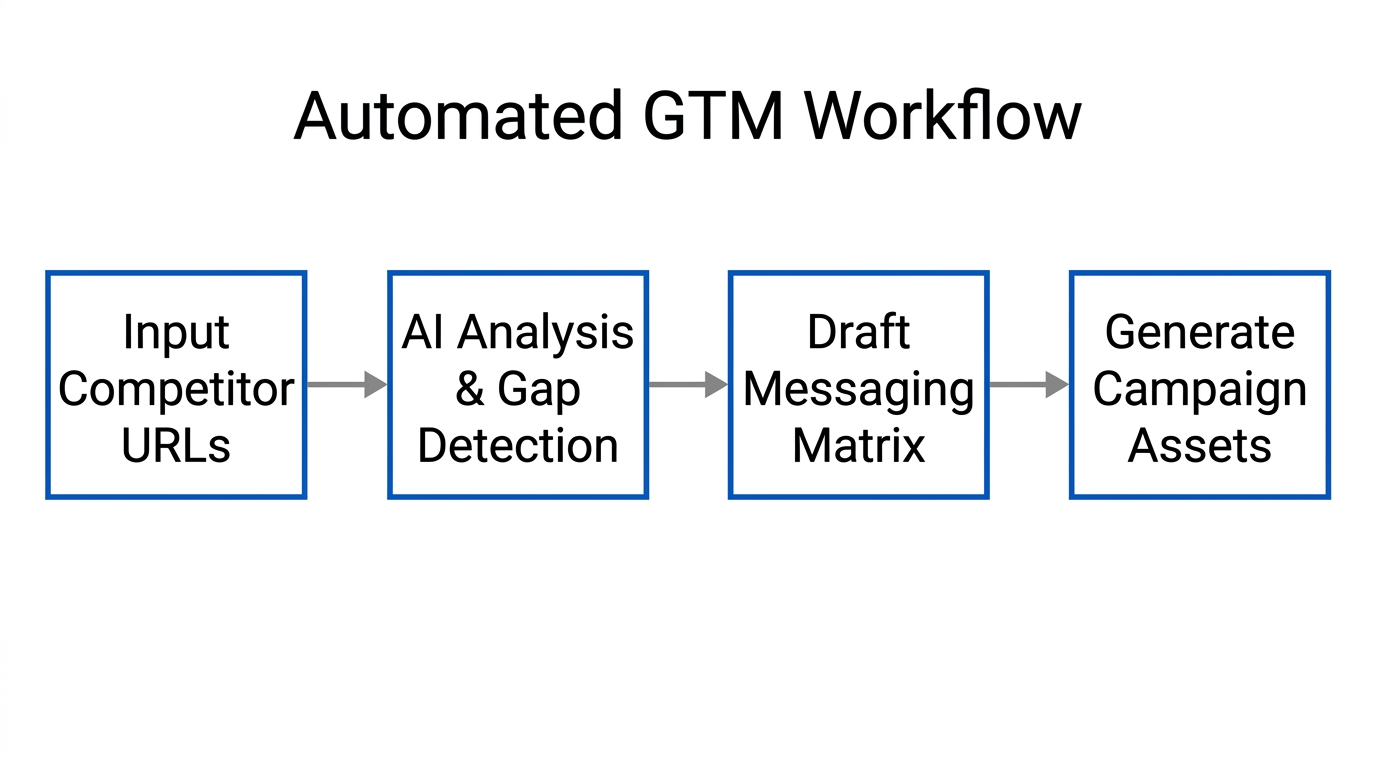
The final stage of replacing the first hire is GTM strategy automation. This means the AI isn't just doing the work; it's monitoring the results. By connecting your ad accounts and CRM to an AI-driven workflow via Zapier or Make, you can build a system that automatically adjusts your positioning based on customer sentiment.
- Sentiment Analysis: Feed customer support tickets into an AI to find recurring feature requests.
- Creative Iteration: Automatically generate new ad copy variants when click-through rates (CTR) on Google Ads dip below a certain threshold.
- Creator CRM: Use tools like Stormy AI to manage your relationships with UGC creators, tracking which ones drive the most app installs or sales without needing a dedicated Influencer Manager.
The Path Forward: Stop Hiring, Start Prompting
The arbitrage period for ChatGPT Pro for startups is now. Currently, these tools are heavily subsidized and accessible to anyone with $20 a month (or $200 for the Pro/Team tiers). In the future, the cost of these 'AI employees' will likely rise to match the value they provide. If you aren't integrating marketing automation for founders into your daily habit today, you are essentially refusing to use the most powerful leverage ever created.
Start by mapping out every boring, repetitive task you currently do or plan to hire for. Try to solve each one with a deep-research prompt first. Build your factory, keep the lights on, and focus your human energy on the one thing AI can't replicate: your vision.