In the competitive landscape of 2026, the economics of e-commerce have undergone a seismic shift. As acquisition costs (CAC) have risen by nearly 60% over the last five years, the industry has transitioned into a retention-first model as acquisition costs (CAC) rose nearly 60%. Brands are no longer just looking for the next transaction; they are building dynamic customer ecosystems. This evolution is driven by the realization that AI-powered loyalty programs are delivering a 4.8x to 5.2x ROI, according to data from Envive AI. For Shopify and enterprise merchants, the path to sustainable growth lies in predictive customer churn AI and sophisticated automation.
The Shift to Predictive Churn Modeling
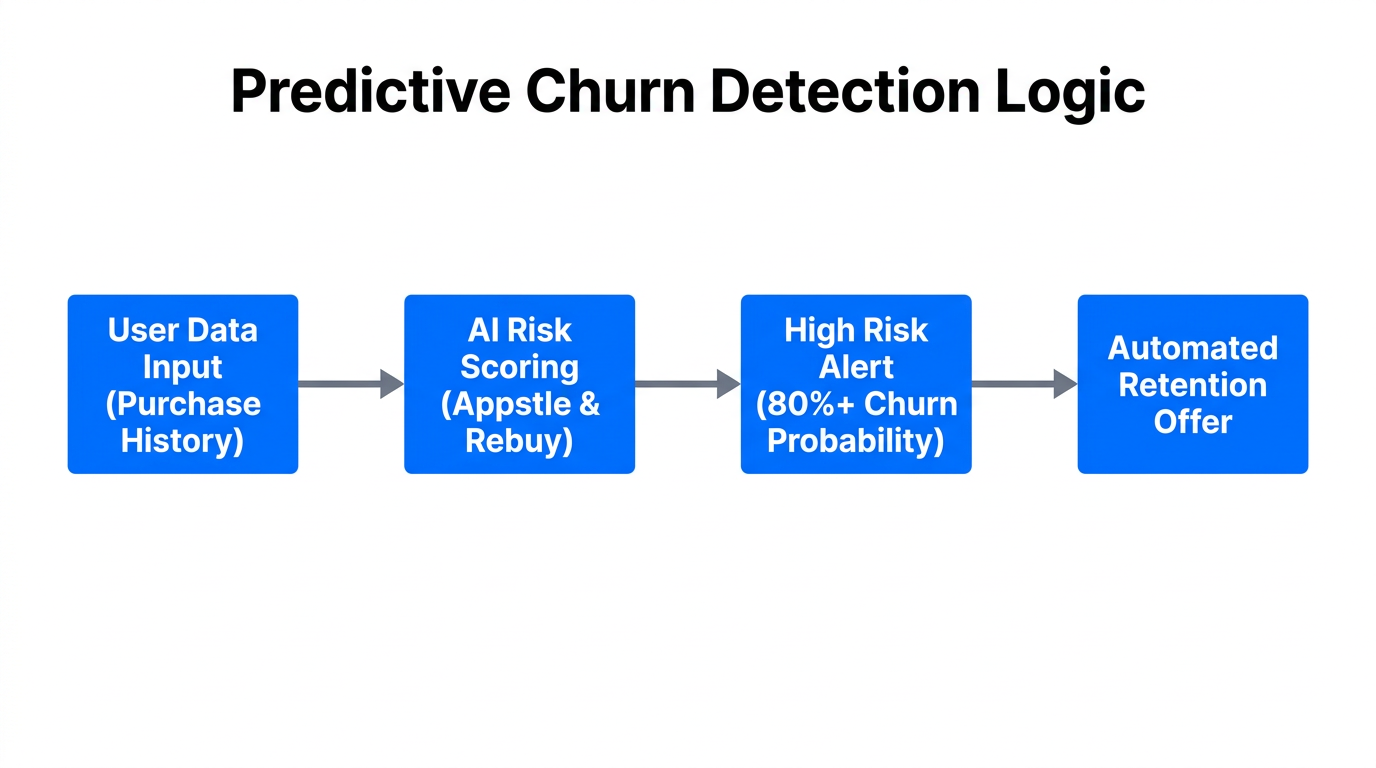
The standard approach to retention in previous years was reactive—sending a discount code after a customer had already stopped buying. In 2026, top-performing brands use AI to identify "at-risk" behaviors up to three months before churn occurs. By analyzing declining open rates, reduced cart activity, and shifts in browsing patterns, platforms like Appstle allow merchants to intervene while the customer relationship is still salvageable.
This predictive capability is not just about keeping a customer; it is about protecting the 50% increase in Customer Lifetime Value (CLV) that brands implementing AI-powered retention typically see, as noted by Raleon. When you can anticipate a lapse in interest, you can shift your strategy from generic marketing to high-utility care. Experts like Hasan Beyari highlight that shoppers today interpret AI-driven utility as "care" rather than mere "promotion," creating a stronger emotional bond with the brand.
"The key insight for 2026 is that loyalty is a living ecosystem that adapts to behavior in real time, not a fixed marketing tactic." — Chemi Katz, CEO of Wandz.aiPlaybook: The 72-Hour Win-Back Strategy
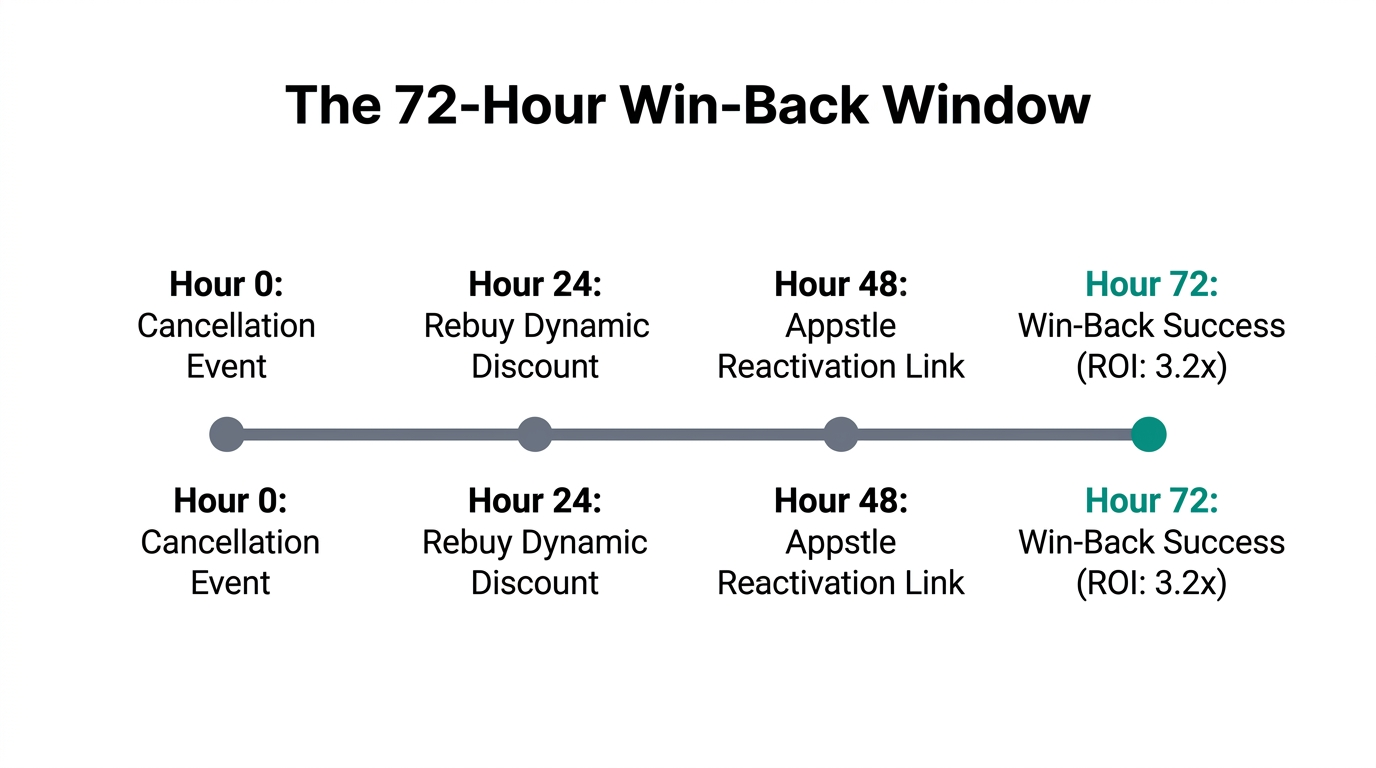
One of the most effective ecommerce win-back strategies involves automatically trigger a 'win-back' reward exactly 72 hours before predicted churn. Using the integration between Appstle and your communication stack, you can create a highly focused automation sequence that feels personal rather than programmed. Here is how to structure it:
- Identify the Churn Threshold: Use Appstle's AI engine to determine the average time between purchases for your specific micro-segments.
- Monitor Micro-Signals: Track non-purchase signals such as a sudden stop in clicking newsletter links or a decrease in logged-in sessions on your Shopify store.
- The 72-Hour Trigger: Set a workflow to trigger a high-value "exclusive gift" or a personalized bonus exactly three days before the AI predicts the customer will officially enter the 'churned' category.
This level of precision ensures that you are not discounting for customers who were going to buy anyway, but rather providing a meaningful nudge to those truly on the fence. AI-driven personalization like this drives 40% more revenue than standard, static loyalty programs according to Envive AI. To ensure your top-of-funnel leads are high-quality enough to benefit from these retention loops, many brands use Stormy AI to discover and vet creators whose audiences match their ideal high-retention customer profiles.
| Strategy Component | Reactive Retention (Old Way) | Predictive Retention (2026) |
|---|---|---|
| Trigger | Post-churn (30+ days of inactivity) | 72 hours before predicted churn |
| Incentive | Generic 10% discount code | Experiential reward or tier upgrade |
| Messaging | Batch-and-blast email | AI-optimized SMS & Email timing |
| Result | Lower margins, low recovery rate | Higher CLV, 30% churn reduction |
Using Rebuy to Eliminate 'Spam Fatigue'
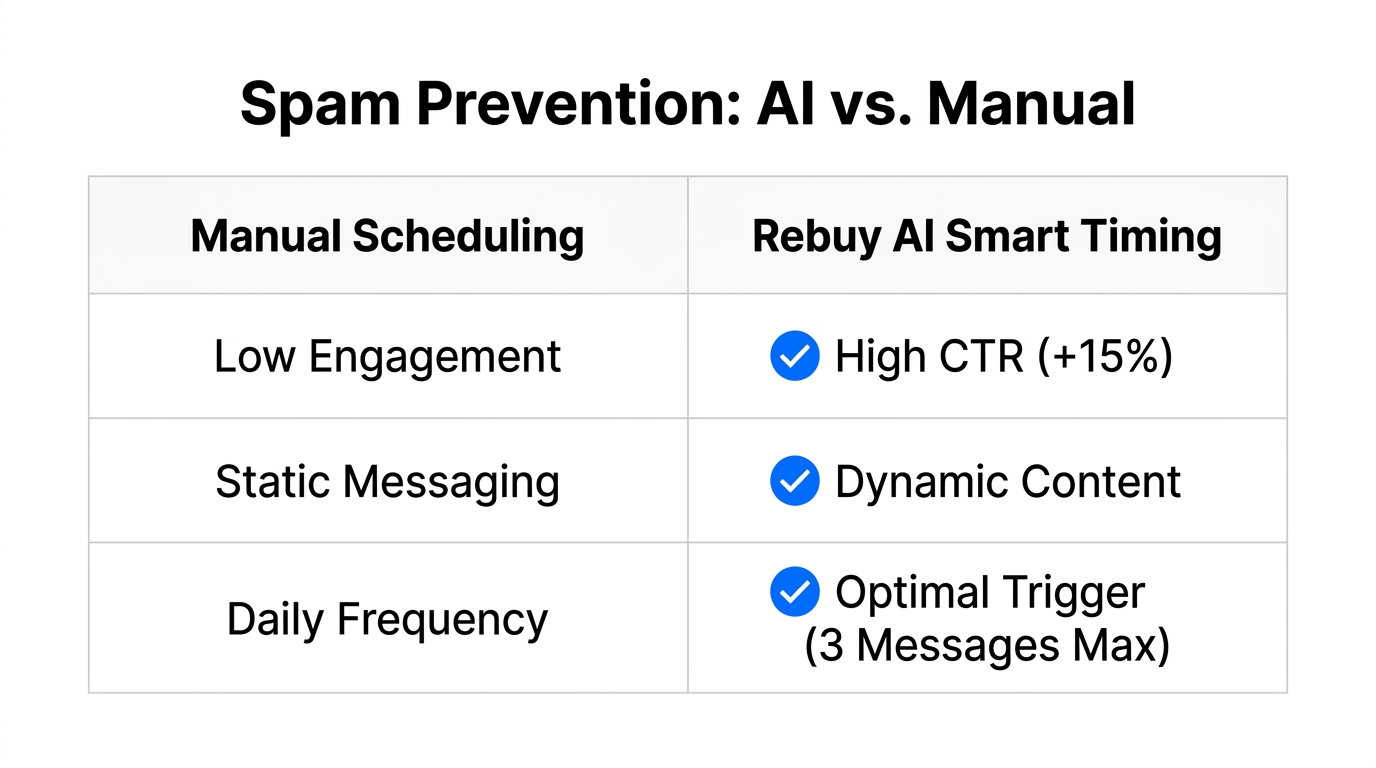
Even the best rewards can be ignored if the customer is suffering from message overload. In 2026, AI-optimized messaging frequency to eliminate 'spam fatigue' is a critical component of Rebuy automated retention. Instead of sending messages on a fixed schedule, Rebuy uses individual engagement history to determine the optimal time and frequency for every user.
By adjusting the timing of SMS and email notifications based on when a customer is most likely to engage, brands avoid the "unsubscribe" reflex. This approach aligns with the trend of "Agentic Commerce," where AI agents act as personal shopping assistants, filtering out noise and presenting only the most relevant value propositions to the consumer, as discussed by Loyalty & Reward Co.
"AI-powered conversational assistants for loyalty members increase conversion rates by 4x compared to traditional methods."When pairing Rebuy with an integrated CRM and influencer management solution like Stormy AI, you can ensure that your retention efforts are synchronized across every touchpoint. This synergy prevents the common mistake of sending a win-back SMS at the same time a customer is browsing the site, which can feel intrusive rather than helpful.
Real-Time Tier Upgrades: Surprise and Delight
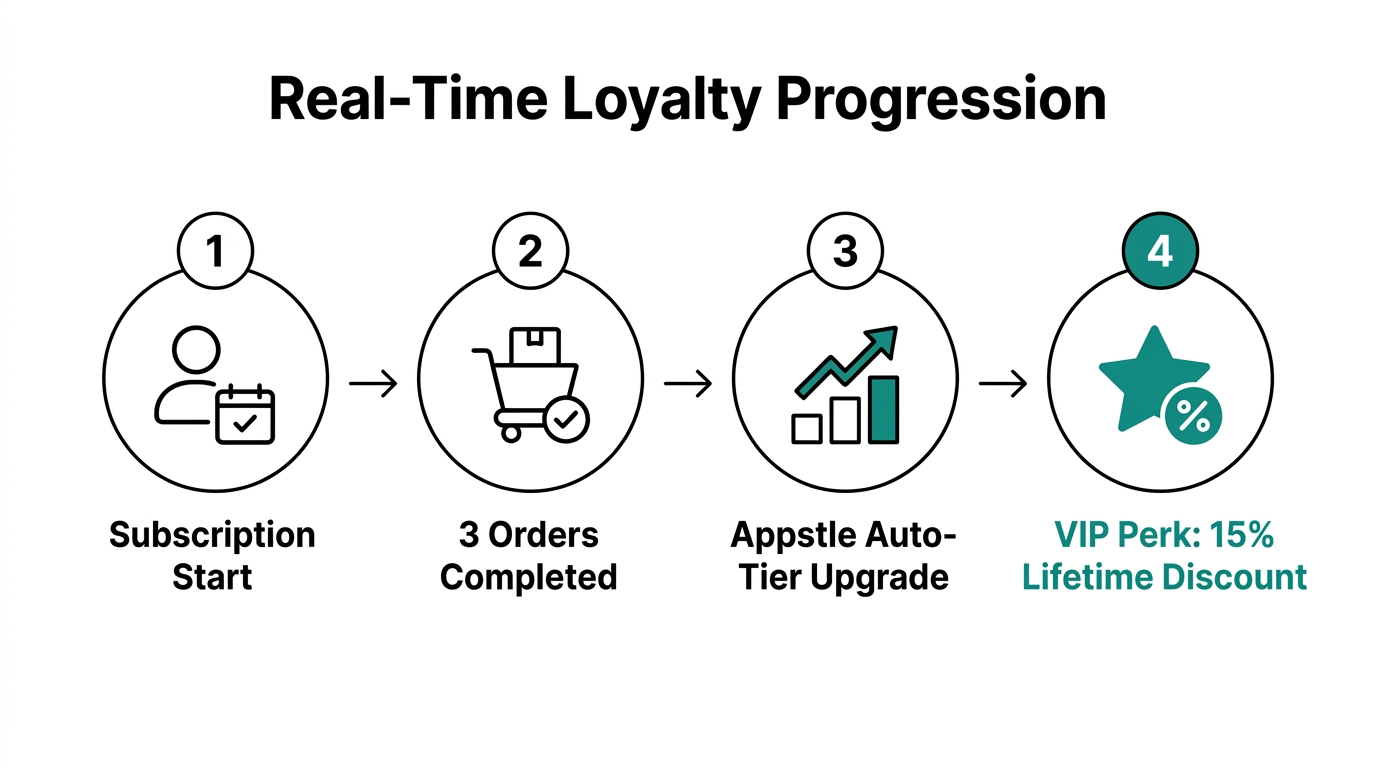
The psychology of loyalty has shifted from purely transactional (points for purchases) to emotional. According to Shopr, 34% of consumers now feel "true emotional loyalty" to brands. To capitalize on this, merchants are moving toward real-time tier upgrades. Instead of waiting for a monthly audit, platforms like Appstle can upgrade a customer's status the second they hit a milestone.
This instant status change triggers a "surprise and delight" notification, often including an immediate experiential reward. This tactic mirrors the success of companies like Sephora, which uses AI to tailor offers based on seasonal needs and skin type, or Nike, which uses AI to predict when a member needs new gear based on fitness milestones.
- Instant Feedback: Customers feel immediate gratification for their engagement.
- Behavioral Rewards: Move beyond spend and reward behaviors like social shares, recycling, or choosing carbon-neutral shipping.
- Micro-Segmentation: Use Zinrelo to offer "early access" to specific drops based on browsing affinity rather than just total spend.
Avoiding the 'Fragmentation Trap' in Data Hygiene
Perhaps the most dangerous pitfall in 2026 is data fragmentation. AI fails if loyalty data is siloed away from POS or ERP systems. When your loyalty data, subscription data, and order history live in different places, your AI cannot build an accurate picture of the customer. This fragmentation is "fatal" for the emerging AI agents that consumers are increasingly using to find the best value, according to research from Loyalty & Reward Co.
To avoid this trap, ensure your Shopify loyalty automation stack is fully integrated. Your retention data from Rebuy and Appstle should flow seamlessly into your ERP (like NetSuite) and your marketing automation tools (like Klaviyo). This ensures that a customer's "VIP" status is recognized whether they are shopping on your mobile app, through a social media link, or in a physical store.
"71% of consumers worry about AI data misuse. Failing to provide consent-first models can destroy brand trust instantly."Brands must prioritize "consent-first" data models to maintain trust, as emphasized by contributors on Medium. Transparency about how AI is using customer data to improve their experience is no longer optional—it is a cornerstone of brand loyalty.
Conclusion: The Future of Retention is Proactive
Reducing churn by 30% is no longer a pipe dream; it is an achievable target for any merchant willing to embrace predictive AI and automated loyalty workflows. By leveraging the combined power of Appstle for predictive modeling and Rebuy for personalized messaging, you can create a retention engine that works while you sleep.
The brands that win in 2026 will be those that treat loyalty as a living, breathing ecosystem—one that prioritizes emotional connection over simple discounts and utility over noise. Start by auditing your current churn data, implementing the 72-hour win-back rule, and ensuring your data is unified across your entire tech stack. For those looking to fuel this engine with the right creators, remember that platforms like Stormy AI are essential for finding the high-quality audiences that convert into long-term, loyal customers.