How to Reduce Support Tickets by 65% Using the OpenClaw Influencer Order Tracking System
Learn how to reduce WISMO support tickets by 65% using the OpenClaw Influencer Order Tracking System to automate Shopify logistics for e-commerce brands in 2026.
In the high-velocity world of 2026 social commerce, the most common phrase echoing through customer support channels isn't a compliment—it's the dreaded "Where is my order?" (WISMO). As influencer marketing matures into a $34.1 billion industry, brands are finding that the logistics of shipping products to hundreds of creators and their subsequent customers is an operational nightmare. Manual tracking is no longer just tedious; it is a profit-killer.
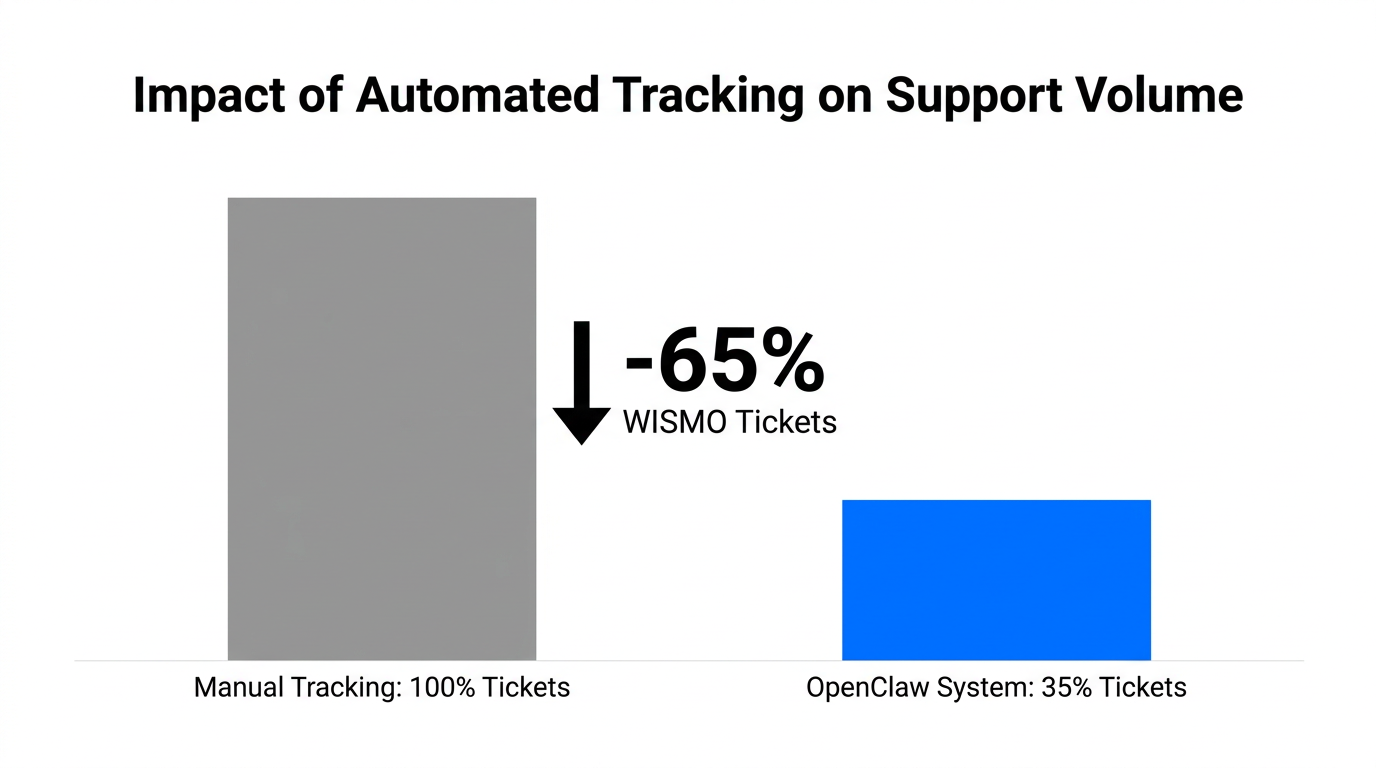
The OpenClaw Influencer Order Tracking System has emerged as the definitive solution for brands running high-volume campaigns. By deploying autonomous AI agents that bridge the gap between e-commerce backends and social messaging apps, brands are seeing a 65% reduction in support tickets within the first month of implementation. This guide provides an operational deep-dive into setting up this system to automate your influencer fulfillment and reclaim your team's time.
The Hidden Cost of Influencer Campaign Logistics
Most marketers focus on the front-end: the creative, the reach, and the engagement. However, the back-end logistics of influencer seeding and customer fulfillment often hide massive overhead costs. When a creator asks for a shipping update or a customer buys through an influencer's TikTok Shop, a manual inquiry usually triggers a chain of Slack messages, emails, and dashboard digging.
Statistics from Archive show that while the average ROI for influencer marketing sits at $5.78 for every dollar spent, top-tier brands using automated attribution and tracking systems are pushing those returns to $18–$20. The difference lies in operational efficiency. By reducing the friction of logistics, you allow your influencer program to scale without a linear increase in support staff.
"The key to scaling social commerce in 2026 isn't just finding more creators; it's automating the 'boring' administrative tasks that happen after the contract is signed."
Understanding the OpenClaw Framework in 2026
OpenClaw is not a traditional software-as-a-service (SaaS). It is a highly customizable, open-source AI agent framework that has taken the marketing world by storm, surpassing 270,000 GitHub stars as of early this year. Unlike rigid platforms, OpenClaw allows you to build "agents" that can think, browse, and interact with your existing tech stack.
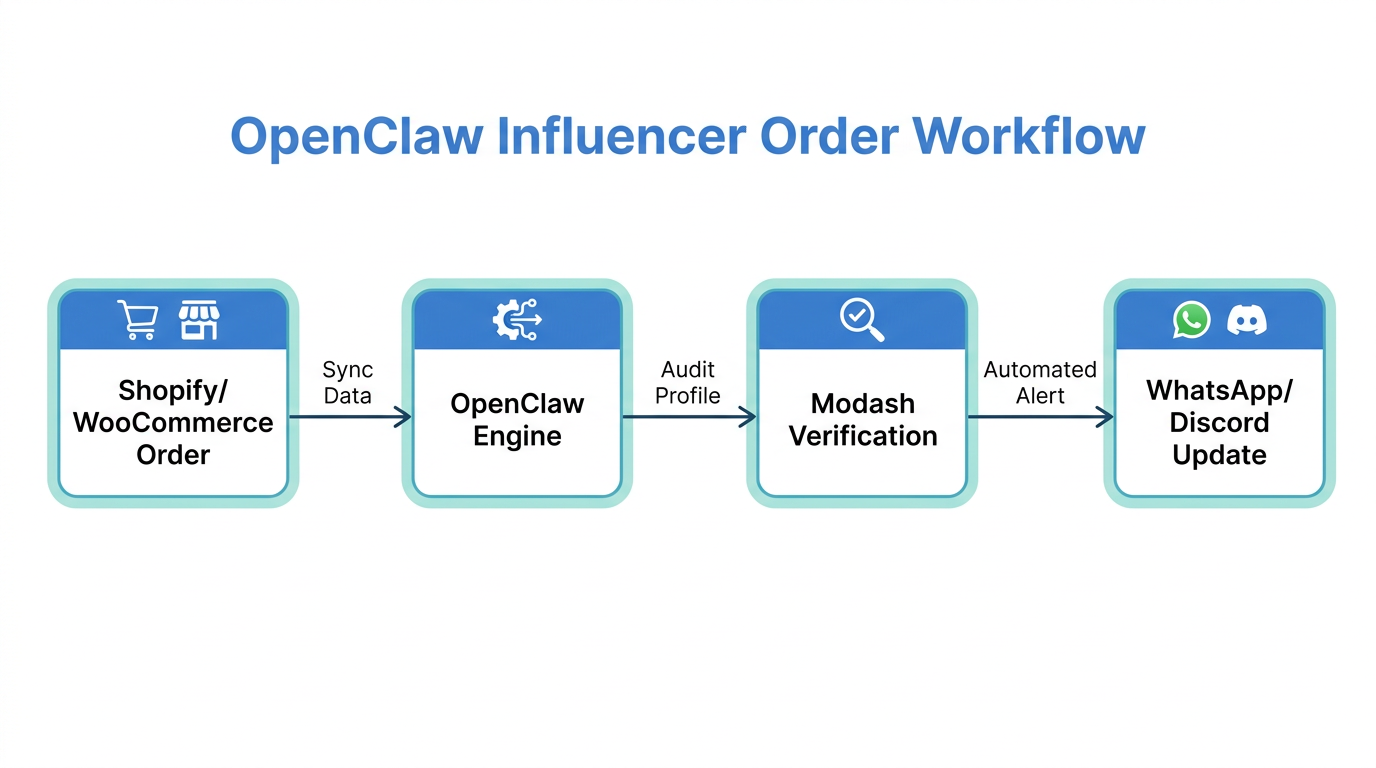
This shift toward B2A (Business-to-Agent) commerce means that influencers are no longer just content creators; they are active storefronts managed by intelligent systems. Experts at Marketing Interactive note that companies adopting "agentic GTM" (Go-To-Market) strategies like OpenClaw report a 55% increase in operational efficiency. These agents don't just send emails; they monitor warehouse data, check carrier APIs, and update stakeholders in real-time.
| Feature | Manual Workflow | OpenClaw AI Agent |
|---|---|---|
| Order Status | Manual lookup in Shopify | Real-time API sync |
| Creator Updates | Email threads / DMs | Automated WhatsApp/Discord pings |
| Anomaly Detection | Discovered after complaints | Proactive flagging of delays |
| Scalability | Limited by headcount | Unlimited automated pings |
Setting Up 'Skills' for Shopify and WooCommerce
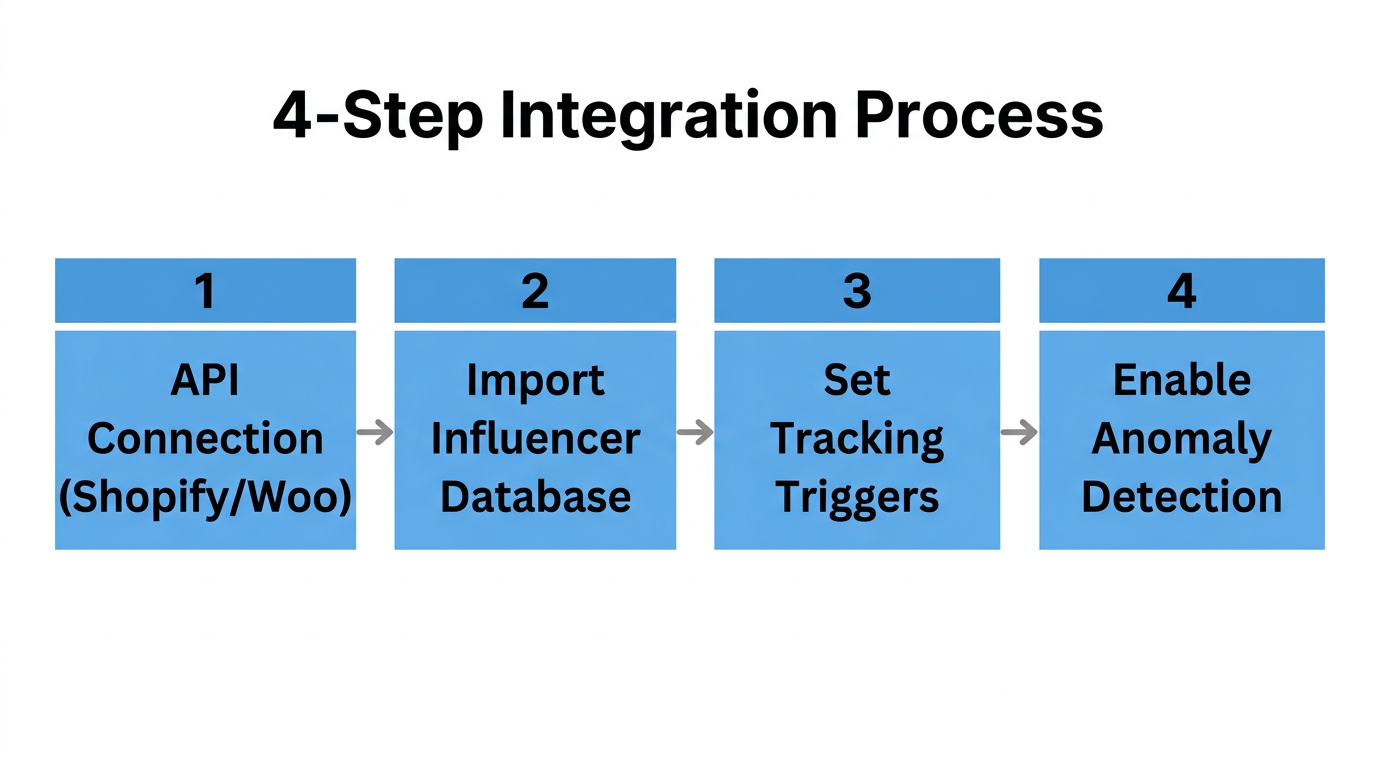
To turn OpenClaw into an order tracking powerhouse, you need to install specific "skills." Skills are essentially plugins that give the agent permission to talk to your e-commerce store. The most popular registry for these is ClawHub, where developers share pre-built connectors.
Step 1: Install WooClaw-Lite or Shopify Connector
If you are running a WooCommerce store, the WooClaw-Lite skill is the gold standard. For Shopify users, you will need to generate a custom Admin API key with read-access to orders and shipping. Once these credentials are plugged into your OpenClaw instance, the agent can "query" order IDs just like a human would, but at lightning speed.
Step 2: Define Specific Skill Descriptions
A common mistake highlighted by Tencent Cloud is using vague skill prompts. Don't just tell the agent to "track orders." Use a specific, instruction-heavy prompt like: "Look up the shipping status, carrier name, and estimated arrival date for customer orders using the provided Order ID from the Shopify API." This level of specificity ensures the agent doesn't hallucinate and provides accurate data to the customer or creator.
Deploying Real-Time Updates on WhatsApp and Discord
The true power of the OpenClaw Influencer Order Tracking System lies in its multi-channel reach. Customers and influencers don't want to log into a portal; they want updates where they already spend their time. By using the SOUL.md protocol, OpenClaw agents maintain persistent memory and a consistent personality across different apps.
For many e-commerce brands, deploying the agent on WhatsApp via the WhatsApp Business API has been the game-changer. When a package leaves the warehouse, the agent automatically sends a message to the recipient with a tracking link and an invitation to ask questions. If the recipient asks, "When will it get here?", the agent uses its Shopify skill to provide the exact date. This proactive communication is exactly how brands like those profiled by Tencent Cloud achieved that 65% reduction in WISMO tickets.
"The goal is to answer the question before the customer even thinks to ask it. That is the essence of agentic logistics."
Automating Anomaly Detection and Quality Control
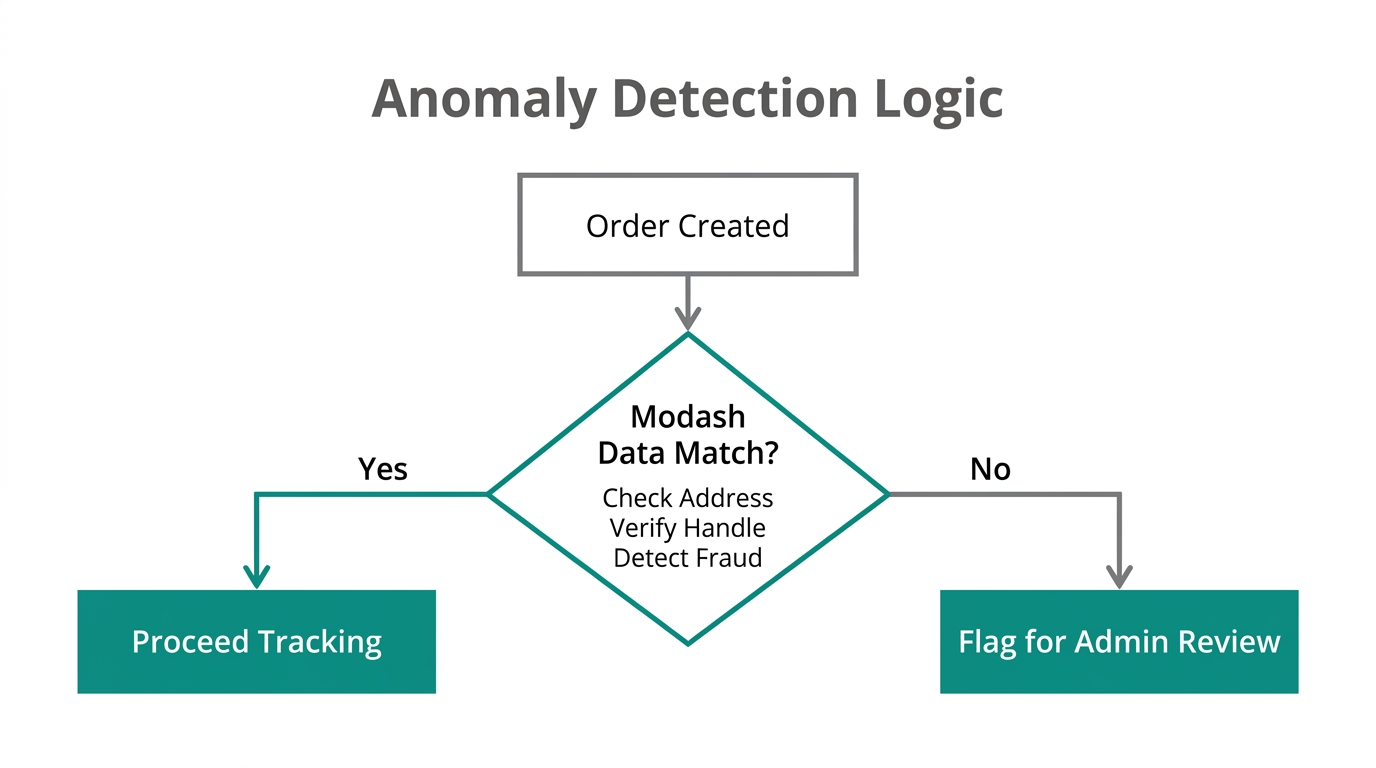
Not every order goes smoothly. Sometimes a tracking number is generated but the package never moves, or an influencer provides a fake address. To handle these edge cases, you should integrate your OpenClaw system with vetting tools.
By connecting an AI-driven vetting platform like Stormy AI, the agent can automatically flag "untrackable" orders from influencers who have high fake-follower scores or suspicious engagement. This ensures you aren't wasting product on creators who won't deliver an ROI. Furthermore, platforms like Stormy AI can be used at the top of the funnel to find high-quality creators, which the OpenClaw agent then manages through the fulfillment lifecycle.
Playbook: Persistent Server Deployment
An AI agent is only useful if it's online 24/7. Running OpenClaw on your local laptop won't work for a global e-commerce operation. You need a persistent server (VPS) to host your agentic pipeline.
Step 1: Choose a Hosting Provider
For brands operating in Asia or looking for aggressive pricing, Tencent Cloud Lighthouse is a top recommendation. For US and European brands, a Hostinger VPS offers an excellent balance of speed and reliability.
Step 2: Hardened Security Baselines
With the rise of the "ClawJacked" vulnerability—where locally running agents could be hijacked—it is critical to use hardened baselines. Only grant the agent the minimum permissions required to perform its task. As noted by Mapify, security should be the first step of deployment, not an afterthought.
| Provider | Recommended Plan | Key Benefit |
|---|---|---|
| Tencent Cloud | Lighthouse (2-core / 4GB) | Global edge nodes & cost efficiency |
| Hostinger | KVM 2 VPS | Ease of use & persistent uptime |
The Future of Social Commerce is Agentic
As we navigate 2026, the brands that win aren't just the ones with the best content, but the ones with the most efficient operations. Reducing support tickets by 65% isn't just about saving money on customer service—it's about building trust. When an influencer knows exactly where their seeding kit is, and a customer receives proactive updates on their purchase, the entire brand ecosystem flourishes.
While OpenClaw handles the logistics, tools like Stormy AI provide the discovery and outreach power needed to feed the top of your funnel. By combining AI-powered discovery with automated tracking, you create a seamless loop from first contact to final delivery. The age of manual WISMO inquiries is over; the age of the AI-powered commerce agent has arrived.