In 2026, the SaaS landscape has reached a critical tipping point. Traditional paid acquisition channels—once the reliable engines of growth—have become prohibitively expensive as customer acquisition costs (CAC) continue to skyrocket across Meta Ads and Google Ads. For software companies to thrive this year, the focus has shifted from high-reach celebrity endorsements to high-authority subject matter experts (SMEs). This is the era of product-led influencer marketing: a strategy where technical social proof and utility-driven content replace flashy, superficial ads.
The global influencer marketing industry has surged past $40 billion in 2026, according to Autofaceless.ai. But for SaaS brands, the real story isn't just the size of the market; it’s the shift in where the money is going. B2B influencer budgets are growing by 34% year-over-year as marketers realize that 87% of B2B buyers now trust peer recommendations and industry experts over branded corporate content, as noted in the latest Edelman Trust Barometer. This article provides an actionable playbook for leveraging this trend to reduce SaaS CAC and build lasting technical authority.
The 'Product-Led Demo' Framework: Beyond the Shoutout
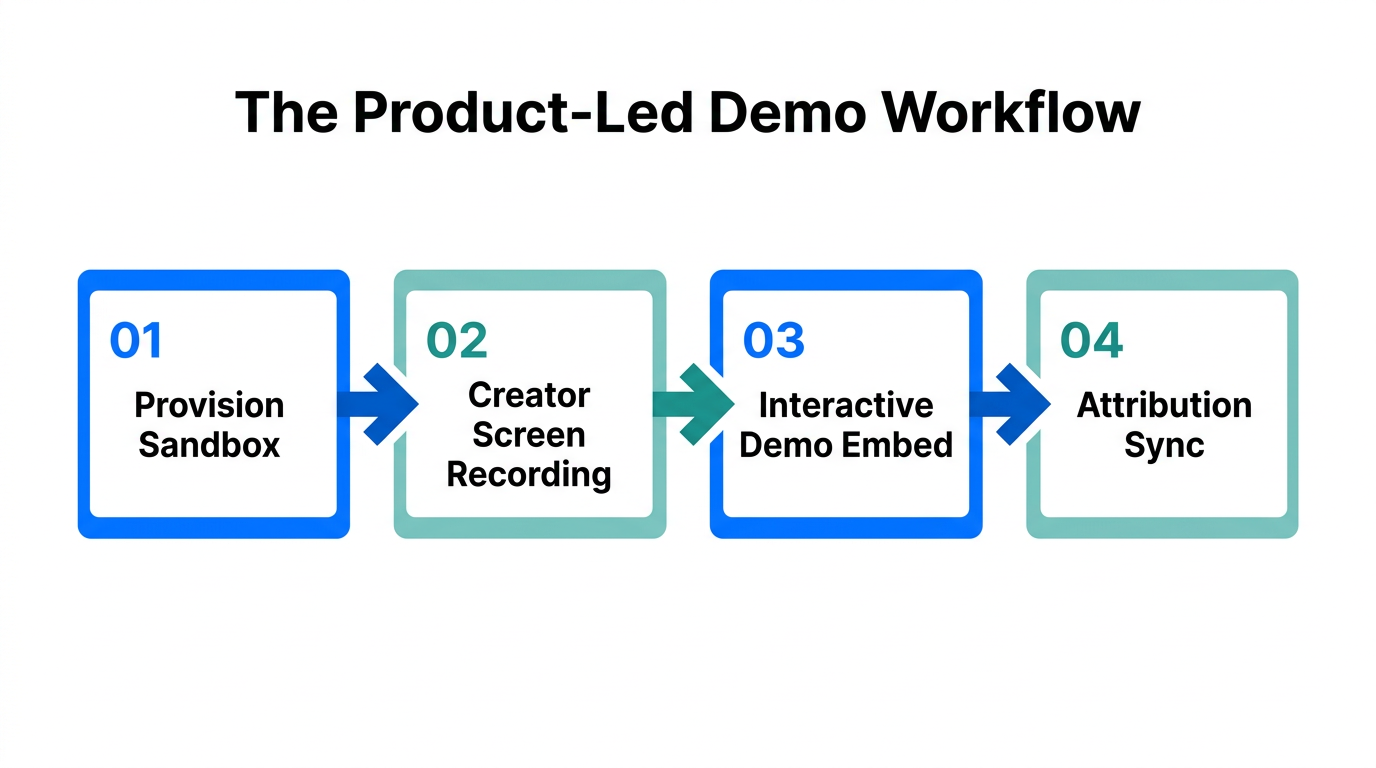
In the past, influencer marketing for software often looked like a scripted mention at the beginning of a video. In 2026, that no longer moves the needle. To reduce SaaS CAC, brands are adopting the Product-Led Demo framework. This involves giving influencers "sandbox" access to the software—a fully functional environment where they can build, break, and explore the tool without restrictions.
Instead of a polished 30-second ad, influencers are producing raw, unedited walkthroughs. Whether it’s a CTO showing a live security integration or a designer building a complex layout from scratch, these SaaS social proof tactics work because they allow the audience to see the product in action. According to Claire Suellentrop of Forget the Funnel, influencers must act as "strategic executors" who guide users through the entire customer journey, from initial discovery to technical onboarding.
"The key to B2B influence isn't reach; it's about who picks up the phone when you call. Depth of relationship beats breadth of followers every single time."When you provide sandbox access, you enable influencers to create content that mirrors the actual user experience. This reduces friction in the sales funnel because by the time a lead reaches your landing page, they have already "seen" the software solve a specific problem in a real-world context. This strategy has been used effectively by brands like Monday.com, who collaborated with industry leaders like Ann Handley to reach over 17 million potential users through educational content rather than pure sales pitches.
Why Use-Case-Led Messaging Converts 60% Better
One of the biggest shifts in 2026 is the abandonment of the "feature list." Most SaaS companies spend years building features, but customers only care about outcomes. Research from IQFluence shows that use-case-led messaging converts 60% better than traditional feature-based promotion.
When an influencer demonstrates a specific use case—such as "How I used this design tool to create 50 social media posts in 10 minutes"—they are providing immediate, relatable value. This is why micro-influencers (those with 10k–100k followers) are the gold standard for SaaS growth. As Together Agency points out, these creators deliver 60% higher engagement rates than mega-influencers at roughly 1/10th of the cost.
| Strategy Component | Traditional Influencer Marketing | Product-Led Influencer Marketing |
|---|---|---|
| Content Format | Scripted Ad Reads | Unedited Workflow Demos |
| Targeting | Broad Demographic | Niche Technical Authority |
| Messaging | Feature Lists | Problem-Solution Use Cases |
| Goal | Brand Awareness | Lower CAC & High-Intent Leads |
To implement this, your brief should focus on a single pain point. For example, if you are marketing an A/B testing tool, don't ask the influencer to talk about your "proprietary algorithm." Ask them to show how they identified a conversion leak in their own funnel using your tool. This humanizes the software and builds the human trust that Morgan J Ingram emphasizes as essential for standing out in a world of AI-generated corporate noise.
Integrating SEO: Securing Authoritative Backlinks
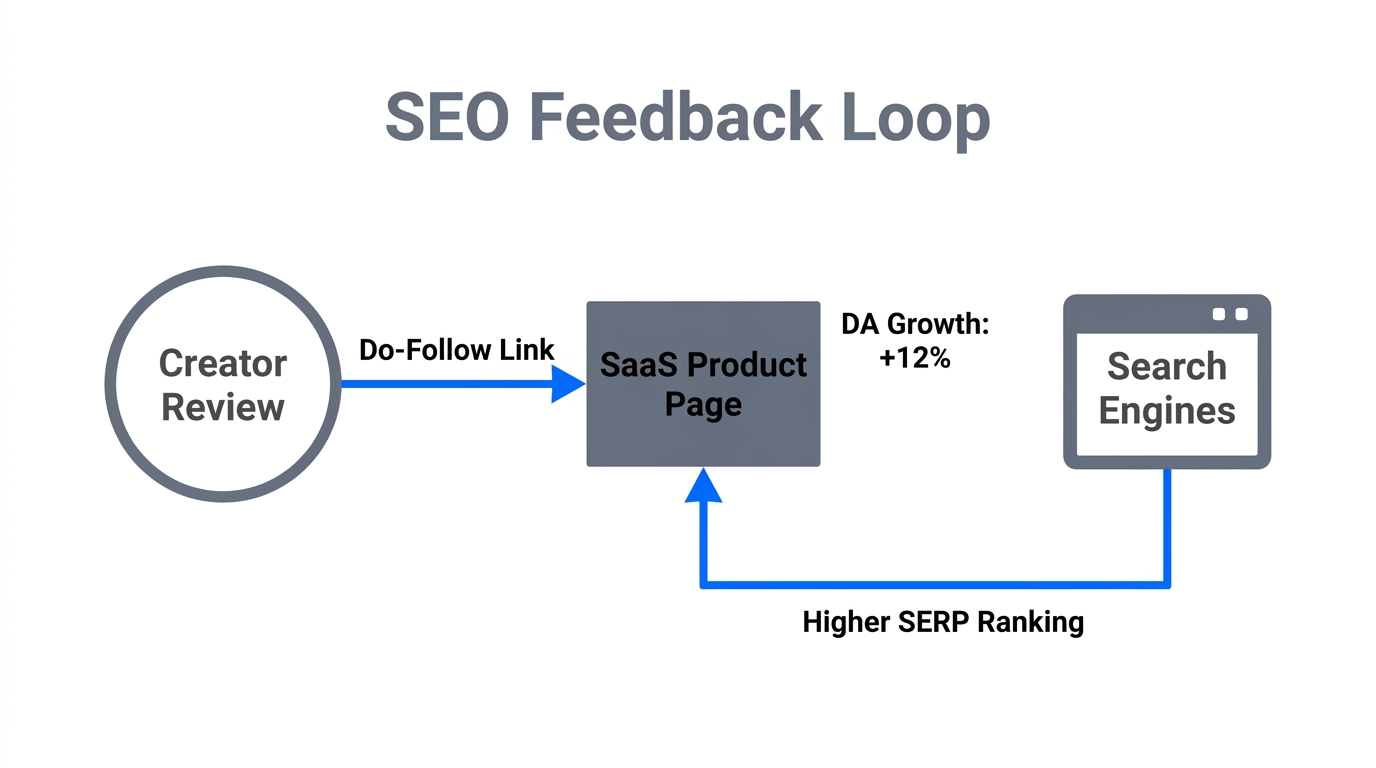
A common mistake in influencer marketing is treating social posts as ephemeral. In 2026, savvy SaaS marketers are using influencers to boost their organic search presence. This is where influencer SEO backlinks come into play. Instead of just focusing on TikTok or Instagram, brands are prioritizing partnerships with influencers who own high-DR (Domain Rating) blogs or professional websites.
A backlink from a niche-relevant expert provides significant "link juice" that helps your main domain rank for competitive keywords. Use tools like Ahrefs or SEMrush to verify the domain authority of your potential partners before signing a contract. A single guest post or a detailed review on a DR 70+ site can provide long-term traffic that far outlasts a 24-hour Instagram story.
"The ROI of a social post ends in 48 hours. The ROI of an expert backlink on a high-DR blog can last for years."Platforms like Stormy AI can help you filter for creators who have an established web presence beyond social media, ensuring your campaign contributes to your long-term SEO strategy while simultaneously driving immediate social traffic. By combining influencer SEO backlinks with SaaS social proof tactics, you create a multi-layered acquisition strategy that lowers the blended CAC across all channels.
Synchronizing YouTube Deep-Dives and LinkedIn Newsletters
In 2026, content doesn't exist in a vacuum. The most successful product-led campaigns use multi-channel synchronization. The goal is to meet the B2B buyer wherever they are in their workday. A typical high-converting workflow looks like this:
- YouTube: The influencer records a 10-15 minute technical deep-dive or tutorial. This lives as a long-term resource for search queries.
- LinkedIn Newsletters: The key takeaways and a 2-minute highlight clip are distributed to the influencer's LinkedIn newsletter audience.
- Dark Social: The influencer shares the "behind the scenes" results in their private Slack or Discord communities, where high-level decision-makers often congregate.
This "always-on" approach treats influencers as brand ambassadors rather than one-off vendors. For example, leading SaaS organizations use their brand ambassadors to promote software via specialized training and certifications, effectively decentralizing their entire marketing department through expert education. This multi-touch attribution is harder to track via traditional means, but it is precisely where Dark Social influence happens—in the private conversations where software decisions are actually made.
Steps to Avoid the 'Over-Edited' Content Trap
As AI design tools like Canva and CapCut become more prevalent, audiences have developed a "sixth sense" for content that feels manufactured. To maintain trust, your influencer content must feel like a genuine recommendation from a colleague. Here is a quick playbook for keeping it real:
- Limit the script: Provide key talking points and technical requirements, but let the creator use their own voice and vocabulary.
- Encourage 'Errors': If a creator runs into a minor technical hurdle and shows how they solved it using your tool, it makes the demo feel 10x more authentic.
- Use native formats: Don't try to force a horizontal YouTube format onto a vertical TikTok screen. Let the platform dictate the style.
- Focus on quality: Use advanced AI-powered vetting tools to analyze audience quality and ensure you aren't paying for bot engagement.
By following these steps, you ensure that your product-led influencer marketing efforts feel like a natural extension of the creator's content. This transparency is not just a moral choice; it's a legal one. Failing to follow FTC guidelines for sponsored content can lead to severe penalties and a total loss of brand credibility, as highlighted by Archive.com.
"Authenticity is the only currency that doesn't depreciate in the influencer economy of 2026."Measuring Success: Beyond Vanity Metrics
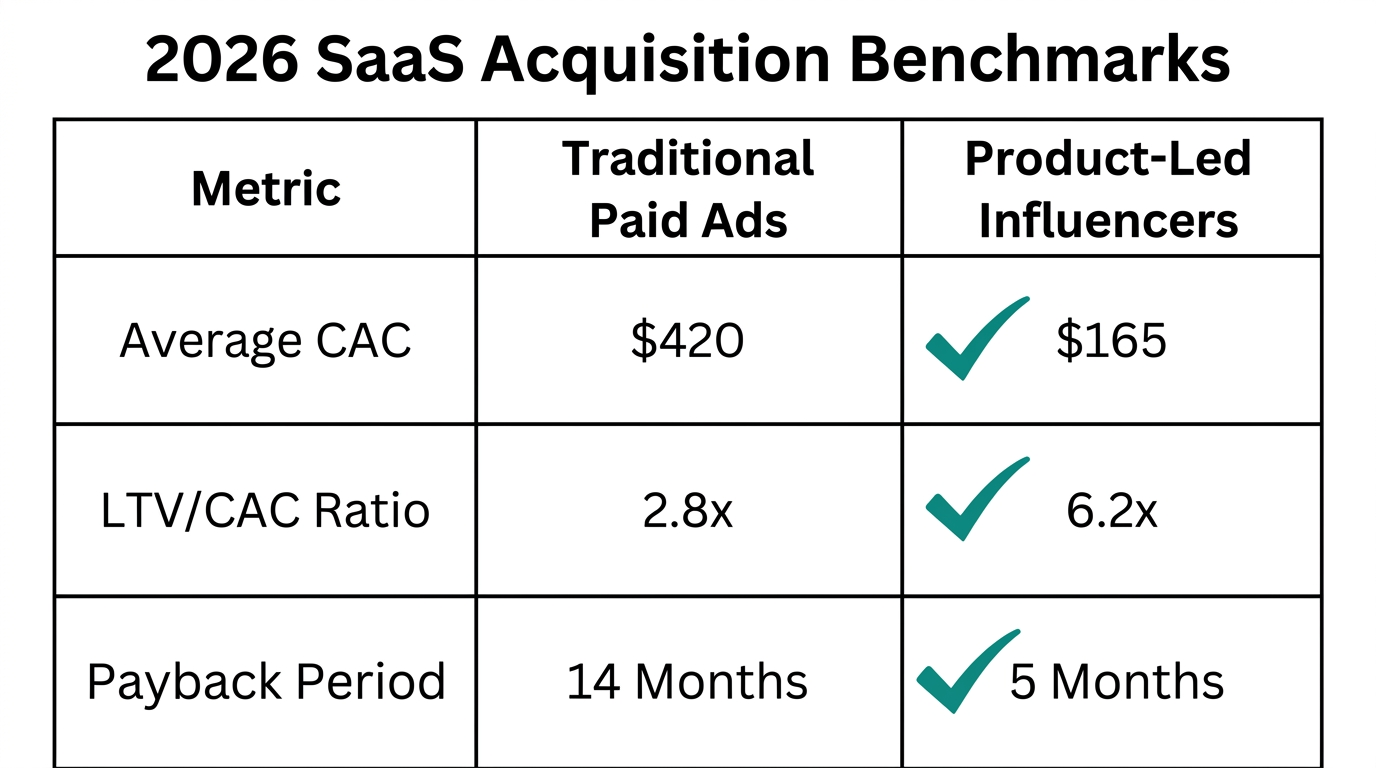
Finally, to truly reduce SaaS CAC, you must measure what matters. In 2026, follower counts and likes are considered vanity metrics. Instead, focus on Technical Relevance and Conversion Intent. High-performing SaaS brands use tools like Stormy AI to track the actual impact of influencer content across TikTok, YouTube, and Instagram, monitoring everything from engagement quality to actual post performance.
When analyzing your campaign, look for "high-intent" signals: Are people asking technical questions in the comments? Are they sharing the video into private Slack channels? Are they signing up for demos using the influencer's unique link? By focusing on these metrics, you can refine your strategy and double down on the creators who actually drive revenue, rather than just noise.
The Future of SaaS Growth
Reducing SaaS CAC in 2026 requires a fundamental shift in how we think about influence. It is no longer about the largest audience; it is about the most trusted authority. By implementing a product-led influencer marketing strategy—focusing on sandbox demos, use-case-led messaging, and authoritative SEO backlinks—brands can build a sustainable acquisition engine that thrives even as traditional ad costs rise.
The era of the "shoutout" is over. The era of the expert educator has begun. For companies looking to scale their creator programs with AI-powered discovery and automated outreach, Stormy AI provides the tools needed to find, vet, and manage the technical influencers who will define the next decade of SaaS growth.