In 2026, the standard for a "high-converting" landing page has shifted from static designs to autonomous, real-time personalization. As customer acquisition costs (CAC) continue to climb, performance marketers can no longer rely on generic templates or slow, manual A/B testing. The latest data from Gartner valued the AI developer tool market at $7.1 billion this year, and this explosion in agentic technology is finally being applied to the core of growth marketing: the landing page.
We have entered the era of the "Infinite Landing Page," where code is no longer written once and deployed. Instead, agents like Claude Code are being used to build sites that dynamically rewrite their own components based on visitor intent, LinkedIn profiles, and real-time social sentiment. This guide explores how technical marketers are leveraging Claude Code personalization and the Model Context Protocol (MCP) to achieve CPA reductions of up to 45%.
The Shift from Static Templates to Edge Personalization
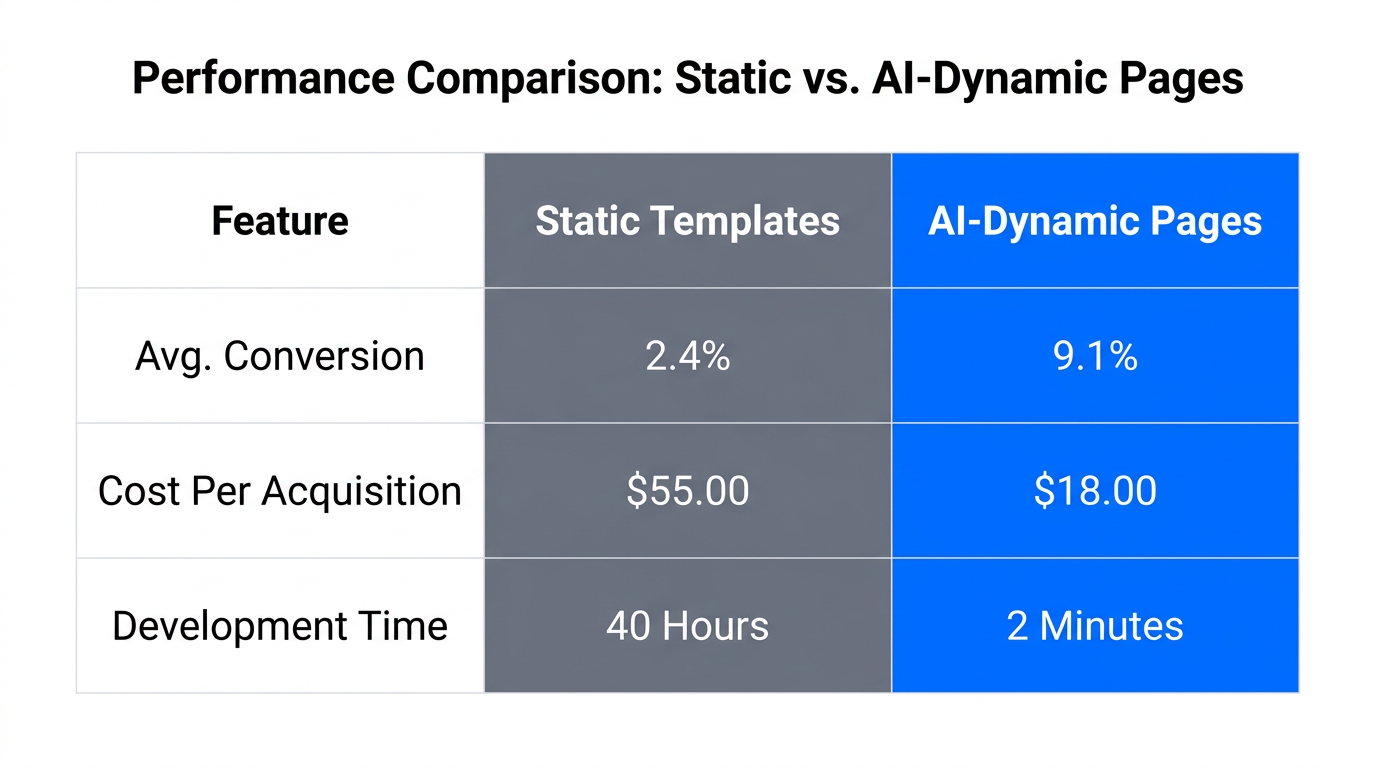
For years, the landing page software market—now estimated at $1.8 billion in 2026—was dominated by no-code builders. However, high-performance, custom-coded pages now command a 40% premium in lead generation ROI due to their superior performance on Google's Core Web Vitals. As of early 2026, 68% of Series A/B startups have moved away from traditional agencies, opting instead for agentic CLI tools to build their marketing assets, according to the State of AI Report 2026.
This shift to "Edge Personalization" allows developers to create dynamic landing pages 2026 users expect—pages that load in under a second and change their content to match the specific search query or user persona. Using tools like v0.dev for initial UI and Claude Code for the implementation, companies are seeing conversion lifts of 30-50% by eliminating the friction of generic messaging.
"The barrier to entry for high-end web design has vanished. Tools like Claude Code mean the 'developer' is now a product manager of AI agents." — Amjad Masad, CEO of Replit
Using MCP Servers for Shopify and Salesforce Integration
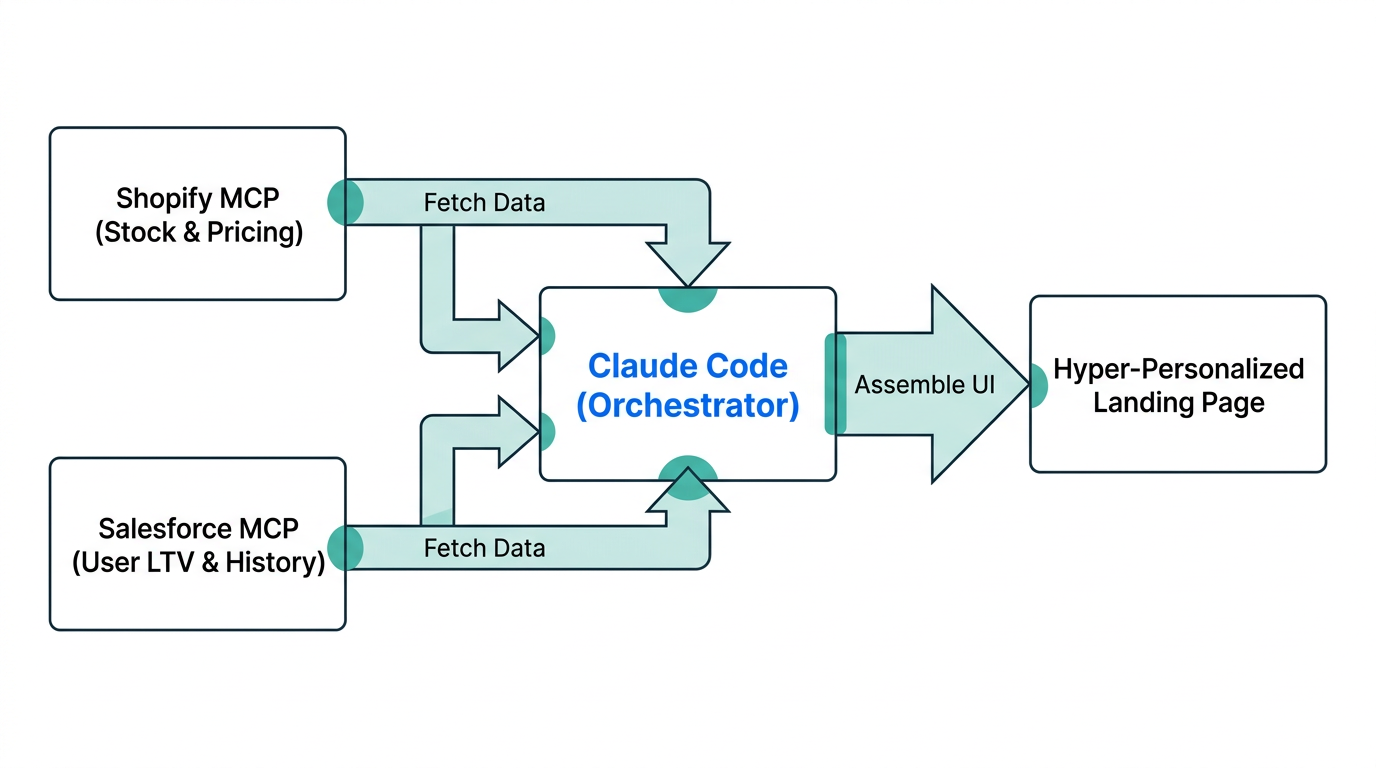
One of the most significant breakthroughs in 2026 is the Model Context Protocol (MCP). This protocol acts as the "USB-C for AI," allowing Claude Code to interact directly with your business data. For example, a MCP server for Shopify SEO allows the AI to read live inventory levels and adjust landing page copy to highlight "limited stock" or "trending now" items automatically.
By connecting Claude Code to Salesforce, marketers can create AI driven lead generation funnels that recognize a returning lead and serve a personalized pricing component based on their previous interaction history. According to research on Claude Code MCP conversion lift, brands using these integrations report an average 23% lift in conversion rates. The brand Tushy even achieved conversion rates as high as 15% by utilizing agents to handle complex pre-sale technical queries on-page.
The 4-Phase Workflow for Scaling High-Conversion Pages
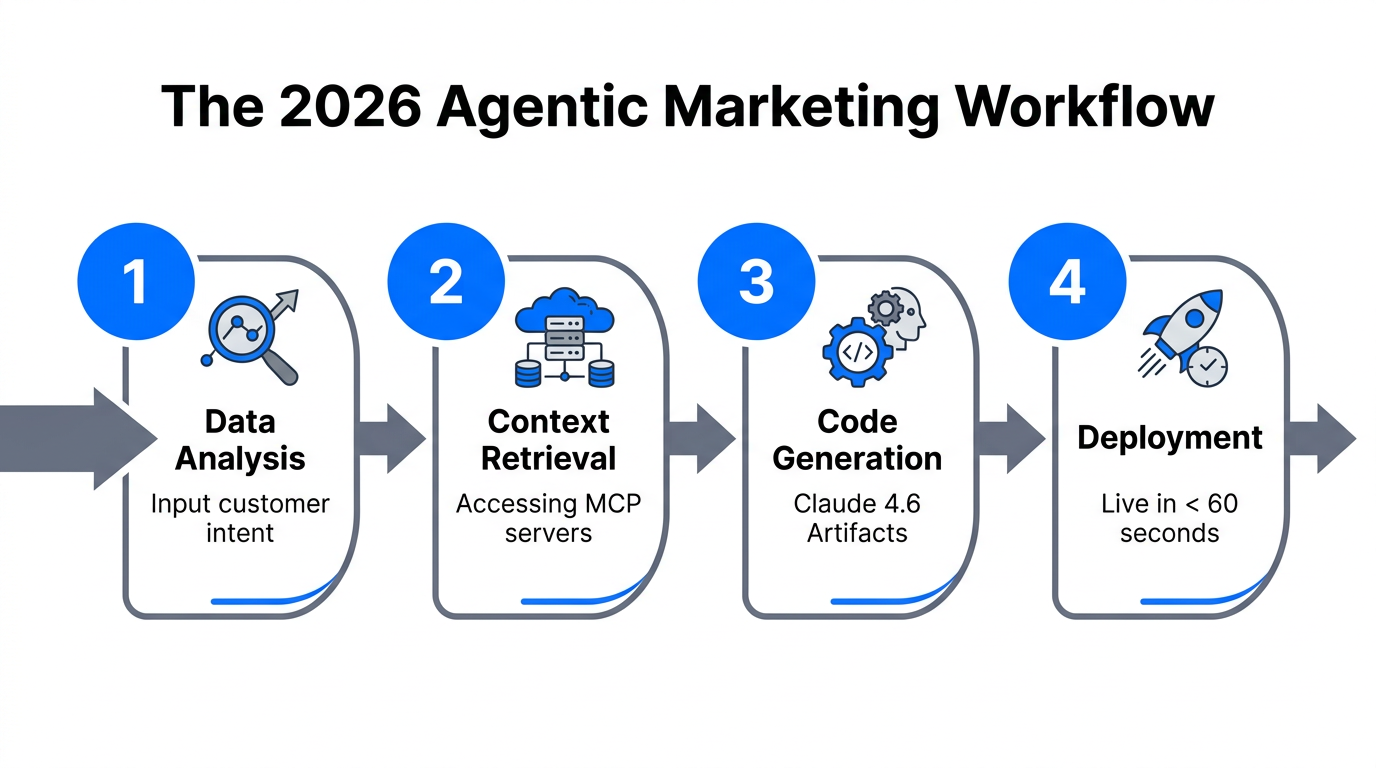
To reduce customer acquisition cost AI must be implemented systematically. Below is the 2026 playbook for generating 50+ industry-specific subdirectories to hyper-personalize your funnel.
Step 1: Scaffolding with Agentic CLI
Begin by initializing your project using a clean, performant stack like Next.js and Tailwind CSS. Avoid heavy plugins. Use a command like: claude code: "Initialize a Next.js project. Create a high-conversion hero section for a B2B SaaS. Use a dark theme and include a multi-step lead form."
Step 2: Dynamic Copy Injection
Instead of manual writing, provide the agent with a CSV of customer pain points and industry data. Task the agent with refactoring components to address these points. This method helped a solar SaaS project generate 50 unique subdirectories, resulting in a 45% reduction in CPA compared to their generic pages.
Step 3: Speed and Core Web Vitals Optimization
Page speed is a non-negotiable conversion factor. Use Claude Code to optimize bundle sizes and move non-critical JavaScript to web workers. In one case study, a fintech startup saw their Largest Contentful Paint (LCP) drop from 2.8s to 0.9s, leading to a 22% conversion increase in 30 days.
Step 4: Autonomous Deployment and Tracking
Instruct the agent to write GitHub Actions for deployment to Vercel and integrate tracking pixels. Modern workflows often involve using PostHog to feed conversion data back into the AI agent for automated A/B testing.
| Feature | Claude Code (Agentic) | No-Code Builders | Traditional Dev |
|---|---|---|---|
| Speed to Live | Minutes | Hours/Days | Weeks |
| Performance | 100/100 | 70-90/100 | Variable |
| Cost | Low (Tokens) | Medium | High ($$$$) |
| A/B Testing | Autonomous | Manual | Manual |
Leveraging the 1-Million-Token Window of Claude 4.6
The release of Claude 4.6 Opus on February 5, 2026, introduced a massive 1-million-token context window. This is a game-changer for maintaining brand consistency. Marketers can now feed entire corporate brand bibles, design systems, and historical campaign data into the agent's context. This allows the agent to "remember" the specific hex codes and tone-of-voice constraints across hundreds of localized pages.
For global brands, this means scaling dynamic landing pages 2026 requires significantly less human oversight. The agent understands the global brand intent while localizing the copy for 20+ different regions simultaneously. This level of scale was impossible with previous generations of LLMs that suffered from "context drift."
"Claude Code is designed to be a collaborator that understands the intent behind the software, not just the syntax." — Dario Amodei, CEO of Anthropic
Automating the 'Vibe Marketing' Cycle
One of the most innovative strategies this year is "Vibe Marketing"—the practice of adjusting landing page copy in real-time to match trending social sentiment. By integrating sentiment data from platforms like Stormy AI, which tracks influencer trends and social vibes, Claude Code can rewrite headlines to mirror the exact language your target audience is using on TikTok or LinkedIn right now.
Marketers using this agentic workflow have seen a 30% reduction in average CPA by automating this feedback loop. For instance, if a specific aesthetic or "vibe" goes viral in your niche, your AI agent can detect it through the Stormy AI search and analytics suite, then immediately update your TikTok Ads Manager landing pages to reflect that trend. This ensures your brand always feels relevant and "in the moment."
Navigating the 2026 Agentic Landscape
While Claude Code is the power user's choice for complex architecture, the ecosystem in 2026 is diverse. Choosing the right tool depends on your technical comfort level and the complexity of your funnel.
- Cursor: The standard IDE for developers who want the most polished "tab-to-complete" experience (Cursor.com).
- Lovable.dev: The favorite for non-technical founders, allowing for functional app generation in under 90 minutes (Lovable.dev).
- Replit Agent: The leader for mobile-native and solo builders who need an all-in-one hosting and dev environment.
- Claude Code (CLI): Best for technical growth engineers who require raw power and deep integration via MCP.
However, users must be wary of the "Quality Cliff." A 2026 study by Stack Overflow found that AI-authored pull requests have 75% more logic errors than human code. Always ensure your agentic workflow includes a human-in-the-loop or automated unit testing to prevent "token bleed" and silent failures in your conversion funnel.
Conclusion: The Future of Conversion Engineering
The era of manually tweaking button colors is over. In 2026, reducing customer acquisition cost AI strategies requires a shift toward agentic engineering. By utilizing Claude Code, the 1-million-token window of Claude 4.6, and MCP integrations, brands can build an "Infinite Landing Page" system that scales revenue while humans focus on high-level strategy.
As you build your 2026 growth stack, remember to pair your agentic coding tools with robust analytics. Use tools like Stormy AI to discover the creators and trends that will feed your AI copywriter, and deploy your pages via Vercel for maximum performance. The companies that master this autonomous conversion cycle will be the ones that survive the rising costs of the digital advertising landscape.