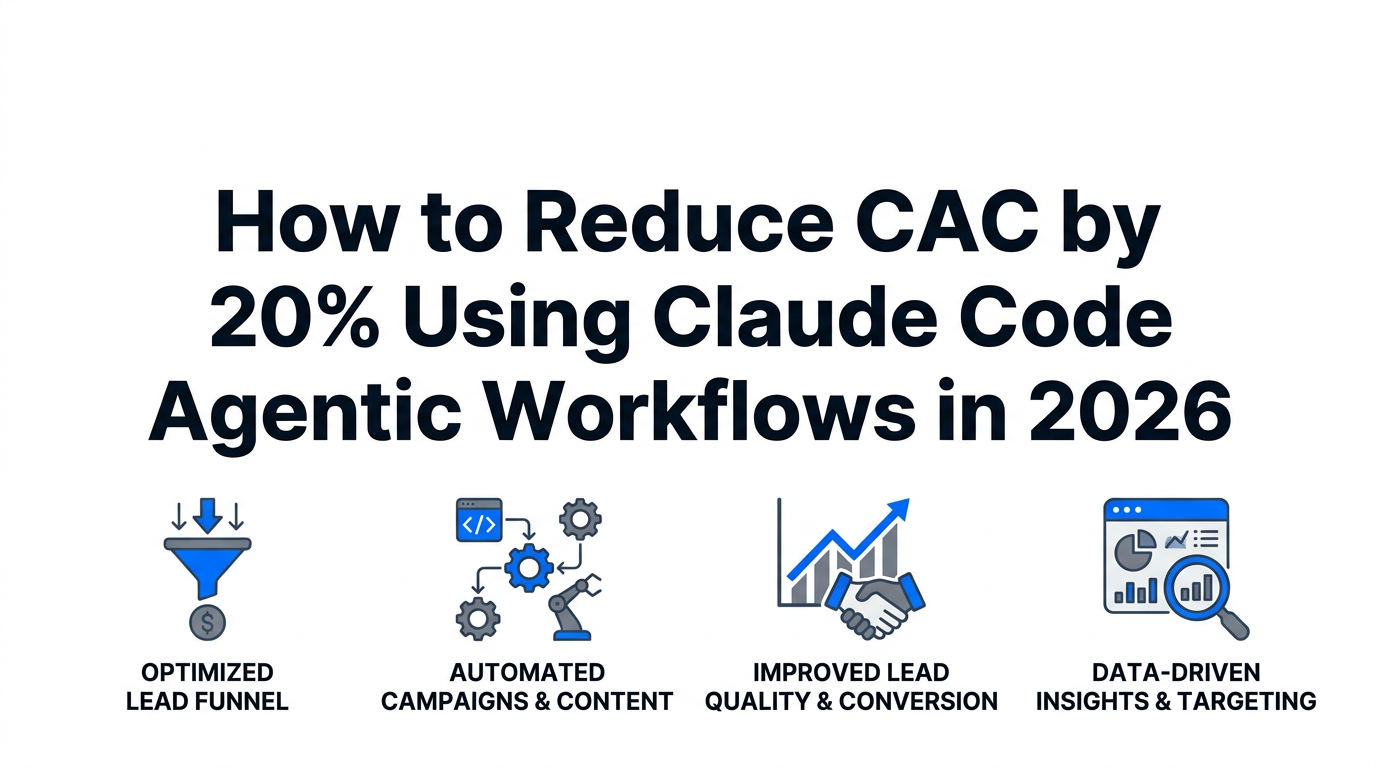
In 2026, the Customer Acquisition Cost (CAC) crisis is no longer a matter of bid strategy, but of technical agility. As the global AI code assistant market has surged to over $27 billion according to Fortune Business Insights, a new breed of growth leader has emerged. They aren't just adjusting budgets; they are deploying agentic marketing workflows to automate the infrastructure that used to require a six-figure engineering team. By leveraging tools like Claude Code, brands are seeing a 15–20% reduction in CAC through the elimination of data silos and the implementation of self-healing tracking systems. This guide explores how CMOs and growth leads are utilizing AI-driven marketing engineering to dominate the 2026 landscape.
The Dawn of the Marketing Engineer: A 2026 Job Requirement
The barrier between the marketer and the developer has officially eroded. According to latest 2026 LinkedIn Jobs Data, over 65% of Senior Growth Manager roles now explicitly require experience with "agentic workflows" or tools like Claude Code and Cursor. This shift has birthed the Marketing Engineer—a professional who uses natural language to build production-grade infrastructure.
"The hottest new programming language is English, and it’s being spoken loudest in the marketing department."This quote, popularized by Andrej Karpathy, has become the rallying cry for non-technical marketers. Instead of waiting three weeks for a dev ticket to update a tracking pixel, marketers now use Claude Code to research the Google Ads API and write scripts that export spend data directly into custom dashboards. This autonomous execution is why Anthropic’s tool has reached a $2.5 billion revenue run rate this year, as reported by TIME.
Building the 'Self-Healing' Marketing Stack
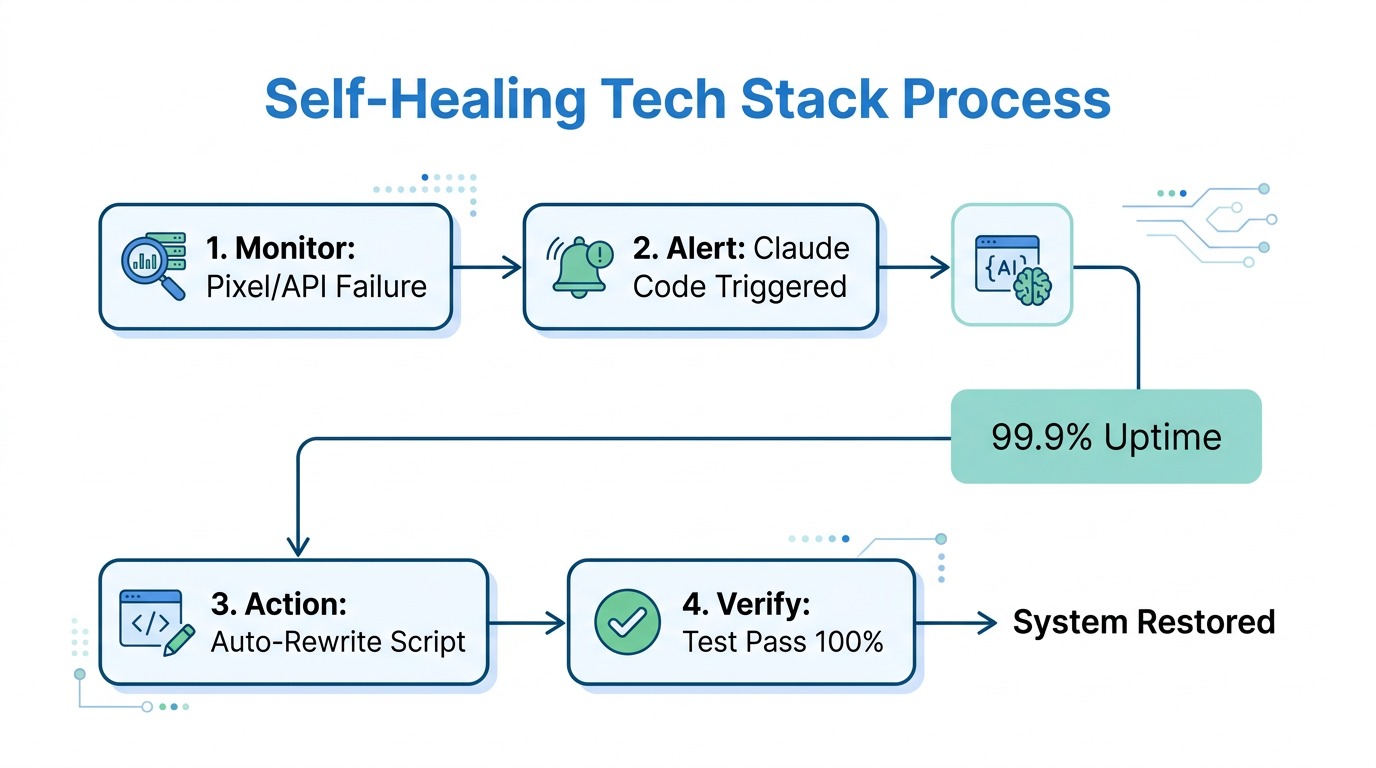
One of the primary drivers of high CAC is data leakage—broken pixels, misattributed conversions, and failed API calls. In the past, these issues would go unnoticed for weeks. Today, self-healing marketing stacks powered by Claude Code sub-agents automatically detect and fix these errors in real-time.
For instance, if a Meta Ads pixel stops firing due to a website update, a Claude-powered agent can identify the script failure, cross-reference the documentation, and deploy a patch via the terminal. This level of automation is reducing total content and campaign production time by 40–60%, according to research from Digital Applied. By ensuring 100% data integrity, brands can optimize their budgets with surgical precision, directly contributing to reduce CAC with AI automation.
Teams are also connecting these agents to their influencer workflows. For example, growth teams use Stormy AI to discover high-performing creators, then deploy Claude Code agents to build custom scripts that sync Stormy AI's engagement data into a centralized Creator CRM for automated contract management.
Eliminating Agency Fees: The $15,000 Dashboard in 72 Hours
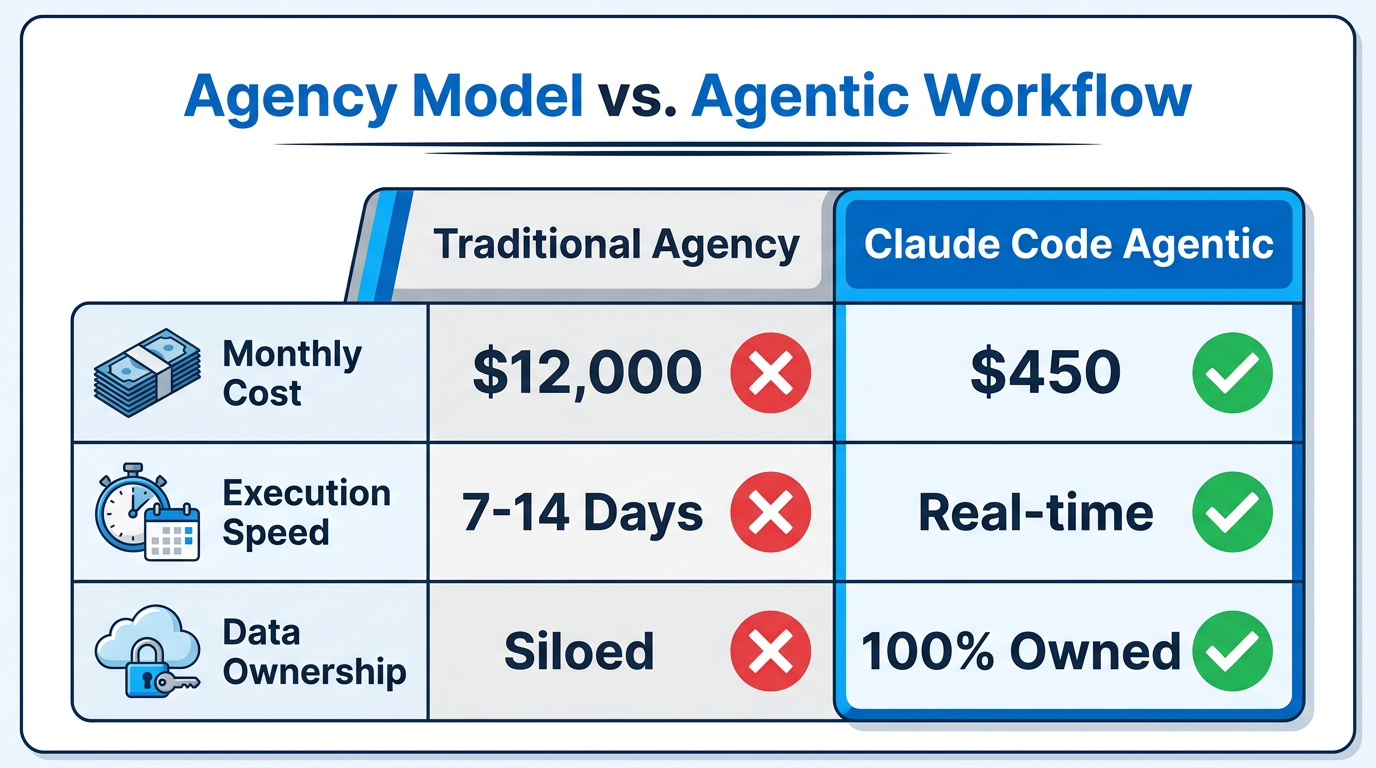
The traditional agency model is under fire. In 2026, solo growth marketers are performing tasks that previously required entire departments. A notable case study from a Series A FinTech brand revealed that a single marketer used Claude Code to build a custom multi-touch attribution (MTA) dashboard in just three days. Previously, this project had been quoted at $15,000 by a specialized data agency.
"We didn't just save $15k; we gained 100% data ownership and saw a 22% increase in budget efficiency because we finally understood our cross-channel impact."Similar results are being seen in e-commerce. As noted by Shopify Case Studies, brands are using Claude to write Python scripts that scrape competitor pricing via tools like Firecrawl and adjust their own store pricing via API—a move that has boosted conversion rates by 8% almost overnight. This shift toward local-first agents that have permission to manage marketing files and folders is the ultimate competitive advantage in a high-inflation ad market.
| Feature | Claude Code (Anthropic) | Cursor (AI Editor) | Replit Agent |
|---|---|---|---|
| Best For | Autonomous Agents & Automation | Rapid UI/Frontend Iteration | Prototyping & Hosting |
| Agentic Ability | High (Terminal Control) | Medium | High (Sandbox-based) |
| Context Window | 200K - 1M Tokens | 70K - 120K | Variable |
| Efficiency | 5.5x more efficient per task | Standard | High for web apps |
Security Protocols for CMOs: Managing Shell Access and Risks
While the ROI is undeniable, giving an AI agent permission to run commands on a corporate laptop introduces significant risks. The release of Claude Code in early 2025 was followed by the discovery of vulnerabilities such as CVE-2025-59536, which could allow remote code execution if a user interacted with a malicious repository. As reported by IT Pro, these flaws have since been patched, but they highlight the need for strict security protocols.
CMOs must enforce the following security standards for their marketing engineering teams:
- Human-in-the-Loop: Never allow an AI to deploy code to a production server without a manual review.
- Prompt Injection Awareness: Be wary of agents reading untrusted third-party data, which can be used to trick the model into executing unauthorized commands, a risk highlighted by CPI Consulting.
- Context Management: Use a
CLAUDE.mdfile in your marketing folders to serve as a permanent memory for brand guidelines and experiment history, preventing "context rot" as discussed by Stormy AI's analysis.
"Security in 2026 isn't just about firewalls; it's about governing the permissions of the AI agents that hold the keys to your marketing data."The Playbook: Implementing Claude Code in Your Marketing Org
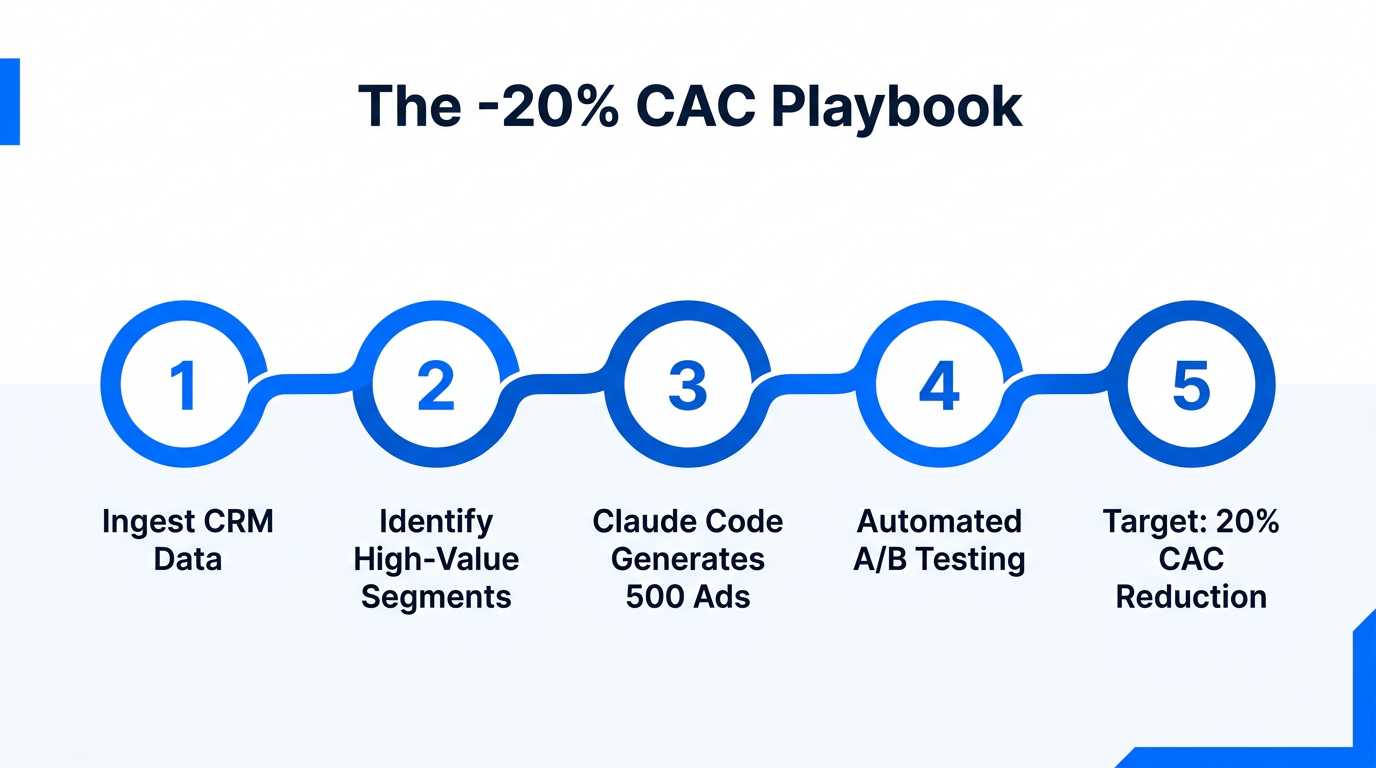
Transitioning to an AI-driven marketing engineering model requires a phased approach to overcome what experts call the "Terminal Wall." Follow this sequence to begin reducing your CAC by 20%.
Step 1: The Sandbox Phase
Start your team on Claude.ai using the "Artifacts" feature. Use this to generate simple HTML/CSS for landing pages or to visualize PPC data. This builds confidence without the need for technical setup.
Step 2: The Guided Automation Phase
Shift to Cursor. Use the "Composer" (Cmd+I) to ask for marketing scripts. Because it provides a visual interface, it is far less intimidating than a command-line tool, making it ideal for the 92% of developers—and now marketers—who use AI coding tools according to GitHub's Octoverse report.
Step 3: Full Agentic Deployment
Install the Claude Code CLI via npm install -g @anthropic-ai/claude-code. Start with low-risk tasks: "Claude, audit this landing page for SEO best practices and check if our GA4 script is loading correctly." Only move to agentic marketing workflows for budget management once the team has mastered the environment.
claude /doctor command regularly to ensure your local environment is optimized and free of installation errors that frequently cause 70% of beginners to quit.Conclusion: The Future of Growth is Built, Not Bought
By 2026, the brands winning the war on CAC are those that have traded their agency retainers for internal Claude Code ROI marketing systems. The ability to build, fix, and optimize your own marketing stack in real-time is no longer a luxury—it is the baseline for survival. Whether you are using Stormy AI to automate your influencer discovery or deploying Claude to build custom attribution models, the message is clear: the most valuable asset in your marketing department is no longer your budget, but your team's ability to direct the machines that spend it.
As Scott Brinker of HubSpot famously noted, the no-code revolution is being swallowed by the AI-code revolution. Don't just watch it happen—start building your self-healing marketing stack today.