How to Reduce Amazon Sponsored Products ACoS in 2026: The Efficiency Era
Master Amazon ACoS optimization in 2026. Learn how to combat rising CPCs with inventory-aware bidding, long-tail harvesting, and AI-driven efficiency.
Welcome to the Efficiency Era. In 2026, the Amazon advertising landscape has matured into a high-stakes, agentic battlefield where total ad revenue is projected to hit $82.07 billion. For ecommerce operators, the old playbook of "spend to grow" has officially failed. Average Amazon Sponsored Products costs have surged, with CPCs reaching $1.34—a staggering 34% increase from just two years ago, according to Statista. To maintain profitability, brands must move beyond manual keyword adjustments and embrace an inventory-aware, AI-first strategy. This guide outlines the exact playbook for reducing your ACoS while navigating the new realities of AI discovery engines like Rufus.
Benchmarking ACoS Performance in 2026
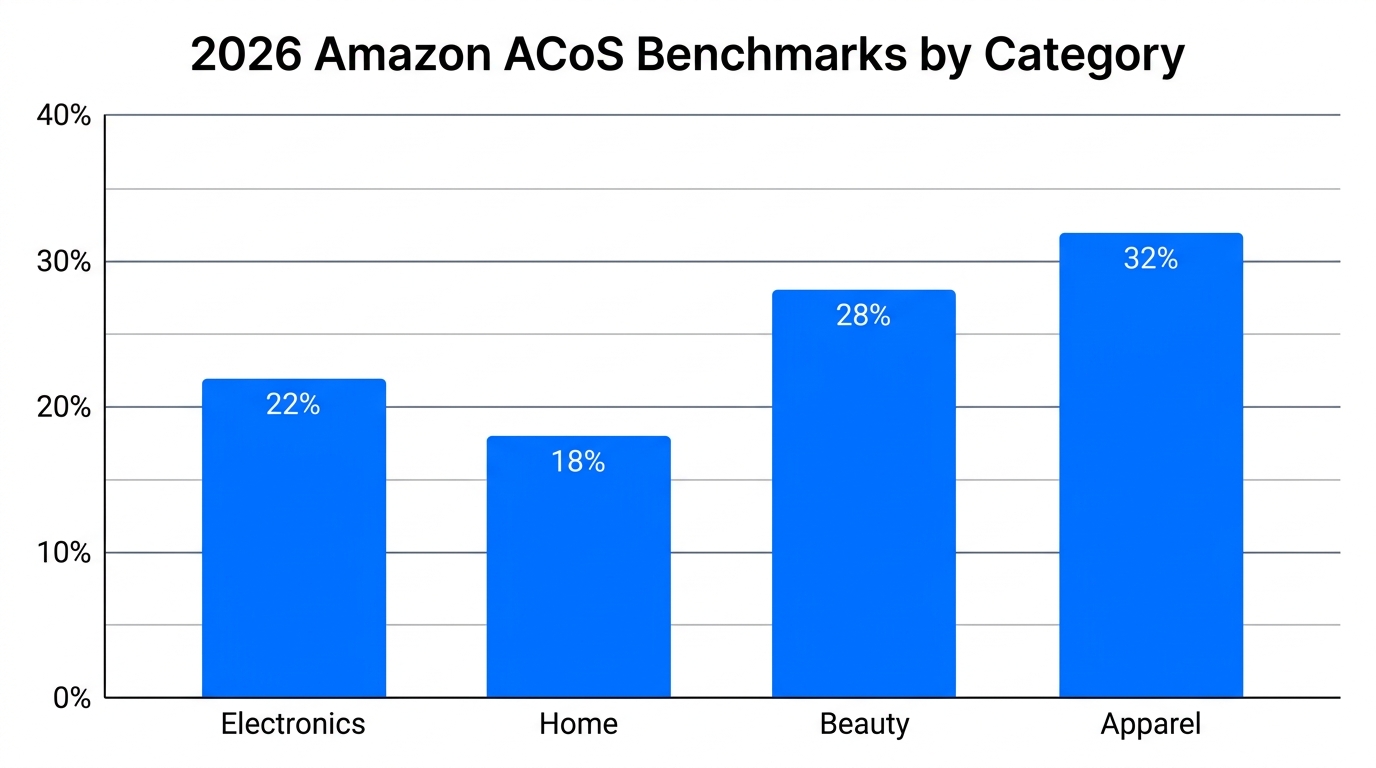
To optimize, you first need to know where you stand. The 2026 market is defined by high data transparency but brutal competition. According to data from Marketplace Pulse and Sequence Commerce, the average ACoS across all categories has stabilized at 32.48%. While conversion rates (CVR) on Amazon remain an impressive 8x higher than standard ecommerce sites, the rising cost of traffic means that brute-force bidding—simply raising bids to win top-of-search—is a one-way ticket to negative margins.
| Metric | 2026 Average | Top 10% Performers | Why it Changed |
|---|---|---|---|
| Average CPC | $1.18 - $1.25 | $0.64 (Long-tail) | CPMs grew 47% YoY. |
| Conversion Rate (CVR) | 10.2% - 11.5% | 18% - 22% | AI-assisted discovery pre-qualifies clicks. |
| Average ACoS | 32.48% | 15% - 23% | Efficiency is now the only way to scale. |
| NTB (New-to-Brand) Rate | 28% | 35%+ | AI agents are better at exploratory discovery. |
If your ACoS is north of 35%, you aren't just facing a bidding problem; you're likely facing an operational problem. In this era, successful brands use an AI ecommerce employee like Stormy AI to monitor inventory levels and flag stockout risks in real-time, ensuring that ad spend is never wasted on products that are about to lose the Buy Box.
"Amazon is entering its efficiency era... the shift is from 'spend to grow' to 'optimize to win.'" — Enrico Babucci, CSO, OmniShopper
Tutorial: Long-Tail Query Harvesting (6+ Words)
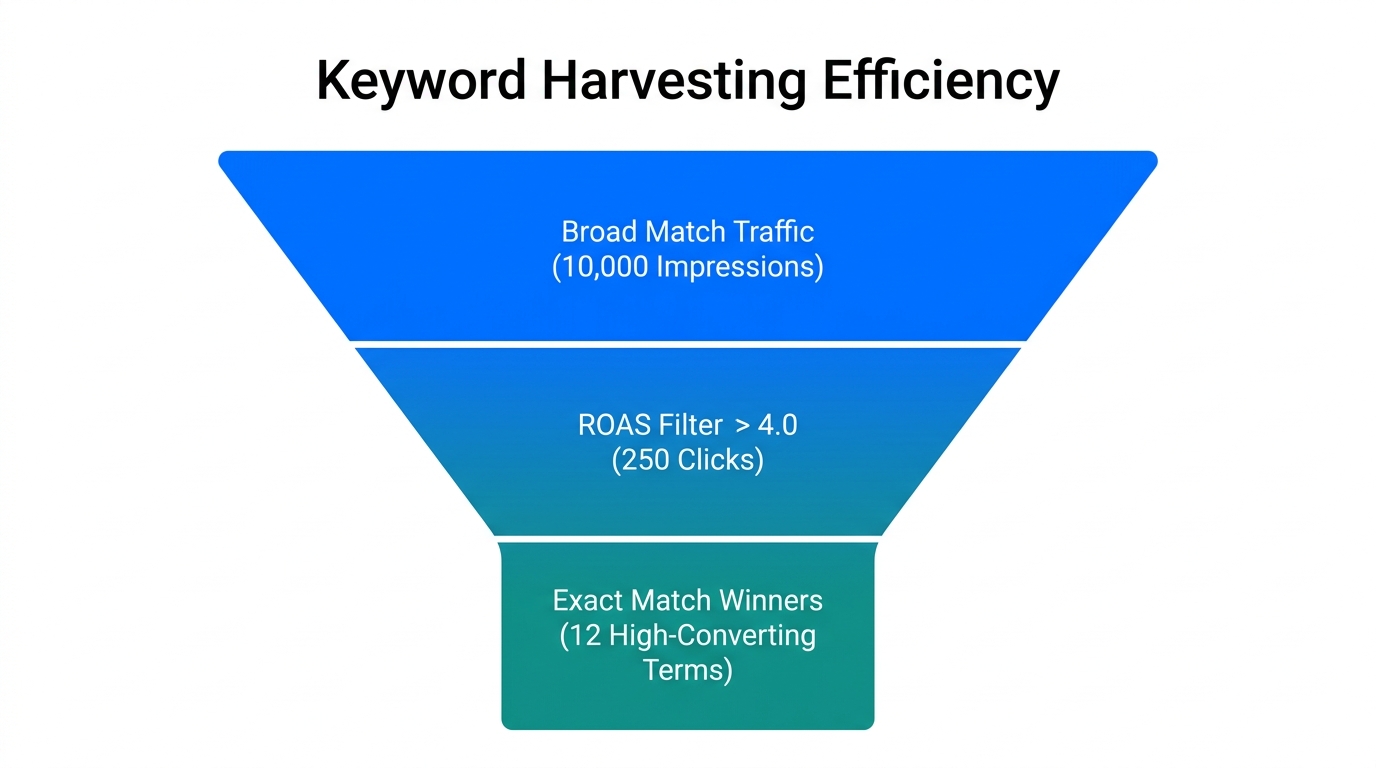
One of the most effective Amazon ACoS optimization 2026 tactics is moving away from hyper-competitive 3-word head terms. Data shows that long-tail queries (6+ words) now achieve a 13.5% CVR at an average CPC of only $0.64. Contrast this with standard short-tail terms, which convert at 9.2% but cost double the price.
Step 1: Identifying Semantic 'Folksonomy' Terms
Shoppers in 2026 use Amazon’s AI assistant, Rufus, to ask conversational questions. Use the "Help me decide" prompt in the customer interface to see how the AI describes your product. Are shoppers asking for "waterproof running shoes for flat feet marathon training"? Those are your target keywords.
Step 2: The 'Noun-Phrase' Listing Update
Traditional SEO is dead. Replace comma-separated keyword stuffing with descriptive phrases. Instead of "Running Shoes, Men, Black," use "Black Men's Running Shoes with Arch Support for Flat Feet." Rufus and the COSMO algorithm prioritize these phrases when generating recommendations, giving you a 12% boost in organic impression share without increasing your bid.
Step 3: Harvesting via Auto Campaigns
Run a low-bid Auto Campaign for "Keyword Mining." After 7 days, harvest any search term with at least 2 conversions and move it into a Manual Exact Campaign. This "Atomic Structure" ensures you are only paying top dollar for proven winners while letting the AI do the discovery work at a lower cost.
Setting Up 'Inventory-Aware' Bidding
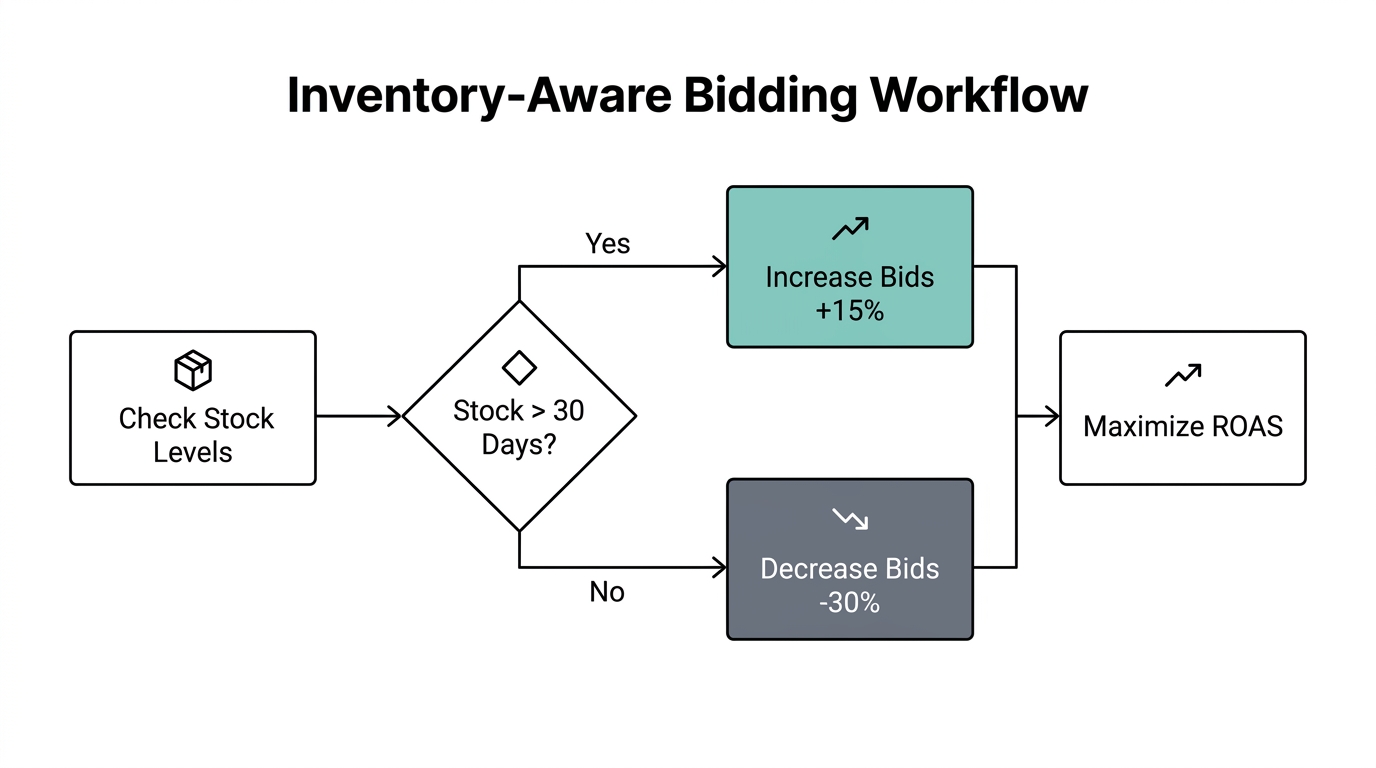
A major pain point in 2026 is "Inventory Lag." Most Amazon PPC automation tools make decisions based solely on ad data, ignoring the fact that your warehouse might be running dry. Bidding aggressively on a product with only 10 days of stock is a waste of capital—once you stock out, your organic rank will be shadow-penalized.
This is where Stormy AI becomes your secret weapon. While tools like Profasee handle the bid adjustments, Stormy AI acts as the employee who fixes the root cause. Stormy tracks your SKUs, lead times, and supplier deadlines in a living spreadsheet. When inventory hits a critical threshold, Stormy doesn't just alert you—it can automatically follow up with your supplier to expedite a shipment or remind a human to approve a reorder PO before the stockout kills your ad performance.
"AI didn't kill search; it exposed the waste in how we measured it." — Elizabeth Marston, VP, Commerce, Tinuiti
Using Amazon Marketing Cloud (AMC) for Lifestyle Targeting
If you want to reduce ACoS, you have to stop targeting just keywords and start targeting intent. Amazon Marketing Cloud tutorial sessions now focus heavily on identifying high-intent lifestyle audiences. By analyzing SQL-based data in AMC, brands can see exactly which audiences have the highest lifetime value (LTV).
For example, the brand Marvis achieved a 62.6% New-to-Brand share by using AMC signals to target "lifestyle" audiences rather than just competing on the term "toothpaste." They identified that shoppers who recently purchased premium espresso machines were 4x more likely to convert on their high-end oral care products.
Actionable AMC Strategy:
- Identify users who viewed your Product Detail Page (PDP) but didn't buy.
- Cross-reference them with "Lifestyle" segments (e.g., "Luxury Travelers").
- Run Sponsored Display retargeting specifically for those segments. This surgical approach reduces wasted impressions and lowers overall ACoS.
The Role of Stormy AI in the Efficiency Era
Automation in 2026 isn't just about moving a slider on a dashboard. It’s about having an autonomous agent that handles the messy back-office tasks that distract you from strategy. Stormy AI operates as your ecommerce employee, bridging the gap between your ad console and your operations.
How Stormy AI reduces your Amazon Sponsored Products cost:
- Daily Ad Audits: Stormy pulls performance data from Amazon Ads, identifies campaigns with ACoS higher than your target (e.g., 35%), and flags them in a shared workbook with suggested bid reductions.
- Supplier Follow-ups: If a shipment is late, Stormy sends polite follow-up emails to your vendor, preventing the "Inventory Lag" that leads to inefficient bidding.
- Unified Reporting: Every week, Stormy builds a polished Shopify and Amazon cross-platform report, comparing your total ad spend against net revenue to calculate your true TACOS (Total Advertising Cost of Sale).
Conclusion: Moving from Spend to Optimization
The 2026 era of Amazon advertising demands a level of precision that manual management simply cannot provide. By focusing on long-tail query harvesting, implementing inventory-aware bidding, and leveraging Amazon Marketing Cloud for audience insights, you can pull your ACoS down toward the top-performer benchmark of 15-23%.
Success this year requires more than just a better bid; it requires better operations. Whether it's drafting personalized outreach to creators for TikTok Shop or ensuring your Amazon restocks are on schedule, an AI employee like Stormy AI ensures your back office is as efficient as your front-end ads. Stop being a manual manager and start being an agentic marketer. Optimize your inventory, refine your targeting, and let AI handle the heavy lifting.