In 2026, the distance between a raw business idea and a live, validated market test has shrunk from months to mere minutes. We have officially moved past the era of "vibe-coding"—the practice of building beautiful but purposeless interfaces—into an era of context-driven execution. If you are an entrepreneur or a growth marketer today, your competitive advantage is no longer just your ability to build; it is your ability to maintain high-fidelity business context across a suite of autonomous agents. By leveraging the Model Context Protocol (MCP) to link Idea Browser directly to Claude Code, you can construct a complete Go-to-Market (GTM) strategy that is data-backed and hyper-niched before your morning coffee gets cold.
The Context Engine: Connecting Idea Browser to Claude Code
 1:59
1:59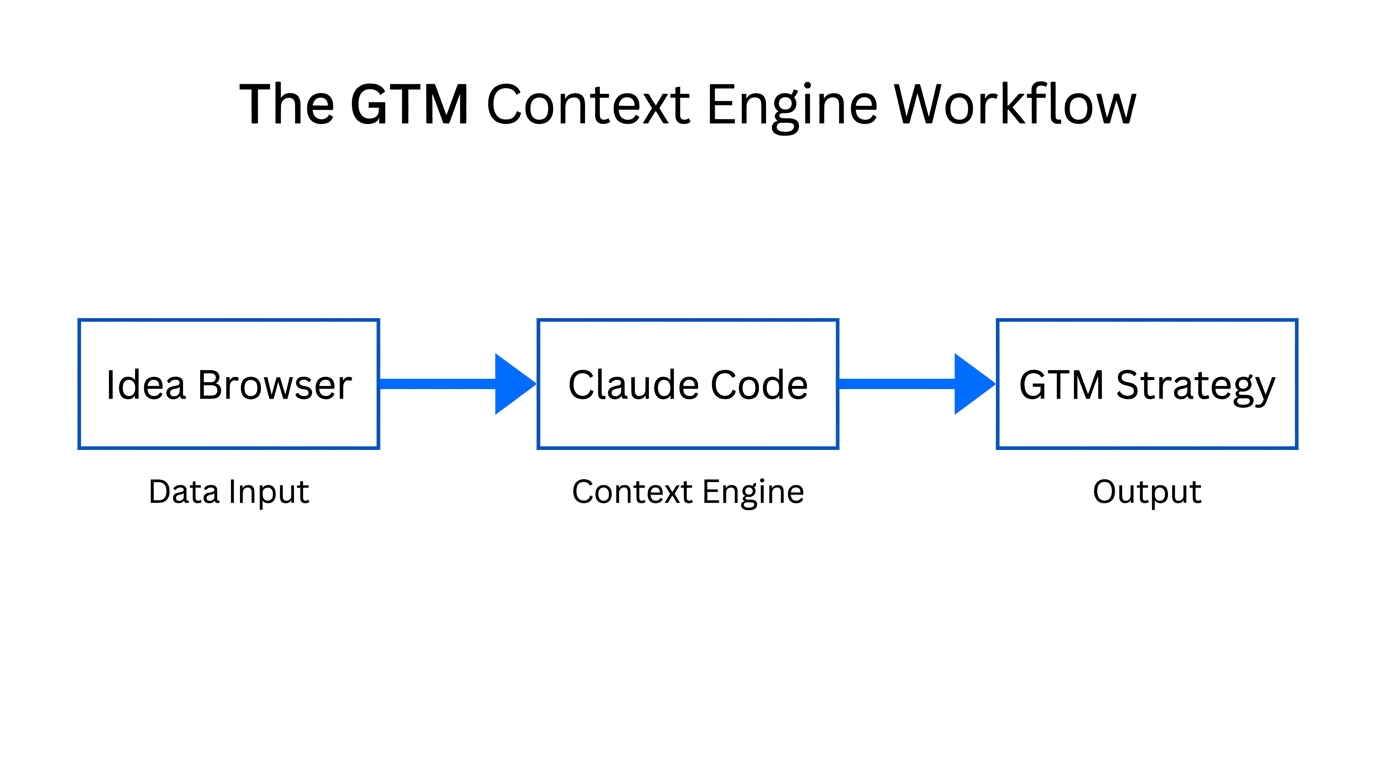
The biggest failure point for AI-assisted growth in previous years was the "context gap." You would have a great strategy session in one tool, but the AI writing your code or your ad copy had no memory of your Ideal Customer Profile (ICP) or your unique value proposition. In 2026, we solve this using MCP connectors. By connecting your Idea Browser project to your terminal via Claude Code, the agent doesn't just see your files; it understands the evolution of your business logic.
When you initiate a project, such as an AI sparring partner for B2B sales teams, Idea Browser acts as your source of truth. It stores your offer definitions, talk tracks, and competitive positioning. When you call the MCP in your terminal, Claude Code pulls this exact context to ensure every line of a landing page or every sentence of an email sequence aligns with your validated ICP positioning. This prevents the generic, "robot-sounding" output that plagues unrefined AI workflows.
"The mistake most founders make isn't building too slow; it's building without a context-heavy foundation. Your AI agent is only as smart as the documents you feed it."
Niching Down: The 'Lead Magnet Legend' Skill
A broad GTM strategy is a failing GTM strategy. To win in 2026, you must move from a broad horizontal idea to a hyper-vertical execution. For example, rather than building a general "sales AI," the research suggests focusing on a specific pain point: Freight Software sales. Using specific "skills" within Idea Browser, such as the Lead Magnet Legend, you can generate industry-specific hooks that convert at 3-5x the rate of generic offers.
Instead of a button that says "Sign Up," your GTM strategy should lead with a high-value asset. In the freight software example, the AI might suggest a guide titled: "5 Objections That Kill Freight Software Deals (And How to Rebut Them)." This level of specificity does two things: it qualifies the lead immediately and provides Claude Code with a specific content framework to build out the rest of your funnel.
| Strategy Phase | Traditional Method (2024) | AI-Agent Method (2026) |
|---|---|---|
| Market Research | Manual Google searches & surveys | Idea Browser competitive scraping |
| Copywriting | Human writers or basic GPT-4 prompts | Lead Magnet Legend skill context |
| Web Design | Figma mockups to dev handoff | Paper Design connected to Claude Code |
| Validation | Months of waiting for SEO/Ads data | Humbolytics autonomous AB testing |
Refining Design Without 'Vibe-Coding'
15:21One of the most common pitfalls of modern AI development is ending up with a "purple vibe-coded" landing page—a site that looks like a generic SaaS template but lacks brand soul. To avoid this, you should use Paper Design as an intermediary interface. Paper allows you to design and iterate directly in code while maintaining a visual interface that syncs with Claude.
Instead of asking the AI to "make it look better," give it constraints and reference images. Use high-quality UI libraries like Tailor-arc or Tailwind CSS to pull specific components. You can take a screenshot of a design style you admire, drop it into the terminal, and tell Claude: "Extrapolate the key design elements from this image to create a design system for my lead magnet page." This ensures consistency across your entire growth roadmap.
"Taste is the final frontier. We've made it easy to achieve tasks; the winner is whoever gives the agents the best direction and the most refined aesthetic constraints."
The Validation Loop: Autonomous CRO with Humbolytics
43:16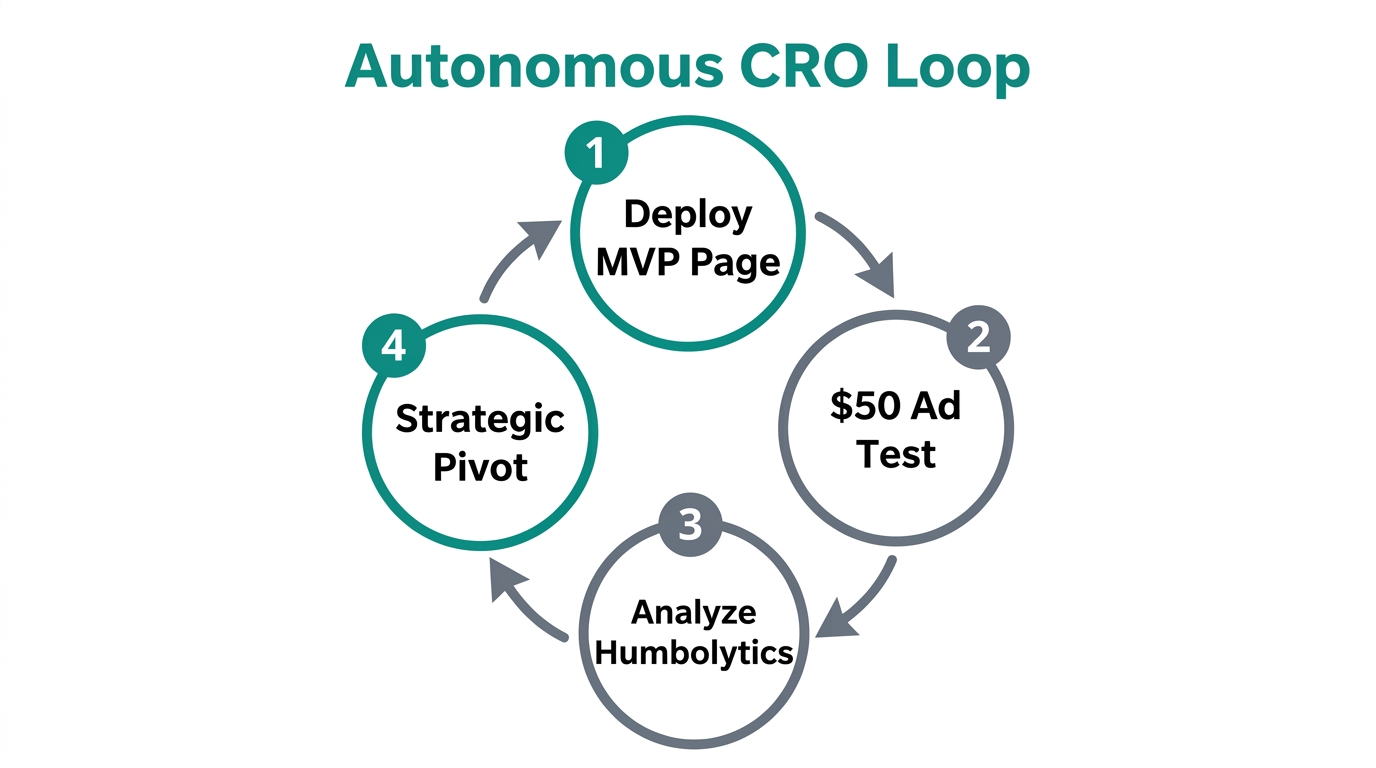
A GTM strategy is purely theoretical until it hits the market. In 2026, validation happens through an autonomous Conversion Rate Optimization (CRO) agent. Once your page is live, you can connect Humbolytics to your terminal. This tool allows you to run AB experiments without manually pushing new code deployments.
By hitting the Humbolytics API, your AI agent can analyze real-time traffic data—scroll depth, bounce rates, and click tracking—and automatically generate a variant. For instance, if the agent detects a 25% bounce rate on your hero section, it can autonomously deploy a new headline like: "Every lost deal started with an objection your rep wasn't ready for." This level of automation means your GTM strategy is optimizing itself while you sleep, moving closer to profitability with every visitor.
Scaling Outreach with UGC and AI Sourcing
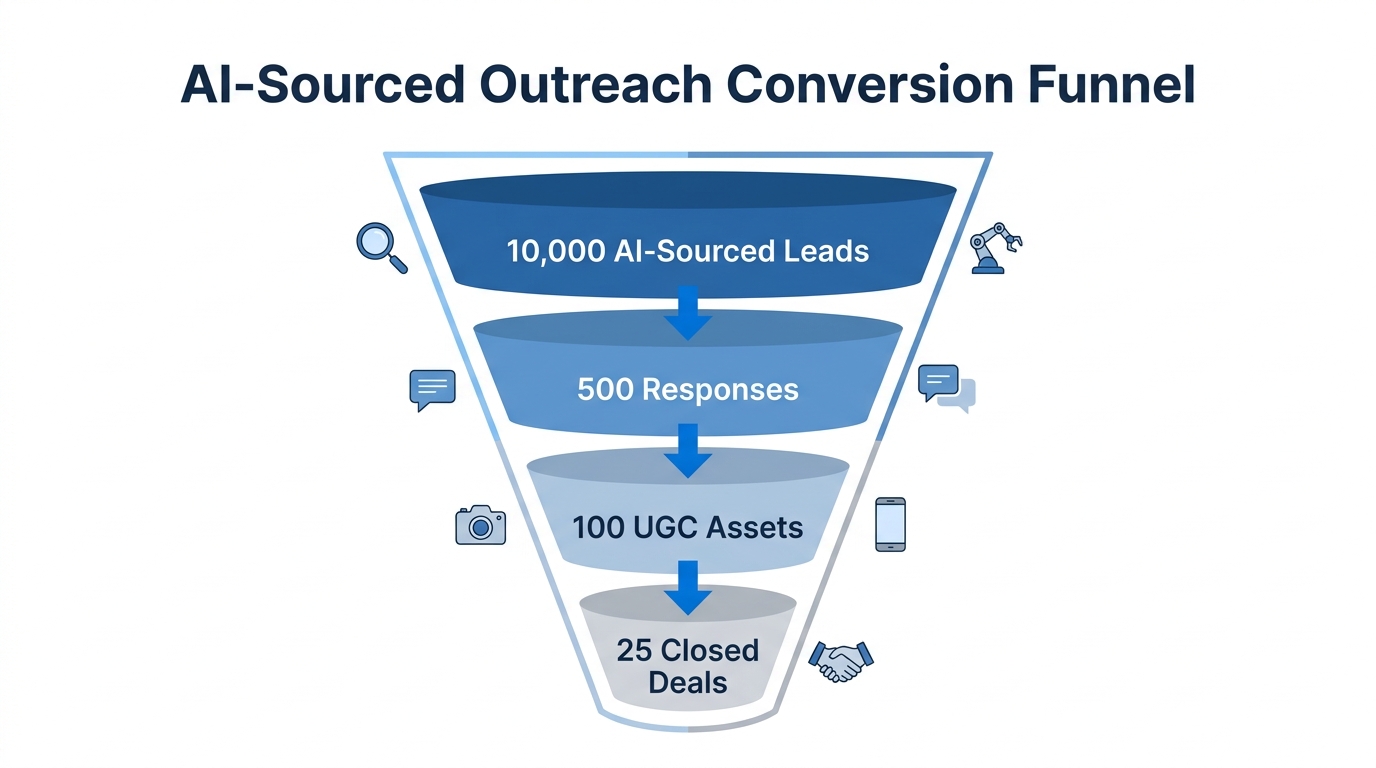
Once your landing page is converting and your niche is validated, the next step in the 2026 GTM playbook is fueling the top of the funnel. While Google Ads and Meta Ads provide the reach, User-Generated Content (UGC) provides the trust. To find the right voices for your niche (e.g., logistics influencers or sales coaches), platforms like Stormy AI streamline the process of finding and vetting creators.
Using Stormy AI, you can type a natural language prompt to find creators who specifically talk to your target vertical. By integrating creator sourcing into your GTM workflow, you move from a cold software launch to a community-backed market entry. You can manage these relationships within a specialized CRM and use AI to handle the outreach, ensuring that your validated messaging reaches the right ears across TikTok, LinkedIn, and YouTube.
"99.9% of marketers don't know this stack exists. There is a massive arbitrage opportunity for anyone who can combine AI context tools with rapid validation cycles."
Exporting Actionable Sales Talk Tracks
The final stage of a rapid GTM strategy is moving from the web back to the human element. Your AI-generated positioning documents in Idea Browser shouldn't just live in a database; they should be exported directly into actionable sales talk tracks. Because Claude Code has been working within the same context as your landing page and your lead magnet, the sales scripts it generates will feel seamless to the customer.
You can use these scripts for outbound sequences in tools like Instantly or for real-time coaching during sales calls. This ensures that the transformation you promised in your Google Ad is exactly what your sales rep delivers on the phone. In 2026, the goal is total vertical alignment from the first click to the final contract signature.
Conclusion: The Future of GTM Automation
Building a GTM strategy in 2026 is no longer about who has the biggest marketing team; it’s about who has the most efficient agentic stack. By linking Idea Browser for context, Paper for design, and Humbolytics for validation, you can test a business idea for less than the cost of a traditional consultant. The arbitrage opportunity is immense for those who master the terminal as their primary interface of work. Stop vibe-coding and start validating—your next billion-dollar niche is only a few prompts away.