In the hyper-accelerated startup ecosystem of 2026, the traditional five-year exit timeline is officially dead. Founders are no longer waiting for years of audited financials to attract Private Equity (PE) interest. Instead, they are engineering micro-exits in under 30 days. The benchmark for this new era is Caleb Dean, who successfully navigated the Runify acquisition after just 26 days of revenue, securing a six-figure deal at a 5x ARR multiple. This isn't just luck; it is a calculated startup exit strategy 2026 founders are using to de-risk their portfolios and stack capital for their next big play.
Build in Public Marketing: How 'Yapping' on Twitter Attracts PE Buyers
In 2026, your Twitter (X) feed is your investor relations department. Caleb Dean proves that you don't need a massive following to attract high-tier buyers; you just need radical transparency. Even with an account hovering around 200 followers, Dean used build in public marketing to signal confidence to the market. By tweeting about his bullish revenue targets and the development process, he caught the attention of Dev Shah and other PE scouts searching for high-agency founders.
"The acquisition DM came in because I was just yapping about Runify on Twitter. I was super bullish about hitting 100k a month, and buyers saw that confidence early."When Twitter buyers see a founder documenting the grind in real-time, it removes the 'black box' of due diligence. They aren't just buying code; they are buying the momentum you’ve publicly validated. This visibility is essential for anyone selling a mobile app in the current market, as it creates a paper trail of growth that purely private startups lack.
The Runify Validation Framework: Using Competitor Data to De-Risk
Learn how Caleb used a simple landing page to validate market demand early.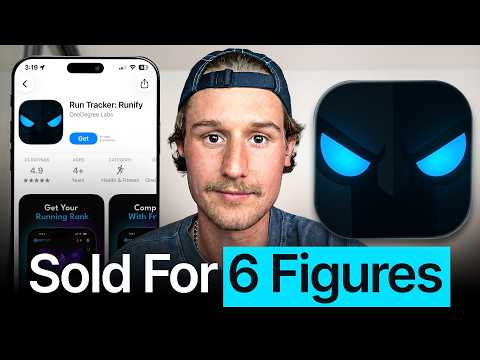
Before writing a single line of code for Runify, Caleb utilized a specific validation framework that identified existing market demand. He targeted the fitness niche by analyzing Sensor Tower data for Liftoff, a gamified gym app doing 700k in monthly revenue. The strategy was simple: take a proven mechanic (ranked competition) and apply it to a larger Total Addressable Market (TAM)—running.
The MVP is a Stripe Link
Validation didn't stop at data analysis. Caleb built a landing page using ChatGPT and sent organic traffic to a Stripe payment link for an app that didn't exist yet. When 90 people paid a $5 'early adopter' fee, the signal was undeniable. This 'pre-sale' strategy is the ultimate proof of concept for buyers concerned about product-market fit.
| Validation Metric | Caleb's Result | Market Benchmark |
|---|---|---|
| Waitlist Signups | 2,000+ | 500+ |
| Early Adopter Payments | 90 | 20-30 |
| Competitor Revenue (Liftoff) | $700k/mo | $100k/mo |
Distribution at Scale: 9 Reels a Day and the 5-Million-View Month
Caleb explains why organic social media drove ninety percent of his app's growth.In 2026, organic reach is a volume game. Caleb’s team posted nine Instagram Reels per day, a frequency that many founders fear but that Instagram rarely punishes. By building internal tools to generate 10,000 video variations in minutes, they secured 5 million views in their first month.
Scaling this level of content requires more than just a scheduling tool; it requires a deep understanding of what drives clicks. While manual creation works for the MVP stage, growing brands in 2026 often leverage platforms like Stormy AI to discover and manage UGC creators who can replicate viral formats at scale. Stormy AI allows founders to automate the outreach and management of these creators, ensuring the 'content engine' never stops running while the founder focuses on the product.
"Quality nearly always beats quantity, but at the start, you need the volume to find that one video that hits 6 million views and changes your business."The Pre-Order Power Move: Solving the Day-Zero Retention Crisis
See how a two-week App Store pre-order campaign generated thousands of initial downloads.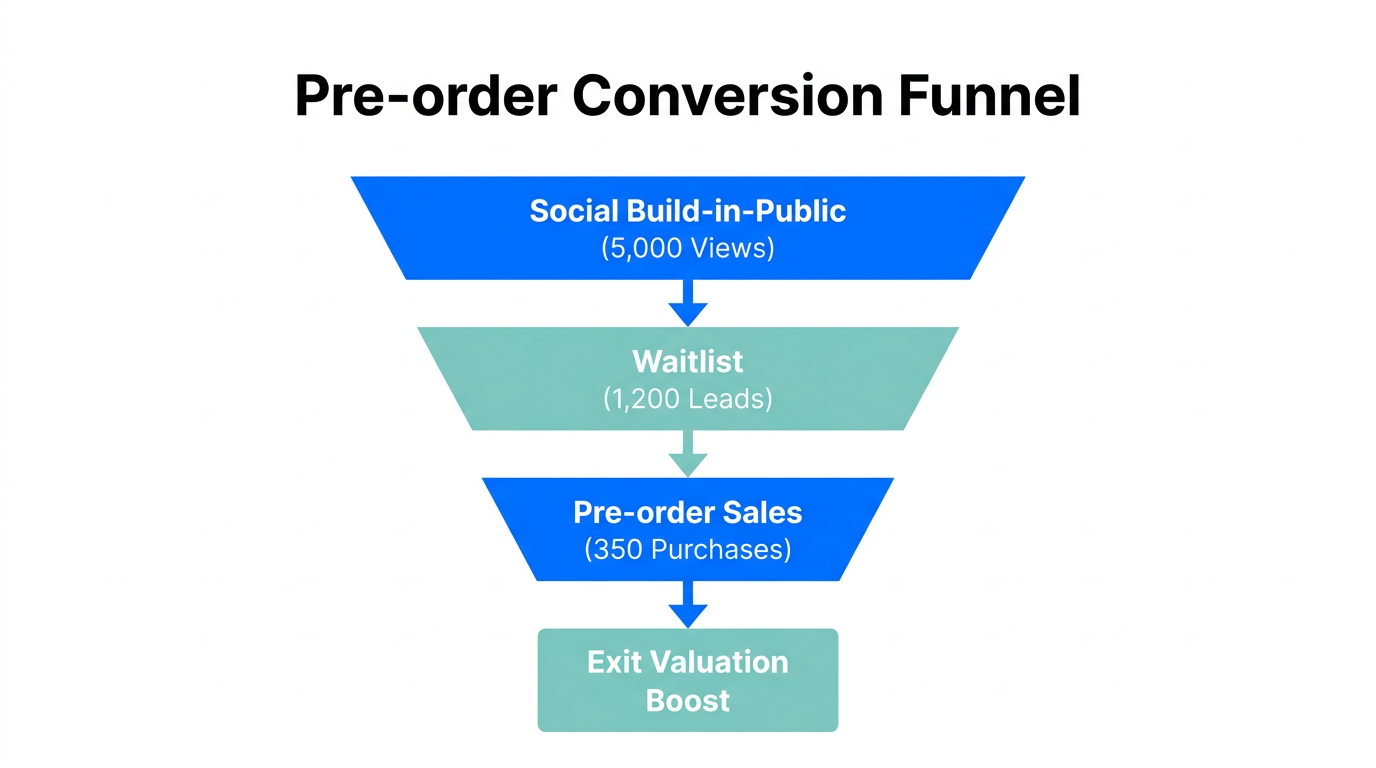
One of the most overlooked tactics in the Runify acquisition playbook was the use of App Store pre-orders. By getting a bare-bones version approved by Apple early, Caleb was able to collect 3,000 pre-orders over two weeks. On launch day, the app automatically downloaded to 3,000 devices simultaneously.
This solved the 'empty room' problem that kills social apps. When the first users logged in, the leaderboards were already full, creating an immediate sense of community and competition. This 'seeding' process significantly boosts long-term retention—a metric that is critical for maintaining high mobile app valuation multiples during exit negotiations.
Mobile App Valuation Multiples: How to Get 5x ARR on Estimated Data
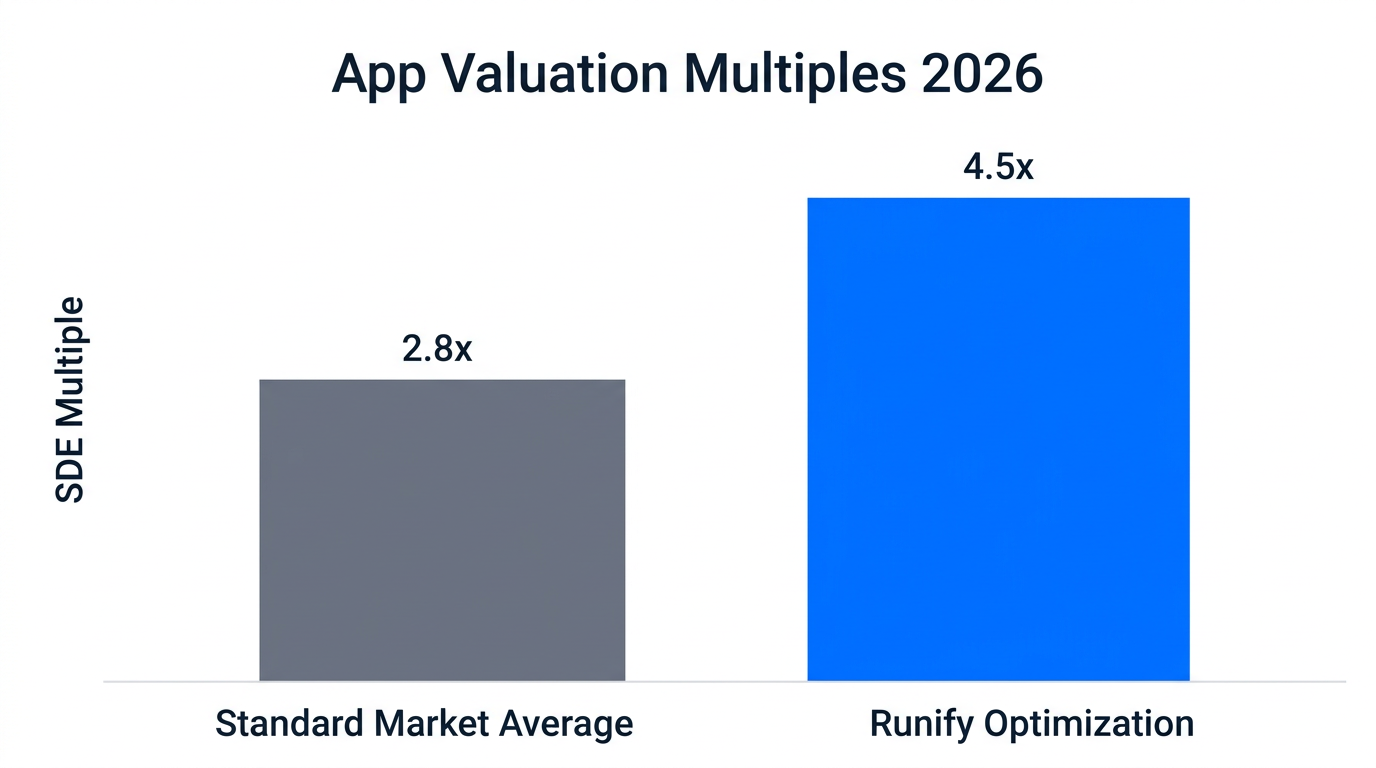
How do you value an app that hasn't even finished its first month? The Runify acquisition used 'forward-looking' math. Because Caleb had 26 days of revenue and dozens of active 7-day trials, the buyers extrapolated an MRR of $3k. In 2026, for a high-growth app in a hot niche like wellness, a 5x ARR multiple is the gold standard for rapid acquisitions.
Buyers are willing to pay these premiums because they are acquiring a 'validated engine' that they can plug into their existing infrastructure. In Caleb's case, the buyer had an app studio with a dedicated dev team and distribution experts ready to scale Runify from $3k to $100k MRR.
Negotiating the Deal: The 'Watermelon vs. Grape' Philosophy
One of the most strategic moves Caleb made was refusing a 100% cash exit. Instead, he retained 30% equity in Runify. This is what he calls the 'watermelon vs. grape' philosophy: it is better to own 10% of a massive watermelon than 80% of a tiny grape.
Structuring the Earn-Out
The deal was structured with several layers of compensation:
- Upfront Cash: Immediate liquidity for the founder.
- Retained Equity: A 30% stake to benefit from future scaling by the acquirer's team.
- Earn-out Period: Six months of additional cash bonuses tied to continued development and transition support.
This structure de-risks the buyer while keeping the founder incentivized to ensure a smooth handoff. It’s a win-win that has become the standard for selling a mobile app to app studios in 2026.
"You're better off having 10 percent of a watermelon rather than 80 percent of a grape. Retaining equity lets you benefit from the buyer's capital and scale."The 48-Hour Due Diligence Checklist
Understand the surprisingly light due diligence process for a rapidly acquired early-stage app.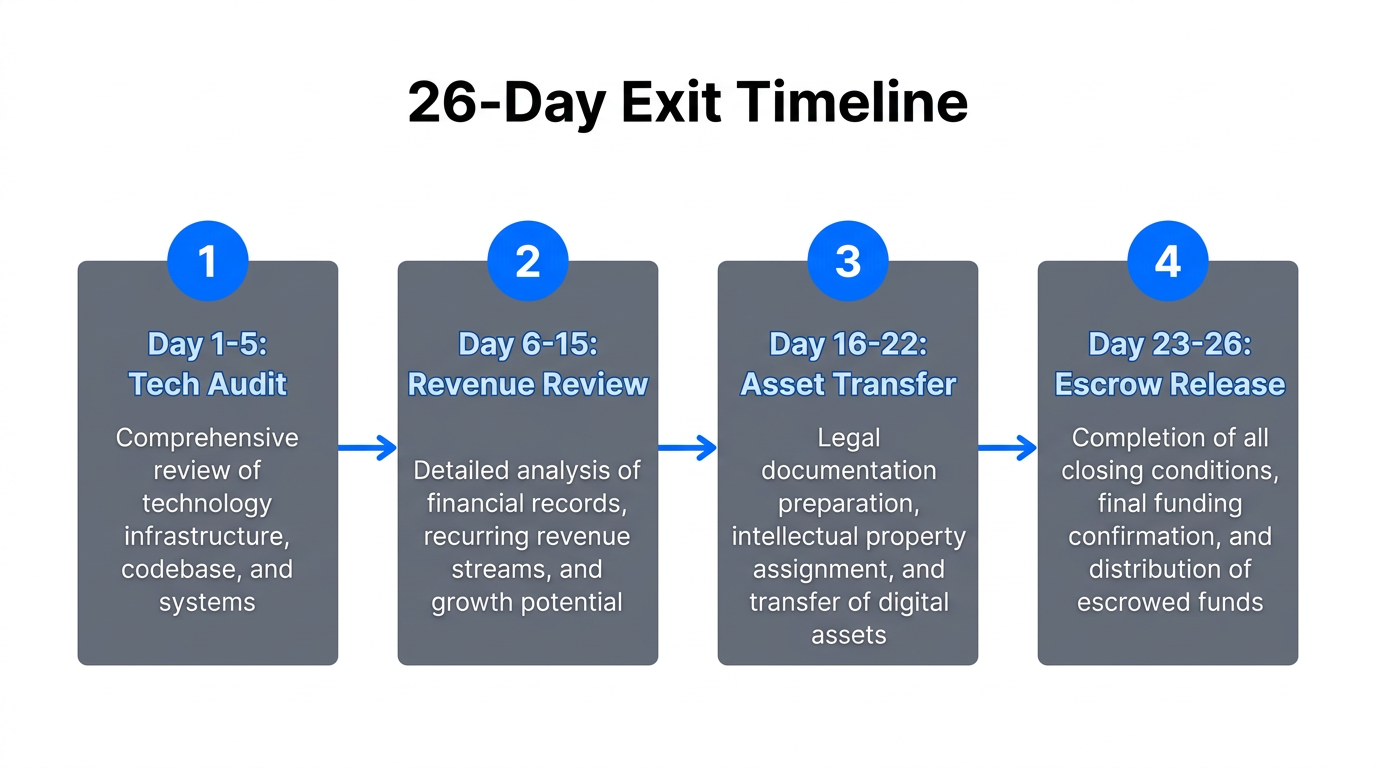
Because the app was so new, due diligence was remarkably fast. If you want to replicate this speed, you must have your data ready for a 48-hour audit. PE firms in 2026 move fast, and any delay in providing data can kill the deal momentum.
- Apple Store Connect: Provide guest access to verify download numbers and user regions.
- Stripe Analytics: Export gross volume and trial conversion rates to prove revenue claims.
- User Engagement: Highlight sessions per device (Runify boasted 7 sessions per device).
- Legal: Ensure all IP (code, designs, assets) is clearly owned by the entity being sold.
Tools like Superwall and their paywall experiments tool can help you optimize your conversion data before the audit, ensuring your 'trial-to-paid' numbers look as attractive as possible to the buyer.
Conclusion: Your Playbook for the $100k Sprint
The path from zero to a $100k exit in 2026 is no longer about grinding for years in silence. It is about radical validation, aggressive distribution, and public visibility. By leveraging competitor benchmarks, high-volume organic content, and smart equity retention, Caleb Dean turned a month of work into a life-changing payout and a powerful personal brand.
If you are building in 2026, don't wait for perfection. Validate with a Stripe link, seed your users with pre-orders, and use platforms like Stormy AI to scale your influencer outreach once the signal is clear. The buyers are out there—you just need to start 'yapping' loud enough for them to find you.