In the high-stakes landscape of 2026, scaling a B2B startup is no longer about slow and steady wins. It is about extreme operational velocity. When Eric Glyman and Karim Atiyeh founded Ramp, they didn't just aim for a successful exit—they sat down and asked if they could build a billion-dollar company in exactly 18 months. By 2021, they had achieved an 8.1 billion dollar valuation and were approaching a $100 million ARR run rate, completing one of the fastest sprints from $1M to $100M in SaaS history.
This isn't just a success story; it's a blueprint for the hyper-growth strategy 2026 founders need to dominate legacy markets. By reverse-engineering their goals and tracking their age in days rather than years, Ramp bypassed the traditional 'slow build' and forced the market to adapt to them. If you are looking to replicate this SaaS scaling playbook, you must first understand the mechanics of their 'Count the Days' philosophy.
The 'Count the Days' Philosophy: Urgency as a Competitive Edge
 12:31
12:31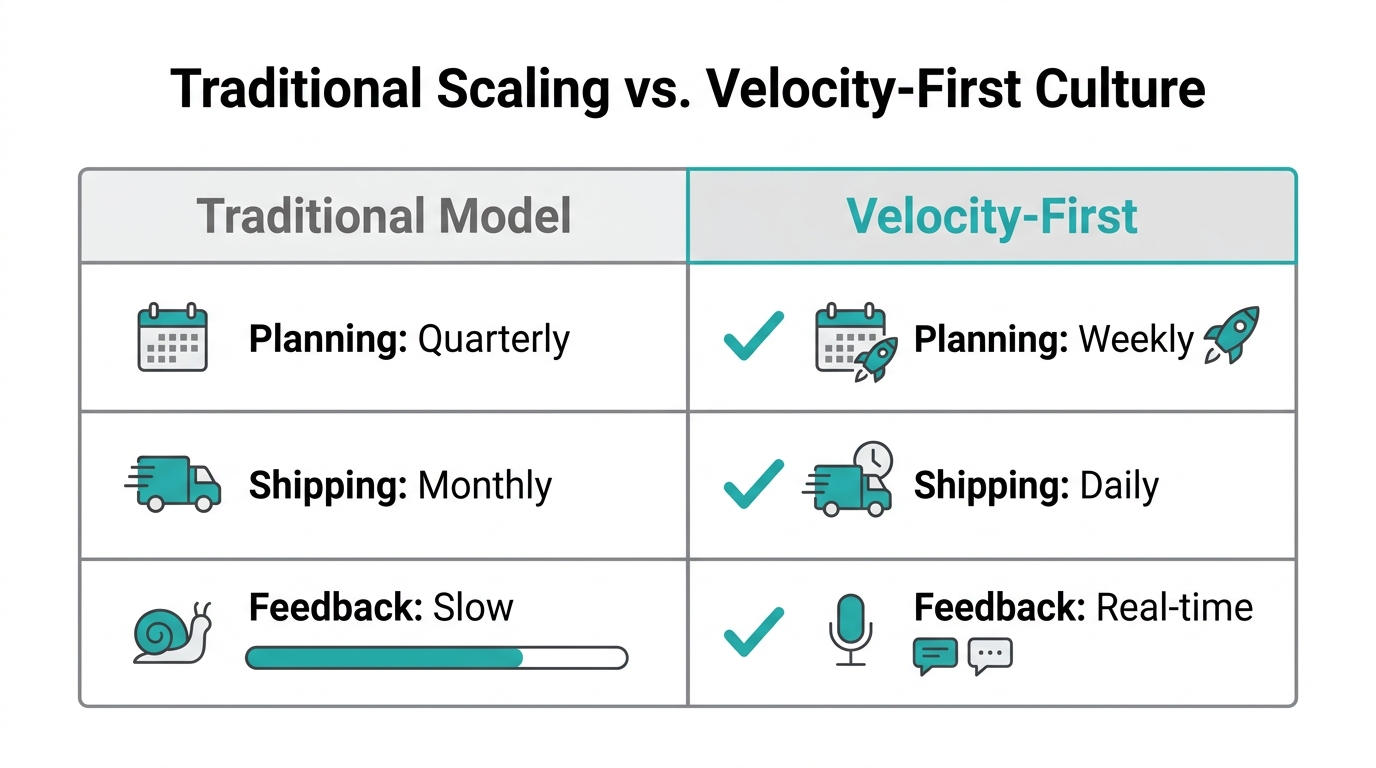
Most companies track their progress by quarters or years. Ramp tracks its age in days. As of our current analysis in 2026, Ramp is approximately 2,310 days old. This isn't just a vanity metric; it is a fundamental shift in how a team perceives time. According to Eric Glyman on My First Million, this radical transparency creates a sense of existential urgency.
When time is measured in days, a delay of one week isn't just 'a blip'—it’s 0.3% of the company's entire existence. This mentality allowed Ramp to set aggressive internal deadlines during their launch phase:
- Day 45: Network approval secured.
- Day 60: Bank partnership finalized.
- Day 70: First transaction funded.
"We were hellbent on moving at incredible velocity and simply being designed to ship things faster than any incumbent ever could."
Setting 10% Weekly Growth Targets: The Math of Momentum
Maintaining momentum is the hardest part of a startup velocity framework. Ramp’s internal engine was fueled by a simple, brutal metric: 10% weekly growth. While 20% monthly growth is often cited as the gold standard for Y Combinator-tier startups, Ramp pushed for double that pace during their explosive 2021 run.
During that year, Ramp's revenue grew 70 times year over year. This type of growth requires more than just good marketing; it requires a product that compounds in value. Because Ramp operates on a transaction-based model (earning through interchange fees), every new customer doesn't just add a flat subscription fee—they add a stream of ongoing transaction volume.
| Metric | Legacy Banking (Amex/Chase) | Ramp Hyper-Growth (2021-2022) |
|---|---|---|
| Growth Cadence | Annual / Quarterly | Weekly (10% Target) |
| Time to $100M ARR | Decades | ~18 Months |
| Product Evolution | Incremental (every 5-10 years) | Daily (Continuous Shipping) |
| Revenue Model | Interest/Fees | Interchange + Software Value |
To sustain this without burning out the team, Glyman emphasizes hiring people who find extreme joy in their craft. The goal isn't to push low-cost labor to the limit, but to find high-output individuals who thrive on the dopamine hit of constant winning. In the modern era, 2026 growth teams also leverage automation—for instance, using platforms like Stormy AI to handle the heavy lifting of influencer discovery and outreach—to maintain high output without increasing headcount linearly.
The Reverse Engineering Framework: Spotting Billion-Dollar Gaps
53:23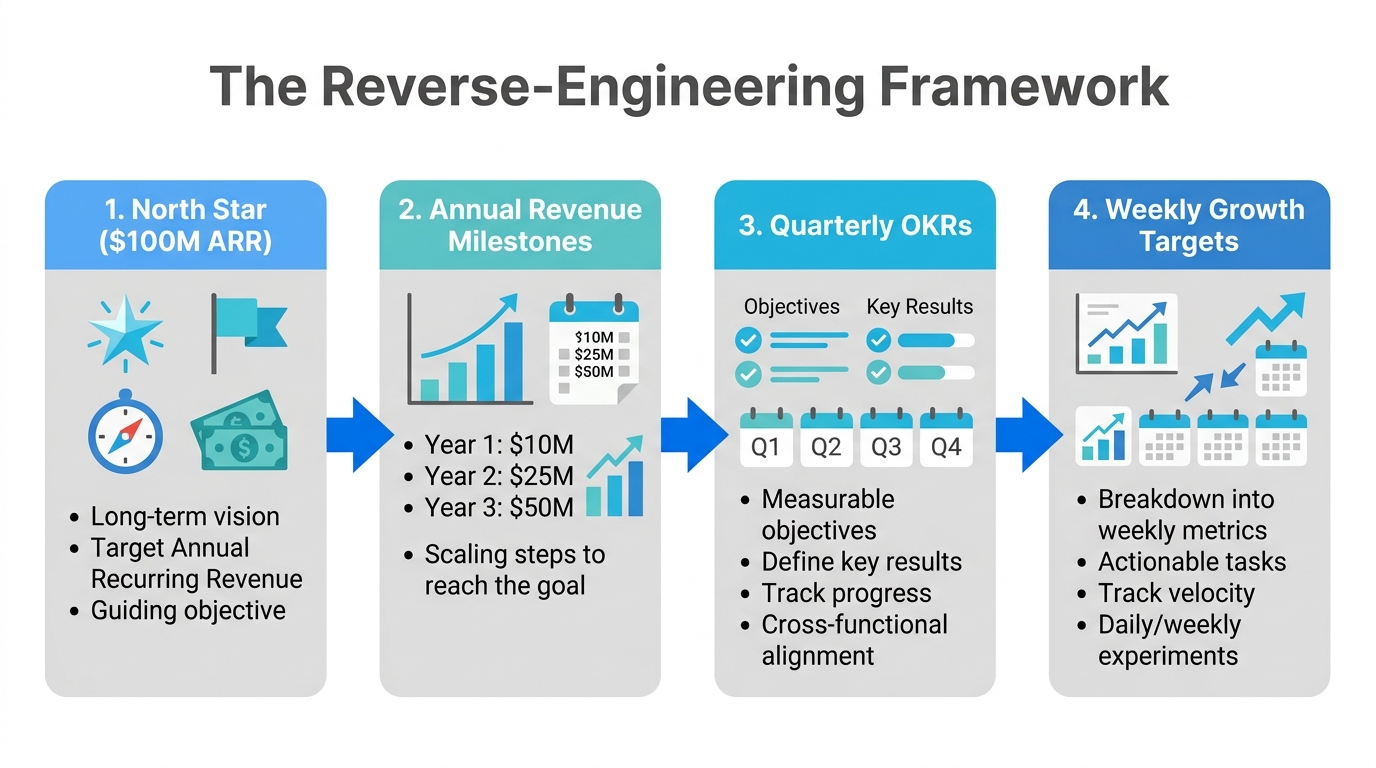
Ramp didn't start with a "random silly idea." They used a reverse-engineering framework pioneered by builders like Brad Jacobs. This involves identifying a massive, stagnant industry and looking for the bottleneck. For Ramp, that industry was banking—a sector where the biggest players (Amex, Citi, Chase) were founded by people who literally wore top hats.
Glyman realized that while consumer technology had evolved from flip phones to AI-powered devices, the Ramp business model could disrupt a banking product that hadn't changed in 40 years. They looked for "boring" business models that abstract away complexity, similar to how Rippling handles HR or HubSpot manages CRM workflows.
Why Most 'Good' Ideas Fail
Before settling on Ramp, Glyman explored manufactured housing. The idea was noble: why are cars manufactured efficiently but homes built manually? However, he realized the bottleneck wasn't manufacturing—it was zoning. If the bottleneck is a slow-moving government regulation, you cannot maintain 10% weekly growth. You must pick a market where the only constraint is your own ability to execute.
"You want to find a business where you can compound for a long time without fighting the weight of external regulators or legacy physics."
The 15-Month Million-to-100-Million Sprint
3:56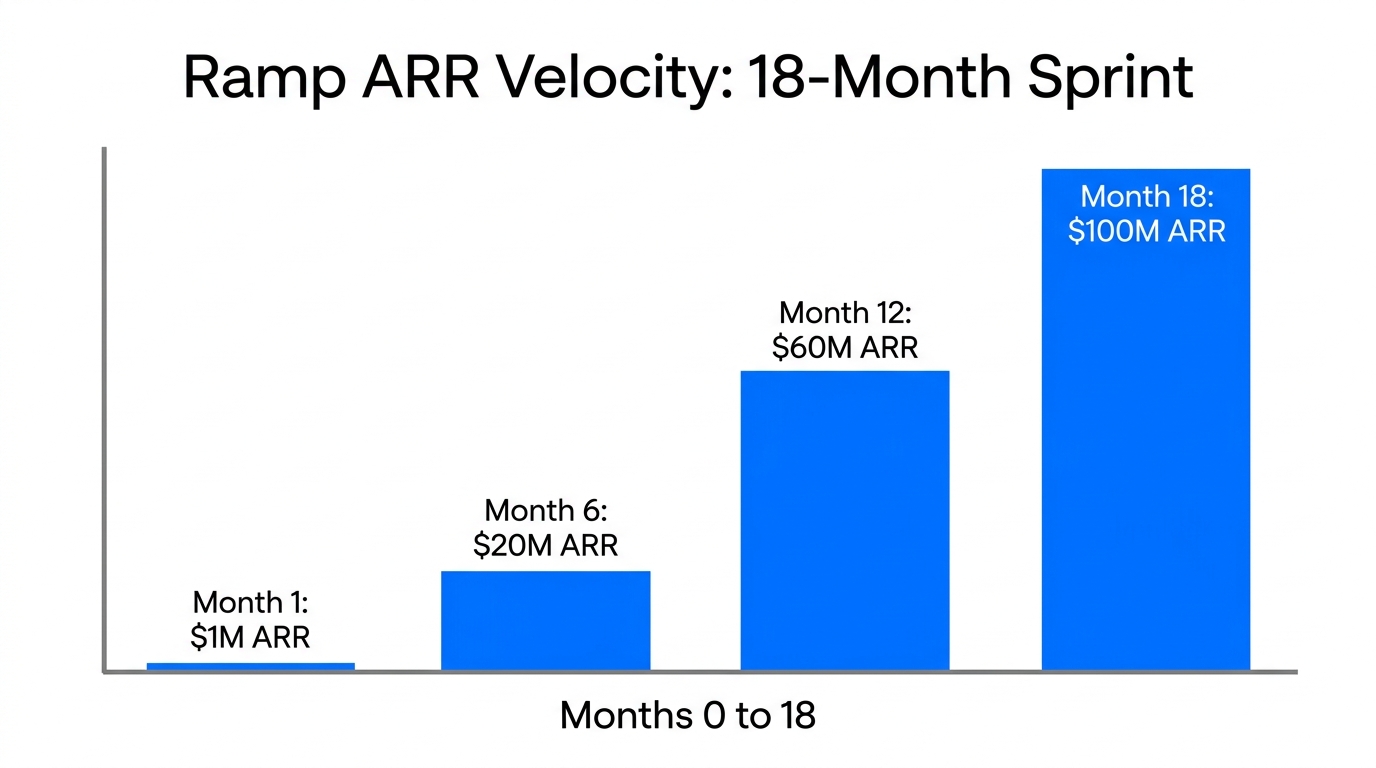
The jump from $1 million to $100 million in ARR is usually a five-to-seven-year journey. Ramp did it in roughly 15 to 17 months. This acceleration was possible because they treated B2B customer acquisition as a software problem rather than a sales problem. By integrating deeply with accounting software and providing "instant" value through savings (rather than just credit), they reduced the friction of the sales cycle.
For startups in 2026, this sprint requires a "stack" of high-velocity tools. Just as Ramp used Stripe and Shopify to understand merchant data, modern brands use AI agents to automate the top-of-funnel. For example, the Stormy AI agent can autonomously discover and outreach to creators, mirroring Ramp's philosophy of "counting the days" by ensuring not a single day passes without active outreach.
Scaling from 10 to 1,000: Maintaining Culture at Speed
7:56Hiring 10 people a month is difficult. Hiring 50 people in a two-week period—as Ramp has done—is a logistical nightmare. To scale to 1,100+ employees, Glyman focused on operational triaging. He admits that his mind often focuses on the top 10% of problems, leaving the other 90% to rot. To survive this, he surrounded himself with "operationally unbelievable" leaders who could cascade decisions across a massive org.
Key strategies for scaling culture at high velocity include:
- Integrity as a Reference: Ensuring every deal (like their previous sale to Capital One) is a "win-win" to build a reputation that attracts top-tier talent.
- Emotional Regulation: As a leader, Glyman practices emotional regulation by resetting his headspace regularly to avoid making impulsive decisions under stress.
- Redesigning the Week: Auditing your calendar to ensure you aren't spending 100% of your time on tasks you hate, which leads to burnout.
The 2026 Growth Takeaway: Compound or Die
As we look at the fintech and SaaS landscape in 2026, the lesson from Ramp is clear: don't interrupt the power of compounding. Whether you are building a credit card company or a niche SaaS tool, the goal is to grow 30% for 30 years—but you get there by growing 10% a week in the early days.
Ramp succeeded because they didn't wait for the market to give them permission. They reverse-engineered a billion-dollar valuation, counted every day, and built a culture that obsessed over velocity. For the 2026 founder, the tools to achieve this are more accessible than ever. By combining the Ramp mentality with modern AI discovery platforms like Stormy AI, the 18-month sprint to a billion is no longer just a dream—it's a repeatable playbook.