In 2026, the barrier to entry for building a software-as-a-service (SaaS) business has effectively vanished. With the emergence of high-speed AI development environments, founders no longer need a deep technical background to ship production-ready code. However, as the technical moat shrinks, the moat of domain specificity becomes the only thing that matters. The most profitable entrepreneurs this year aren't trying to build the next generic AI assistant; they are looking at the mundane, repetitive, and deeply frustrating buttons that knowledge workers click every single day. Specifically, they are looking at the "Export" button.
The Export Button Theory suggests that every time a user clicks "Export to Excel" or "Download CSV" in a platform like QuickBooks, they are signaling a workflow breakdown. They are essentially saying: "This software is too limited to do what I actually need, so I am taking my data into a spreadsheet to perform manual labor." By identifying these breakdowns and layering intelligence on top of them, founders are building profitable AI startup ideas that generate upwards of $130,000 in monthly recurring revenue (MRR) with lean, AI-driven teams.
The Economics of the Export Button
 2:58
2:58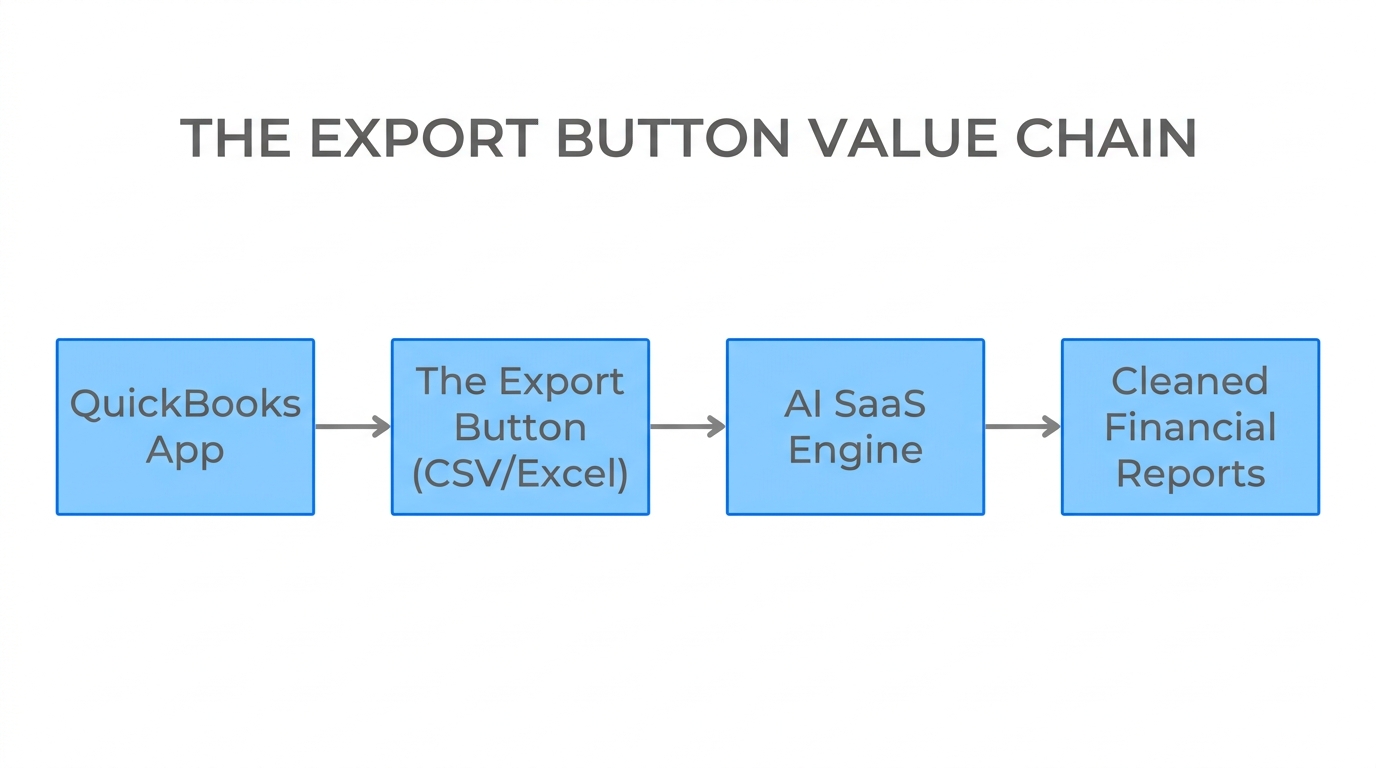
To understand the scale of this opportunity, we have to look at the numbers. Research into AI accounting software trends reveals a staggering reality: QuickBooks users alone export over 250 million financial reports annually. When you consider that each of those exports typically requires 45 to 90 minutes of manual reformatting, cleaning, and analysis in Microsoft Excel, the waste is astronomical.
For a bookkeeper earning $75 to $150 per hour, an hour spent manually dragging cells around a spreadsheet is an hour of lost billable high-value work. If an AI SaaS can turn that 90-minute task into a 90-second automated report, the value proposition isn't just "cool tech"—it is immediate quantifiable ROI. This is the foundation of QuickBooks AI automation success in 2026.
"Every export button in enterprise software represents a manual workflow breakdown and a potential $10,000 to $30,000 a month feature waiting to be built."
The 5-Step Framework for Finding AI Opportunities
3:46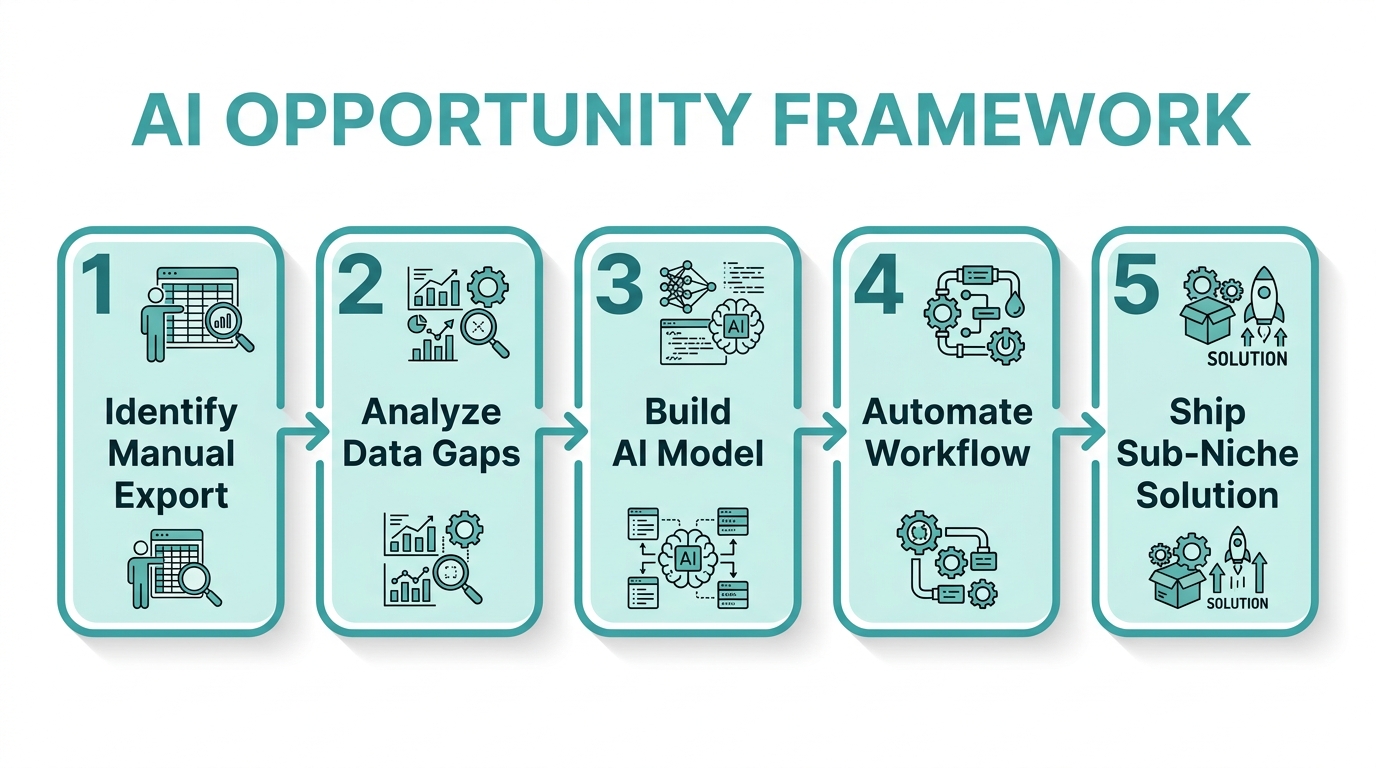
Building a successful financial SaaS isn't about guessing what people want; it’s about observing where they are struggling. Here is the framework for identifying those hidden goldmines within financial SaaS business ideas 2026.
1. Identifying Repetitive Pain Points
The first step is to watch how people actually interact with enterprise software. You are looking for "Pain Patterns"—moments where the user switches from a high-level tool to a manual one. For example, if an analyst is moving data from Salesforce to Excel and then into PowerPoint, they are performing a task that an AI agent could handle natively. Use tools like Reddit or specialized search tools to find people complaining about these specific workflows.
| Pain Pattern | Example Workflow | AI Opportunity |
|---|---|---|
| Reformatting Exports | QuickBooks to Management Report | Automatic Executive Reporting |
| Copy-Pasting Between Tools | Jira Tickets to Slack Updates | Automated Status Syncing |
| Weekly Manual Reporting | Monday.com Dashboard Export | Self-Updating AI Reports |
| Manual Data Maintenance | Manual Inventory Spreadsheets | Intelligent Inventory Systems |
2. Adding Intelligence to Manual Processes
Once you find the export, you must add intelligence. A simple CSV uploader isn't enough in 2026. You need to use Large Language Models (LLMs) to turn messy data into actionable insights. For instance, a Stripe export shouldn't just be a list of transactions; it should be an AI-powered revenue analysis that flags churn risks before they happen. This shift from data display to data interpretation is what allows you to charge premium prices.
3. Bridging Data Silos
Valuable data is often trapped in silos. Organizations frequently have customer success data in one tool and sales data in another. The manual work of reconciling these two sources is a massive bottleneck. Successful SaaS founders are building AI layers that connect these systems, such as identifying upsell opportunities by comparing product usage data with contract renewal dates automatically using Zapier or custom AI agents.
"The winners in 2026 won't be the companies with the best AI demos; they'll be the ones that understand the most boring, painful workflows."
4. Finding Missing Connections
Listen for phrases like "I wish these two things worked together" or "I have to manually check if these match." These are the sounds of money being left on the table. For example, connecting an HR system with payroll to detect anomalies using AI can save a mid-sized company thousands of dollars in overpayments or compliance errors.
5. Start Small and Go Sub-Niche
A common mistake for new founders is trying to build a "horizontal" tool that serves everyone. In the age of SaaS niche marketing strategy, the riches are in the niches. Don't build "Accounting AI." Build "AI-Powered Cash Flow Forecasting for Divorce Attorneys." By narrowing your focus, you eliminate competition from the big players who can't afford to build hyper-specific features for small sub-sectors.
From Horizontal to Sub-Niche: The Path to $130K/Month
To hit the $130K/month mark, you need to solve a problem that is so specific that your customers feel like the tool was built just for them. Think of the category hierarchy like this:
- Horizontal: Legal Software (High competition, low margins)
- Niche: Divorce Law Software (Moderate competition)
- Sub-Niche: AI Prenup Drafting & Financial Reconciliation (Low competition, high margins)
When you operate in a sub-niche, your marketing becomes significantly easier. Instead of competing on the broad keyword "accounting software," you dominate QuickBooks AI automation for a specific industry. This specificity allows you to charge based on the value you provide, rather than a per-user seat cost. Just as platforms like Stormy AI have revolutionized creator discovery by focusing on the specific pain of manual influencer vetting, your financial SaaS should focus on a specific manual reporting pain.
The Math of Pricing: 20-30% of Manual Labor
20:05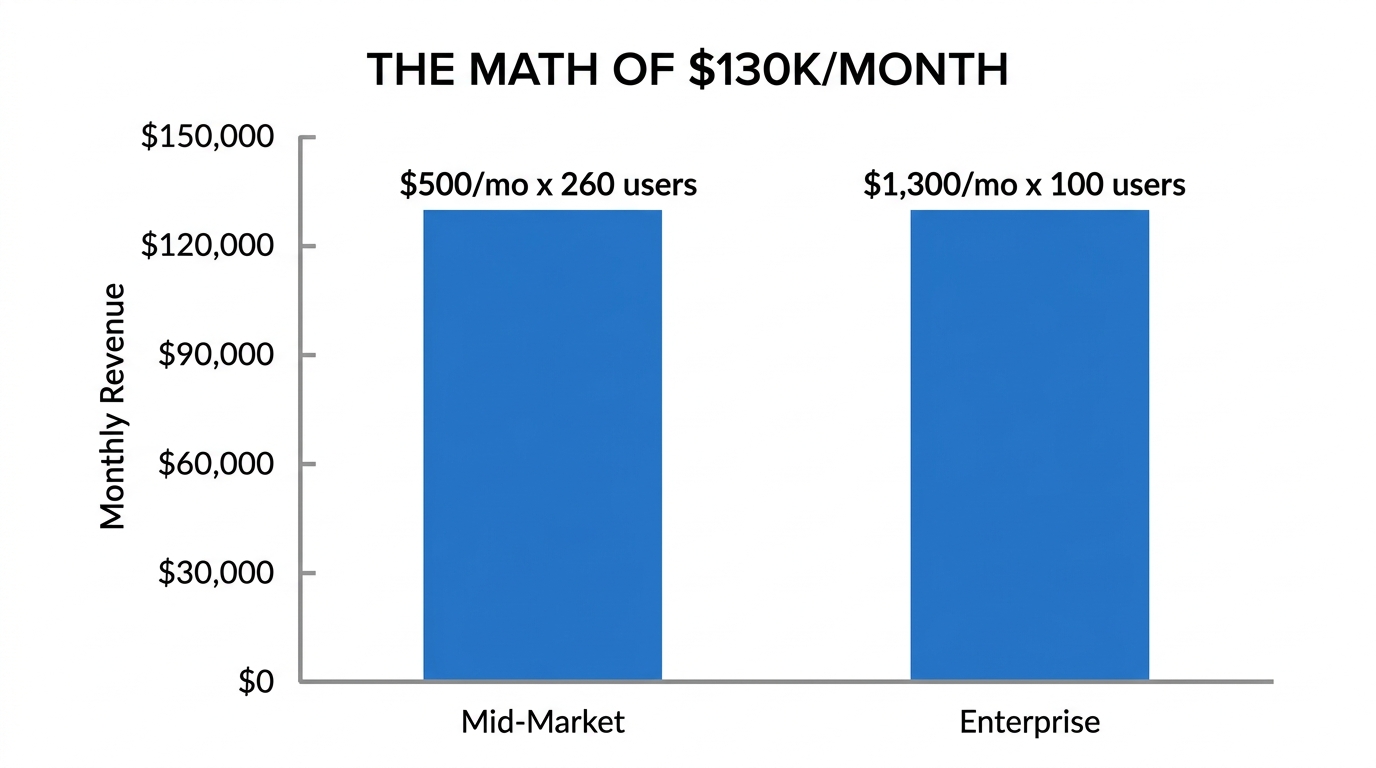
Pricing your AI SaaS shouldn't be a guessing game. In 2026, the standard for profitable AI startup ideas is to price based on time-replacement value. If your software saves a bookkeeper 10 hours a month, and their time is worth $100/hour, you have created $1,000 in monthly value. Charging $200 to $300 per month for that automation is a "no-brainer" for the customer because it represents a 3x to 5x ROI on their investment.
| Manual Button | AI Opportunity | Estimated Market Size |
|---|---|---|
| Schedule Meeting | Context-Aware Scheduling | $1.8 Billion |
| Upload CSV | Intelligent Data Processing | $3.2 Billion |
| Format Document | One-Click Brand Rules | $1.5 Billion |
| Compile Data | Automatic Aggregation | $2.9 Billion |
The 30-Day AI SaaS Playbook
20:51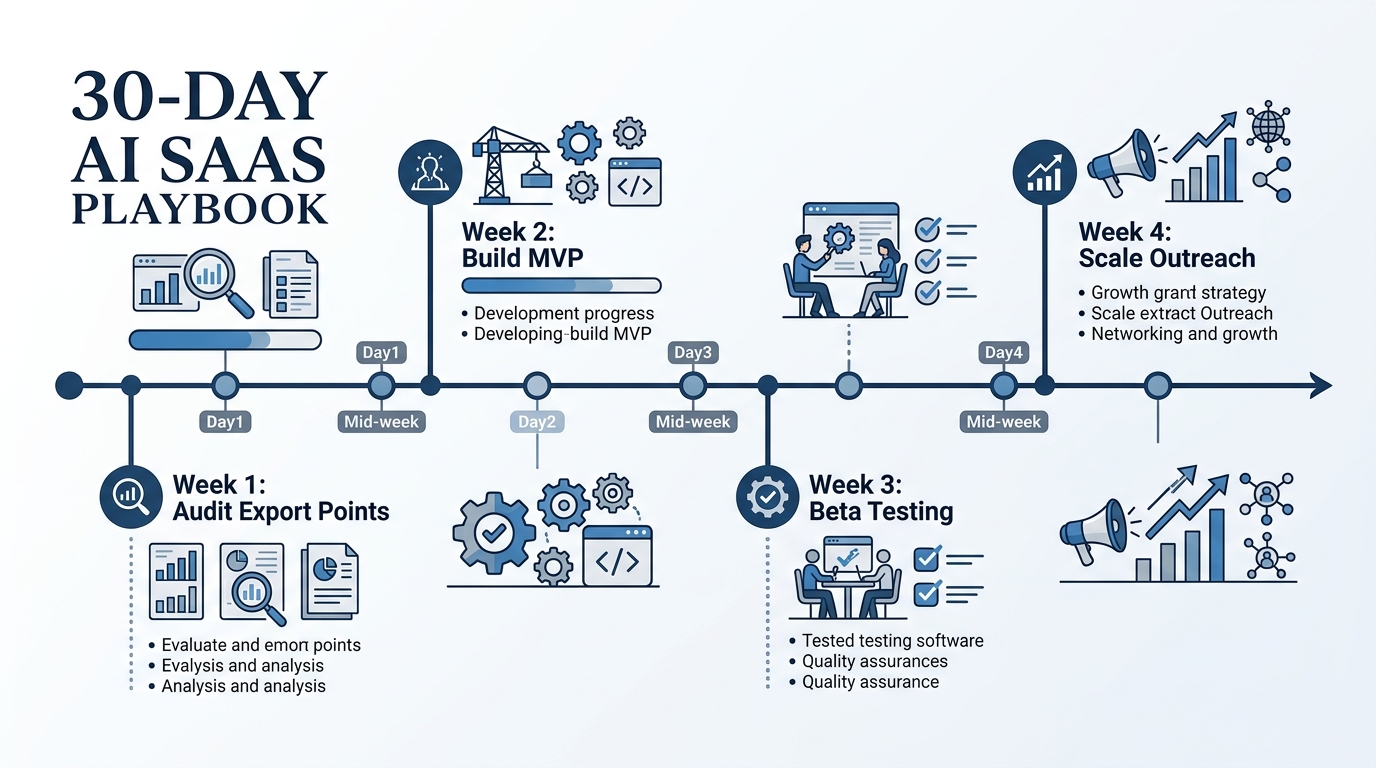
You don't need six months of development to test these theories. In fact, you should aim to have your first paying customers within 30 days by using the following playbook:
Days 1-5: Research and Audience Building
Select your enterprise software (e.g., QuickBooks) and your sub-niche. Join communities on X or specialized forums where these professionals hang out. Start building an audience by sharing insights about the manual workflows you are investigating. This creates a "warm" pool of potential beta testers.
Days 6-10: Power User Interviews
Reach out to power users and ask them: "What do you do with the data once you hit the export button?" Your goal is to map the 90 minutes of manual work they do in Excel. Don't try to sell yet; just learn the workflow better than anyone else.
Days 11-20: Build the MVP (Minimum Viable Prototype)
Use modern AI coding tools like v0, Bolt, or Lovable to generate your frontend and backend. Your MVP should do exactly one thing: take a specific QuickBooks export and turn it into a specific, high-value report. Do not add extra features yet.
Days 21-30: Beta Launch and First Revenue
Get 3 to 5 of your interviewees onto the platform. Charge them immediately—even if it's a discounted "beta" rate. If they aren't willing to pay, you haven't solved a big enough pain point. Collect video testimonials focused on the time saved. Video is critical in 2026; text testimonials are often ignored by savvy buyers.
"If you are solving real, manual pain that costs a business money, they will pay you from day one. You don't need a free tier."
Conclusion: Scaling the Goldmine
The QuickBooks export goldmine is just one example of the massive opportunities available in 2026. As knowledge workers become increasingly overwhelmed by data, the demand for "intelligent bridges" between software platforms will only grow. By following the Export Button Theory, focusing on high-value sub-niches, and pricing based on labor replacement, you can build a highly profitable SaaS that scales without a massive headcount.
Remember, the goal isn't to build the most complex technology. The goal is to eliminate the most boring part of someone's day. If you can do that, you've already won. For founders looking to scale their reach once they have a product, leveraging AI-driven platforms like Stormy AI can help you find the right influencers and creators to bring your niche solution to the masses, turning a small tool into a $130K/month powerhouse.