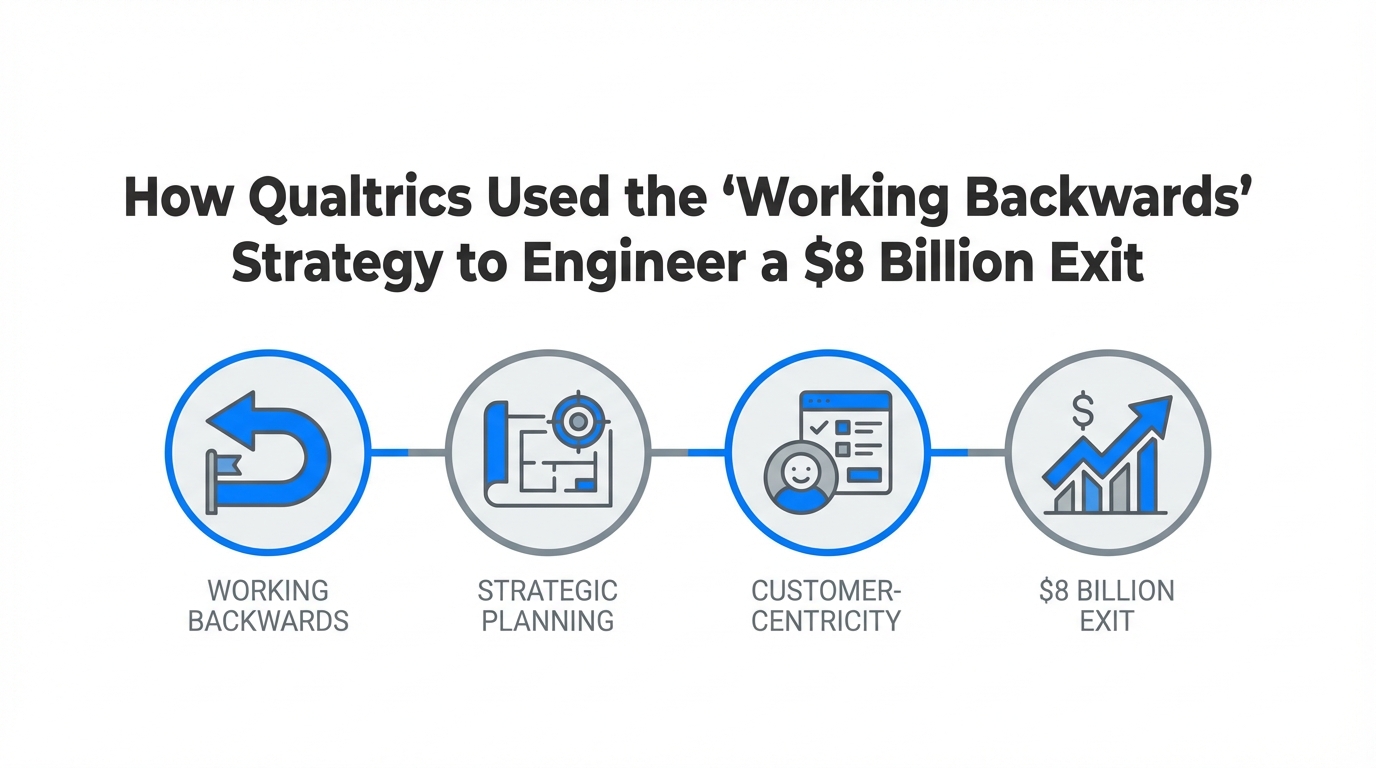
Ryan Smith is not your typical tech billionaire. He wasn't the Harvard dropout with a grand vision and a golden parachute. In fact, he was a 1.9 GPA high school dropout who found himself in the basement of his family home in Utah, trying to sell software that no one seemed to want. Yet, two decades later, he would sell that same company, Qualtrics, for a staggering $8 billion and become the owner of the NBA's Utah Jazz. The bridge between that 1.9 GPA and a $2 billion net worth wasn't luck—it was a calculated, relentless business growth strategy known as "Working Backwards."
To understand the Qualtrics story is to understand the power of high-stakes focus. Ryan didn't just build a product; he reverse-engineered a global brand building empire by envisioning the future and forcing the present to catch up. Whether it was teaching English in Korea at 17 to make $8,000 a month or turning down a $500 million acquisition offer from SurveyMonkey, every move was part of a broader startup scaling roadmap. In this article, we analyze the specific tactics Ryan Smith used to engineer one of the most successful exits in software history.
The Julie Bort Method: Reverse-Engineering Business Growth from Headlines
Most founders focus on the product roadmap: feature A leads to feature B. Ryan Smith focused on the media roadmap. This is what we call the "Julie Bort Method." In the early days of Qualtrics, Ryan realized that press coverage wasn't just a result of success; it was a tool to define it. After turning down a massive acquisition offer, he spoke with Julie Bort, a prominent journalist at Business Insider. She wrote a headline that would change his life: "The Kid Who Turned Down $500 Million."
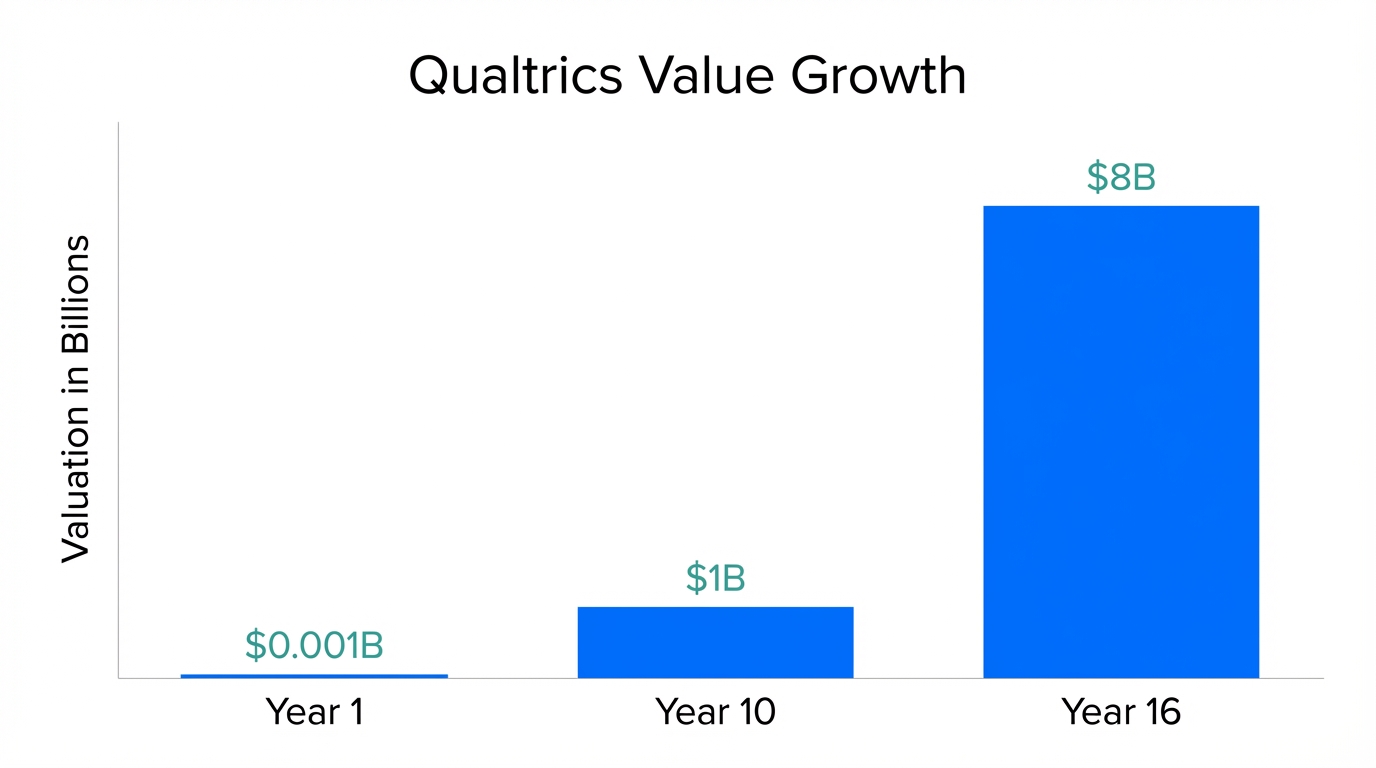
Instead of shying away from the spotlight, Ryan used that headline as a brand building benchmark. He framed that article on his wall and asked his team: "What is her next article going to be?" This wasn't vanity; it was a business growth strategy. By deciding what the next headline should be—raising at a $1 billion valuation, then $2.5 billion, and eventually an $8 billion exit—he created a psychological forcing function for his entire organization.
"We knew what the next article had to be. It wasn't about the money; it was about the directional standpoint of the company. We worked backwards from the story we wanted to tell when we were done."
Burn the Boats: Why Turning Down $500M Was a Strategic Lever
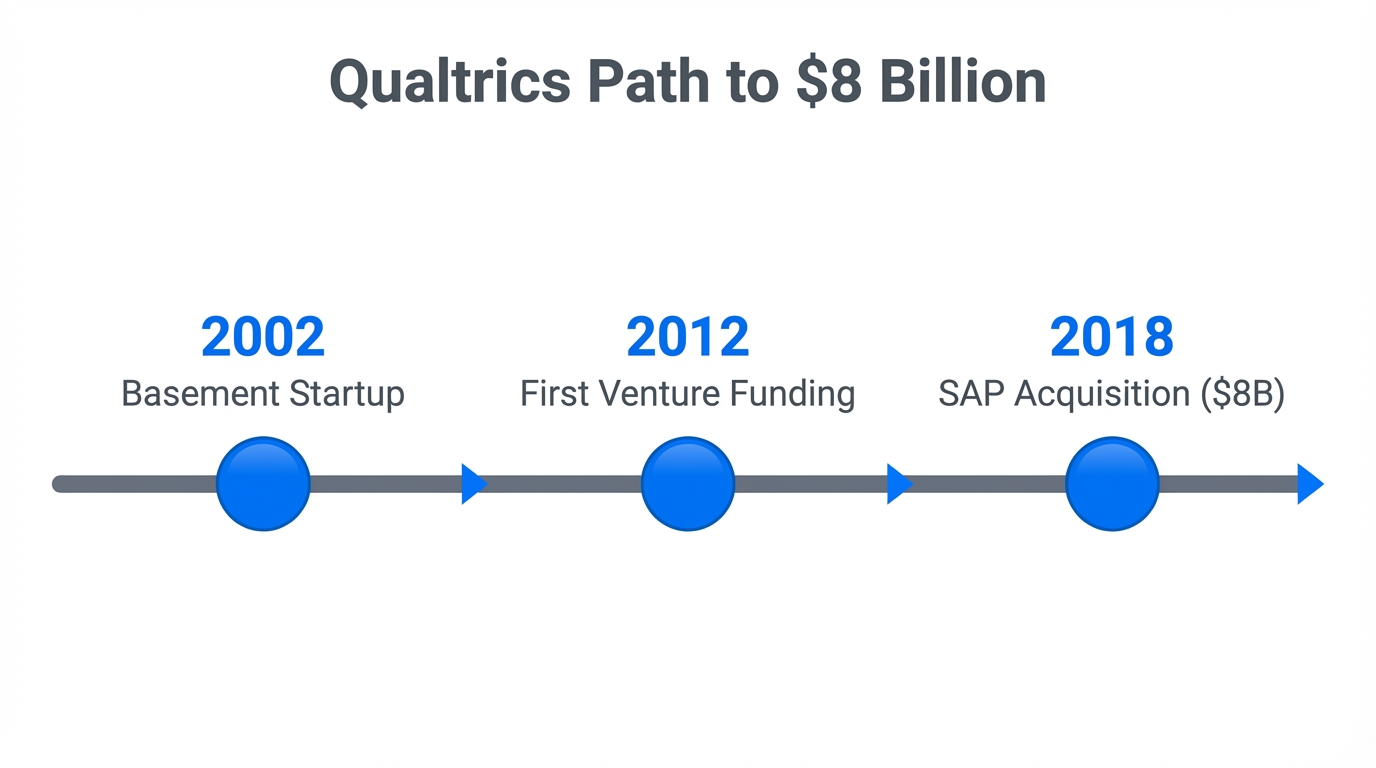
In 2012, Qualtrics was 10 years into its journey. They were profitable, bootstrapped, and largely ignored by Silicon Valley. Then came the offer: $500 million from SurveyMonkey. At the time, the offer was clean, life-changing, and backed by tech royalty like Sheryl Sandberg, who was then running Meta. For a kid from Utah, it was the ultimate "I made it" moment. But Ryan turned it down.
This decision was his "Burn the Boats" moment. By rejecting the exit, he signaled to his team, his family, and the market that they were playing a much larger game. This is a critical component of startup scaling: knowing when to resist the early exit to capture the massive upside. He consulted mentors like Duff Thompson, who reminded him that many companies sell too early. By staying independent, Qualtrics was able to maintain its culture of intense focus and eventually secure funding from Sequoia Capital and Accel, the same firms that backed Google and Slack.
Setting 'North Star' Milestones to Align Teams
A business growth strategy is only as good as the focus it commands. When Ryan’s brother, Jared, left a high-level position at Google China to join Qualtrics, he brought a "religious" level of focus to the company. They decided to target only the top 250 universities in the world. Jared famously refused to even discuss other customer types. "Unless you're talking about these 250 universities, I don't want to hear it," was the mantra.
This narrow focus created a massive competitive advantage. By winning the top academic institutions—like the Kellogg Business School—they ensured that every graduating student would enter the workforce already trained on Qualtrics. It was a Trojan Horse strategy for enterprise distribution. They weren't just selling software; they were building a generation of users. This alignment between product and sales is what allowed them to scale without a massive marketing budget in the early years.
| Strategy Phase | Target Milestone | Outcome |
|---|---|---|
| Bootstrap Era | Top 250 Universities | Product-market fit & credibility |
| Expansion Era | Fortune 500 Enterprises | Hyper-growth & recurring revenue |
| The Exit | $8 Billion Acquisition | Market dominance via SAP acquisition |
In today's landscape, founders often get distracted by too many channels. While Ryan Smith had to manually dial for years to reach these universities, modern growth teams use AI to maintain that same level of focus. For example, platforms like Stormy AI allow brands to discover specific niches of UGC creators and automate personalized outreach, ensuring that the startup scaling process remains targeted rather than scattered.
The 'Long Game' Philosophy: Resisting Side-Hustles
One of the most striking aspects of Ryan Smith's story is his refusal to engage in the typical "founder behavior" of side-hustles and angel investing. For 20 years, he did nothing but Qualtrics and basketball. He didn't sit on boards. He didn't buy real estate. He didn't invest in other startups. He played the long game.
In a world that celebrates the "multi-hyphenate" entrepreneur, Ryan’s success proves that startup scaling requires 100% of your cognitive load. By avoiding the distraction of being an angel investor, he was able to navigate the complex nuances of his own business during the difficult years (2002–2012) when the company was still in obscurity. This focus is what eventually allowed him to buy the Utah Jazz for $1.6 billion—a move he described as a culmination of 20 years of sacrifice.
"I didn't do anything else when I was doing Qualtrics. I didn't invest. I didn't sit on boards. I didn't buy real estate. I was literally heads down for 20 years."
Actionable Playbook: Creating Your Headline Roadmap
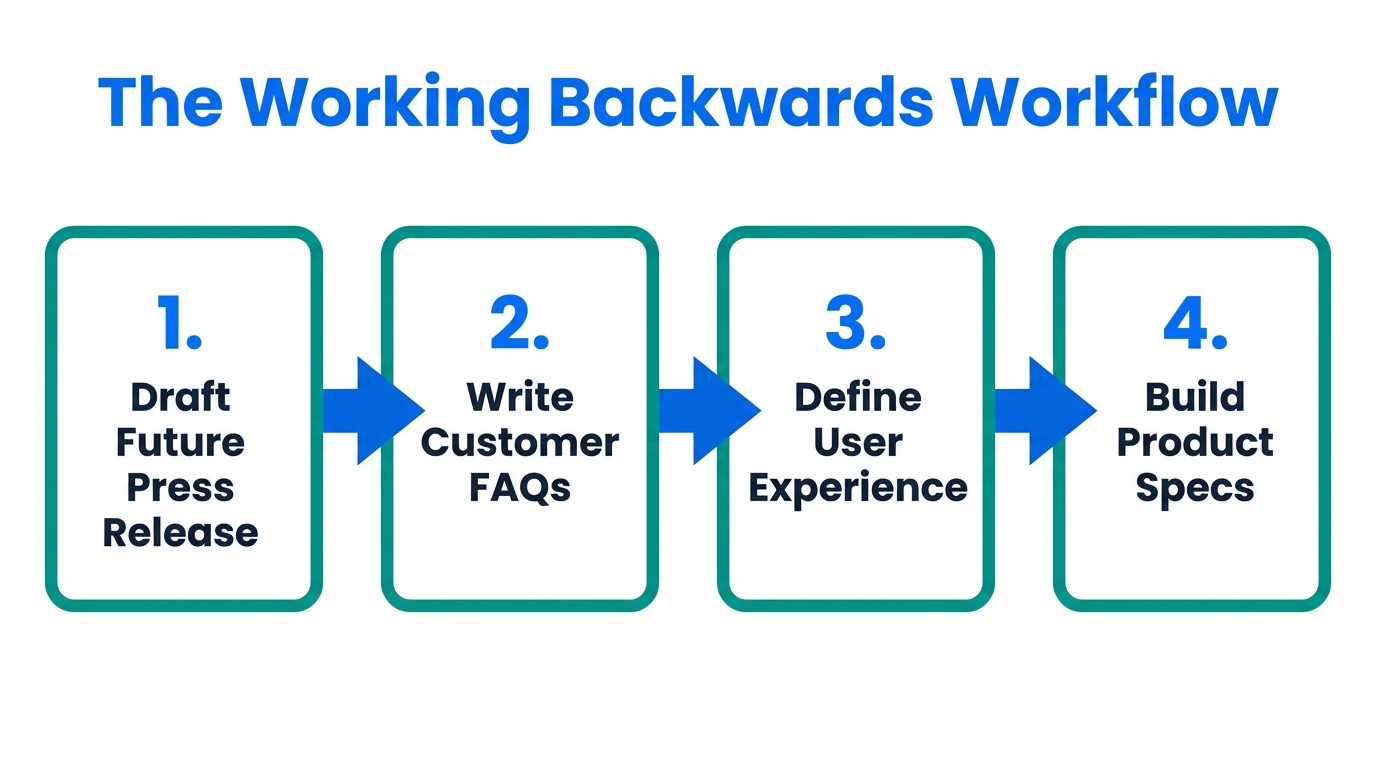
If you want to use the Working Backwards method for your own exit strategy, you need to stop thinking about tasks and start thinking about narratives. Here is the 3-step playbook to engineer your growth:
Step 1: The 10-Year Vision
Define the ultimate headline. Is it an IPO on the NYSE? Is it an acquisition by a tech giant like SAP? Is it a social impact milestone? Write this headline down and put it where your team can see it every day. Use tools like Notion to document this "North Star" and align all project tasks under it.
Step 2: The 5-Year Milestone
What needs to happen for the 10-year headline to be possible? Usually, this involves a specific revenue target or market share. For Qualtrics, this was reaching a $1 billion valuation. This is where you focus on brand building and aggressive distribution. If your distribution involves partnerships or influencer marketing, tools like Stormy AI can help source and manage those relationships at scale, keeping your team focused on the high-level strategy rather than manual vetting.
Step 3: The 2-Year Execution
Identify the "forcing functions" required today. For Ryan Smith, it was the top 250 universities. For you, it might be dominating a specific niche on TikTok or achieving a certain retention rate. Track these metrics religiously using Google Analytics or Mixpanel.
Conclusion: The Power of the Final Story
Ryan Smith’s journey from a high school dropout to an $8 billion exit is a testament to the fact that startup scaling is as much about psychology as it is about software. By using the "Working Backwards" strategy, he was able to turn a basement startup into a global powerhouse. He didn't just wait for the media to notice him; he dictated the narrative from day one.
Whether you are building the next enterprise SaaS giant or a consumer brand, the lesson remains the same: tune out the noise and play the long game. Define your headline, burn the boats, and stay religious about your focus. At the end of the day, all an entrepreneur has are the stories they can tell. Make sure yours is worth reading.