When Casey Holiday and his partner Ted decided to launch QALO, they weren't looking to build a $100 million empire. They were two guys working in a Beverly Hills restaurant, newly married, and frustrated by a surprisingly common problem: their wedding rings didn't fit their lifestyles. Whether it was hitting the gym, playing golf, or working in a busy kitchen, traditional metal bands were dangerous, uncomfortable, or easily lost. They realized that while people wear specific shoes for running and specific watches for diving, there was no "active" alternative for the most symbolic piece of jewelry a person owns.
What followed is a masterclass in bootstrapping, grit, and high-leverage influencer marketing strategy. From trimming 50,000 rings with eyebrow scissors in a mom’s living room to seeing their product featured for ten minutes on HBO’s Hard Knocks, the QALO story offers a definitive blueprint for how modern brands can turn a viral moment into a sustainable category-leading business. In this deep dive, we will analyze the exact tactics they used to identify influencers, the "Wedding Gift" outreach strategy, and how they scaled their operations to handle a 4x overnight spike in sales.
How to Identify High-Leverage Influencers Before They Become Mainstream
In the early days of QALO marketing, the term "influencer" barely existed in its current form. Casey and Ted didn't have a massive budget for brand ambassador outreach, nor did they have the capital to compete with established jewelry giants. Instead, they looked for "people of influence" who naturally embodied the problem they were solving. They focused on athletes—specifically those in high-contact or high-intensity environments where a metal ring was a liability.
The key to their influencer marketing strategy was finding someone who was respected within a specific niche but hadn't yet reached "super-celebrity" status where they would be inundated with paid sponsorship offers. They identified Andy Dalton, who was then the quarterback for the Cincinnati Bengals. Dalton was a rising star, recently married, and an athlete who spent his days in a environment where a metal ring was impractical. He wasn't just a face; he was the ideal user persona.
When searching for these creators today, brands often start on platforms like TikTok or Instagram. The goal is to find individuals who are already documenting a lifestyle that aligns with your product’s utility. Casey’s approach was rooted in authentic alignment. He didn't want a commercial; he wanted a quarterback to actually wear the ring during practice because it solved a real pain point for him. This authenticity is what eventually led to one of the most famous earned media examples in sports marketing history.
The 'Wedding Gift' Outreach Strategy: Pitching Through Personal Connections
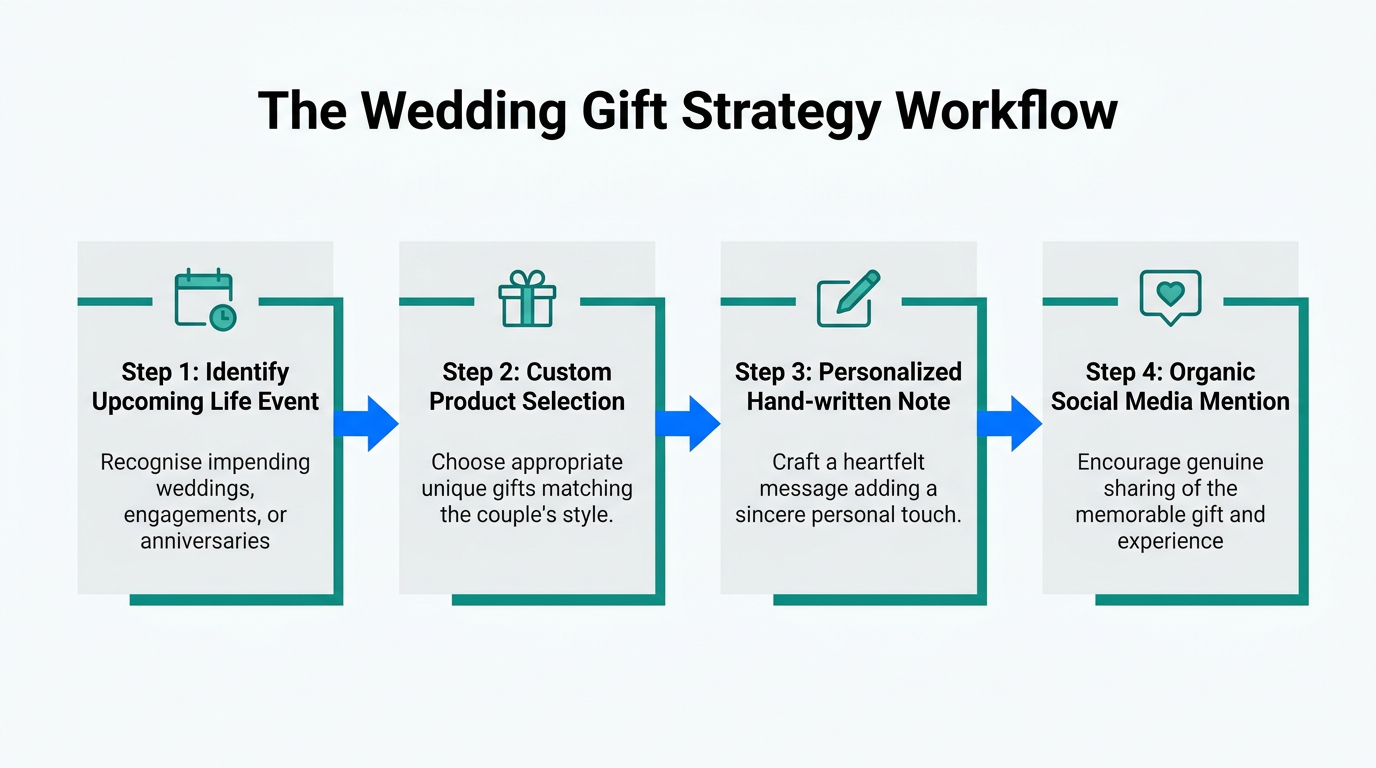
Cold emails are often ignored, especially by people of high influence. Casey Holiday understood that to get through the noise, he needed a personal angle. He didn't pitch Andy Dalton directly; he reached out to Andy’s wife, Jordan, through a Facebook message. Because Casey had attended the same university (TCU) and had a loose social connection, the message didn't feel like a sales pitch—it felt like a wedding gift.
The strategy was simple: "Congratulations on getting married. We started this company because we had a problem with our rings. I thought Andy might like one to wear on the field. Could I send one to you?" By framing the outreach as a gift for a milestone event, the barrier to entry was lowered. There was no request for a post, no contract, and no payment. It was pure product seeding.
"The goal wasn't to find an 'influencer'—it was to find a person who felt the pain of the problem we were solving so deeply that they couldn't help but talk about it."This method of brand ambassador outreach relies on the principle of reciprocity. When you provide genuine value or a thoughtful gift to someone, they are naturally inclined to support you. Months went by without a word, but the seed had been planted. This is a critical lesson for brands looking to scale a brand: influencer relationships are a marathon, not a sprint. You are building a network, not just buying a post.
How to Capitalize on Unexpected Earned Media Moments
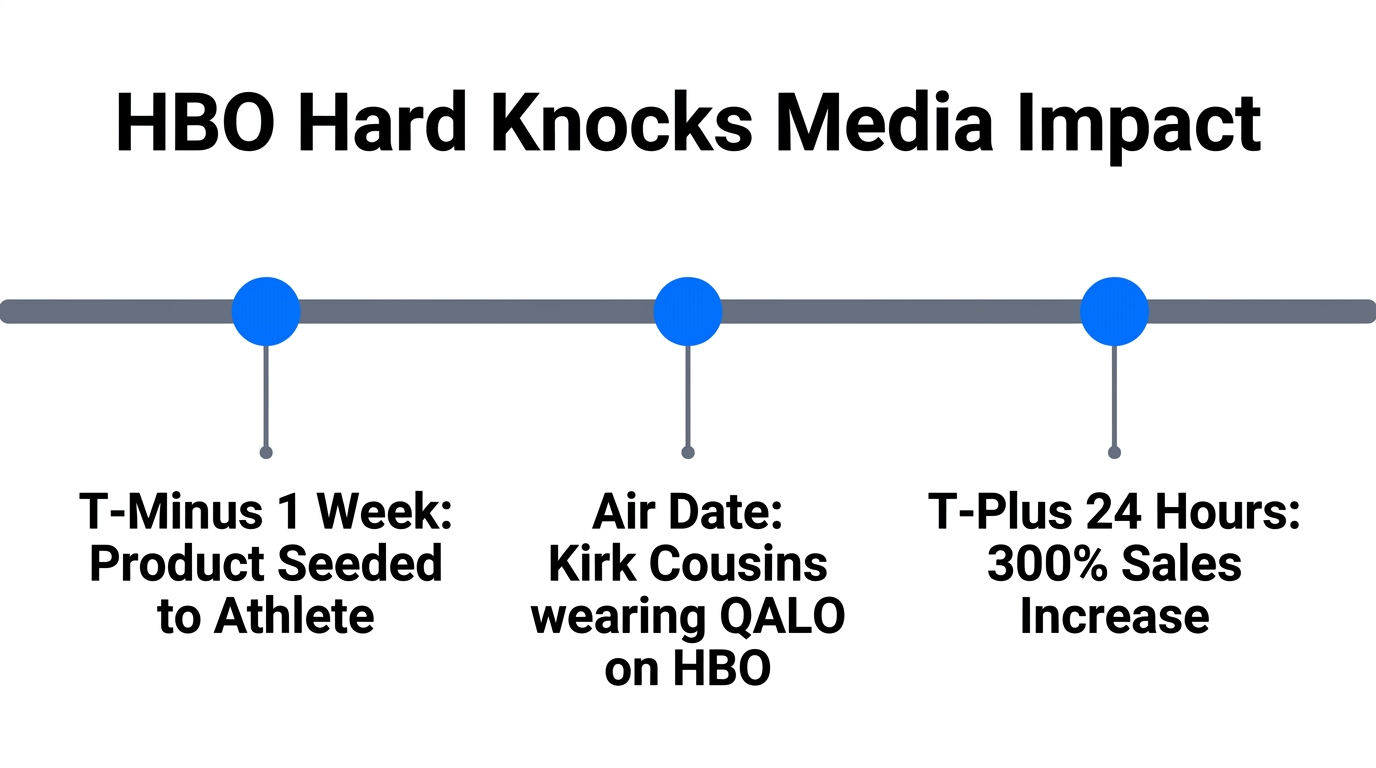
The turning point for QALO came from a source they didn't control: HBO’s Hard Knocks. During an episode featuring the Cincinnati Bengals, the cameras spent nearly ten minutes focused on Andy Dalton wearing his QALO ring. He explained on national television that he wore it because it represented his commitment to his wife while allowing him to do his job safely. It was the perfect brand positioning delivered by a third party with zero incentive to lie.
The impact was immediate. Sales spiked 3x to 4x overnight. Orders were pouring in so fast that Casey and Ted, who were still operating out of a mom’s living room, had to line up envelopes from one end of the house to the other. But a viral moment is only a "ping" if you don't turn it into a "wave." To capitalize on this earned media, they had to move fast. They didn't just celebrate the sales; they used the moment to validate their entire category.
| Strategy Component | Traditional Approach | The QALO Approach |
|---|---|---|
| Influencer Selection | High follower count, broad appeal. | High utility match, niche authority. |
| Initial Contact | Cold email to agent with a contract. | Personal message/gift via family/friends. |
| Creative Control | Strict scripts and brand guidelines. | Zero script; let the product solve the problem. |
| Media Focus | Paid commercials and print ads. | Earned media via authentic product use. |
When your brand experiences a viral moment, your first priority should be infrastructure. If your website crashes or your shipping takes three weeks, you lose the trust of the new audience. Casey and Ted were still hand-trimming rings with eyebrow scissors at this stage. They had to transition from a "couple of guys with an idea" to a legitimate operation almost instantly to ensure that the attention they gained turned into long-term brand equity.
Bridging the Gap Between Viral Moments and Long-Term Equity
A spike in sales is great, but how to scale a brand effectively requires turning that initial curiosity into a community. After the Hard Knocks episode, QALO didn't just wait for the next TV show. They began to aggressively build out their own content engine and social presence. They treated the Andy Dalton moment as a "proof of concept" that they could use to recruit other athletes and influencers.
They focused on showing the ring in diverse environments—crossfit gyms, construction sites, and professional sports arenas. By diversifying the use cases, they ensured that QALO wasn't just "the ring for football players," but the ring for anyone with an active lifestyle. They used platforms like Shopify to manage their growing storefront and integrated with social networks like Facebook and Instagram to retarget the visitors who had discovered them through the HBO segment.
Transitioning from Founder-Led Outreach to AI-Powered Systems
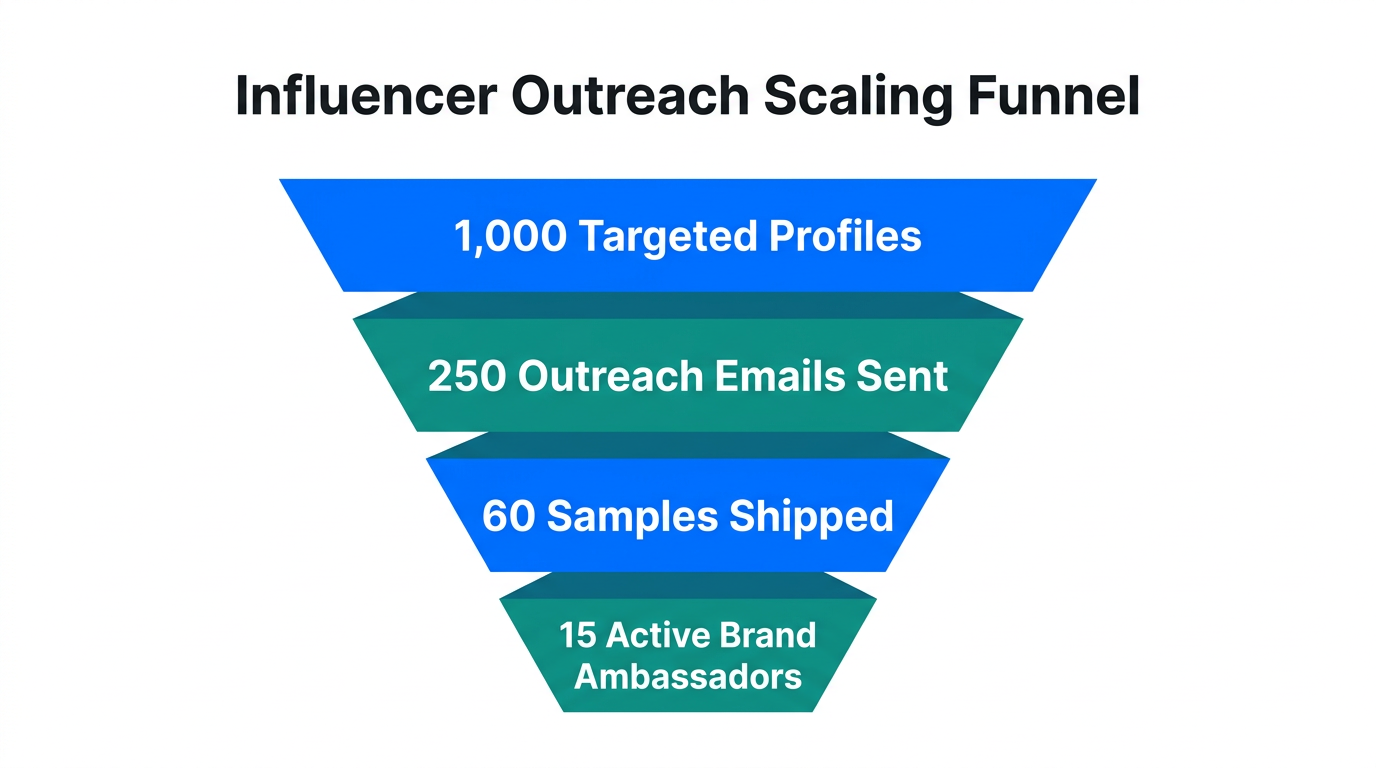
In the beginning, Casey Holiday was the one sending the Facebook messages and packing the boxes. As the company grew toward 100 employees and $30 million in annual revenue, that manual approach was no longer feasible. Scaling required systems and departments. They had to hire customer service teams, inventory managers, and eventually, a dedicated influencer marketing department.
For modern startups, the leap from manual outreach to a structured department is where most brands fail. Today, founders don't have to spend months watching Lost while trimming rings; they can leverage technology to find their next "Andy Dalton." Using an AI search engine like Stormy AI, brands can discover creators across TikTok, YouTube, and Instagram who match their specific niche—whether that's high-intensity athletics or professional woodworking—in seconds.
By using Stormy AI, brands can automate the discovery and vetting process that took Casey months to do manually. Instead of searching for friends-of-friends on Facebook, you can use natural language prompts to find influencers with high engagement and authentic audiences, then manage those relationships through a built-in CRM. This allows founders to stay focused on the big-picture strategy while the AI handles the heavy lifting of sourcing and initial outreach.
"The mistake most founders make is thinking they can do everything forever. Scaling is the art of building a machine that runs without you."Building a Culture of Growth: Lessons from $100M in Sales
As QALO reached the $100 million milestone, the challenges shifted from "how do we get noticed?" to "how do we stay better?" Casey Holiday emphasizes that they never focused on being the biggest company—they focused on being the better company. This meant listening to their customers and constantly iterating on their product quality.
They moved from a 200-square-foot office where no one could take a phone call because it was too loud, to a professional headquarters with a culture of innovation. Throughout this growth, they remained first movers in the category. They understood that if they didn't move fast, competitors with more capital would eventually enter the space. Their influencer marketing strategy acted as a protective moat; by the time other silicone ring brands appeared, QALO was already synonymous with the category.
To maintain this momentum, they utilized a modern growth stack, pairing their influencer efforts with automated marketing tools. They likely used tools like Klaviyo for email automation and TikTok Ads Manager to amplify their UGC content. By combining earned media with paid amplification, they created a perpetual growth loop that allowed them to dominate the market for years.
Conclusion: Your Playbook for Scaling Through Influencers
The story of QALO is a reminder that successful marketing isn't about the size of your budget, but the depth of your insight. Casey Holiday and Ted identified a real human problem, found an authentic way to reach the people who had that problem, and had the grit to handle the chaos when it finally went viral. Whether you are trimming rings in a garage or managing a multi-million dollar ad spend, the principles remain the same.
If you want to replicate QALO's success, start by identifying your high-leverage brand ambassadors. Don't be afraid to use personal outreach strategies like the "wedding gift" method to break through the noise. And when you're ready to scale that process, leverage modern tools to find and manage your creator relationships at scale. The next "Hard Knocks" moment for your brand might be just one well-placed gift away.