Casey Holiday didn't start his journey in a sleek Silicon Valley incubator. He started it while bartending in Beverly Hills, staring at his bank account and hoping his rent check wouldn't bounce. Along with his partner Ted Baker, Casey transformed a simple observation—that traditional wedding rings are impractical for active lifestyles—into QALO, a brand that has now sold over $100 million worth of silicone wedding rings. This wasn't a linear path of easy victories; it was a grueling process of manual labor, manufacturing disasters, and high-stakes operational shifts.
For entrepreneurs looking at scaling a business, the QALO story serves as a masterclass in grit and tactical execution. Transitioning from two guys in a garage to a 100-employee company with 20% profit margins requires more than just a good product; it requires a complete overhaul of how you manage human capital, operational systems, and distribution. In this guide, we will break down the exact strategies used in this QALO case study to help you navigate your own growth journey.
The 'Inflection Point': When to Go All-In
Every founder faces the terrifying moment where they must choose between the safety of a steady paycheck and the potential of their startup. For Casey, this was the "inflection point." He was working a 7:00 AM shift at a restaurant while his wife worked the 11:00 AM shift, sleeping in their Fiat in the parking lot to save time. They were living with his mother to keep overhead low—a classic move in entrepreneurship scaling where personal sacrifice fuels professional growth.
The decision to quit his job wasn't based on a massive bank balance. In fact, his partner Ted explicitly told him they couldn't afford for him to go full-time. However, Casey recognized that the business was outgrowing its status as a side hustle. To truly achieve business growth strategy milestones, one founder usually has to dedicate 100% of their mental energy to the operation.
Building Operational Systems Amidst Chaos
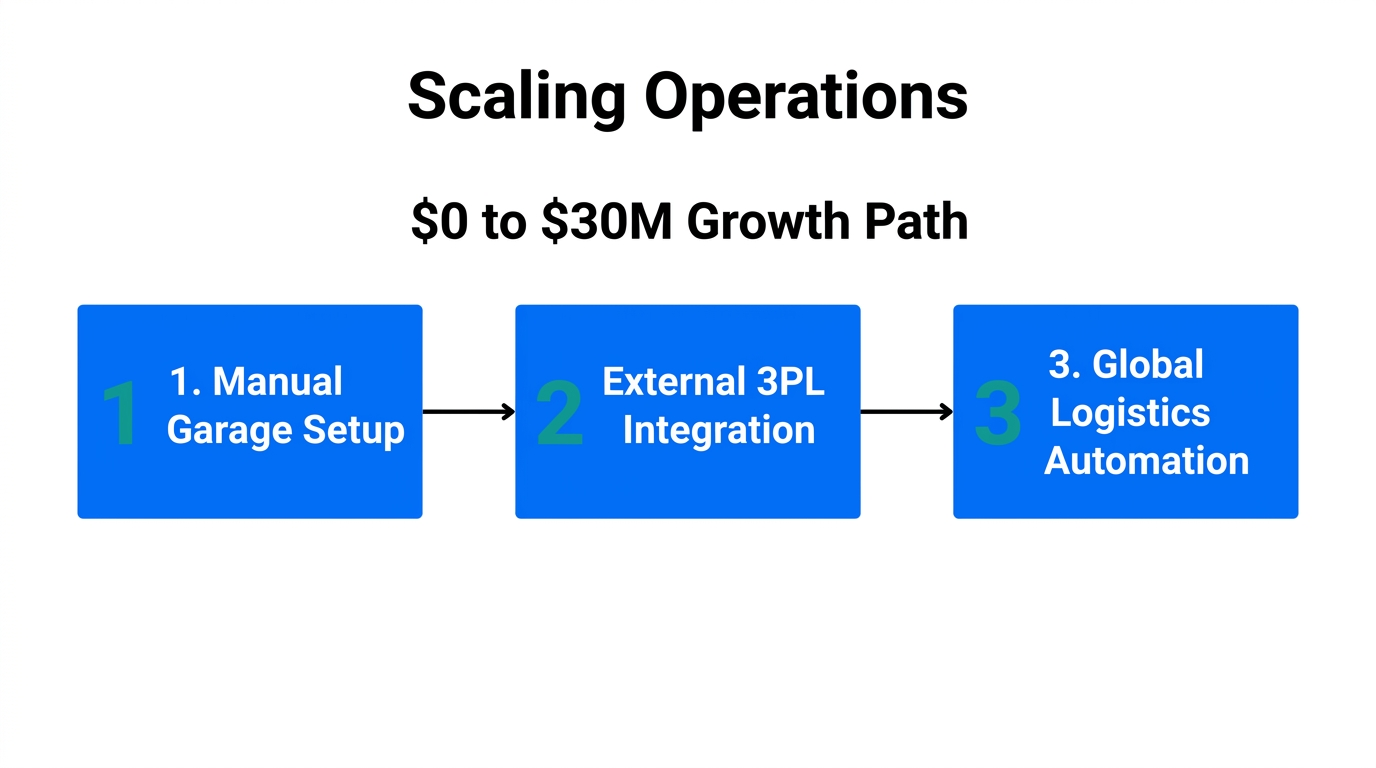
One of the most famous parts of the QALO story is the "Eyebrow Scissors Incident." After emptying their savings to order their first batch of inventory, Casey and Ted discovered the product quality was abysmal. The edges were uneven and unsellable. With no money left to reorder, they spent months hand-trimming 50,000 silicone rings with tiny eyebrow scissors while watching six seasons of Lost.
While this is a testament to their dedication, it also highlights the lack of initial operations management for startups. As you scale, you must move from manual fixes to systematic quality control. This means:
- Vetting Manufacturers: Moving beyond "a friend of a friend" to professional sourcing.
- Redundancy: Ensuring you aren't reliant on a single batch of inventory to keep the company alive.
- Documentation: Creating clear SOPs (Standard Operating Procedures) so that if a product is defective, there is a protocol for remediation that doesn't involve the founder's bedroom floor.
"We had ring shavings all over our house—stuck to our cat, in our cushions, in our bed. You’d get out of bed and have shavings stuck to your back because we were trimming rings in bed. That was our life."Scaling Human Capital: Hiring for Culture
As QALO moved from $1M toward $30M, they entered a phase of rapid hiring, adding 2-3 people per month. This is where many businesses fail; they hire for skills but ignore culture, or they hire too fast and lose control of the communication flow. Casey recalls a time when 13 people were crammed into a 200-square-foot office. If someone was on a customer service call, the entire office had to be silent.
To maintain company culture during hyper-growth, QALO focused on the problem they were solving rather than just the product they were selling. They weren't just selling rubber; they were selling a solution for committed, active individuals. When hiring, you must ensure every new team member understands the "Why" behind the brand.
| Phase | Team Size | Communication Strategy | Primary Focus |
|---|---|---|---|
| Garage Stage | 1-2 Founders | Instant/Informal | Product Market Fit |
| Growth Stage | 10-20 Employees | Daily Standups | Customer Acquisition |
| Scale Stage | 50-100 Employees | Departmental KPIs | Profit Margin & Efficiency |
Modern Distribution: From Andy Dalton to AI
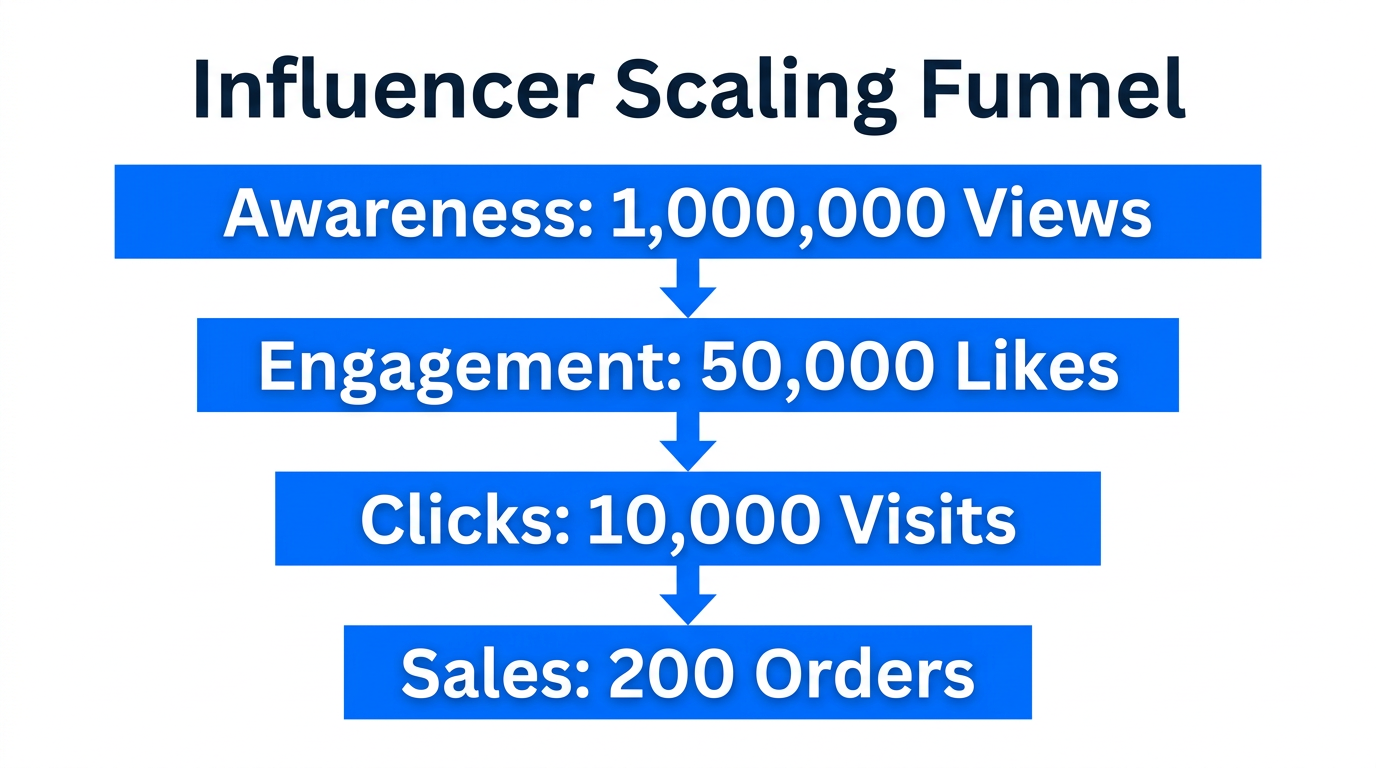
In the early days, QALO’s big break came from a manual, high-effort outreach strategy. Casey messaged the wife of NFL quarterback Andy Dalton on Facebook, offering a ring as a wedding gift. This eventually led to Dalton wearing the ring on HBO’s Hard Knocks, which generated a massive spike in sales. This was the precursor to what we now call influencer marketing.
Today, you don't have to rely on luck and manual Facebook messages. Brands looking to replicate this success use advanced platforms to source creators who align with their mission. For example, tools like Stormy AI allow businesses to search for creators across TikTok, Instagram, and YouTube using natural language prompts, effectively automating the discovery process that Casey had to do by hand. By identifying "people of influence" who actually care about the problem you’re solving, you can supercharge your business growth strategy without waiting for an HBO cameo.
Once you find these creators, managing the relationship is key. Most successful brands now pair their discovery tools with a robust Creator CRM to track deal stages and collaborations, ensuring that every "Andy Dalton moment" is tracked and optimized for long-term ROI.
Maintaining a 20% Profit Margin at Scale
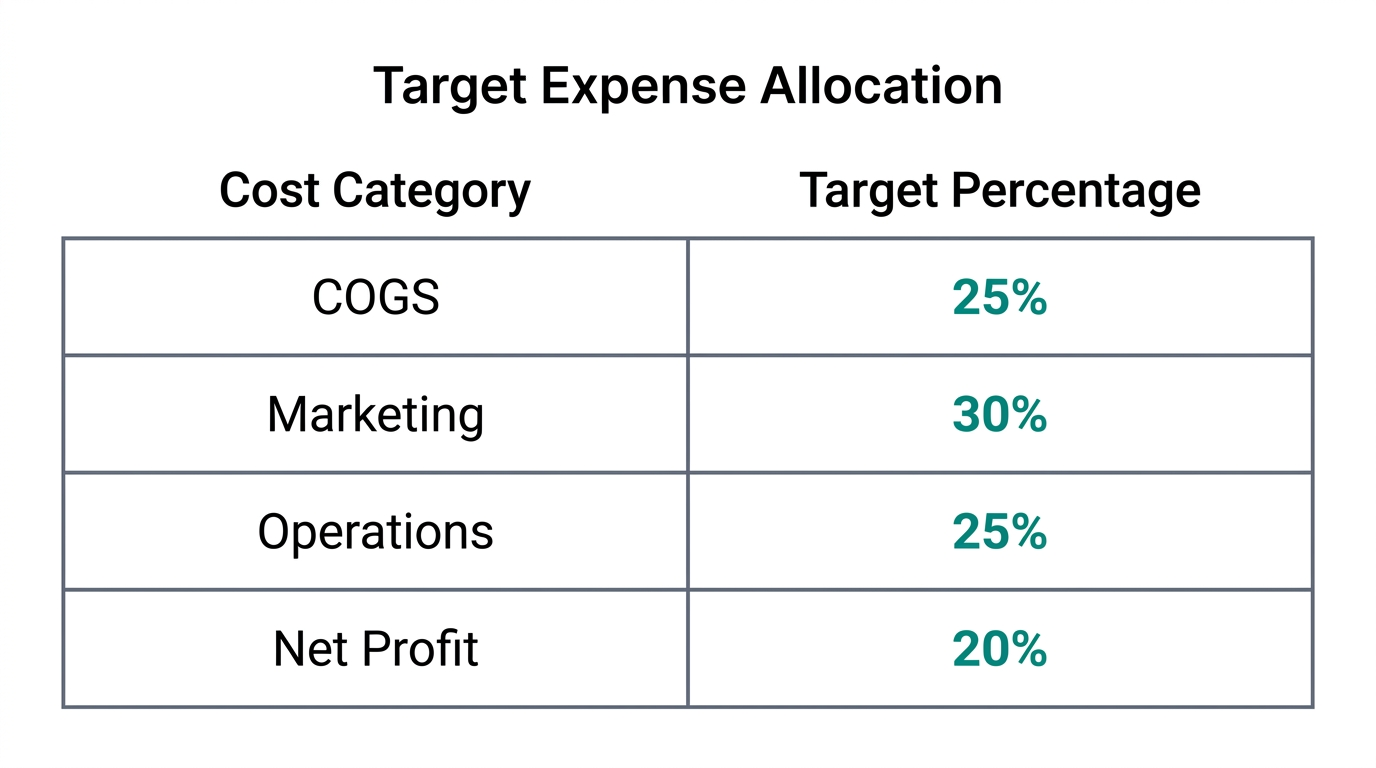
It is relatively easy to grow a company if you are willing to lose money. It is significantly harder to scale revenue from $1M to $30M+ while maintaining a 20% profit margin. Casey and Ted achieved this by being ruthless about operational efficiency. They didn't spend $99 on a Shopify theme until they knew the business was viable. They used the baseline models and focused their capital on inventory and growth.
As you scale, you must watch for "margin creep." This happens when:
- Customer Acquisition Cost (CAC) rises as you exhaust your primary audiences on Meta Ads Manager.
- Overhead increases faster than revenue (hiring too many middle managers).
- Shipping and Logistics costs eat away at the bottom line because of inefficient warehousing through tools like ShipStation.
"It was always focused on being better as a company, not bigger. Who are our customers and how do we know them better than anyone?"The Shift from Founder to CEO
The final stage of the QALO journey was the transition from being the person trimming rings to being the CEO of a 100-person organization. At this level, mistakes are costlier. A 1% error in inventory forecasting at $100,000 is a nuisance; a 1% error at $30,000,000 can be a multi-million dollar disaster.
Casey emphasizes that as an entrepreneur, you must be able to communicate the problem you are solving to anyone. Your role shifts from doing the work to managing the people who do the work. This requires building systems that allow for autonomy while maintaining accountability. Use tools like Asana or Monday.com to track projects, but use your leadership time to focus on the long-term vision and market positioning.
Final Takeaways for Your Scaling Journey
The QALO story proves that you don't need a background in manufacturing or acting to build a massive brand. You need a relentless focus on solving a specific problem for a specific group of people. Whether you are hand-trimming rings or using Stormy AI to find your next thousand customers, the principles of scaling a business remain the same:
- Don't wait for perfection; get the product into customers' hands and iterate based on their feedback.
- Monitor your profit margins as closely as your revenue.
- Scale your team carefully, ensuring that culture isn't lost in the noise of growth.
- Identify your "people of influence" early and build systems to manage those relationships at scale.
If you're ready to start your own journey, remember Casey's advice: people aren't thinking about you or your potential failure as much as you think they are. They are thinking about their own problems. Go solve them.