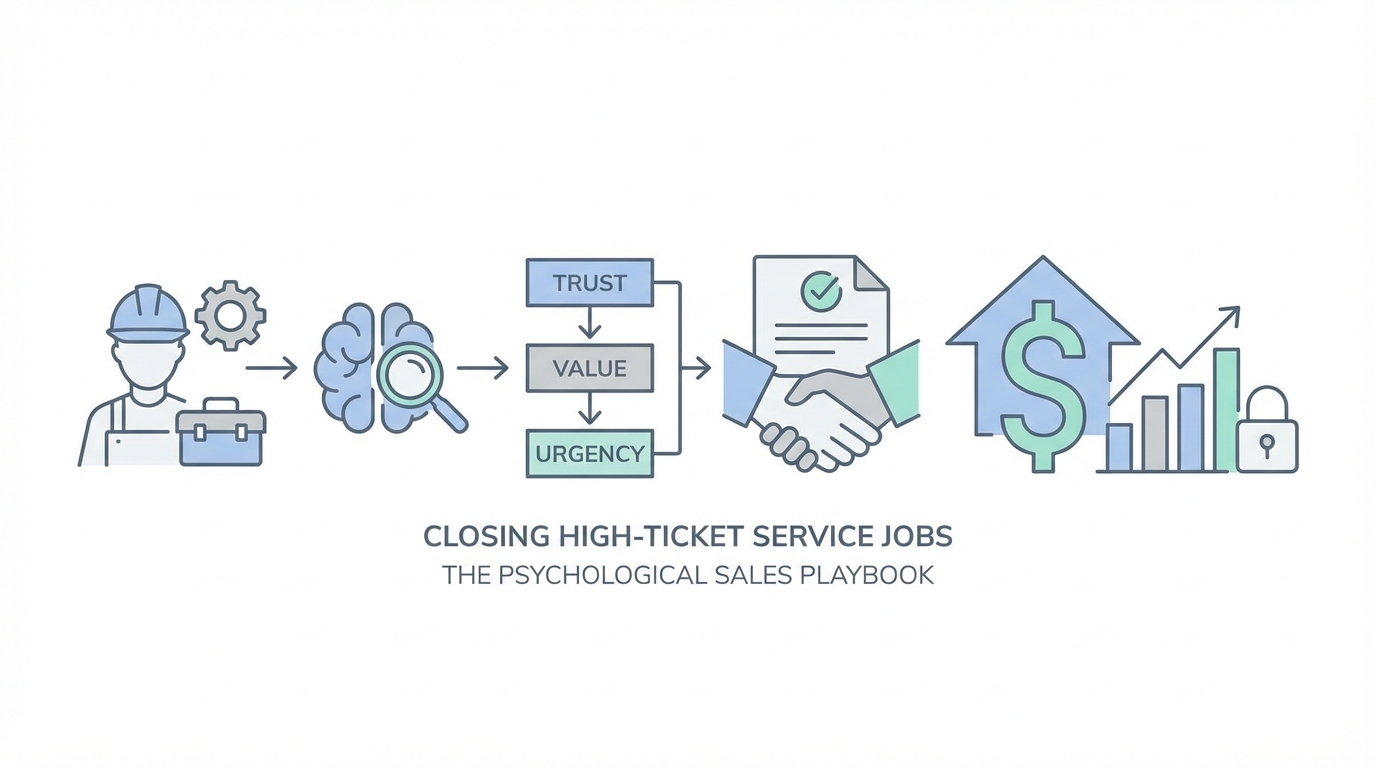
In the world of home services, there is a massive gulf between the technician who struggles to get a signature on a $500 repair and the one who consistently closes $15,000 high-ticket installations. Most people think the difference lies in the technical specs or the age of the equipment, but that is rarely the case. The secret to closing high-ticket service jobs is found in the psychology of the interaction. If you want to increase your average ticket size, you have to stop acting like a vendor who is begging for a sale and start acting like a professional who is providing a diagnosis.
Tommy Mello, the founder of A1 Garage Door Service, built a business worth over $1.7 billion by mastering this specific shift in perspective. His team runs roughly 25,000 jobs a month, and the success of those jobs hinges on a specific psychological sales playbook. This playbook doesn't rely on "closing tricks" or pressure tactics; it relies on established principles of human behavior. By applying sales techniques for contractors that focus on authority, reciprocity, and value-based language, any service business can see a dramatic lift in their bottom line.
The 'Doctor' Sales Approach: Diagnosis Before Prescription

One of the most powerful psychological sales tactics is to mirror the behavior of an authority figure we already trust: the doctor. This methodology is a cornerstone of the Sandler Selling System. When you go to a specialist, they don't walk into the room and immediately hand you a bottle of pills. If they did, you would be terrified. Instead, they ask questions. They run tests. They poke, they prod, and they listen. Because they spend time on the diagnosis, you never question the prescription.
Contractors often fail because they provide an estimate too early. They walk into a garage or a basement, look at the unit for three minutes, and say, "It's going to be four grand." This creates instant friction because the customer doesn't feel heard. To implement contractor sales training effectively, your technicians must learn to ask at least 10-15 deep-dive questions before ever mentioning a price. How is the stress level regarding the current equipment? Is the noise level an issue? Are they planning to sell the home soon? When you spend 30 minutes "diagnosing" the problem, the customer begins to view you as the authority.
By the time you offer the solution, you aren't "selling" them anything—you are giving them a prescription for their problem. This is a core component of Home Service Freedom, where scaling is built on the foundation of professional authority. When you are the doctor, you don't need to compete on price because you are the only one who truly understood the patient's needs. For brands looking to vet the creators they work with, using Stormy AI allows you to instantly generate quality reports and detect fake followers to ensure your brand authority remains intact.
Vocabulary Shifts: Transitioning from 'Cost' to 'Investment'

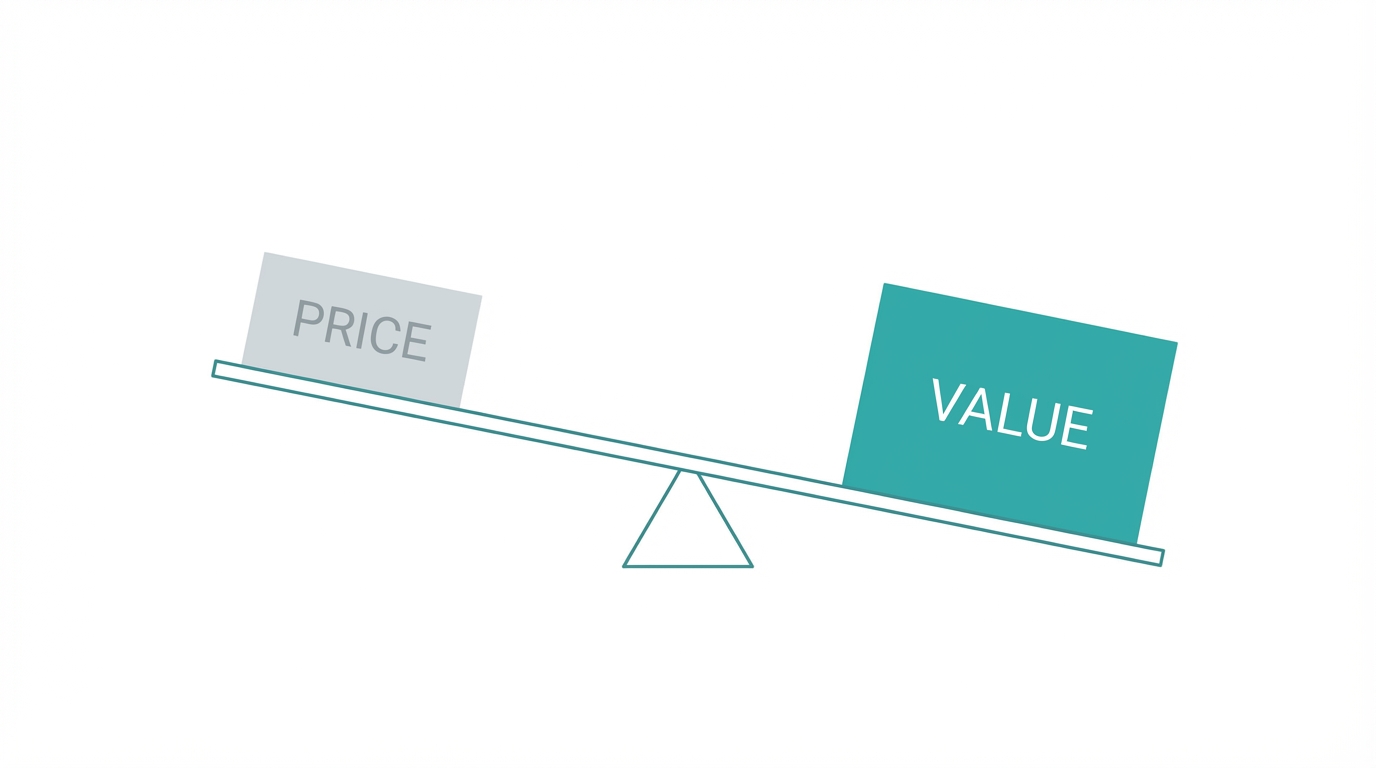
Words matter. In the heat of a sales presentation, the specific language you use can either trigger a defensive "fight or flight" response in a customer or a collaborative "investment" mindset. One of the most effective sales techniques for contractors is the subtle shift in vocabulary that Tommy Mello drills into his team. You should never use the word "cost." Cost implies a loss of money—a burden. Instead, use the word investment. An investment implies a return, whether that return is in safety, efficiency, or home value.
Similarly, stop calling your top-tier option "the most expensive." High-ticket buyers aren't looking for the most expensive item; they are looking for top-of-the-line quality. On the flip side, never call your basic option "the cheapest." That sounds like it might break tomorrow. Call it builder grade. This subtly suggests that it is the bare minimum required by code, making the higher-tier options look much more attractive by comparison.
Even the way you talk about paperwork matters. Don't talk about a "cancellation policy." Talk about the right of rescission. It sounds more professional and less like a trap. If your marketing isn't reflecting this level of sophistication, you may need tools to find the right creators to communicate this value. Platforms like Stormy AI, an AI-powered platform for creator discovery, help brands find UGC creators who can speak the language of professional service, ensuring your ads match your high-ticket reality.
The Power of Three: Offering 'Good, Better, Best' Options
The biggest mistake in how to increase average ticket size is giving the customer a binary choice: Yes or No. When you present one estimate, the customer's brain only has one question to answer: "Do I want to spend this money or not?" This often leads to the dreaded phrase, "I need to think about it."
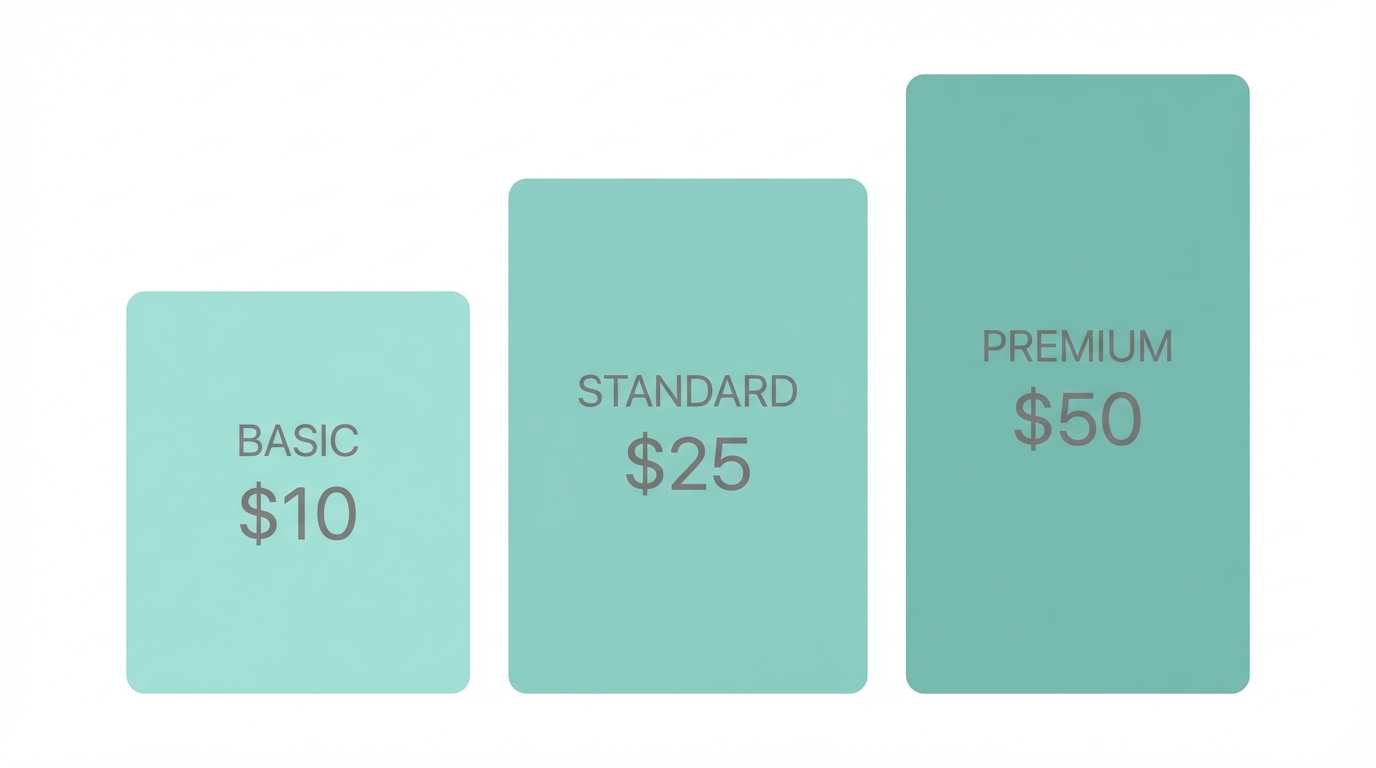
To bypass this, always offer three options: Good, Better, and Best. Now, the customer's brain isn't asking "if" they should buy, but "which" they should buy. This is the Power of Three, a concept rooted in psychological price anchoring.
- The Good (Builder Grade): Solves the immediate problem but lacks long-term security.
- The Better (Value Choice): A significant upgrade with better warranties and features.
- The Best (Lifetime/Top-of-the-Line): The ultimate peace of mind with a lifetime warranty and maximum performance.
When you present these options using home service sales scripts, you should always start with the "Best" option first. This is called anchoring. By showing the $15,000 option first, the $8,000 "Better" option suddenly looks like a bargain. Companies that use sophisticated software like ServiceTitan often find that presenting these tiers digitally increases their close rate because it gives the customer a sense of control over the transaction.
Applying the 7 Rules of Influence in the Field
Psychology in sales is best defined by Robert Cialdini, whose work on the principles of persuasion is legendary. In the home service industry, two of these rules are particularly potent: Reciprocity and Authority.
Reciprocity is the human urge to give back when something is given to us. This is why Tommy Mello encourages his technicians to offer to pick up a coffee or a donut for the homeowner on their way to the job. It’s a $5 expense that can lead to a $500 increase in the final ticket. When you bring someone a coffee, they feel a subconscious debt to you. They are more likely to listen to your recommendations and less likely to haggle over the price. You can learn more about these psychological triggers directly from Robert Cialdini's research.
Authority is established through your brand and your presentation. If you show up in a beat-up truck with a faded logo, you have no authority. But if you show up in a professionally wrapped vehicle—like those designed by Kickcharge Creative—you look like a leader. People are willing to pay more for the perceived safety of an established brand. This is why investing in your brand is not an expense, but a marketing investment that pays dividends in every single sales call. To maintain this authority at scale, marketing teams use Stormy AI to automate personalized outreach and manage every creator relationship within a unified AI-powered CRM.
Training for Confidence: Eye Contact, Smiling, and Interest
At the end of the day, people buy from people they like and trust. You can have the best technical specs in the world, but if your technician looks like a "limp fish" when they shake hands, the deal is dead. Contractor sales training should spend as much time on soft skills as it does on mechanical skills.
Technicians need to be taught to make eye contact and smile. They should be encouraged to find a point of connection with the homeowner. If there's a dog, play with the dog. If there are photos of a boat on the wall, ask about their last fishing trip. This isn't about faking interest; it's about being genuinely curious. When a customer feels that you actually care about them, their skepticism vanishes.
Confidence is another major factor. A technician who says, "I think this might fix it, I'm not sure," will never close a high-ticket job. They need to say, "Here is exactly what we need to do to ensure you never have this problem again." This level of certainty is contagious. If you are struggling to find people with this natural charisma, you can use Stormy AI to discover creators who can help you train your team through video or act as the face of your digital ads to attract higher-quality leads.
The Playbook: A Step-by-Step Closing Strategy
If you want to turn these psychological sales tactics into a repeatable system, you need a playbook. Follow these steps on every call to maximize your average ticket size:
Step 1: The Friend's Knock
Never ring the doorbell. Strangers ring doorbells; friends knock. When the customer opens the door, stand six feet back, smile, and mention the coffee or treat you offered to bring. This immediately lowers their guard and establishes the rule of reciprocity.
Step 2: The Deep-Dive Diagnosis
Before you look at the equipment, sit down with the homeowner. Ask about their pain points. Use the "Doctor" frame to understand their investment goals. Are they looking for the cheapest fix to get by, or do they want to invest in a top-of-the-line system that adds value to the home?
Step 3: The Interactive Inspection
Bring the homeowner with you during the inspection. Point out the "builder grade" parts that are failing. Explain why they are failing in simple terms. This builds authority and transparency. They need to see the problem to believe in your solution.
Step 4: Presenting the Options
Present your Good, Better, and Best options. Start with the Best (The "Smile of the Home" or "Lifetime Protection"). Explain the warranties and the long-term savings. Don't ask for a "Yes"; ask which option makes the most sense for their family.
Step 5: Buying Back Your Time
Once you start closing these higher tickets, the next challenge is scaling. You cannot be the only one running these calls. Use the principles found in Dan Martell's Buy Back Your Time to hire and train other "7s" and turn them into "10s." The goal is to build a system where the owner doesn't have to be the primary salesperson.
Conclusion: Sanity Over Vanity
As Tommy Mello famously says, "Revenue is for vanity, profit is for sanity." It doesn't matter if you are doing $17 million in revenue if you aren't keeping any of it. To build a sustainable, profitable service business, you must move away from the "hustler" mindset and embrace the "leader" mindset. This means building repeatable business systems, focusing on psychological sales tactics, and training your team to be experts rather than vendors.
By shifting your vocabulary, utilizing the power of three, and establishing authority through a professional brand, you can stop competing on price and start winning on value. Whether you are a garage door specialist, an HVAC contractor, or a plumber, the psychological principles of influence remain the same. Implement this playbook today, and watch your average ticket size—and your sanity—increase overnight.