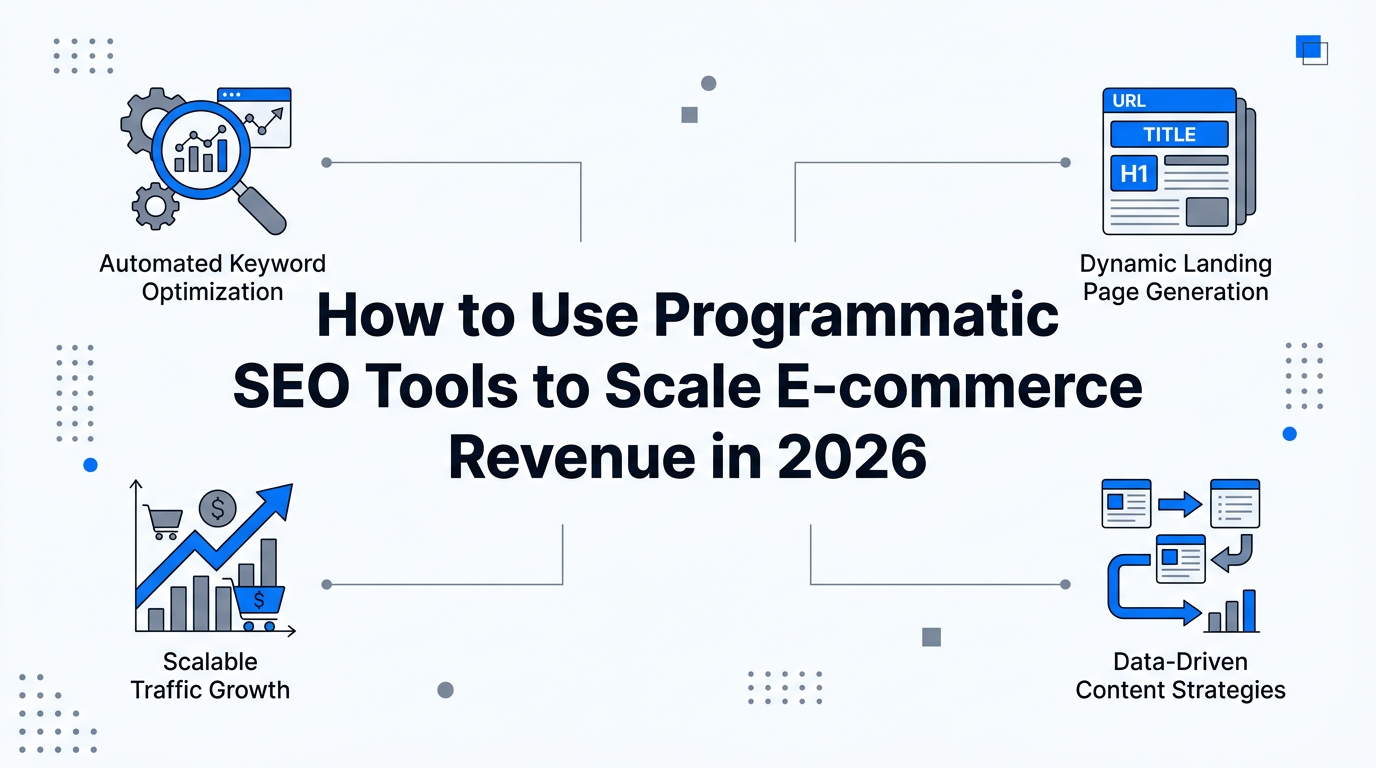
In 2026, the landscape of organic search has undergone a radical transformation. We have moved past the era of mass-produced AI "slop" that cluttered search results just a few years ago. Today, e-commerce founders and marketing directors are finding that the secret to a 30%–80% surge in organic traffic lies not in quantity alone, but in high-utility programmatic pages that solve specific customer problems. By leveraging modern programmatic SEO tools, brands are now able to scale their reach across thousands of long-tail keywords while maintaining the quality and brand voice of a boutique shop.
The 2026 Paradigm Shift: From "Slop" to High-Utility Content
The biggest change this year is the death of the "set it and forget it" automation model. Approximately 1 in 3 pSEO implementations now suffer from a "traffic cliff" within 18 months due to poor quality control or thin content. Search engines, now powered by sophisticated reasoning models, prioritize "citable" content that offers genuine value. Success in 2026 requires a Human-in-the-Loop (HITL) model.
"2026 is the year where automation handles the scale, but humans must ensure the last 20% of quality to prevent 'slop' content that triggers penalties."According to research from GrackerAI, while 67% of businesses use AI content tools, the winners are those integrating human editorial oversight. This shift is driven by the fact that 70% of shoppers still start their discovery on Google, even as 30% of research moves toward AI agents and voice assistants. To capture this traffic, your automated content strategy must provide structured data that these agents can easily digest and cite.
Identifying Scalable Keyword Formulas for E-commerce Scaling
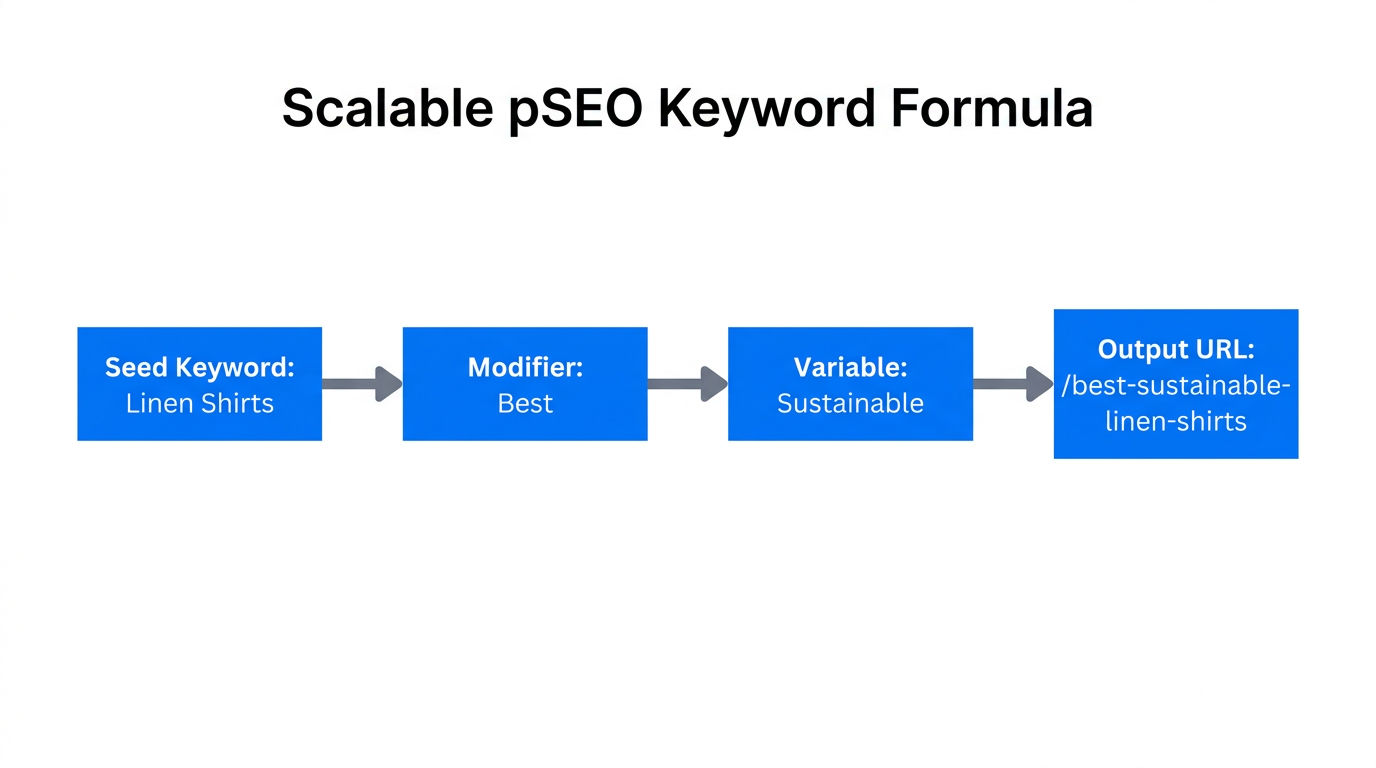
The foundation of any successful programmatic strategy is the keyword formula. Instead of targeting broad terms like "running shoes," 2026's leaders target the "Long Tail" by combining variables. This approach mirrors the architecture used by giants like Amazon, where SEO is built directly into the product structure.
The Winning Formulas
- [Brand] + [Product Type] + [Use Case]: e.g., "Nike Running Shoes for Flat Feet"
- [Product] + vs + [Competitor]: e.g., "Dyson V15 vs Shark Stratos for Pet Hair"
- [Category] + for + [Persona]: e.g., "Organic Skincare for Men Over 40"
- [Product Type] + in + [City]: Essential for omni-channel retailers capturing local intent.
| Formula Type | Example Variable | Search Intent | Conversion Potential |
|---|---|---|---|
| Solution-Based | [Product] for [Specific Pain Point] | High (Transactional) | 9/10 |
| Comparison-Based | [Brand A] vs [Brand B] | High (Consideration) | 8/10 |
| Local-Intent | [Product] in [Location] | Very High (Ready to Buy) | 10/10 |
Using tools like Ahrefs or the Semrush Keyword Magic Tool, you can identify these clusters. For those seeking low-competition niches, Keyword Chef is an excellent addition to your stack for finding underserved long-tail queries.
Inventory-Synced pSEO: Maintaining Equity and Avoiding Soft 404s
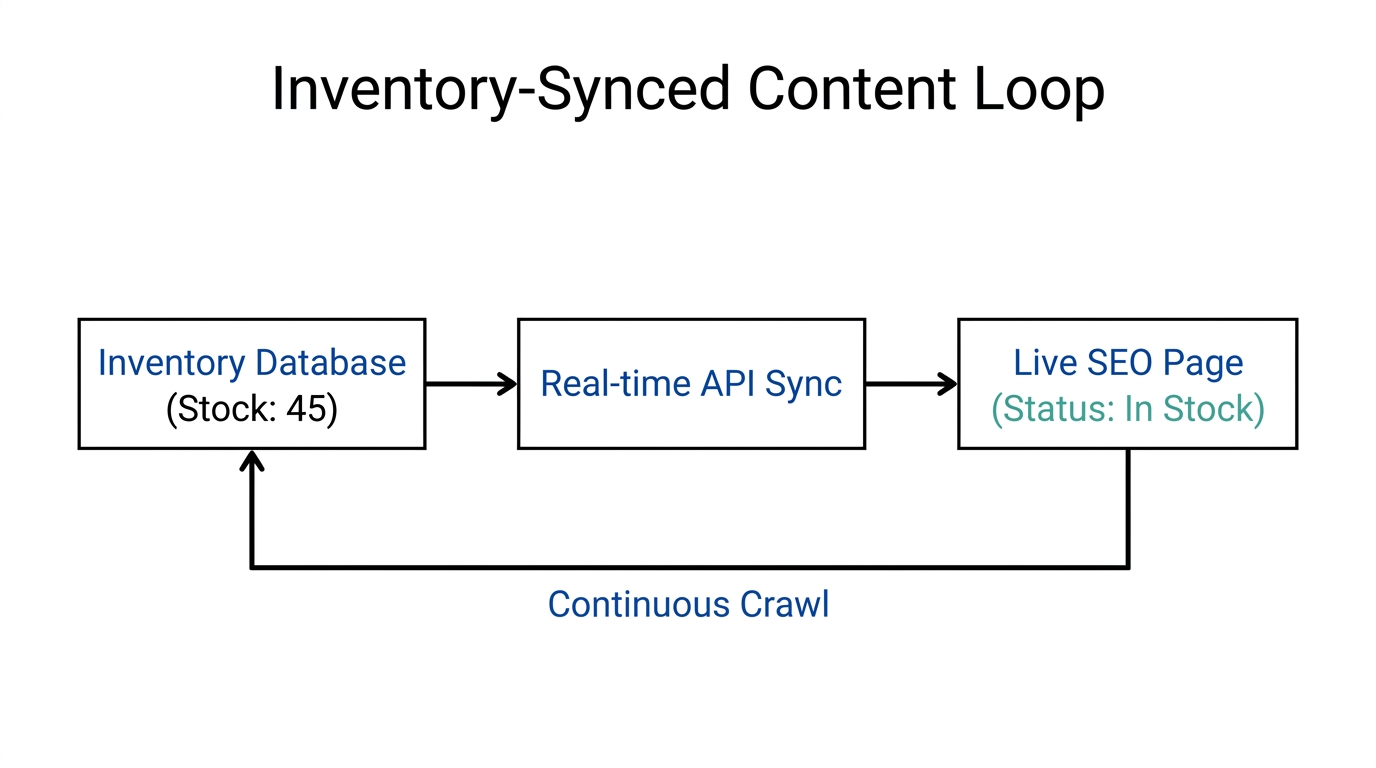
One of the most critical technical challenges in 2026 is managing the relationship between programmatic pages and actual inventory. There is nothing more damaging to your rankings than a soft 404 error caused by a page that exists but has no product to show. Experts at Yoast warn that leaving out-of-stock pages active without value harms your crawl budget.
The 2026 Inventory Playbook
- Temporary Out-of-Stock: Keep the page live. Add a "Notify Me" email capture (integrated with Klaviyo) and remove internal links from main navigation to reduce crawl priority.
- Permanent Out-of-Stock: Use a 301 redirect to the most relevant parent category or a replacement product. This preserves the backlink equity you've worked hard to build.
- Dynamic Internal Linking: Ensure your templates use logic to link only to in-stock related products, preventing "dead-end" user experiences.
"Inventory-synced pSEO is no longer optional; it's the barrier between a scaling brand and one that gets buried by Google's helpful content updates."To implement this, tools like SEOmatic or ConvertMate are essential. They connect your product feed directly to your CMS, ensuring that if a SKU disappears, the page adapts or redirects automatically. This level of technical automation is what separates e-commerce scaling masters from the amateurs.
The Essential pSEO Tech Stack for 2026
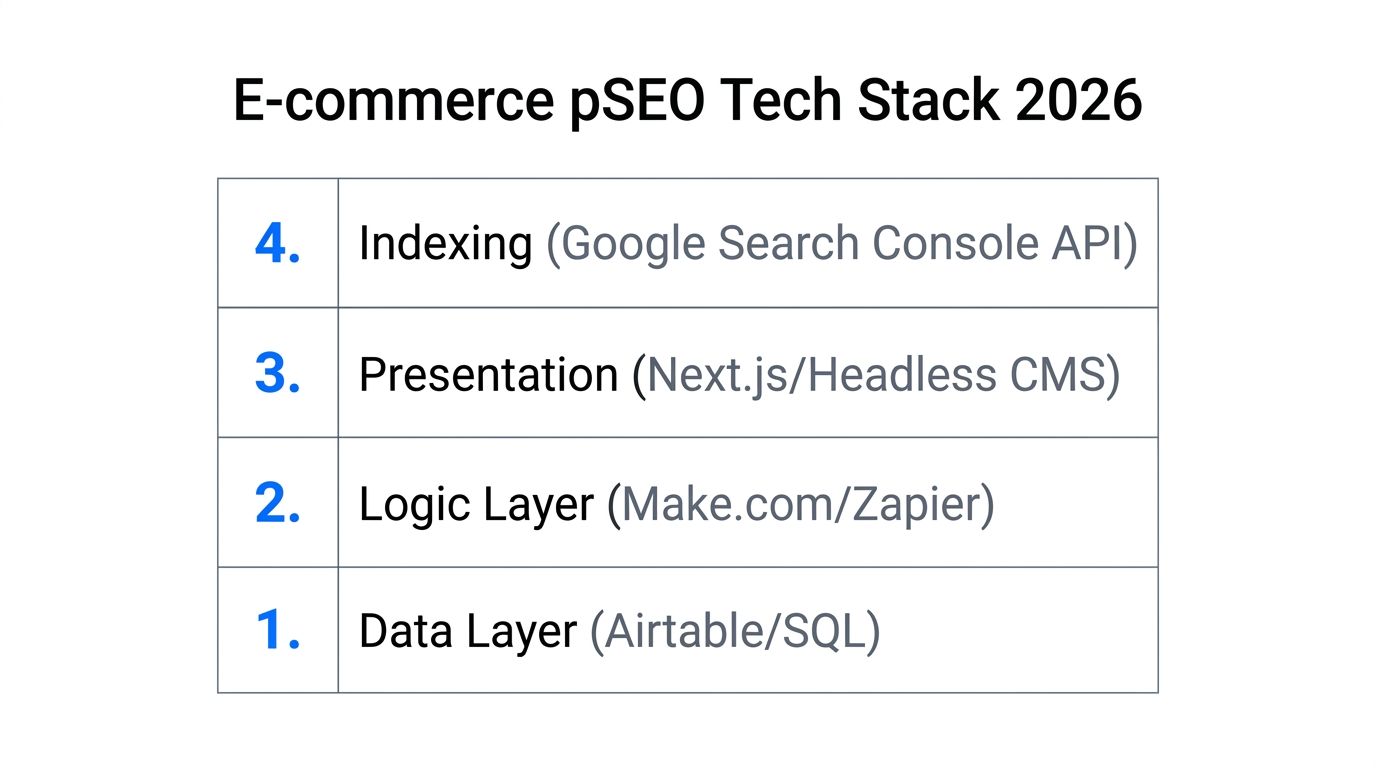
Building a programmatic engine requires a multi-layered stack. You need a "Source of Truth" for your data, a generator for your content, and a CMS to host it all. For data management, Airtable remains the gold standard, allowing you to manage thousands of rows of product specs, prices, and features that populate your templates.
For page generation, Shopify users should look at ConvertMate, while Webflow users can pair their CMS with Whalesync to keep data in perfect harmony. If you are using WordPress, WP All Import is still the most robust solution for bulk-importing large XML or CSV datasets into WooCommerce.
Visuals are equally important. Using tools like Orshot, you can programmatically generate unique product images via API. This satisfies Google’s uniqueness signals, which are crucial for ranking in 2026.
Lessons from the Giants: Canva and Meshki
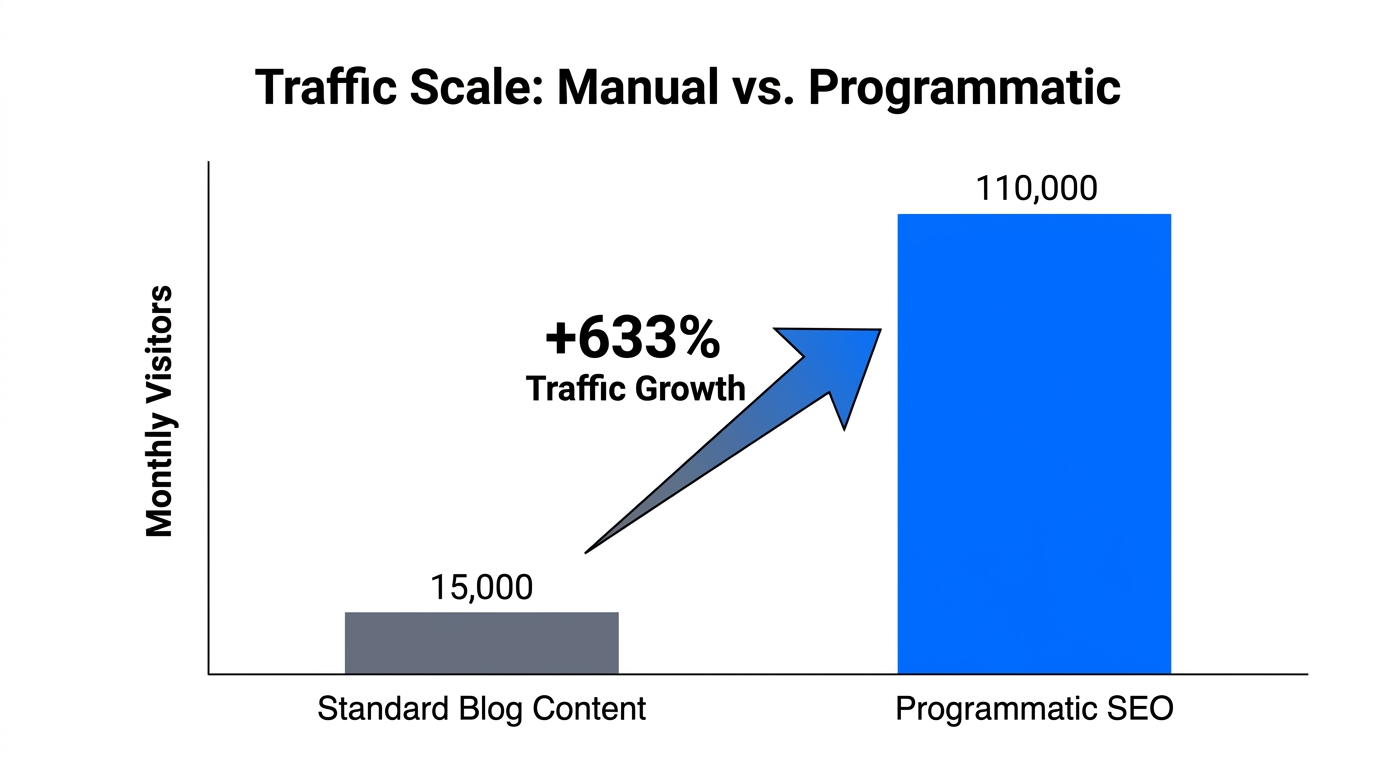
How powerful is this strategy? Look at Canva. They created over 24,000 templated pages for every conceivable design need—from "Logo Maker" to "Wedding Invitation Template." This programmatic approach drives over 38 million organic visits per month, according to data from Golden Owl Digital.
In the fashion world, MESHKI saw a 493% organic traffic explosion. They didn't just add products; they programmatically optimized descriptions and implemented advanced structured markup (JSON-LD) across their entire catalog. This made their products highly "discoverable" for AI search agents and Google’s Rich Results. Similarly, real estate platform Flyhomes scaled from 10,000 to 425,000 pages in just three months by automating local market guides, as noted by JB Impact.
"Scaling from 10k to 400k pages isn't a content problem; it's a data architecture opportunity."Managing the "Traffic Cliff" with Editorial Oversight
To avoid the dreaded traffic drop, your automated content strategy must include a validation layer. Emina Demiri-Watson of Vixen Digital emphasizes that automation handles the heavy lifting, but humans must verify the facts. This is especially true for "Your Money Your Life" (YMYL) categories like supplements or high-end electronics.
One way to add a human touch to programmatic pages is to integrate social proof and community insights. In 2026, search engines value the "human voice" found on platforms like Reddit and LinkedIn. By mining these platforms for real customer concerns and feeding them back into your pSEO templates, you create content that feels lived-in and authoritative.
This is where Stormy AI becomes an invaluable part of your growth stack. While Stormy is primarily an influencer marketing platform, its AI-powered discovery and analysis tools allow you to find the exact creators who are talking about your niche. You can use the insights from these creators—their common phrases, the questions their audiences ask, and their high-performing UGC—as the primary data source for your pSEO templates. Imagine having 1,000 landing pages, each featuring a dynamically inserted UGC video or quote from a trusted influencer in that specific niche. That is the ultimate utility in 2026.
Conclusion: Building Your Programmatic Future
Scaling e-commerce revenue in 2026 is a race toward utility. By moving away from "slop" and toward inventory-synced pSEO, you build a sustainable asset that attracts high-intent buyers while you sleep. Start by identifying your keyword formulas, invest in a robust data management tool like Airtable, and ensure every page is backed by rich JSON-LD Schema.
The era of manual page creation is over. The era of the AI-powered growth engine is here. Whether you are using Stormy AI to source community insights or SEOmatic to deploy your pages, the goal remains the same: be the most helpful answer on the internet for your customer's specific needs.