In 2026, the biggest trap for founders isn't a lack of technical ability—it is the "vibe coding" paradox. With the explosion of tools like Claude and Lovable, over 200,000 new projects are birthed every single day. Yet, most of these products launch to absolute silence. The moat has officially shifted from code to distribution. If you aren't building a distribution engine while you build your product, you are essentially building a store in the middle of a desert. This guide outlines the exact programmatic SEO 2026 playbook to turn that desert into a high-traffic highway, leveraging Claude Code automation and automated data scraping to hit 300,000 monthly visitors.
The 2026 Distribution Flip: Why Marketing is the New Moat
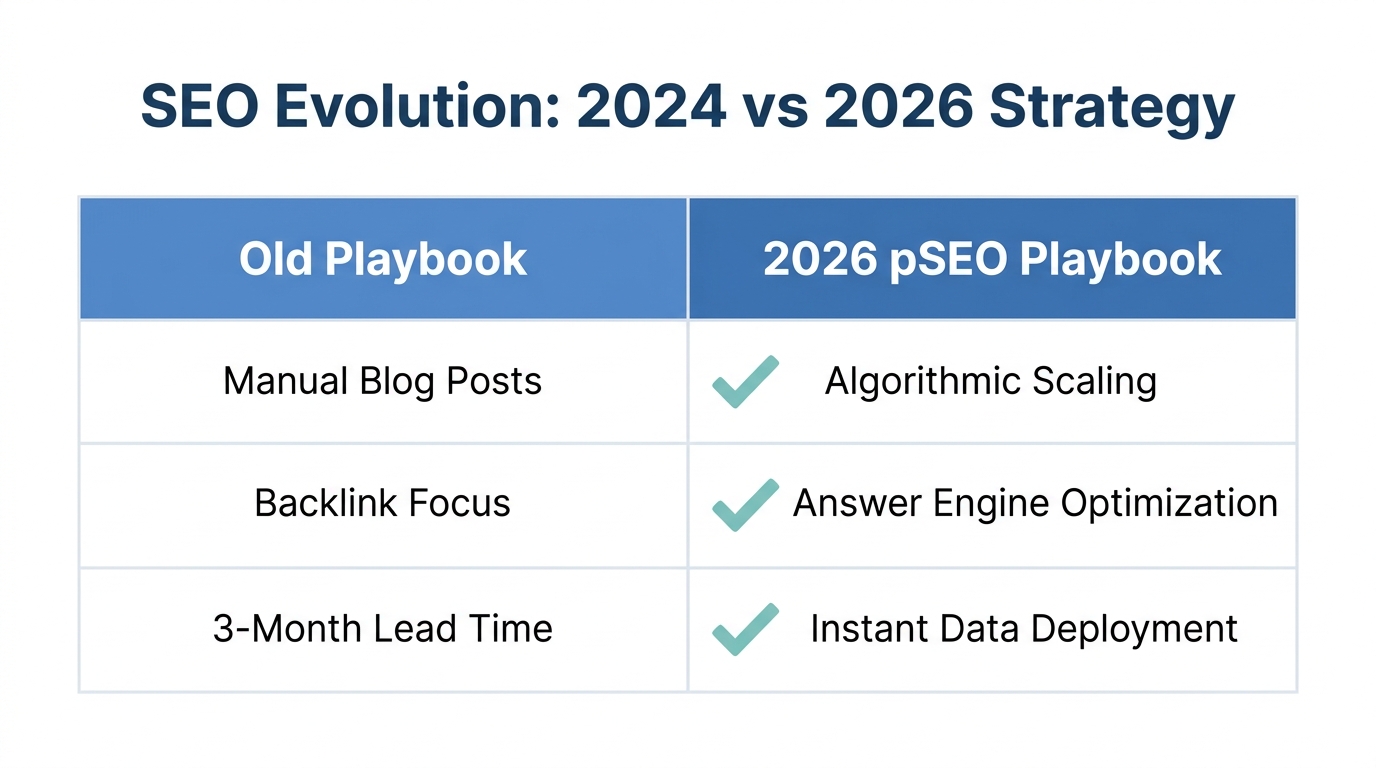
For decades, Silicon Valley operated on a hierarchy: engineers at the top, product in the middle, and marketing at the bottom. In 2026, that hierarchy has completely flipped. Because AI can now generate production-ready code in seconds, software is becoming commoditized. The real value now lies in who can actually capture and hold human attention.
"The wealthiest people over the next 10 years will be marketers, not just developers. Code is now a commodity; distribution is the only scarce resource left."
Look at the most successful solo founders of this era, like Peter Levels. He generates over $3 million in annual revenue with zero employees. How? He doesn't just build; he has built a massive distribution engine through 125,000+ tweets and dominant programmatic SEO on platforms like Nomad List. Success in 2026 requires a distribution-first mindset: grow the audience, identify their pain points, and then use AI to build the solution in 48 hours.
Step 1: Identifying High-Intent Keyword Patterns
 10:08
10:08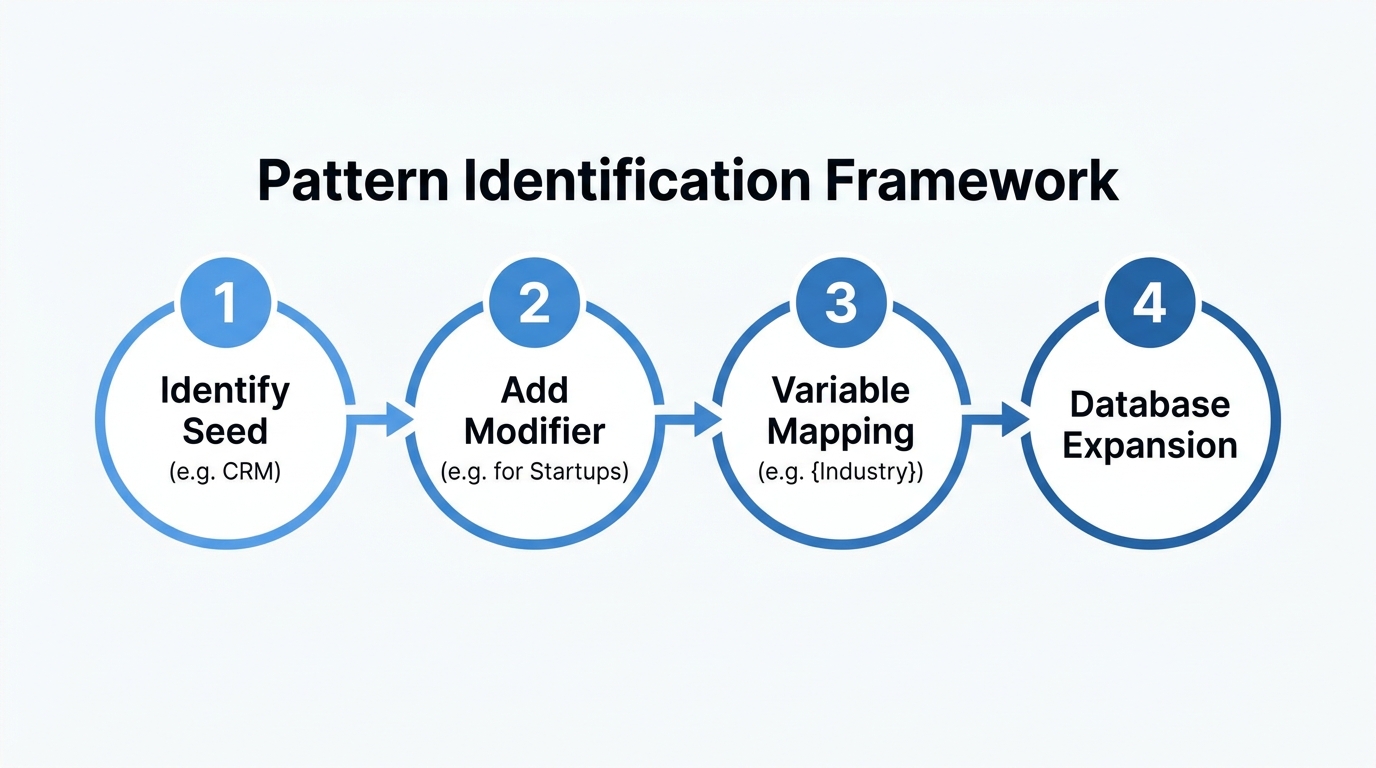
The foundation of any AI content scaling strategy is the keyword pattern. You aren't looking for one-off keywords; you are looking for scalable structures that can be repeated across thousands of pages. In 2026, the most effective patterns follow a "Product for Niche" or "Service in City" logic.
- Best [Product Type] for [Niche]: e.g., "Best CRMs for dentists," "Best accounting software for florists."
- [Service] in [City]: e.g., "Roofing in Miami," "AI automation agency in Austin."
- [Competitor A] vs [Competitor B] for [User Type]: e.g., "Stripe vs PayPal for marketplace founders."
By identifying these patterns, you can create a single high-quality template and populate it with unique, structured data. This is the heart of SaaS distribution strategies that scale without linear effort.
Step 2: Scrapping Clean Data Sets with Firecrawl
8:02Programmatic SEO is only as good as the data behind it. To avoid the "AI slop" penalty from search engines, your pages must provide real, tangible value that LLMs can't just hallucinate. This is where a Firecrawl SEO tutorial comes into play.
Firecrawl allows you to scrape the web and return clean, structured JSON data. For example, if you are building a directory of the "Best CRMs for Dentists," you can use Firecrawl to pull pricing, key features, and user sentiment from across the web. This data becomes the unique value proposition of your programmatic pages.
| Data Type | Source | SEO Value |
|---|---|---|
| Pricing Tiers | Competitor Sites | High (Comparison charts) |
| User Reviews | G2 / Capterra | High (Social proof) |
| Feature Sets | Documentation | Medium (Technical specs) |
| Creator Mentions | Stormy AI | Extreme (Authority/UGC) |
To really boost your domain authority, you should also look for which influencers are talking about these tools. Using Stormy AI, you can find creators in specific niches (like dental tech influencers) and incorporate their insights or testimonials into your programmatic pages to add human-verified authority.
Step 3: Generating 10,000 Pages with Claude Code Automation
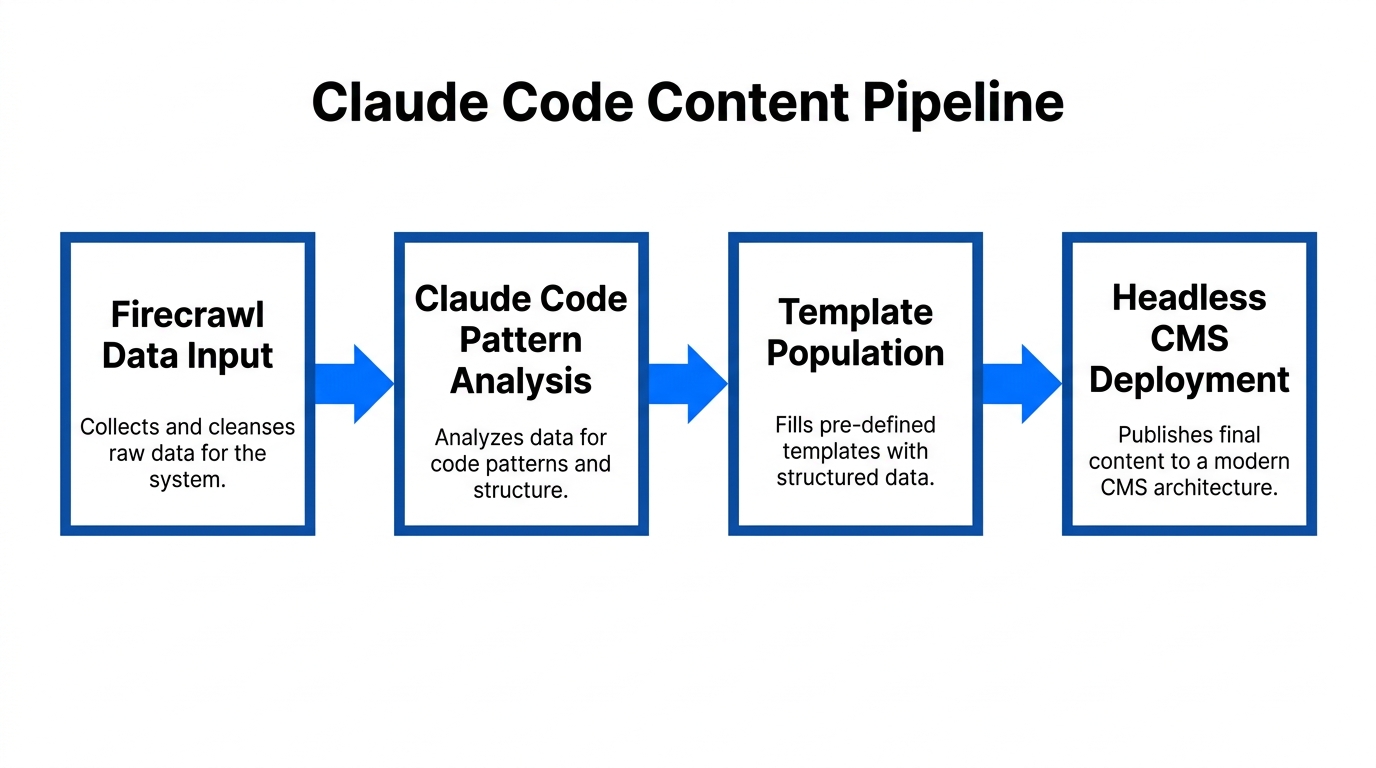
Once you have your data and your pattern, it's time to build. In 2026, we use Claude Code automation to handle the heavy lifting of generation. Unlike simple variable swaps of the past, modern pSEO requires unique, high-quality AI content for every page.
"The goal isn't to create 10,000 identical pages; it's to create 10,000 unique solutions to 10,000 specific problems."
Using a framework like Next.js, you can set up a dynamic route (e.g., /crm/[niche]). Use Claude to generate custom intro paragraphs, pros and cons lists, and specialized advice for each niche based on the data you scraped. This ensures that each page passes the Google Helpful Content update and provides actual utility to the reader.
The Math of pSEO: From 0 to $60k/Month
9:26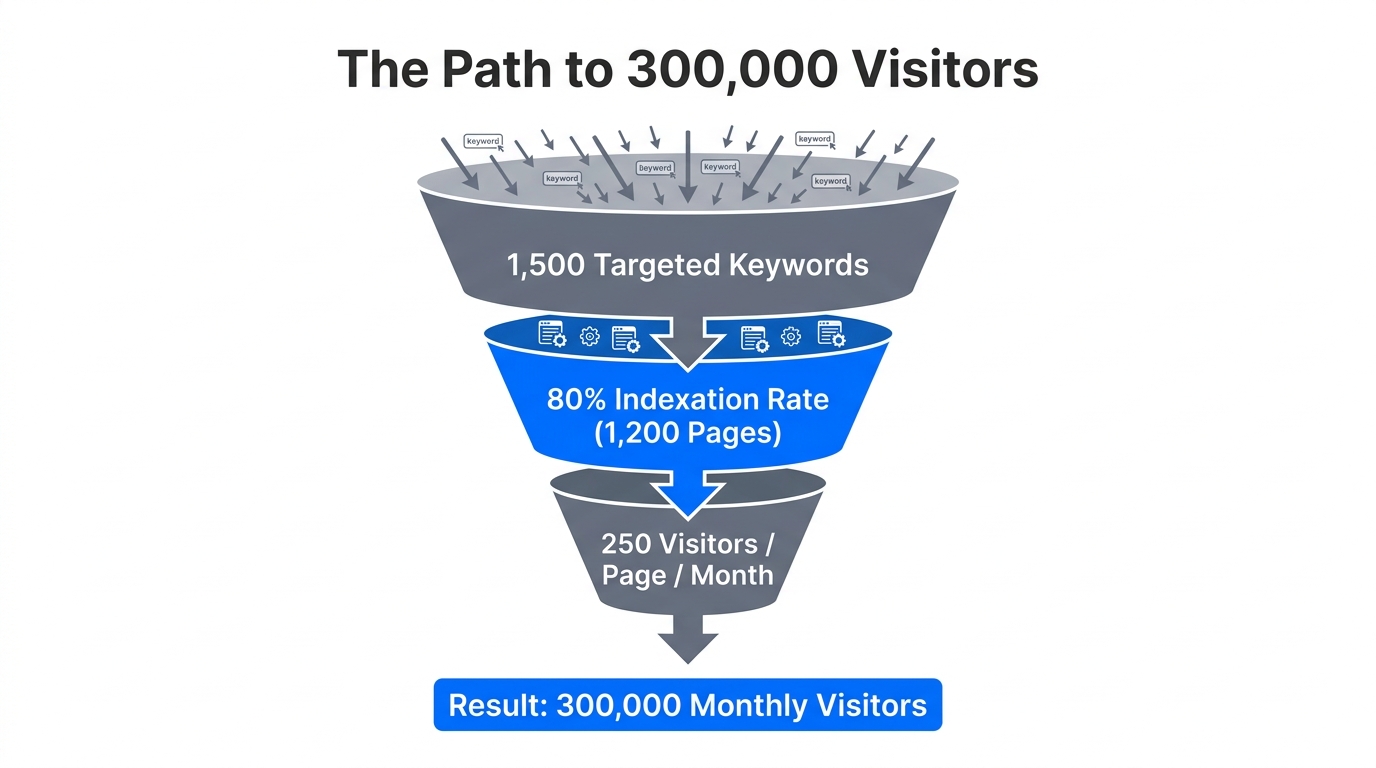
Why do founders obsess over programmatic SEO? Because the math is incredibly compounding. While individual pages might only get a handful of visits, the aggregate is a monster.
10,000 Pages × 30 Visits/Month = 300,000 Visitors.
300k Visitors × 2% Conversion Rate = 6,000 Customers.
6,000 Customers × $10 LTV = $60,000 Monthly Revenue.
This doesn't happen overnight. SEO takes time to index and rank. However, by using tools like Google Search Console to monitor indexation and Ahrefs to track keyword growth, you can see the compounding interest of your 10,000 digital assets working 24/7.
Step 4: Answer Engine Optimization (AEO)
29:25In 2026, traditional SEO is only half the battle. You also need to optimize for Answer Engines like Perplexity and ChatGPT. Zero-click searches are rising, and your goal is to be the cited source for AI answers.
To win at AEO, your content needs to be structured for machine readability. This means using:
- Schema Markup: Use Schema.org to tell AI exactly what your data represents.
- FAQ Blocks: Direct questions followed by clear, concise 1-2 sentence answers.
- Comparison Tables: Easy-to-parse data that AI can use to answer "What is the difference between X and Y?"
Founders who master this transition—becoming the definitive source that AI cites—will see their referral traffic jump significantly. Peter Levels recently noted that his AI referrals increased from 4% to 20% in a single month by optimizing for these citations.
Step 5: Human-in-the-Loop Content Quality
The biggest risk in AI content scaling is the "slop" penalty. If your content feels like a generic AI output, users will bounce and Google will de-rank you. You must maintain a human-in-the-loop workflow.
- MVP Phase: Launch 100 pages first and monitor how they perform.
- Editorial Review: Have a human editor check the tone and accuracy of the AI-generated sections.
- Unique Artifacts: Add shareable milestones or "viral artifacts" (like a custom score or grader) to make the page worth bookmarking.
"AI gets you 90% of the way there, but the last 10%—the human touch—is what determines if you rank #1 or #100."
Conclusion: Building Your 2026 Growth Engine
The era of "build it and they will come" is dead. In 2026, distribution is the only moat. By combining the power of programmatic SEO 2026, Claude Code automation, and real-world data from tools like Firecrawl, you can build a traffic engine that generates 300,000+ visitors while you sleep.
Start this week: pick one keyword pattern, scrape your first dataset, and build 100 high-quality pages. For those looking to amplify their pages even further, platforms like Stormy AI can help you find the right creators to provide the social proof and backlinks needed to dominate the rankings. Stop vibe coding and start building your distribution weapon. Happy building.