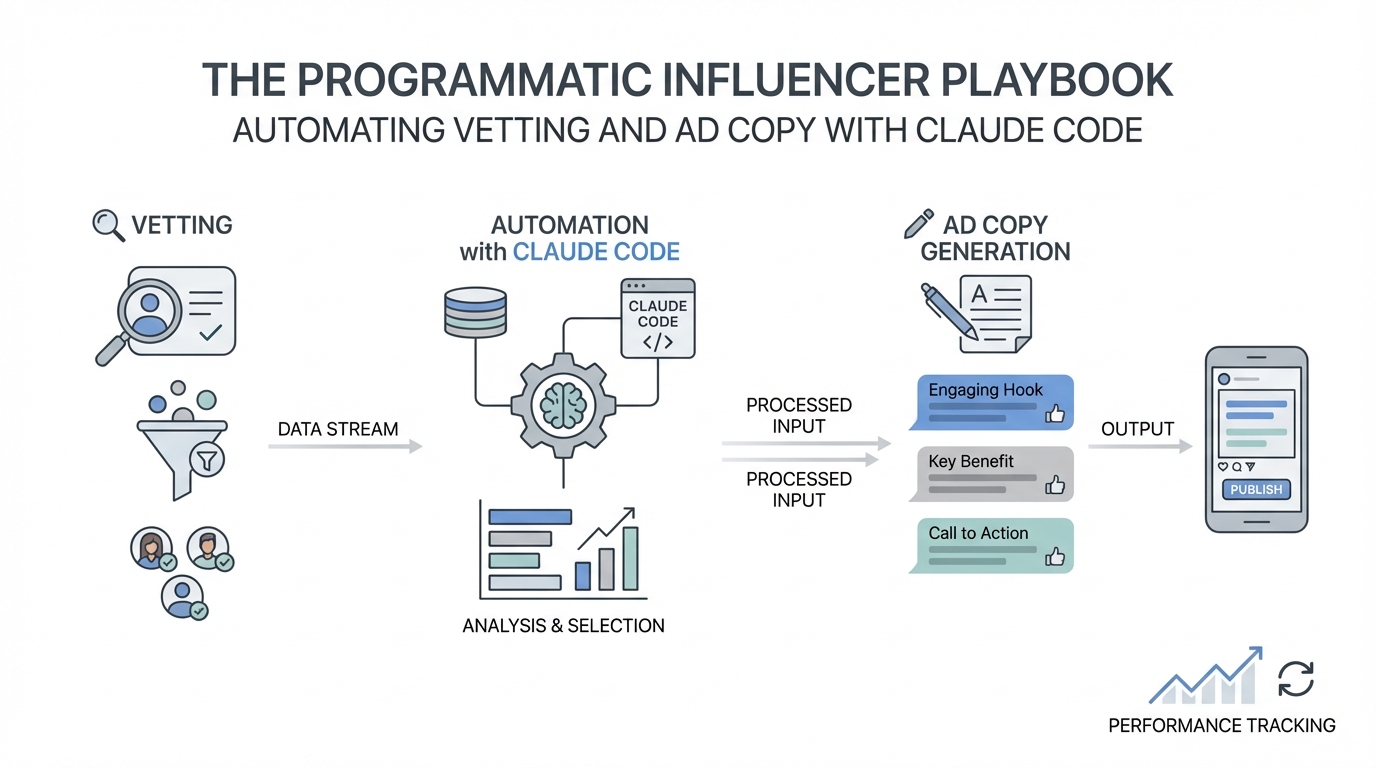
The era of "Chat AI" is rapidly evolving into the era of "Action AI." For performance marketers, this shift represents a move away from copy-pasting prompts into a browser and toward executing complex, multi-step workflows directly from the terminal. According to recent data from Anthropic, 79% of Claude Code interactions are now classified as autonomous automation rather than simple augmentation. This means the AI isn't just suggesting headlines anymore; it is building, vetting, and deploying entire campaign structures.
For those managing high-volume creator campaigns, the manual overhead of discovery and ad creation is the silent killer of ROI. A typical marketer wastes 12 hours per week just context-switching between tabs and moving data from one platform to another, according to Hashmeta. By adopting a programmatic approach to influencer vetting automation, teams can reclaim that time and focus on high-level strategy. This guide provides a technical playbook for using Claude Code to automate the most tedious parts of the influencer marketing funnel.
The Shift to "Vibe Marketing" and Action AI
In 2025, we are seeing the rise of "Vibe Marketing," a concept where the entire marketing funnel is treated like a codebase. Instead of static plans, marketers use command-line agents to deploy landing pages, generate hundreds of ad variations, and draft creator briefs in seconds. Research from McKinsey suggests that this programmatic approach allows brands to treat their influencer operations as a scalable engineering problem rather than a manual outreach struggle.
The efficiency gains are backed by staggering benchmarks. Early adopters have seen ad production speeds for platforms like Google Ads drop from 30 minutes to just 30 seconds per variation. Furthermore, teams using Digital Applied workflows report a 75% time reduction in content audits, turning 8-hour manual reviews into 2-hour automated sweeps.
Step 1: Setting Up the Claude Code Environment
To begin your journey into automated influencer discovery, you need to move out of the web browser and into the terminal. Claude Code is Anthropic’s CLI (Command Line Interface) agent that can access your local files and external tools via the Model Context Protocol (MCP).
Installing the Core Tools
First, ensure you have the latest version of Claude Code installed. You will also need to connect to data extraction tools to pull creator metrics. The Apify Influencer Discovery skill is currently the gold standard for this. You can add it to your environment using the following command:
npx skillfish add apify-influencer-discovery
This skill allows Claude to interact with Apify actors that scrape Instagram, TikTok, and YouTube metrics without you ever leaving the terminal. By integrating these tools through the MCP Market, you create a seamless bridge between raw social data and your marketing strategy.
Step 2: Automated Influencer Discovery and Vetting
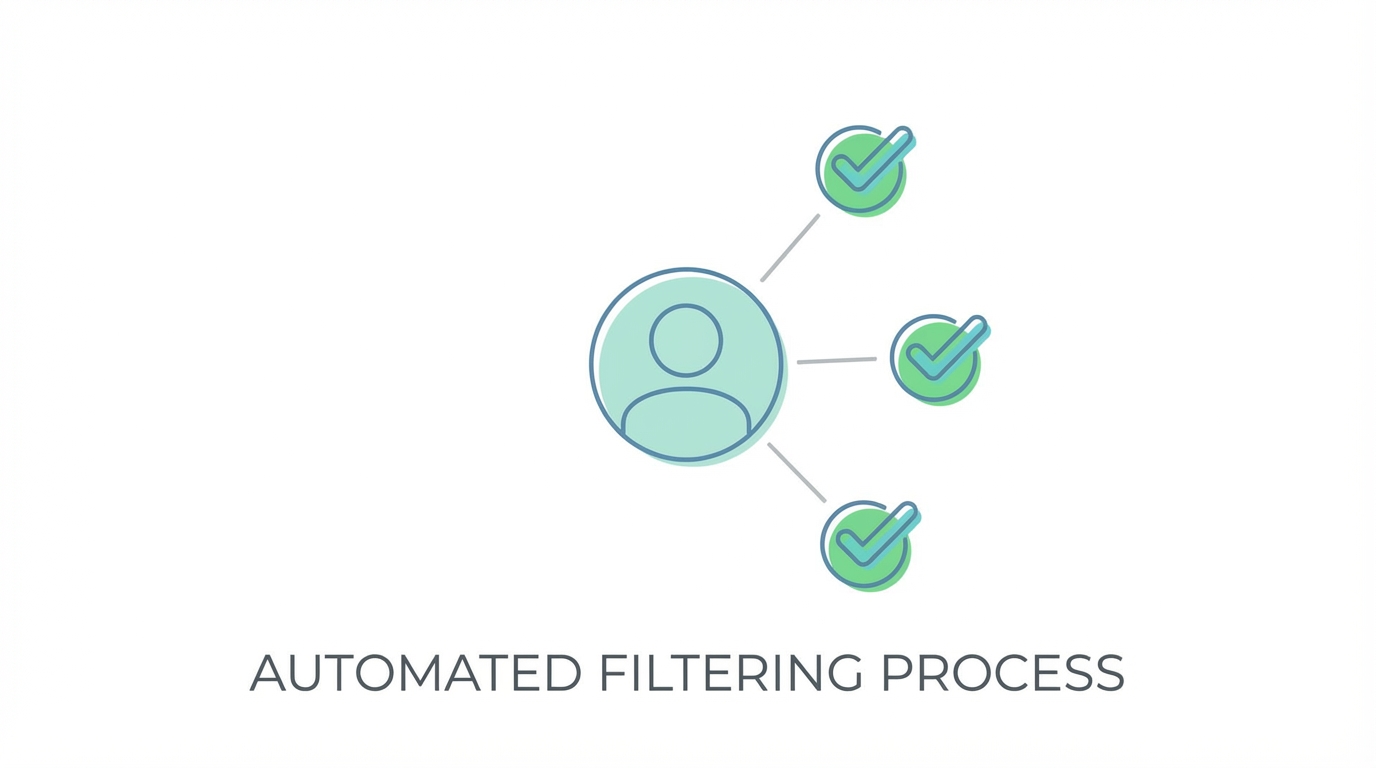
Once your environment is set up, you can execute a Claude Code workflow to find and vet creators programmatically. Instead of browsing hashtags for hours, you give the agent specific, metric-driven parameters.
The Vetting Workflow
Command Claude to perform a multi-step search. For example: "Search for fitness creators in New York with 50k-150k followers, filter for those with an engagement rate over 4%, and flag any who have posted content featuring [Competitor Name] in the last 90 days."
The agent will then:
1. Use the Apify skill to scrape relevant profiles.
2. Filter the JSON data for engagement rate and audience quality.
3. Analyze recent captions for competitor mentions.
4. Output a clean CSV of vetted candidates.
This programmatic approach to influencer vetting automation ensures that you only spend time looking at creators who already meet your technical requirements. For teams managing hundreds of relationships, tools like Stormy AI can further streamline this by providing an AI-powered search engine across TikTok, Instagram, and YouTube, alongside a robust Creator CRM to track every interaction.

Step 3: Executing a CSV-to-Ads Workflow
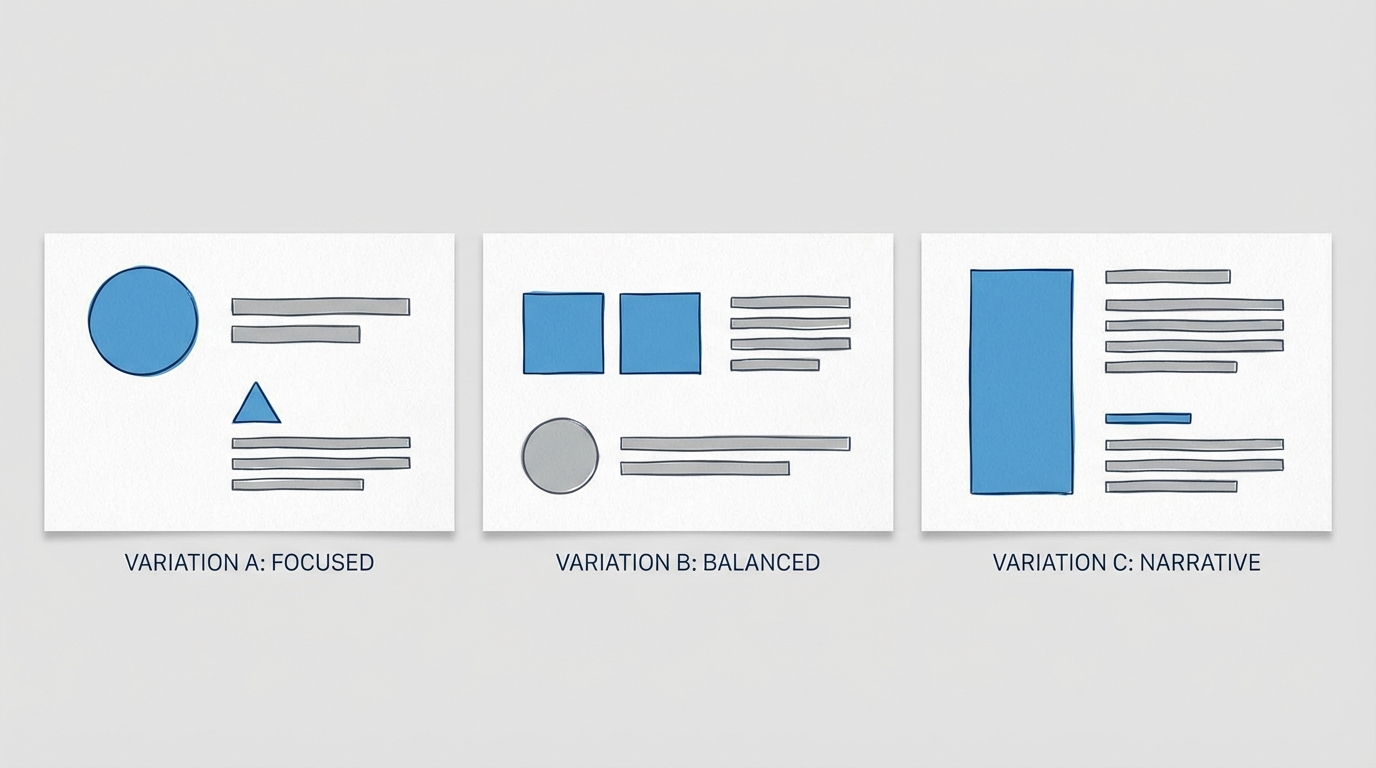
After selecting your creators, the next hurdle is turning their content into high-performing ad units. Performance marketers often struggle with the tedious task of writing headlines and descriptions for Google or Meta Ads Manager Responsive Search Ads (RSA).
Character-Limit Enforcement
One of the biggest frustrations with traditional AI is its inability to respect character counts. Claude Code solves this through its ability to run local scripts and validate output lengths. You can set up a workflow that reads your creator content CSV and generates 15 headlines (30 characters max) and 4 descriptions (90 characters max) for each creator.
According to Generation Digital, this programmatic copy generation allows teams to test 10x more creative variants than they could manually. You can even instruct Claude to export these directly into a Google Ads-ready CSV for bulk upload, as detailed in recent developer guides on Dev.to.
Step 4: Video Ad "Vibe Coding" and Automation
The programmatic playbook doesn't stop at text. Advanced marketers are now using Claude Code to control video APIs like Kling AI or MiniMax. This allows for the automated production of personalized video ads at a fraction of the traditional cost.
A common workflow involves Claude writing technical prompts for 5-second video clips, using FFmpeg to stitch them together programmatically, and overlaying dynamic call-to-action text. This method can reduce production costs by up to 90% compared to traditional human-led video editing, according to research from MIT Sloan. By treating video as a series of programmable assets, you can generate unique UGC-style ads for every micro-segment of your audience.
Step 5: The 'Human-in-the-Loop' Mandate
While the technical possibilities of performance marketing automation are vast, there is a critical danger: the "AI Slop" trap. Publishing raw AI output without human QA often leads to generic, off-brand copy or, worse, hallucinated metrics that damage brand credibility. Experts at Young Company warn that over-automation can alienate the very creators you are trying to partner with.
Relationship Building Still Matters
Automation should be used to draft and data-crunch, not to replace the human element of relationship building. Use AI to find the creator and draft a hyper-personalized outreach email based on their recent content, but always have a human review and click "send." As noted by LNM, 100% automated outreach often results in lower response rates because it lacks the nuance required for genuine collaboration.
To maintain high standards, marketers should use a CLAUDE.md file in their project folder. This file serves as a persistent memory bank for the AI agent, storing brand guidelines, past performance data, and campaign history. This ensures that every piece of programmatic ad copy or outreach draft generated stays consistent with the brand's voice.
Common Mistakes to Avoid
- Privacy Neglect: Never use personal AI accounts for company data. Always opt for Claude Enterprise or equivalent secure environments to ensure your campaign data isn't used for model training, as recommended by Landrum Talent Solutions.
- Fragmented Context: Avoid starting a new terminal session for every minor task. Keep your context focused within a single project directory so the agent can reference previous steps.
- Dashboard Dependency: The future is "dashboard-less." Instead of spending hours in Google Analytics, use tools like Syncari and MCP to ask Claude direct questions like "Which creators had the highest ROI in Q2?" and get an immediate table of results.
Conclusion: Your Automation Edge
The programmatic influencer playbook isn't about removing the marketer from the process; it's about removing the friction that prevents the marketer from doing their best work. By implementing influencer vetting automation and programmatic copy workflows, you transform your department from a cost center into a high-velocity growth engine.
Start small by automating your creator search and vetting process. Once you’ve reclaimed those 12 hours a week, move into bulk ad copy generation and advanced video automation. For those looking for an all-in-one solution that bridges the gap between AI discovery and campaign management, Stormy AI provides the necessary infrastructure to manage these workflows at scale. The marketers who master the terminal today will be the ones leading the most efficient and creative campaigns of tomorrow.