In the high-stakes world of performance marketing, the bottleneck is no longer the budget—it is the speed of creative iteration. For years, media buyers have been trapped in a cycle of manual uploads, tedious headline variations, and the painstaking process of matching ad copy to landing pages. However, the landscape has shifted. As of early 2026, we have moved past the era of "Chat AI" and entered the age of Action AI. This transition allows marketers to move from simply asking an AI for ideas to deploying agentic workflows that interact directly with the Meta Marketing API.
By leveraging tools like Claude Code, a command-line interface (CLI) agent from Anthropic, savvy advertisers are now building entire marketing ecosystems in under an hour—a trend frequently referred to as "Vibe Marketing." This playbook outlines the technical steps to automate your Meta Ads creative testing, ensuring your brand maintains a competitive edge through high-velocity programmatic experimentation.
The Evolution of "Action AI" in Meta Ads
The core shift in 2026 is the integration of AI directly into the execution layer. While legacy tools were limited to writing static copy, Claude Code functions as an autonomous agent capable of reading your codebase, analyzing real-time data, and executing commands across external platforms. According to research on Agentic AI trends, this transition to Action AI represents a fundamental move toward deep integration where AI manages campaigns autonomously rather than just suggesting edits.
Internal Meta studies have already validated this direction, showing a 32% drop in Cost Per Acquisition (CPA) when brands utilize AI-driven automation suites. Furthermore, roughly 70% of Fortune 100 companies have now integrated Claude into their marketing workflows to accelerate execution. The efficiency gains are staggering: marketers using agentic workflows report being 300x faster at complex tasks like multi-landing page optimization and programmatic creative testing.
"The industry is shifting from 'Chat AI' to 'Action AI'—where the AI doesn't just write the ad, it deploys the entire campaign structure through the API while you sleep."Step 1: Using Claude Code 'Plan Mode' for Creative Ideation
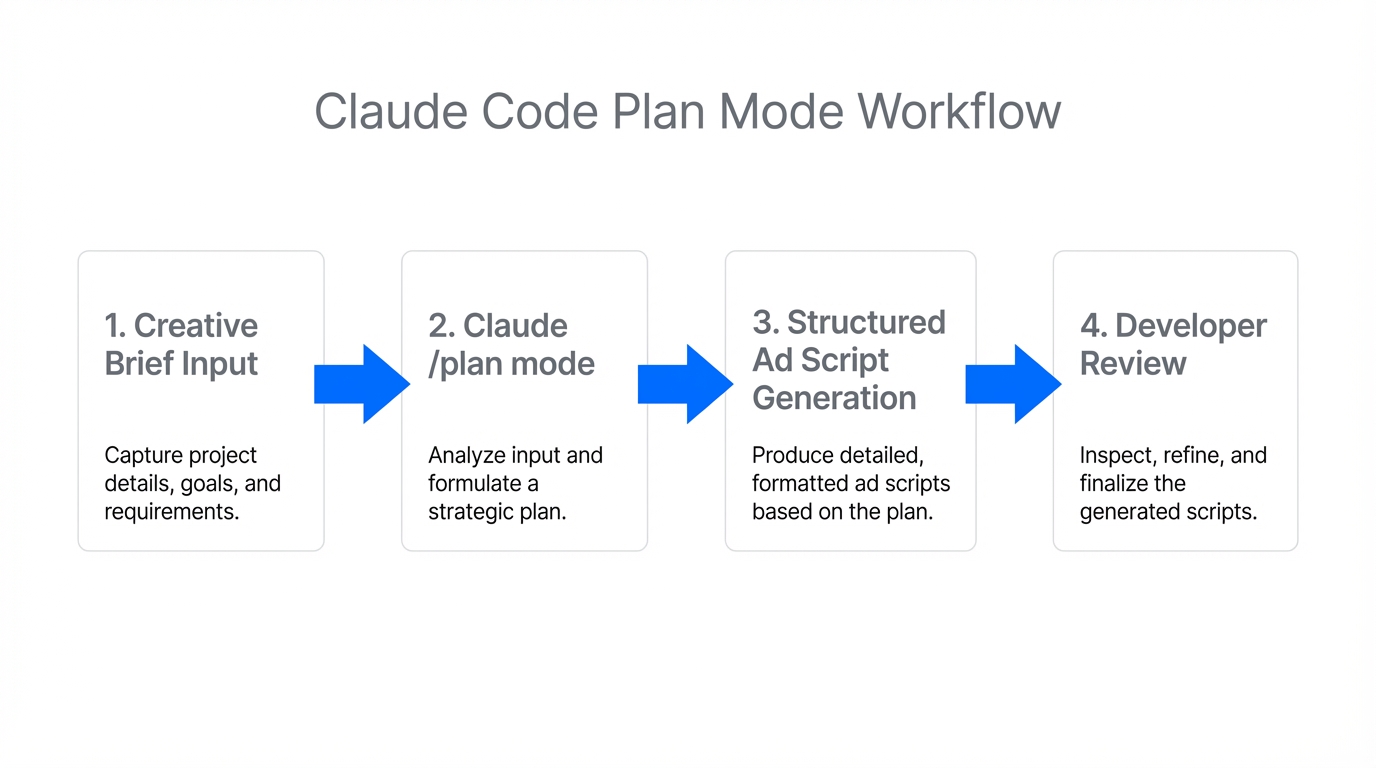
The first step in programmatic ad creative generation is moving beyond the standard chat interface. Using the Claude Code CLI, you can enter Plan Mode to map out a comprehensive testing strategy. Instead of feeding the AI one prompt at a time, you can command it to analyze a CSV export of your top 5 performing ad headlines from the last 30 days.
By instructing Claude to identify the underlying psychological triggers in your winners—whether they are fear of missing out (FOMO), social proof, or direct utility—you can generate 50+ high-intent variations in seconds. This isn't just about changing words; it's about AI ad copy testing that iterates on the "hooks" that stop the scroll. You are essentially teaching the AI to build a library of creative experiments based on proven historical performance.
Step 2: Improving 'Message Match' via Codebase Analysis
One of the biggest reasons for high bounce rates in Meta Ads is a lack of "Message Match." If your ad promises a specific benefit but your landing page focuses on a different value proposition, the user friction increases. Claude Code solves this by being able to "see" your entire codebase. You can have the agent read your index.html, App.tsx, or landing-page.vue files on platforms like Netlify or Vercel to extract your product’s Unique Value Propositions (UVPs) directly from the source of truth.
By aligning your Claude Code marketing workflow with your actual site content, you ensure that every ad generated is 100% consistent with the on-page messaging. This programmatic alignment reduces the cognitive load on the consumer and significantly improves conversion rates. Growth experts like Marcus Burke emphasize that while AI handles the execution, humans must ensure the "why" behind the strategy—context-first messaging is the key to that alignment.
| Workflow Component | Manual Strategy | Programmatic AI Strategy |
|---|---|---|
| Headline Generation | 1-2 hours for 5 options | 30 seconds for 50+ options |
| Message Match | Manual cross-referencing | Automated codebase scanning |
| Ad Deployment | Manual Ads Manager uploads | Direct Meta Marketing API push |
| Optimization | Daily manual tweaks | Real-time 'Ad-Eater' detection |
Step 3: Automating the Meta Marketing API Deployment
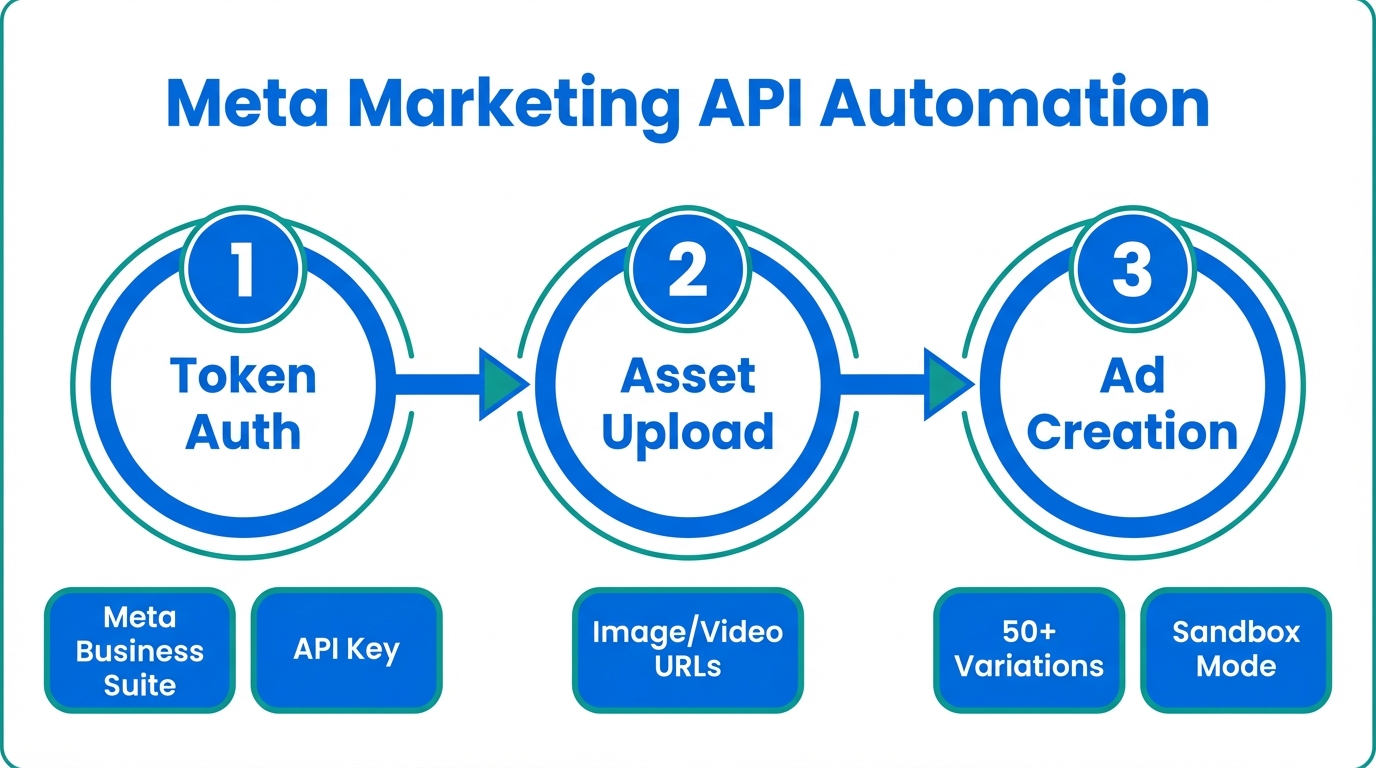
Once your creative variations are ready, the old-school way would be to spend hours in the Meta Ads Manager. The modern way involves the Model Context Protocol (MCP). MCP allows Claude to connect to live data sources and APIs in real-time. By connecting a Meta Ads MCP server, Claude Code can script a Python tool to push your 50 variations directly into your ad sets.
This level of Meta Marketing API automation eliminates human error and allows for a volume of testing that was previously impossible for small teams. For those sourcing user-generated content (UGC) to fuel these tests, platforms like Stormy AI can help source and manage the high-quality creators needed to provide the raw video assets that Claude then scripts and variations at scale.
"The goal is for businesses to simply provide an objective and a budget, and the AI handles the rest. Claude Code is the bridge tool that lets you customize this automation."Solving the 'AI Slop' Problem: Quality Control
A common pitfall in AI automation is "AI Slop"—generic, uninspired copy that fails to resonate. To maintain high quality, you must feed Claude Code your "Brand Voice" files. By including local context files (e.g., brand_guidelines.md or voice_samples.txt) in your project directory, the AI understands the nuances of your brand’s tone, whether it’s irreverent, professional, or minimalist.
Without this local context, your ads risk becoming part of the noise. Stop-the-scroll quality requires a blend of programmatic speed and human-defined brand boundaries. Always ensure that your agentic workflows are not running in a vacuum; they must be grounded in the creative spirit of the brand.
Calculating Hook and Hold Rates with Custom Dashboards
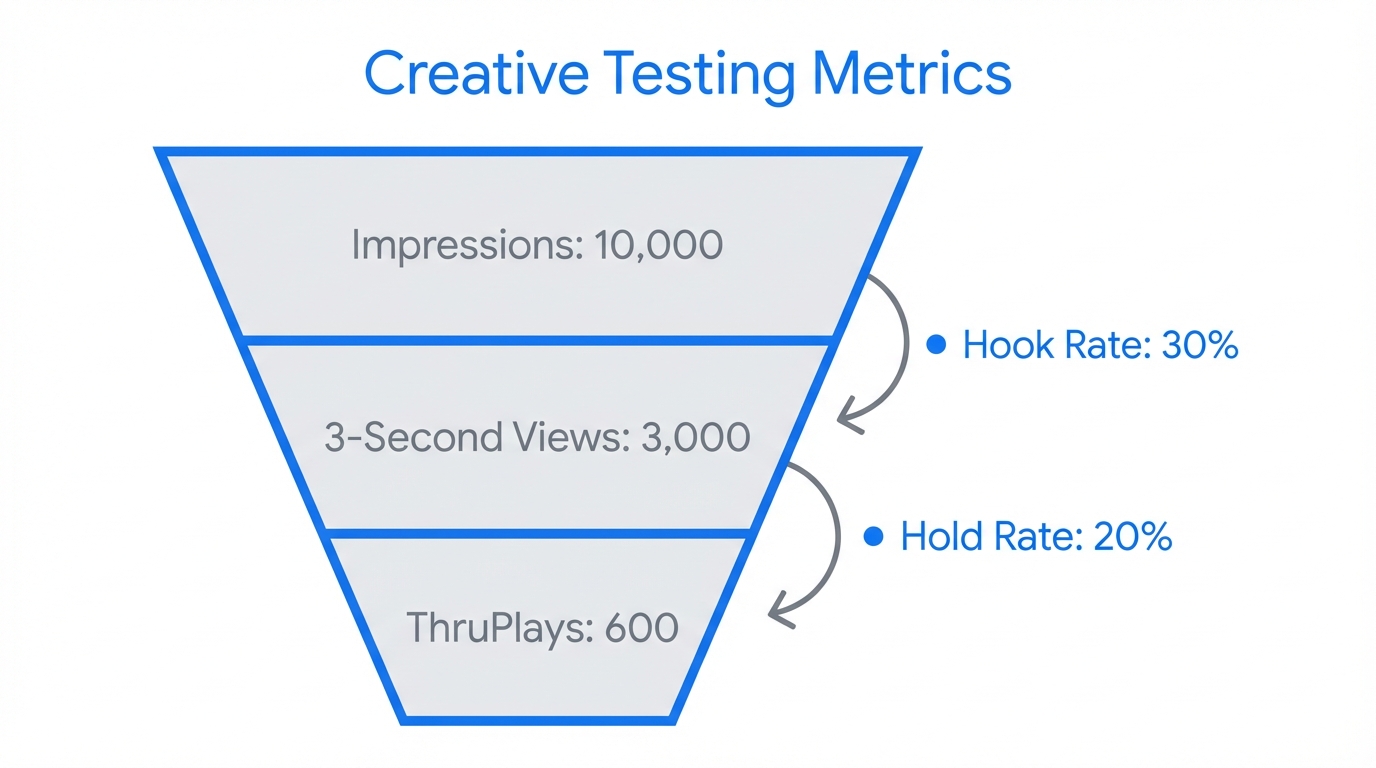
Creative testing is useless without proper measurement. Modern media buyers are now "vibe coding" their own creative dashboards using Claude Code. By building custom software that pulls data via the API, you can calculate Hook Rates (3-second video views / impressions) and Hold Rates (ThruPlays / impressions) across thousands of ads simultaneously, often visualizing this data in Notion or Google Looker Studio.
This allows for a "Kill/Scale" recommendation engine that goes far beyond the basic metrics provided in the standard Meta Ads Manager. Using custom-built analytics scripts, you can identify which specific hooks are driving the lowest CPA and instantly redirect budget to those winners. To manage the workflow of finding the influencers who create these high-performing hooks, using an AI-powered discovery engine like Stormy AI ensures you always have a fresh pipeline of talent to test.
Common Mistakes to Avoid in Programmatic Testing
While the power of programmatic testing is immense, it comes with risks. Avoiding these three common mistakes will keep your account healthy and your ROAS stable:
- Ignoring the Learning Phase: Meta’s algorithm requires 48–72 hours of stable data. Using Claude to make hourly budget changes will trap your campaigns in "Learning Limited" forever.
- The "Set and Forget" Trap: Agentic workflows are powerful but not error-proof. Human oversight via tools like Zapier for alerts is essential to ensure creative alignment remains true to the long-term brand vision.
- Over-Optimization: As warned by growth experts at RevenueCat, optimizing solely for short-term signals like Top-of-Funnel trials can lead to low-quality traffic that doesn't convert to lifetime value.
Conclusion: The Future of Media Buying
The transition to Meta Ads creative testing via programmatic means is no longer optional for brands that want to scale. By combining the strategic oversight of a human marketer with the execution speed of Claude Code, teams can achieve a level of creative density that was once reserved for nine-figure agencies. From generating 50+ variations in Plan Mode to deploying via the Meta Marketing API, the roadmap is clear.
As you build your programmatic engine, remember that the raw material—the creative assets—still matters most. Use AI to handle the logistics, the variations, and the data analysis, but rely on high-quality creator content to fuel the machine. By integrating these AI ad copy testing workflows today, you are not just optimizing ads; you are building a resilient, automated growth engine for the future.