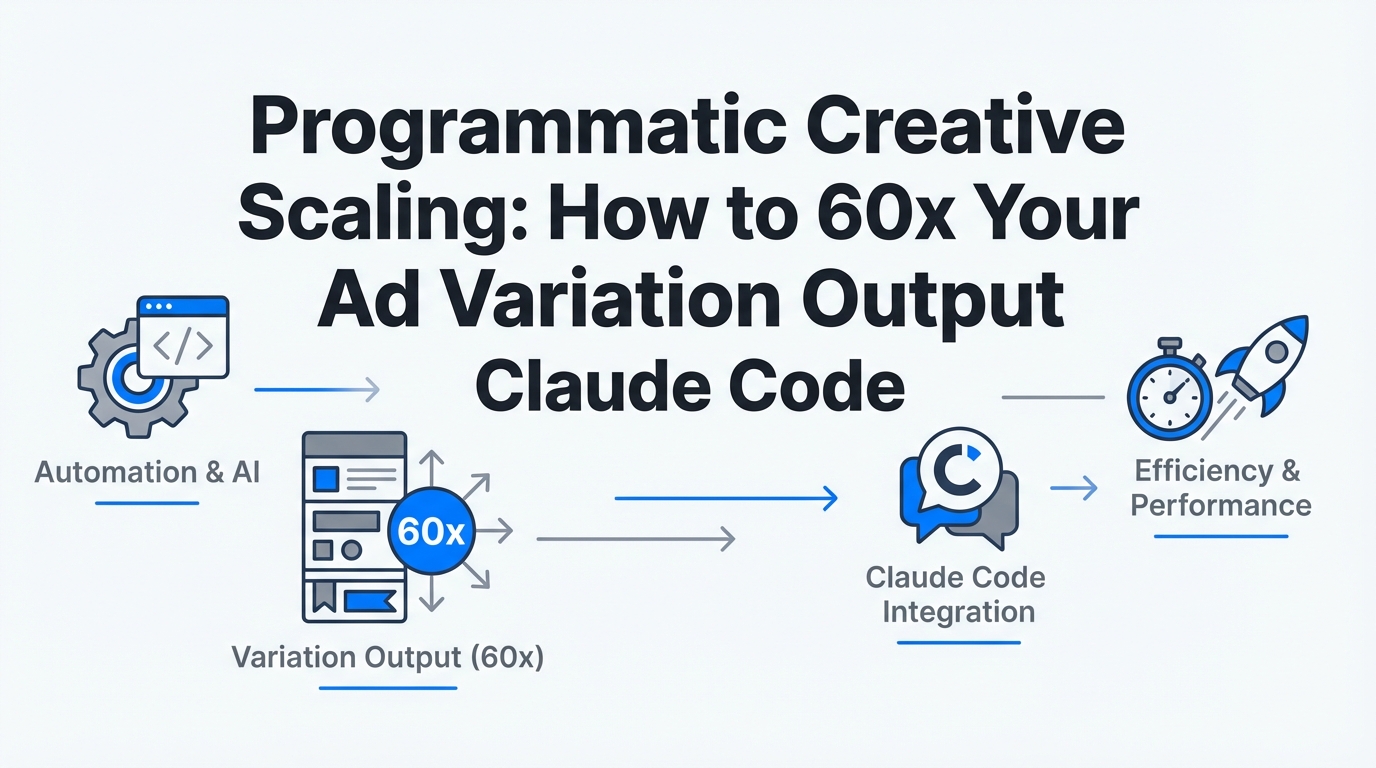
In the high-stakes world of performance marketing, the bottleneck is rarely strategy—it is execution. While media buyers can spend hours debating a bid adjustment, creative teams are often drowning in the manual labor of resizing banners and tweaking headlines for the hundredth time. The shift from manual production to programmatic creative scaling is no longer a luxury; it is a necessity for survival in an AI-driven ad ecosystem. By leveraging Claude Code, Anthropic’s internal growth teams have demonstrated a radical transformation, reducing the time to produce Google Ads automation variations from 30 minutes to just 30 seconds per variant.
This article provides a high-performance playbook for growth marketers and creative operations leaders looking to bridge the gap between static ad copy and high-volume asset production. We will explore how to transition from "Chat AI" to "Action AI" using terminal-based agents that don't just suggest ideas, but execute them directly within your design and ad platforms.
The Shift to Action AI: Why Your Current Workflow is Failing
Most marketers are stuck in the "Context Death Spiral." You prompt a web-based LLM, copy the result, paste it into a spreadsheet, then manually upload that data into a design tool or ad manager. This fragmented approach causes AI to lose project history across different chat windows, leading to inconsistent brand voice and technical errors. Modern creative operations AI requires a persistent environment where the AI has direct access to your local files and external APIs.
According to recent benchmarks from the Stack Overflow 2024 Developer Survey, while 84% of developers use AI coding assistants, only 16.3% feel it makes them "significantly" more productive without a structured framework. This productivity paradox exists because most tools are "vending machines"—you put a prompt in, you get a single asset out. Claude Code functions as a "junior colleague" that can navigate your file system, run terminal commands, and use the Model Context Protocol (MCP) to connect directly to your marketing data sources.
"The bottleneck in modern growth is no longer building features; it is the sheer speed of marketing execution and creative iteration." [Source: Reuters]
The Benchmarks: How Anthropic Achieved 60x Output
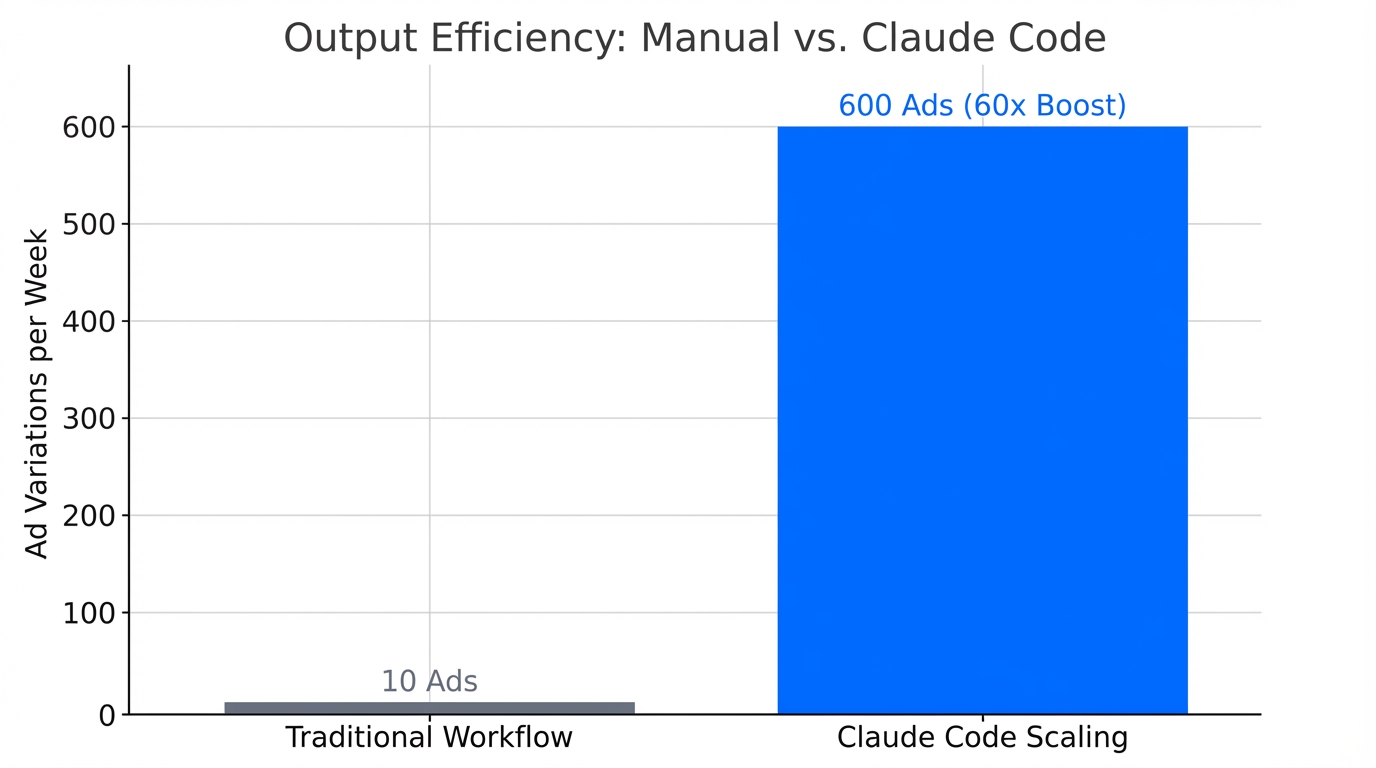
The transition to ad variation automation isn't just about speed; it's about unlocking volume that was previously impossible. Anthropic’s growth team utilized Claude Code to build internal tools that bypassed traditional design bottlenecks. By automating the handoff between copywriters and designers, they achieved a nearly 60x improvement in production velocity. This allows for a "high-frequency trading" approach to creative, where hundreds of variations can be tested simultaneously to find the top 1% of performers.
| Metric | Manual Workflow | Programmatic (Claude Code) | Improvement |
|---|---|---|---|
| Time per Ad Variant | 30 Minutes | 30 Seconds | 60x Speed |
| Context Management | Manual Copy-Paste | Persistent CLI Context | 100% Automated |
| Brand Consistency | Human Review Only | AI-Powered "Skills" | Standardized |
| Audit Time (SEO/Ad) | 8 Hours | 2 Hours | 75% Saving |
As the enterprise AI market evolves—with Claude currently holding approximately 32% of the market share in the enterprise segment according to recent Menlo Ventures reports—the focus is shifting toward complex, multi-step tasks. Growth marketers are now acting as Product Managers, using Claude Code to build custom Figma plugins and lead-scoring scripts that directly impact the bottom line.
Playbook: Building Your Programmatic Creative Engine
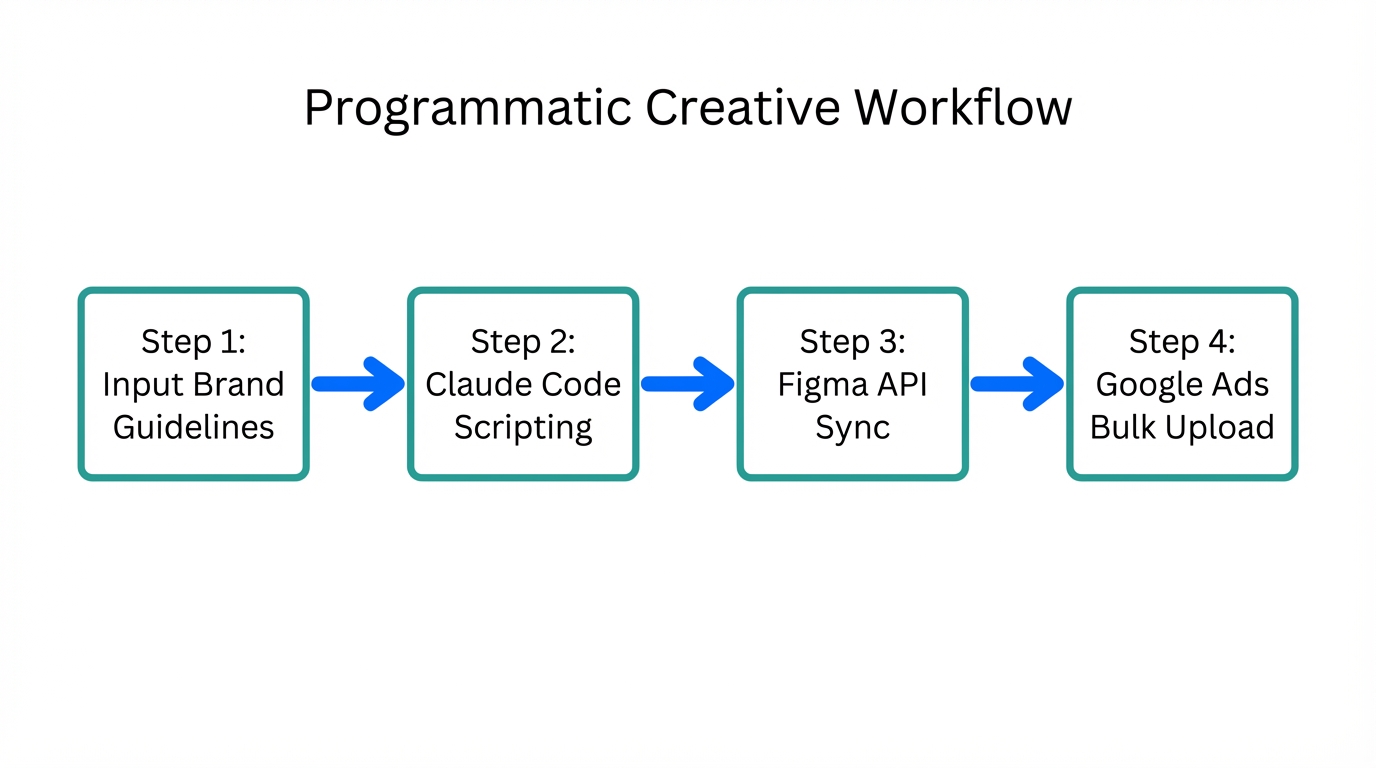
To replicate these results, you need a workflow that connects your performance data to your creative assets. Follow this step-by-step playbook to set up an automated pipeline.
Step 1: Export High-Performing Data
Start by identifying your winning themes. Export a CSV of your top-performing ad copy from your Google Ads or Meta Ads Manager. Instead of manually brainstorming new angles, use Claude Code to analyze the CSV and identify why specific headlines worked. You can command the CLI to: "Analyze ads.csv, find the top 5 emotional hooks, and generate 50 new variations using the Ralph Wiggum Technique of iterative refinement."
Step 2: Define Brand-Voice 'Skills'
To avoid "AI slop" and generic output, create a local BRAND_GUIDE.md file in your directory. Use Claude Code to define specific "Skills"—pre-set instructions that dictate tone, forbidden words, and character limits. This ensures every ad variation generated for Google Ads automation fits your specific brand identity perfectly.
"AI-generated code and copy are reported to have 1.7x more defects without a structured Human-in-the-Loop review process." [Source: GitClear 2024 Study]
Step 3: Automate Asset Production with Figma
The real magic happens when you bridge the gap between text and visuals. Anthropic's team built a custom Figma plugin using Claude Code. By leveraging the Figma API, you can script the creation of 50+ image variants where the text layers are automatically populated from your AI-generated CSV. This eliminates the need for a designer to manually edit individual frames.
Maintaining Quality: The Human-in-the-Loop (HITL) Framework
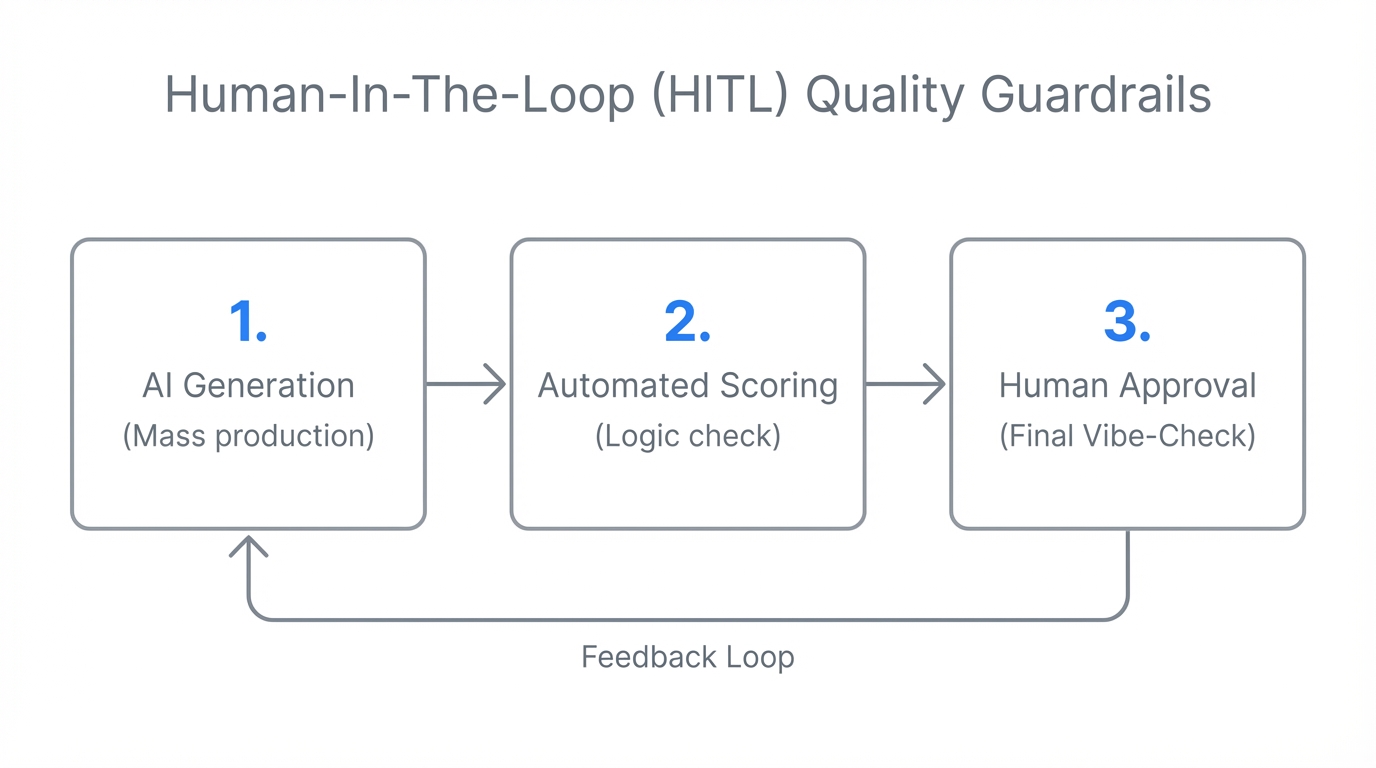
High-volume output is worthless if the quality is poor. Over-reliance on raw AI output leads to robotic content that search engines and ad platforms may de-prioritize. To maintain high standards in creative operations AI, you must implement a structured review process. Use Claude Code to generate a "Markdown Audit Report" of your variations before they go live.
Tools like Playwright or Puppeteer can be controlled via Claude Code to crawl your landing pages and ensure that the ad variations match the destination content. This automated cross-referencing prevents the "disconnection" that often hurts conversion rates.
Furthermore, when dealing with sensitive data or large-scale enterprise deployments, ensure you are utilizing secure environments like AWS Bedrock or Google Vertex AI to maintain data privacy while scaling your ad variation automation.
Conclusion: The Era of Engineering-First Marketing
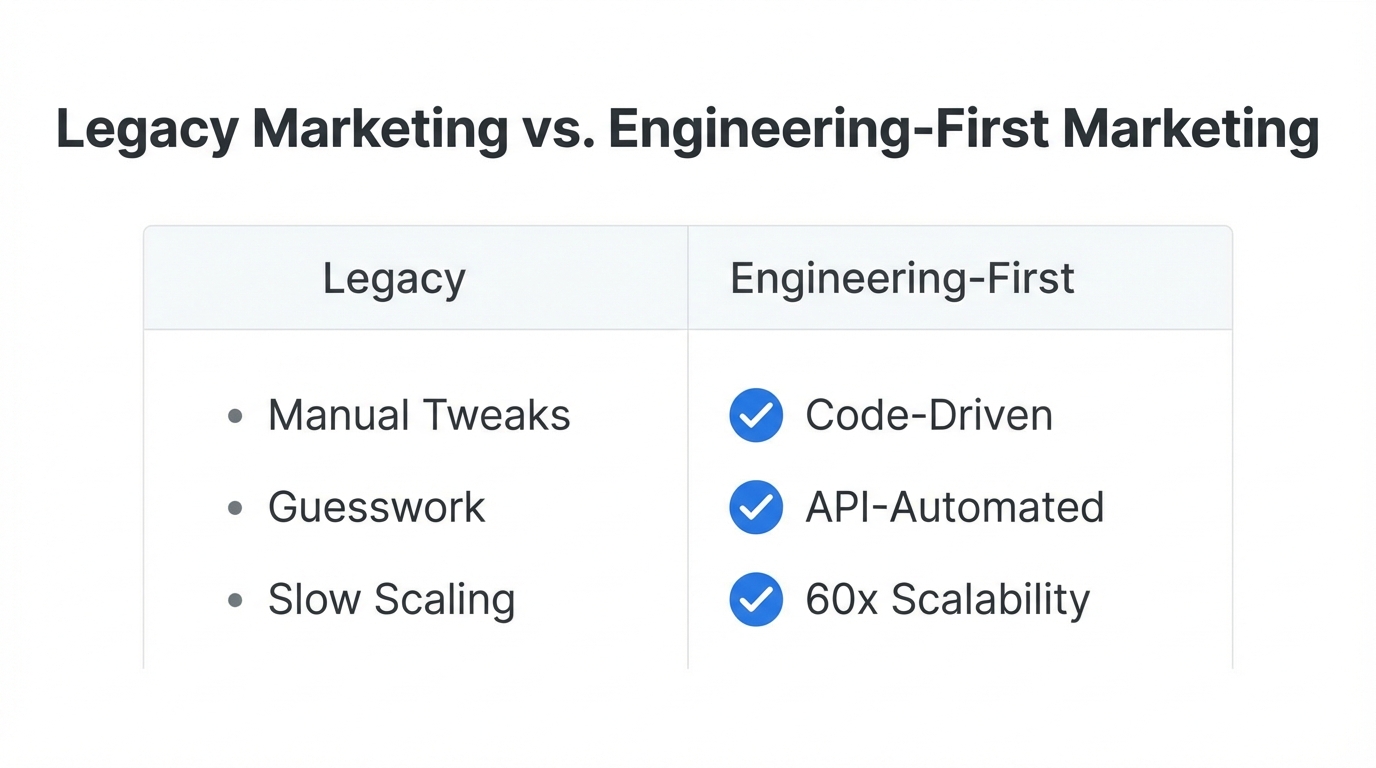
The transition to programmatic creative scaling marks the end of the traditional "creative vs. quantitative" divide. Marketing is becoming an engineering discipline. By using Claude Code to build internal tools and automate the tedious aspects of asset production, growth teams can focus on what actually moves the needle: strategy, psychology, and high-level experimentation.
As you scale your creative output, remember that the most successful marketers treat AI as a partner in an iterative loop. Whether you are building 50 variants for a Google Ads campaign or discovering creators on Stormy AI to fuel your UGC pipeline, the goal is the same: maximum velocity without sacrificing brand integrity. The future belongs to those who can code their way to growth.