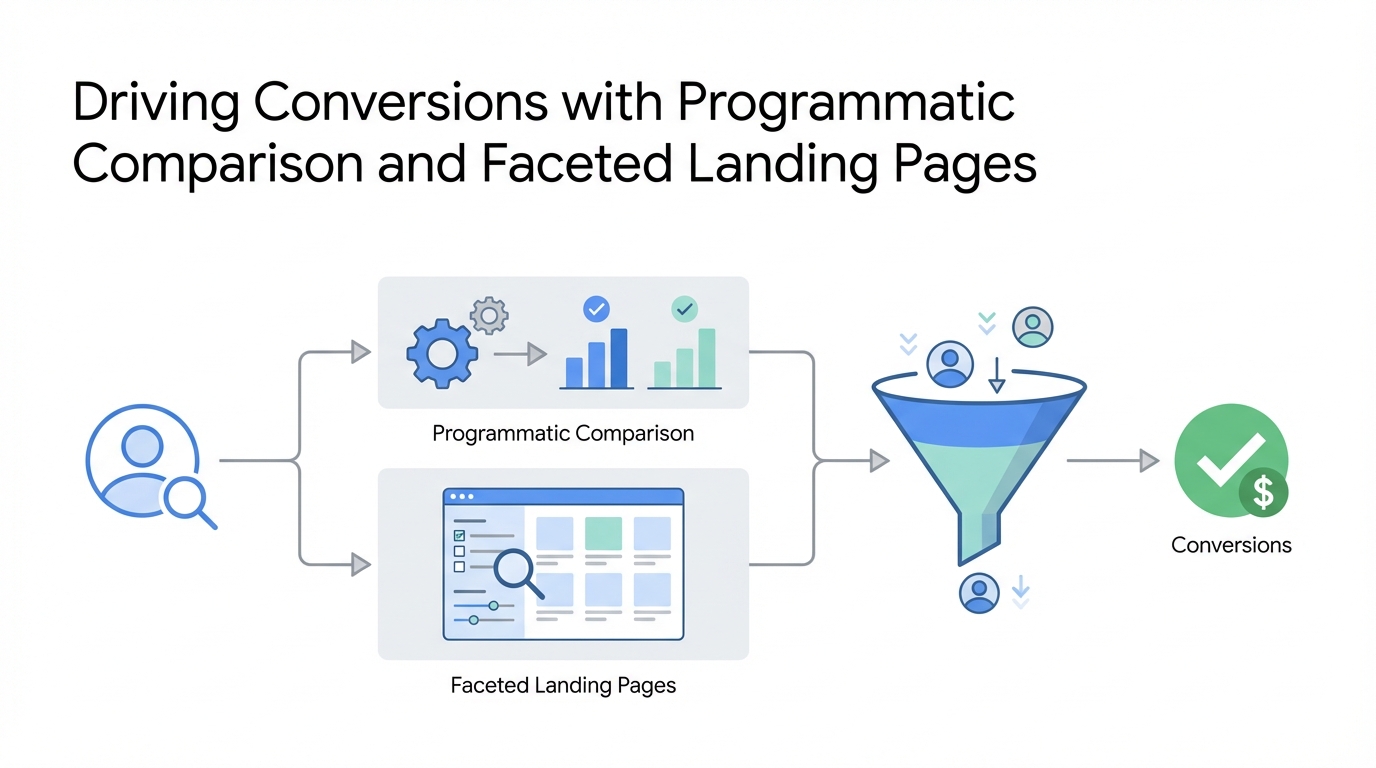
In the rapidly evolving landscape of 2025, e-commerce brands are moving away from the era of "more content for content's sake" and toward a highly surgical approach known as Intent-Driven Architecture. Standard blog posts, while useful for top-of-funnel awareness, often fail to capture the high-velocity buyers who are ready to pull the trigger. To bridge this gap, sophisticated marketers are turning to programmatic comparison pages and indexable faceted navigation. These "Decision Stage" assets are not just SEO tools; they are conversion machines that typically perform 3-5x better than traditional informational content. By automating the creation of these pages using structured data, brands can dominate long tail e-commerce strategy without a proportional increase in manual labor.
The Evolution of Programmatic SEO: From Keywords to GEO
Programmatic SEO (pSEO) has undergone a fundamental transformation. What was once seen as a tactic for "keyword stuffing" has matured into a sophisticated, data-driven architecture strategy. As we look toward 2026, the industry is shifting focus toward Generative Engine Optimization (GEO). This means ensuring that your scaled pages are not just indexable by traditional crawlers like Google, but are "citable" by AI agents such as ChatGPT and Perplexity. Research shows that high-growth e-commerce brands utilizing these strategies report an average 30%–80% surge in organic traffic and a 25%–35% increase in conversion rates within just months of implementation, according to data from WordLift and Seomatic.
The scale of this generation is staggering. Industry leaders have demonstrated that pSEO can expand a site's footprint from 10,000 to over 425,000 pages in under 90 days without triggering quality penalties, provided the content remains high-value and data-rich. This is made possible by moving away from monolithic CMS features toward composable architecture. Using tools like Whalesync, brands can now sync their central source of truth—often an Airtable database—directly to their front-end, enabling real-time programmatic updates across thousands of pages simultaneously.
Automating 'Product X vs Product Y' Comparison Pages
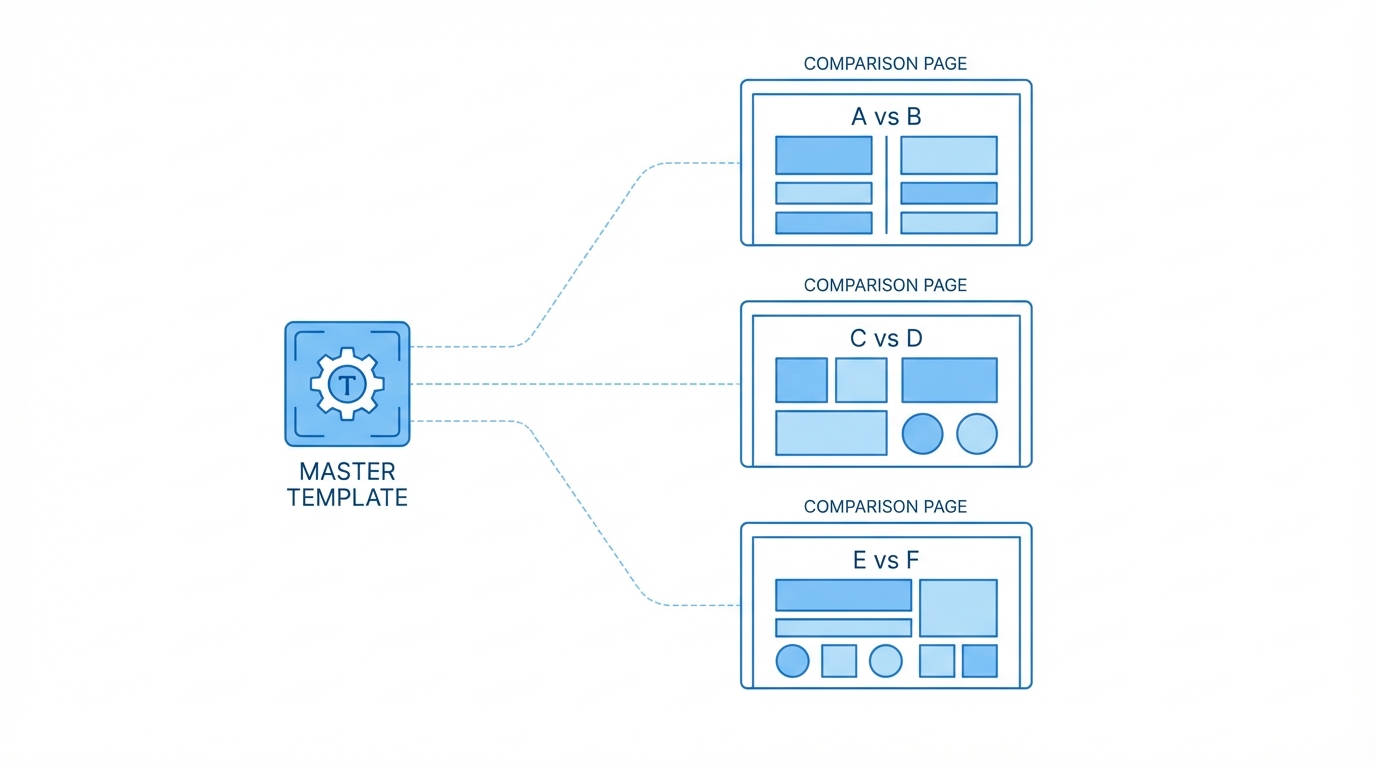
One of the most powerful applications of programmatic SEO is the creation of programmatic comparison pages. When a user searches for "Product A vs Product B," they are in the final stages of the buyer's journey. They have identified their problem and their potential solutions; they just need a nudge to decide which one is better for their specific needs. By building a database of product attributes—such as price, weight, battery life, or materials—you can generate thousands of unique "Head-to-Head" pages automatically.
"Comparison pages target 'Decision Stage' buyers and have conversion rates 3–5x higher than standard blog content because they solve the user's ultimate point of friction: the choice."
To implement this, you don't need a writer to manually compare every pair of products. Instead, you use a template that pulls data dynamically. For example, a sports retailer could compare hundreds of running shoes based on heel-to-toe drop, cushioning level, and terrain type. Tools like Verbolia specialize in this type of category scaling, identifying long-tail gaps and auto-generating landing pages that feel bespoke to the user's query. By populating these templates with JSON-LD Schema, you also ensure that Google displays rich results like star ratings and prices directly in the SERPs, further increasing click-through rates.
Avoiding the 'Traffic Cliff' and Duplicate Content
A common pitfall in scaling comparison pages is the "Traffic Cliff"—a sudden drop in rankings caused by Google's helpful content systems detecting thin or duplicate pages. To avoid this, your programmatic pages must be at least 30% unique. You can achieve this by incorporating dynamic attributes like local availability, unique SKU descriptions, and integrated user reviews. If you are on Shopify, ConvertMate can act as an AI agent to manage these bulk updates, ensuring each product page remains unique and optimized for conversion rate optimization for seo.
Implementing Indexable Faceted Navigation
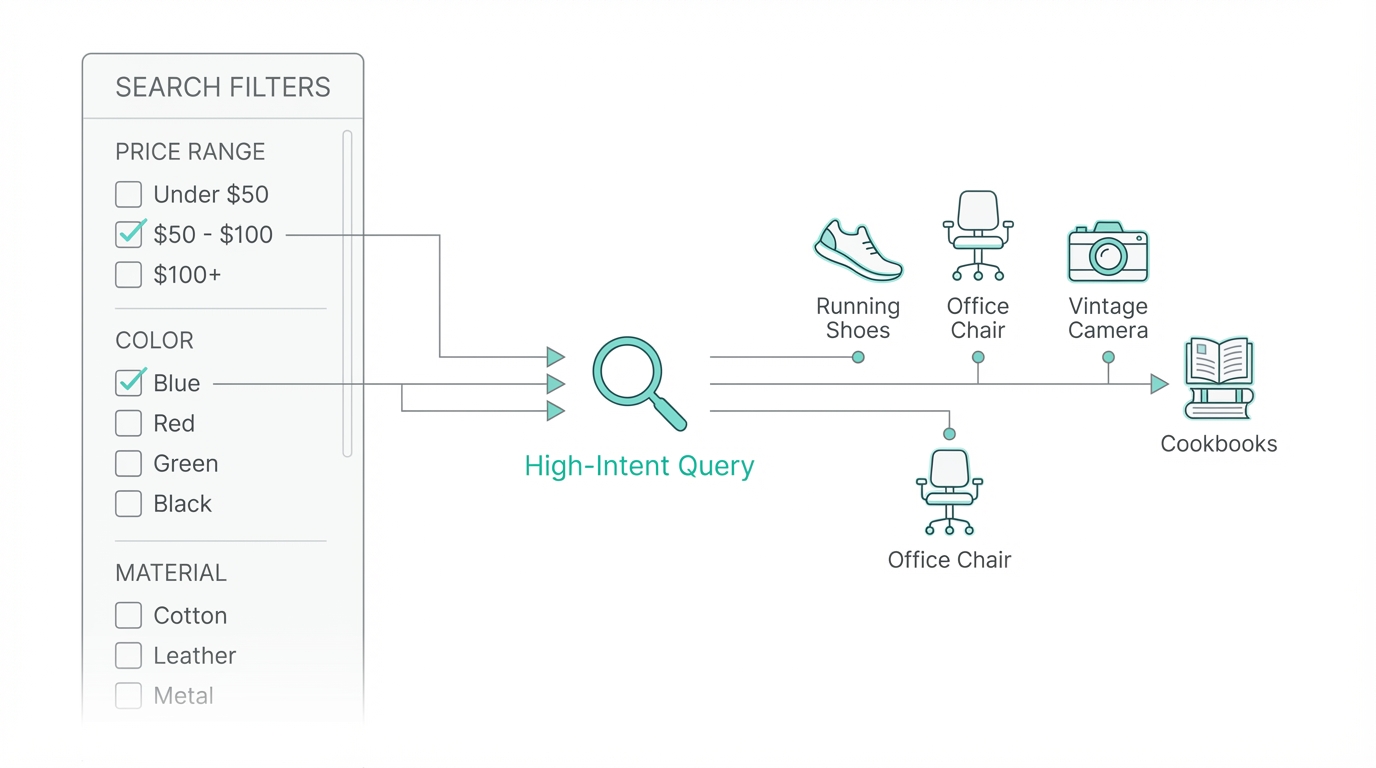
Standard e-commerce categories like "Men's Shoes" are too broad and highly competitive. The real gold lies in e-commerce faceted navigation SEO. This strategy involves taking the filters your users already use—size, color, price, material—and turning those filtered views into indexable, SEO-friendly landing pages. Instead of a messy URL like /shoes?color=blue&price_max=50, you create a clean, crawlable page: /blue-canvas-shoes-under-50.
This approach targets high intent e-commerce keywords with extreme precision. A user searching for "Blue Canvas Shoes Under $50" is much closer to a purchase than someone searching for "shoes." By allowing search engines to index these filtered combinations, you capture hyper-specific traffic that your competitors are likely ignoring. Companies like Canva have mastered this, creating over 1.3 million template pages for every possible design search, which now rank for over 500,000 keywords.
Enhancing Trust with UGC Creators
As you scale these hyper-specific pages, the challenge becomes maintaining a human touch. High-intent pages convert best when they include authentic social proof. This is where tools like Stormy AI become invaluable for e-commerce teams. When you've generated a page for "Minimalist Hiking Boots," you can use Stormy AI’s search and discovery engine to find niche creators who specialize in outdoor gear. By sourcing and embedding User-Generated Content (UGC) specifically relevant to that long-tail query, you significantly increase the trust and conversion potential of the page. Managing these creator relationships through a creator CRM allows you to scale your content production alongside your SEO architecture.

Performance Optimization: Preventing Speed-Related Penalties
Large-scale programmatic sites often struggle with performance. If you have 100,000 pages, a traditional database-driven CMS might buckle under the weight of crawl requests, leading to slow server response times. This is why modern pSEO stacks prioritize Static Site Generators (SSG) like Next.js. SSG pre-renders pages at build time, ensuring that users and crawlers receive lightning-fast response times, which is a critical ranking factor in 2025.
For those using WooCommerce or WordPress, performance can be maintained by using lean plugins like WP All Import to bring in data without bloating the database. The goal is to avoid heavy, client-side rendering that frustrates users and lowers your Core Web Vitals scores. Remember, a one-second delay in mobile load times can impact conversion rates by up to 20%.
"Performance isn't just a technical metric; it's the foundation of user trust. If your 400,000 pages don't load instantly, Google will stop crawling them."
The Automation Playbook: vLink and Internal Linking
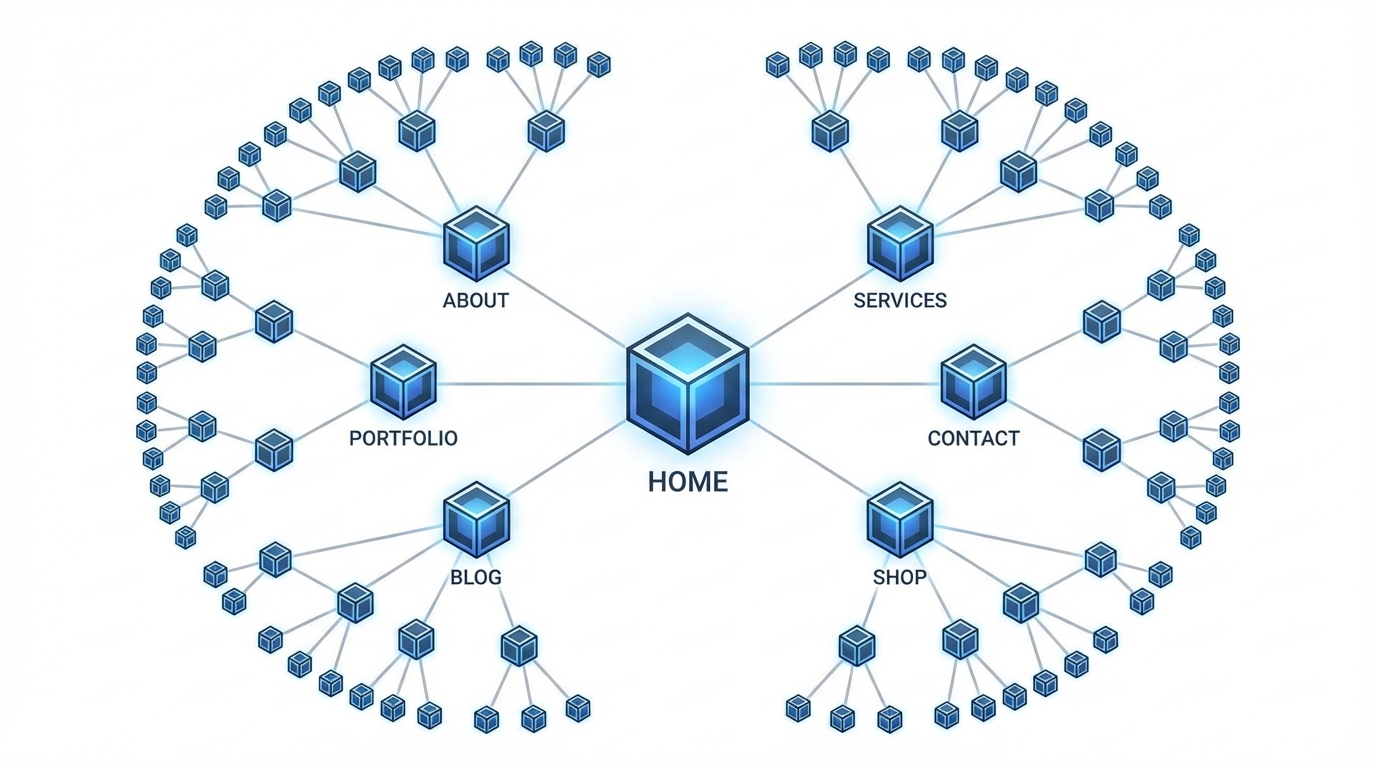
Generating thousands of pages is useless if Google can't find them or if they lack internal authority. This is known as the "Orphan Page" problem. To solve this, you must implement a Hub & Spoke model of internal linking. Your main category page (the Hub) should link to your most important long-tail variations (the Spokes), and those spokes should link back to the hub to pass authority.
To do this at scale, you can use automation tools like vLink by Verbolia. This tool automates high-relevance internal linking across thousands of landing pages based on semantic relevance. It ensures that every new programmatic comparison page is instantly woven into the site's architecture, preventing it from becoming an orphan and helping it get indexed faster. For keyword research to feed this engine, LowFruits is excellent for finding those "low-hanging" long-tail opportunities that are ideal for programmatic targeting.
Conclusion: Scaling with Intent
Driving conversions in 2025 requires more than just ranking for high-volume keywords; it requires owning the Decision Stage of the buyer's journey. By combining programmatic comparison pages with indexable faceted navigation, you create a net that catches the highest-intent traffic possible. While the technical setup—using Next.js, Airtable, and Whalesync—requires an initial investment in time, the long-term ROI of a long tail e-commerce strategy is unparalleled.
As you scale your technical SEO, don't forget the human element. Integrating authentic creator content found through Stormy AI can ensure that while your pages are built by machines, they resonate with people. Start by identifying your top-performing "vs" queries and your most-used filters, and begin your journey toward a truly automated, high-conversion e-commerce architecture.