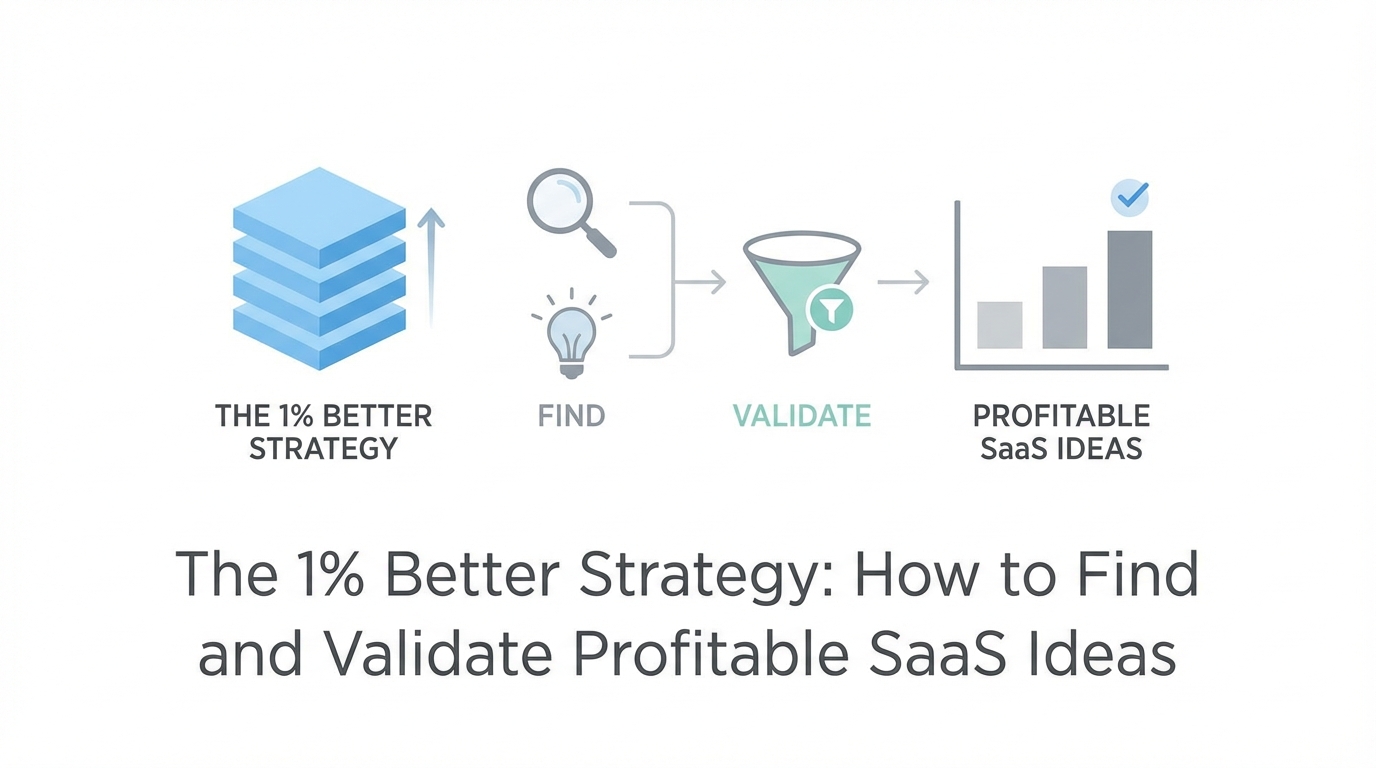
The graveyard of Silicon Valley is filled with "revolutionary" ideas that nobody actually wanted. According to data on startup failure rates, roughly 90% of new ventures fail, often due to a lack of market need. Most founders believe that to build a successful company, they need to invent something entirely new—a blue ocean where no competitor has ever sailed. But the reality for the modern solopreneur is often the exact opposite. Success isn't found in novelty; it's found in execution. Samuel Rondon, a former optician who taught himself to code via YouTube, now generates over $35,000 per month across three SaaS applications by following a simple, counter-intuitive rule: never build something that doesn't already exist.
By identifying existing, profitable SaaS ideas and applying a "1% Better" framework, you can bypass the most dangerous stage of a startup—market validation—and move straight to capturing market share. This strategy focuses on finding products that are already making money, analyzing their weaknesses, and building a streamlined alternative that solves the same problem with less friction. In this guide, we will break down the meticulous method for finding winning ideas, validating them in real-time, and launching a profitable micro-SaaS in record time.
The Myth of Innovation: Why You Should Look for Validated Demand

The biggest risk in the software world is building a product that solves a problem no one cares about. Traditional startup advice tells you to find a "gap in the market," but for a solo founder, a gap often indicates a lack of demand. Instead of looking for what is missing, you should look for what is already working. Market validation for startups is significantly easier when you can see people reaching for their wallets in real-time. Samuel Rondon emphasizes this by scouring platforms like Twitter (X) and Indie Hackers to find founders who are "building in public."
When a founder shares a screenshot of their Stripe dashboard or announces a specific Monthly Recurring Revenue (MRR) milestone, they are handing you a roadmap. That screenshot is the ultimate proof of concept. It tells you that the market exists, the price point is acceptable, and the problem is painful enough to trigger a purchase. By following these profitable micro-SaaS niches, you aren't "stealing" an idea; you are entering a proven market with the intent to provide a better experience. This approach reduces your chance of failure because the hardest question—"will anyone pay for this?"—has already been answered.
The 4-Part Idea Filter: How to Vet Your Next Project
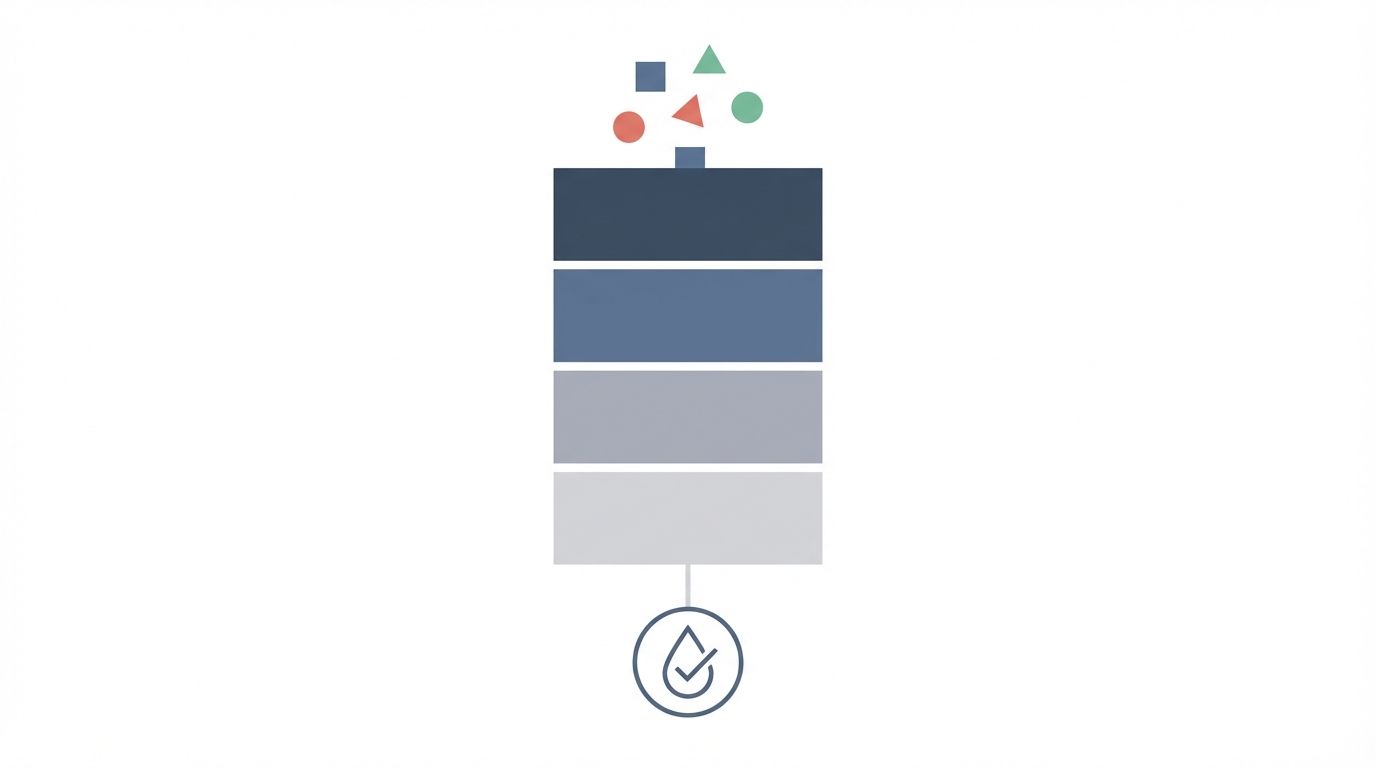
Not every successful app is worth cloning. To ensure you don't end up with a high-maintenance nightmare, you need a rigorous vetting process. Before you write a single line of code, you can use Stormy AI for influencer vetting and niche analysis to see if the creators currently dominating the space have genuine, high-quality audiences. When searching for SaaS business ideas, apply these four specific filters to ensure the project aligns with a lean, profitable business model:
- Personal Use Case: Would you use the tool yourself? Building a product you don't care about is a recipe for burnout. When you are the target customer, you instinctively understand the pain points and the necessary features.
- Existing Traction: Look for public proof of revenue. Use communities like Starter Story to find case studies of small teams making five or six figures. If a tool has thousands of users, there is room for a 1% better alternative.
- Low Marketing Spend: This is a critical indicator of organic demand. If a competitor is ranking highly on Google without spending thousands on ads, it means the market is actively searching for a solution.
- Technical Simplicity: Avoid "complex backend" projects that require a 24/7 engineering team. The goal is to build a tool that is simple to maintain so you can focus on growth, not bug fixes.
If you are struggling to find creators who are already dominating these niches, Stormy's AI search and discovery allows you to find influencers and creators across TikTok, Instagram, and YouTube who are currently promoting similar tools. By seeing which creators have high engagement in a specific niche, you can quickly identify where the "hype" and the money are currently flowing.
Competitive Analysis: Using Data to Reverse-Engineer Success
Once you have identified a potential target, the next step is competitive analysis for SaaS. You need to know exactly where their customers are coming from. Are they finding the product through search engines, or is the founder pouring money into Meta Ads? Using competitive intelligence tools like Ahrefs or Semrush is vital here.
Check the "Top Pages" and "Backlinks" of your competitor. If they are growing primarily through SEO, you know you'll need to be patient and invest in content. However, if their traffic comes from social ads or specific referral sites, you can replicate that traffic almost instantly. For example, when Samuel built StoryShort.ai, he noticed the competition was getting all their traffic from Facebook ads. This meant he could launch his own ads and get immediate traffic without waiting months for Google to index his site. This is how to validate an app idea with data rather than guesswork.
Analyzing Design and User Experience
Beyond traffic, you must analyze the product experience. You don't need to reinvent the UI; you need to understand why the current UI works—and where it fails. Tools like Mobbin allow you to study the user flows of the world's most successful apps. By looking at their onboarding, paywalls, and core features, you can identify the standard "design language" of the niche and ensure your 1% better version feels familiar yet superior.
The "1% Better" Rule: Winning Market Share Without Re-Inventing the Wheel


The core of this strategy is the 1% Better Rule. You aren't trying to build a product that is 10x better or 100x faster—that's too expensive and time-consuming. Instead, look for one small gap. Perhaps the competitor's tool is too expensive for beginners. Perhaps their UI is cluttered and hard to navigate on mobile. Or maybe they lack a specific integration with a tool like Notion or Slack.
By focusing on that 1% difference, you give customers a reason to switch. You aren't competing on every feature; you are competing on a single point of friction. For Samuel's User Artemis, the 1% was making LinkedIn scraping more accessible. For StoryShort, it was simplifying the creation of faceless videos for social media. When you find that specific leverage point, your marketing becomes much easier because you have a clear "Why us?" story to tell.
To truly understand what that 1% should be, you need to see what users are complaining about. One of the best ways to do this is to monitor the performance of your competitor's marketing. Using Stormy's post tracking and analytics, you can monitor the comments and engagement on the videos and posts where competitors are tagged. If you see recurring complaints about a specific feature (or lack thereof), you've found your 1%.
The 2-Week MVP Framework: Prioritizing Speed Over Perfection
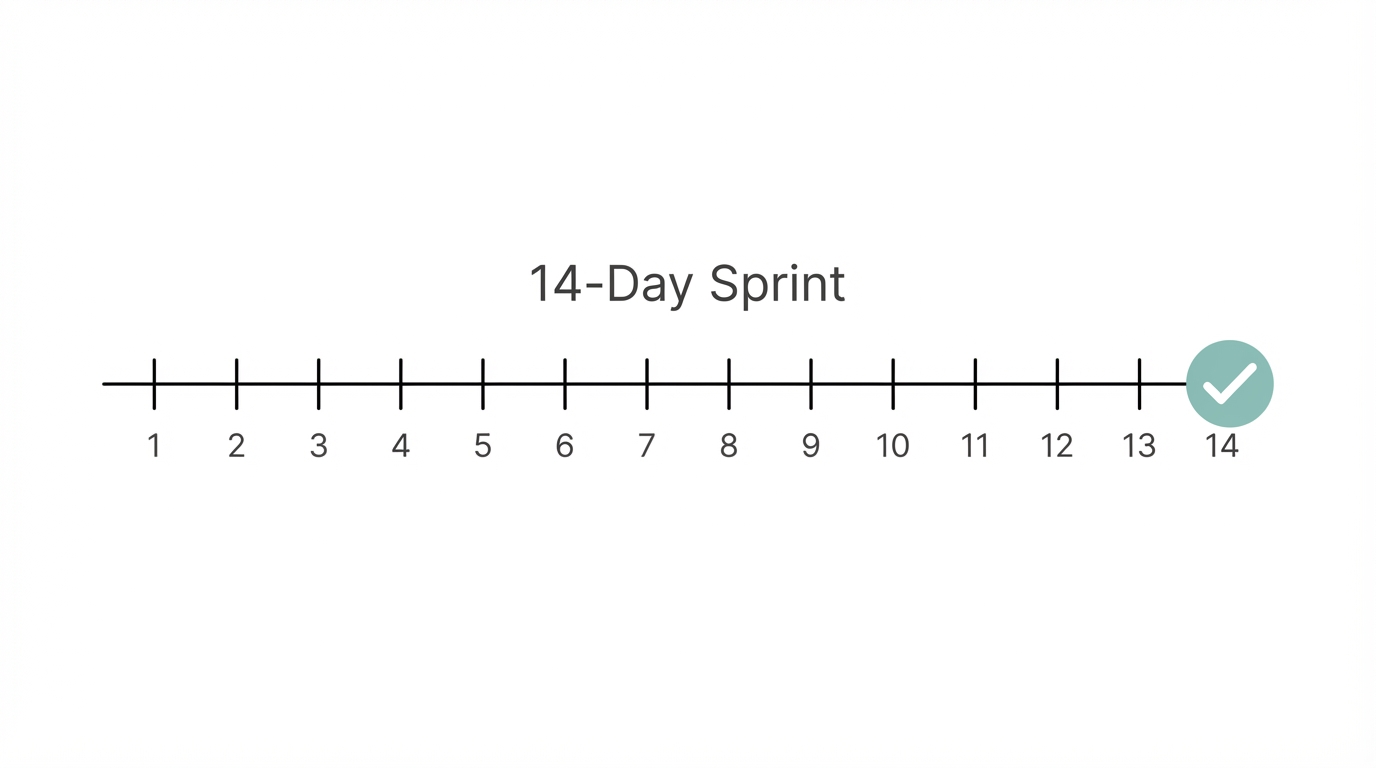
The biggest mistake founders make is spending six months in "stealth mode" building a product that no one has seen. If you have followed the validation steps above, you should be able to build a Minimum Viable Product (MVP) in two weeks. The goal is to ship the core functionality and nothing else. Skip the fancy password reset flows, the multiple theme options, and the complex settings pages. If the core tool works, people will use it even if it's ugly.
Step 1: The AI-Powered Tech Stack
Don't learn to code from scratch. Use modern technologies like Next.js and Node.js combined with AI coding assistants. You can ask ChatGPT to scaffold your entire landing page or write specific API routes. This allows you to build 90% of an app without being a senior engineer. Deploy your app on Vercel for instant hosting and use Stripe for your billing logic.
Step 2: Launch Ads Immediately
Once the basic version is live, don't wait for SEO. Run small-scale Google Ads or Meta Ads. According to recent advertising data, social media ads remain one of the most effective ways to trigger immediate customer acquisition for SaaS. This is the fastest way to test your value proposition. If people click your ad and sign up, you have confirmed the 1% better theory.
Step 3: Iterate Based on Real Usage
Only after you have paying users should you worry about secondary features. Use your first ten customers as your product roadmap. What are they asking for? What are they struggling with? This is the true meaning of market validation for startups: real people using the product and giving you feedback.
Scaling Growth: From Ads to Organic Compound Interest
Once your ads are profitable, you need to build a long-term growth engine that doesn't rely on a daily ad budget. This involves a combination of SEO and automated social presence. Samuel Rondon uses "faceless" YouTube and TikTok channels to drive traffic. These channels post User-Generated Content (UGC) style videos about the product on autopilot, creating a constant stream of attention.
Furthermore, an affiliate program is a powerful way to scale. By offering a commission to creators who talk about your tool, you create a self-sustaining loop of content and SEO backlinks. This is where high-volume outreach becomes essential. Instead of manually emailing potential affiliates, you can use Stormy's AI outreach and inbox to send hyper-personalized emails to hundreds of relevant creators. Stormy can even handle the follow-ups while you sleep, ensuring your affiliate program grows without requiring your constant attention.
Conclusion: Validate Faster, Build Smarter
Building a profitable SaaS doesn't require a stroke of genius; it requires a commitment to the 1% Better Strategy. By ignoring the urge to be "the first" and focusing on being "the best for a specific group," you remove the guesswork from entrepreneurship. Start by browsing X for validated demand, filter the ideas through your personal interest and technical feasibility, and then use competitive intelligence to find your entry point.
Remember that the goal of an MVP is to fail fast or succeed quickly. Don't get bogged down in the perfectionist trap. Use AI to speed up your coding, use Stormy AI's creator CRM to manage your early marketing relationships, and focus on the core value that makes your tool just a little bit better than what’s already out there. The market is huge, and there is always room for a founder who listens better and moves faster than the legacy players. Now, pick an idea, set a two-week timer, and start building.