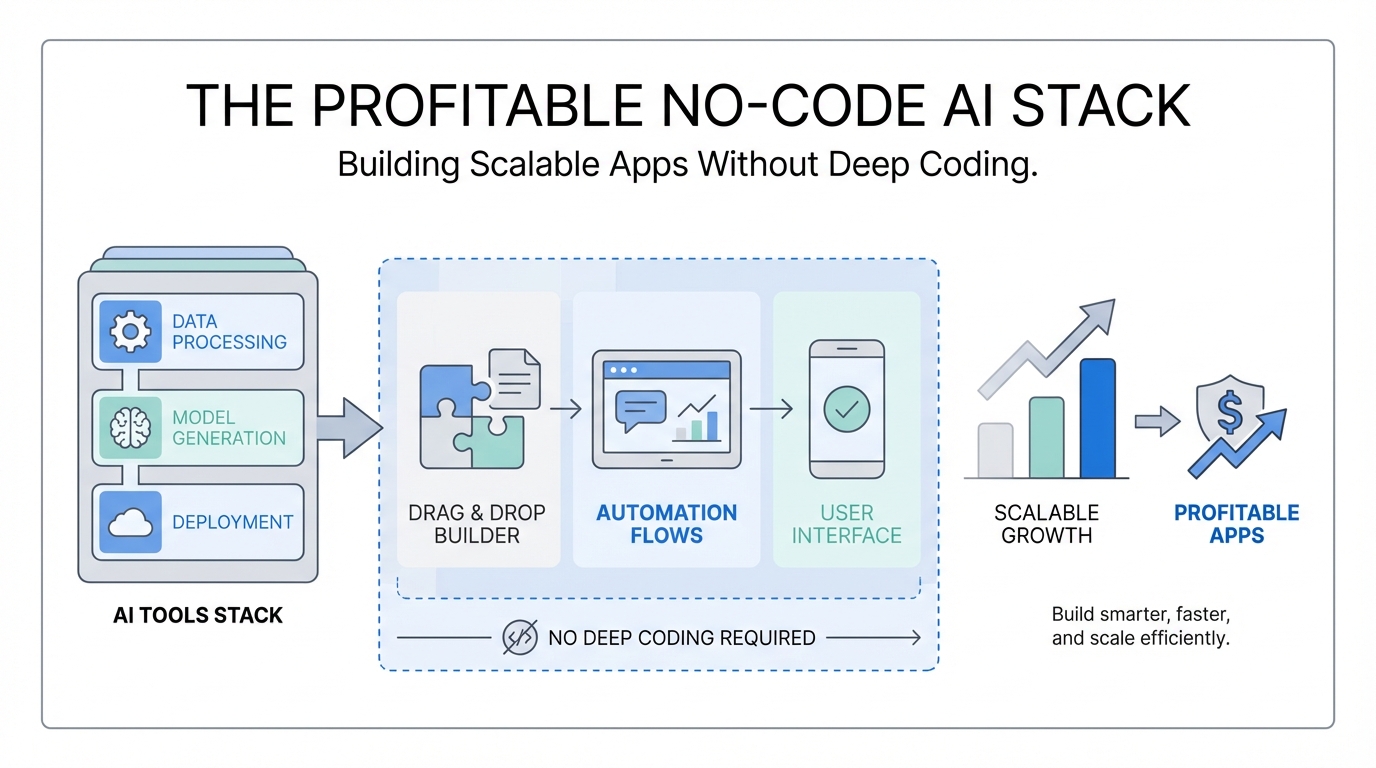
Imagine building a software product in just 12 hours and watching it scale to 200,000 users and $15,000 in monthly recurring revenue. This isn't a Silicon Valley fever dream; it is the reality for Lewis, a solo indie hacker who leveraged no code app development to turn a simple idea into a high-growth B2C SaaS. For years, the narrative around no-code was that it was only suitable for building "toys" or internal MVPs. However, modern stacks are proving that you can build enterprise-grade, scalable logic and high-fidelity user interfaces without ever writing a line of Python or Javascript. This article breaks down the exact technical stack and business playbook used to build Audio Pen, proving that the barrier to entry for the next generation of AI-powered software has never been lower.
The Evolution of No-Code for SaaS
The landscape of best no code tools for saas has shifted dramatically since 2015. In the early days, builders were limited by rigid templates and slow performance. Today, tools like Bubble.io and Xano allow for complex database relationships and external API integrations that mimic custom-coded environments. Lewis’s journey involves failing with 15 to 20 different products before Audio Pen took off. This highlights a critical advantage of build an ai app without code: the cost of experimentation is incredibly low. When you don't have to hire a developer for $100/hour to test a hypothesis, you can afford to be wrong 15 times until you find the one idea that resonates with the market.
Audio Pen functions as a voice-to-text AI tool that transforms "fuzzy thoughts" into clear, structured text. It handles transcription, translation, and stylistic rewriting. Accomplishing this at scale for 5,000+ paying customers requires a robust backend and a seamless frontend. By using an ai app builder approach, Lewis was able to focus on the user experience and the core value proposition rather than debugging server infrastructure. Platforms like Starter Story have documented numerous cases where similar lean stacks have outperformed traditional development teams in both speed to market and profitability.
The Audio Pen Stack: Frontend vs. Backend Logic

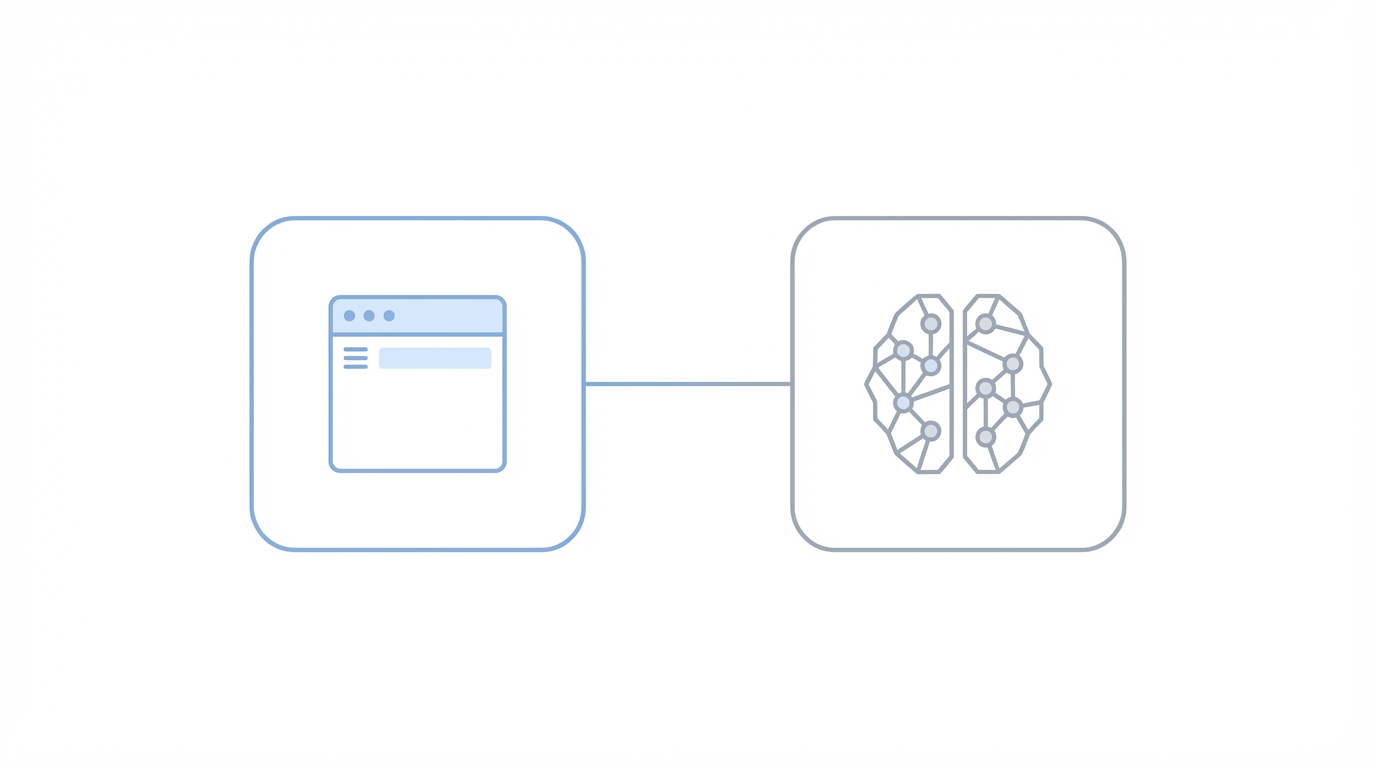
To build a scalable AI product, you need to decouple your user interface from your business logic. This is the hallmark of professional no code app development. For founders who need to find the right voices to market their product, Stormy AI provides an AI-powered search engine across TikTok, YouTube, and Instagram. Instead of manual searching, you can use natural-language prompts to find niche creators in seconds. For a deep dive into how these tools work for beginners, many builders start with a bubble io tutorial for beginners to understand the basics of visual programming.
Bubble for Frontend Mastery
Lewis uses Bubble for the web application, costing approximately $130 per month. Bubble serves as the visual engine, handling everything the user sees and interacts with. It manages the "Big Record Button" and the display of historical notes. While Bubble has its own database, power users often find that as they scale toward 200,000 users, moving the heavy lifting to a dedicated backend becomes necessary for performance.
Xano for Enterprise-Grade Logic
For the backend and complex logic, Lewis relies on Xano, which costs about $260 per month. Xano is often cited among the best no code tools for saas because it provides a scalable PostgreSQL database and a powerful API creator. In the Audio Pen stack, Xano handles the intensive processing of data and communications between various AI APIs. This separation ensures that even if the frontend experiences high traffic, the backend logic remains stable and secure.
Managing AI API Costs and Revenue
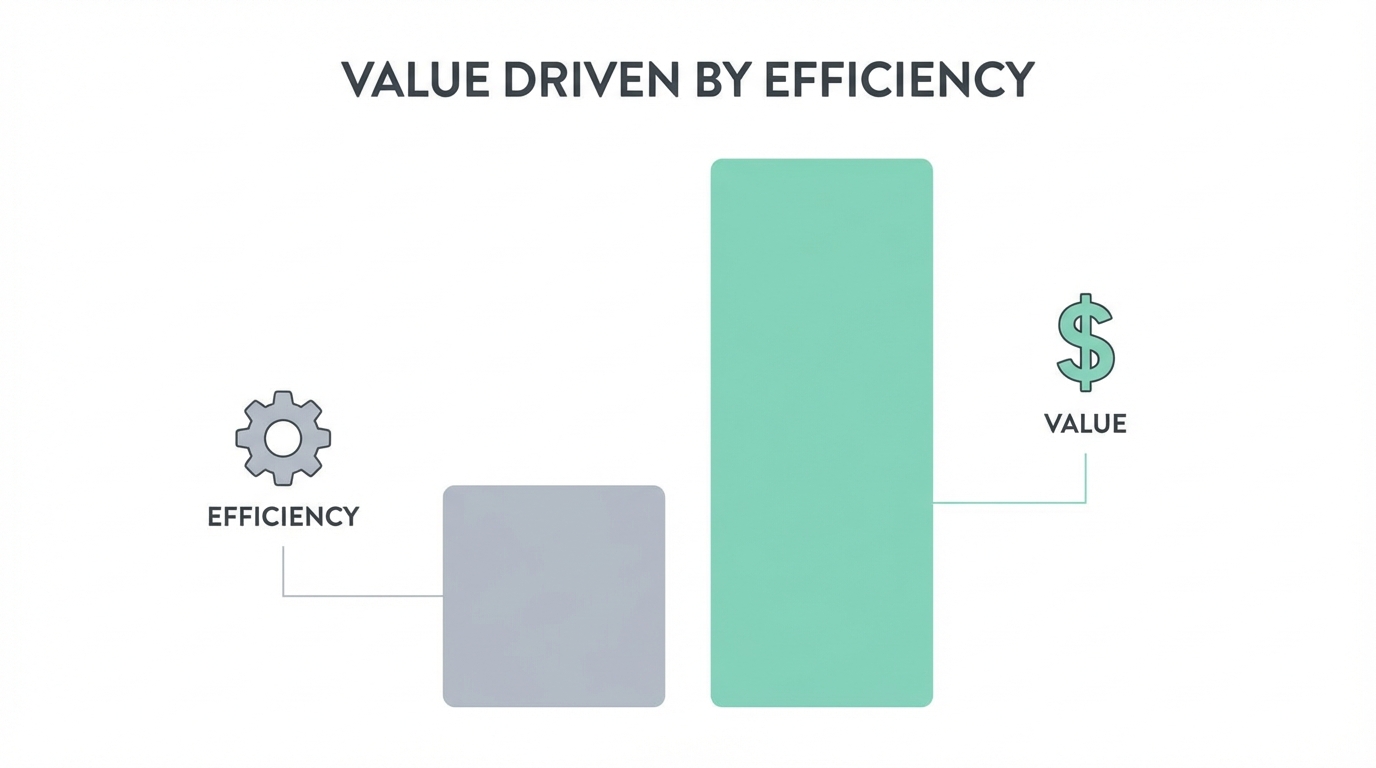
One of the biggest challenges when you build an ai app without code is managing the variable costs of third-party APIs. Audio Pen integrates with AI models to perform transcriptions and rewrites. Unlike traditional software where your only cost is hosting, AI apps incur a cost for every second of audio processed or every word generated. Lewis manages these API costs by carefully balancing his pricing model. He sells access at $99 per year or $159 for two years as non-recurring subscriptions.
Maintaining high profit margins requires a deep understanding of usage patterns. For instance, free users get a shorter recording limit to minimize the financial burden on the founder, while Prime users pay for the privilege of 15-minute recordings and advanced integrations. By monitoring these costs in real-time through analytics tools like Plausible Analytics (which costs just $19/month), builders can adjust their features to ensure the unit economics always remain positive.
When scaling these types of apps, developers often use Stormy AI to vet creators and analyze audience quality. Using an AI-powered report, you can instantly detect fake followers and engagement fraud before spending your marketing budget. Finding the right creators to showcase how a "fuzzy thought" becomes a "clear note" can drastically lower customer acquisition costs compared to traditional Google Ads or Meta Ads.
The 12-Hour MVP Playbook: From Idea to Revenue
The success of Audio Pen wasn't just about the tools; it was about the methodology. Lewis followed a strict "Halfday Build" framework. If you want to replicate this success, you need a playbook that prioritizes speed over perfection. Building an ai app without code is the fastest way to validate whether a market actually exists for your solution.
Step 1: Build for Fun and Experimentation
Before Audio Pen, there were 15 failures. Do not try to build your "magnum opus" on day one. Build tiny, single-purpose tools and host them on a personal site. Use these experiments to find signal from the market. Lewis found his signal on Twitter, where people resonated with his early prototypes more than his previous 15 projects.
Step 2: Design in Figma Before You Build
Even in no code app development, design is the differentiator. Use tools like Pinterest for inspiration and spend time in Figma mapping out the user journey. Lewis emphasizes that knowing exactly what you want the app to look like prevents "builder's block" once you open your ai app builder of choice.
Step 3: Build in Public and Gather a Waitlist
Don't build in a vacuum. Share your designs and progress on social media. By the time Lewis was 10 hours into his 12-hour build, he already had a waitlist. This creates a feedback loop that informs which features are actually necessary for the MVP and which can wait for version 2.0.
Step 4: Launch the Simplest Version Possible
The first version of Audio Pen was just a record button and a text output. It didn't have all the bells and whistles. However, it did its one core job exceptionally well. Launching early allows you to start charging immediately, which provides the cash flow needed to fund further development and API costs.
Automating the "Boring" Business Operations
As a solo builder, your time is your most valuable asset. Once the revenue starts hitting $15,000 per month, the administrative burden can become overwhelming. Managing invoices, tracking expenses, and handling taxes for 5,000 customers is impossible to do manually. This is where automation tools become part of your best no code tools for saas stack.
Lewis and many other indie hackers use Xero to automate the bookkeeping side of the business. By connecting your Stripe account to an accounting platform, you can handle invoicing and cash flow tracking without manual data entry. Additionally, communication with your user base can be automated using platforms like Loops, which Lewis uses for email marketing at a cost of $800 per month. Beyond bookkeeping, you can automate growth using Stormy AI's autonomous agents. These AI agents handle creator discovery and outreach on a daily schedule, managing your personalized email campaigns while you focus on product development. For mobile growth, app developers often look into Apple Search Ads to complement their organic growth from social media.
Why No-Code is the Future of B2C SaaS
The bubble io tutorial for beginners you watch today could lead to a product that supports hundreds of thousands of users tomorrow. The reason no code app development is winning in the B2C space is speed. Consumer preferences change rapidly, especially in the AI era. A founder who can ship a new feature in an afternoon using Bubble and Xano will always out-maneuver a team that needs three weeks of sprint planning and code reviews.
Furthermore, the ai app builder ecosystem is becoming increasingly modular. For example, Lewis uses Draftbit (costing $300/year) to build his native mobile app, allowing him to maintain a presence on the App Store without needing to master Swift or Kotlin. This modularity allows indie hackers to build "pointy features"—tools that do one specific thing better than anyone else.
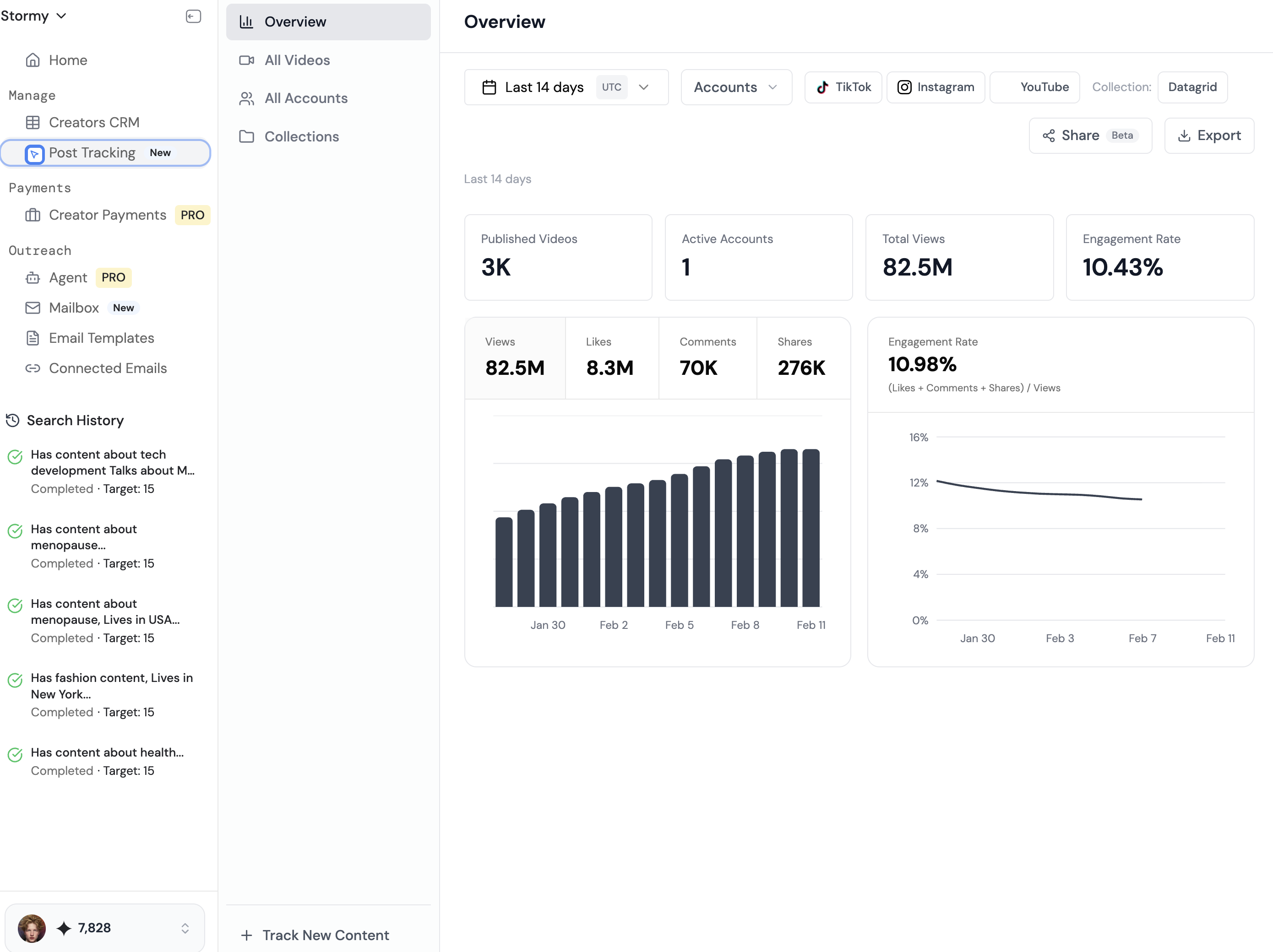
To reach the next level of growth, founders often leverage Stormy AI for post tracking and campaign analytics. Tracking views and engagement across platforms ensures your UGC strategy is actually driving conversions. For a B2C tool like Audio Pen, seeing a real person use the voice-to-text feature in a real-world setting (like a car or a busy office) is more persuasive than any sales copy. AI-powered discovery tools allow you to find these creators in seconds, matching the speed of your no-code development process with high-velocity marketing.
Conclusion: Takeaways for the Modern Builder
Building a profitable AI app in the modern era doesn't require a computer science degree; it requires a builder's mindset and the right stack of best no code tools for saas. The story of Audio Pen proves that a single person can manage 200,000 users and generate $15k/month by focusing on solving one problem perfectly. Build an ai app without code by starting small, validating with real customers, and automating the administrative tasks that slow you down. Whether you are just starting your first bubble io tutorial for beginners or you are looking to migrate a complex backend to Xano, the tools available today have removed the technical gatekeepers to entrepreneurship. The only thing left to do is start building.