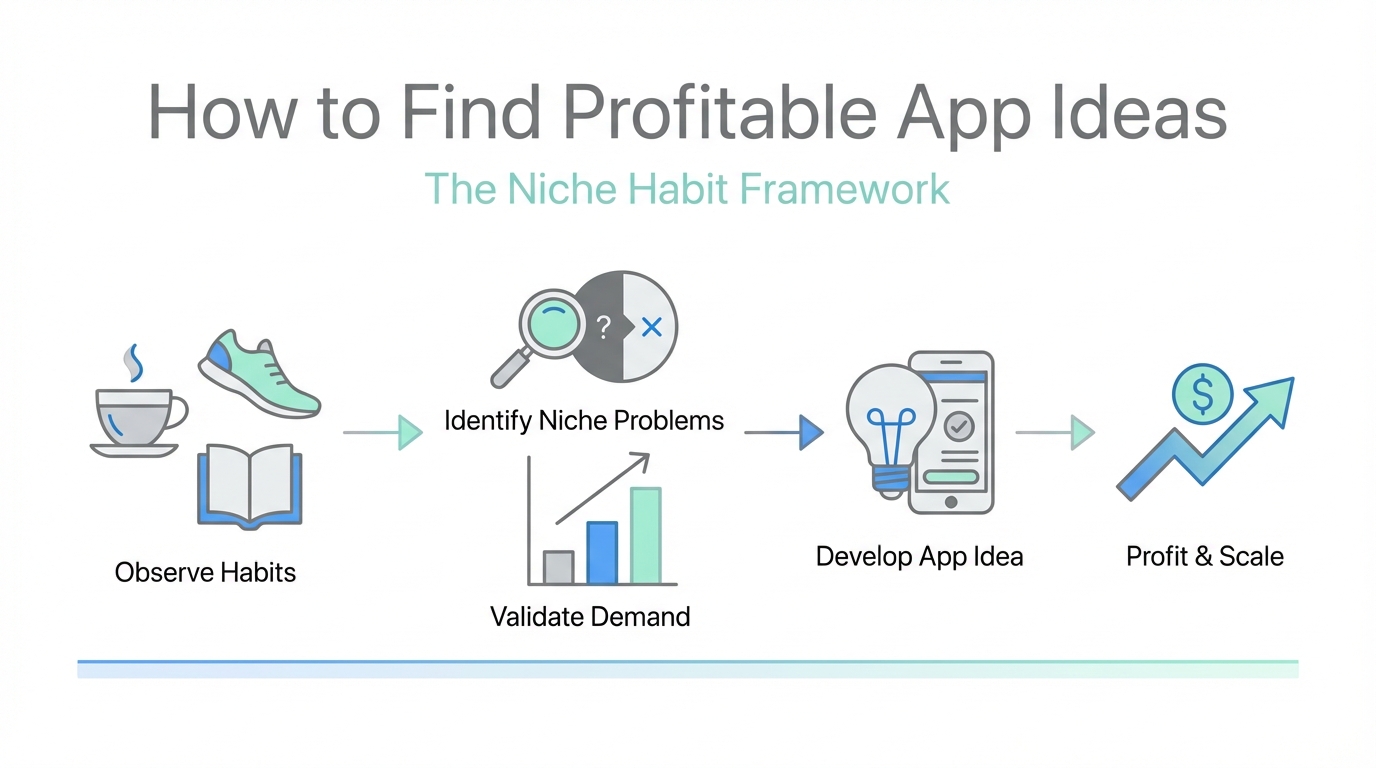
In the current gold-rush era of mobile technology, the path to building a high-growth business has shifted. You no longer need a venture-backed war chest or a decade of engineering experience to hit the coveted $100,000 Monthly Recurring Revenue (MRR) milestone. Today, individual creators and lean teams are scaling millions of dollars in annual revenue by mastering a very specific strategy: identifying high-frequency daily habits and building narrow 'wedges' to serve them. According to recent app market data [source], the most successful independent apps are those that solve immediate, recurring needs. This guide will break down the exact framework needed to discover profitable mobile app ideas by focusing on 'painkiller' problems rather than 'vitamins.'
The 'Painkiller' vs. 'Vitamin' Philosophy for Monetization

One of the most critical mistakes founders make during app market research is building a 'vitamin' when they should be building a 'painkiller.' A vitamin is an app that is 'nice to have'—it might provide some general benefit, but the user doesn't feel a visceral need to open it every day. A painkiller, on the other hand, solves an acute, frequent problem. If you want to build a sustainable business, you must focus on problems that occur daily, not weekly or monthly, as detailed in customer psychology research [source].
Take, for example, the concept of calorie counting. Apps like CalAI have exploded because they address a daily friction point: the tedious nature of logging food. By allowing users to simply take a photo of their meal, they solve a 'pain' that occurs three to five times every single day. High frequency equals high value. When users interact with a product multiple times a day, they are significantly more likely to convert from a free trial to a paid subscription because the utility is reinforced constantly.
Using Social Listening to Spot High-Frequency Daily Habits

Finding profitable mobile app ideas doesn't require a crystal ball; it requires listening to where people are already complaining. The best place to start is within established communities like Reddit. To find valid pain points, navigate to specific subreddits (wellness, finance, productivity) and sort the posts by 'Top' and 'This Year.' This reveals the most resonant struggles within that niche.
Another powerful tactic is using TikTok search filters. Search for a broad topic like 'sleep tracking' or 'study tips,' click the three dots in the corner, and filter by 'Most Liked.' By watching these videos, you can see exactly what 'hacks' people are currently using and where the manual friction lies. If you see a video with 1 million likes explaining a complex manual way to track a habit, there is a massive opportunity to automate that process with a mobile app.
The IdeaBrowser Method
For more advanced app market research, tools like IdeaBrowser can automate the scraping of Facebook groups and subreddits. This allows you to identify underserved segments and 'willingness to pay' signals. If you see users in a group saying they 'burnt thousands of dollars' trying to solve a specific problem, you have found a market with high intent. Pay close attention to the current workarounds people are using—whether it's spreadsheets, manual journals, or general platforms like Upwork or Toptal—and look for ways to build a dedicated, streamlined mobile wedge.
The 'Wedge' Strategy: Starting Narrow to Dominate

The 'Wedge' strategy involves picking a use case that is so narrow it seems almost too small. However, this narrowness allows you to create a superior user experience that generalist apps can't match. In the world of niche app development, being the #1 solution for a tiny problem is much more profitable than being the #100 solution for a broad one. You can often see this strategy in action on Product Hunt, where hyper-specific tools often gain the most traction.
For example, instead of building a 'general health' app, you might build an app specifically for form feedback during weightlifting or dog allergy ingredient scanning. By focusing on a specific niche, your mobile app market trends analysis becomes much clearer, and your marketing becomes hyper-targeted. You aren't competing with giants; you are owning a specific corner of the market.
Validating Willingness to Pay and Competitor Gaps
Before writing a single line of code, you must how to validate an app idea by looking for evidence of paid demand. High demand is useless if users aren't willing to open their wallets. Look at the App Store's top-grossing charts in your niche using tools like Data.ai. If there are competitors making money but their user interface is dated or their features are bloated, you have found a competitor gap.
To truly scale, your mobile app market trends research should include an analysis of the 'First Win' timing. The best apps get the user to a 'win' within the first 60 seconds of onboarding. If your app requires a 20-minute setup before providing value, your churn will be astronomical. You want to aim for a 7-day free trial followed by a subscription ranging from $7 to $40 per month, depending on the intensity of the pain you are solving.
Sourcing Creators for Organic Growth
Once the app is built, distribution is the next hurdle. The most successful apps today leverage User-Generated Content (UGC) and creator partnerships rather than relying solely on paid ads. This is where tools like Stormy AI become essential. By using Stormy’s AI-powered search, you can find niche creators on TikTok, Instagram, and YouTube who already speak to your target audience. Instead of a hard sell, you can manage these relationships through a creator CRM and set up affiliate deals where creators take a 15% to 40% cut of the revenue they generate.
Using Stormy AI's automated outreach, you can contact hundreds of potential partners daily to test different content formats. Whether it's 'story-style' videos or 'meme-style' content, finding the right format is the key to achieving viral growth and hitting that $100k MRR goal.
The Niche Habit Playbook: 4 Case Studies
To get your creative juices flowing, let's look at four specific profitable mobile app ideas that fit the Niche Habit Framework. These ideas leverage current AI capabilities and high-frequency pain points.
1. The Dog Allergy Scanner
Millions of pet owners struggle with food sensitivities. According to the American Kennel Club [source], food allergies are a top concern for owners. A 'painkiller' app would allow users to snap a photo of ingredient labels at the grocery store, and AI would instantly flag unsafe ingredients specific to that dog’s allergies.
2. The Migraine Weather Guard
Migraine sufferers are desperate for predictability. By combining hyper-local weather data and barometric pressure shifts—factors identified by the American Migraine Foundation [source]—an app can warn users hours before an onset. This creates a daily check-in habit where users log symptoms, building a personal trigger model.
3. The Silent Study Timer ('LockIn')
Generic Pomodoro timers are vitamins. A painkiller for students preping for the MCAT or Bar Exam is an app that simulates a library vibe with shared silent study rooms and gamified streaks. Growth can be driven by 'Study With Me' channels on YouTube and niche Discord servers.
4. The Plant Watering AI Coach
Targeting urban apartment dwellers who keep killing their plants, this app identifies species via photo and builds a schedule based on local humidity and sunlight. It monetizes through a small monthly fee and affiliate links to soils and fertilizers on platforms like Etsy or Amazon.
Tracking Metrics: The Levers of Growth
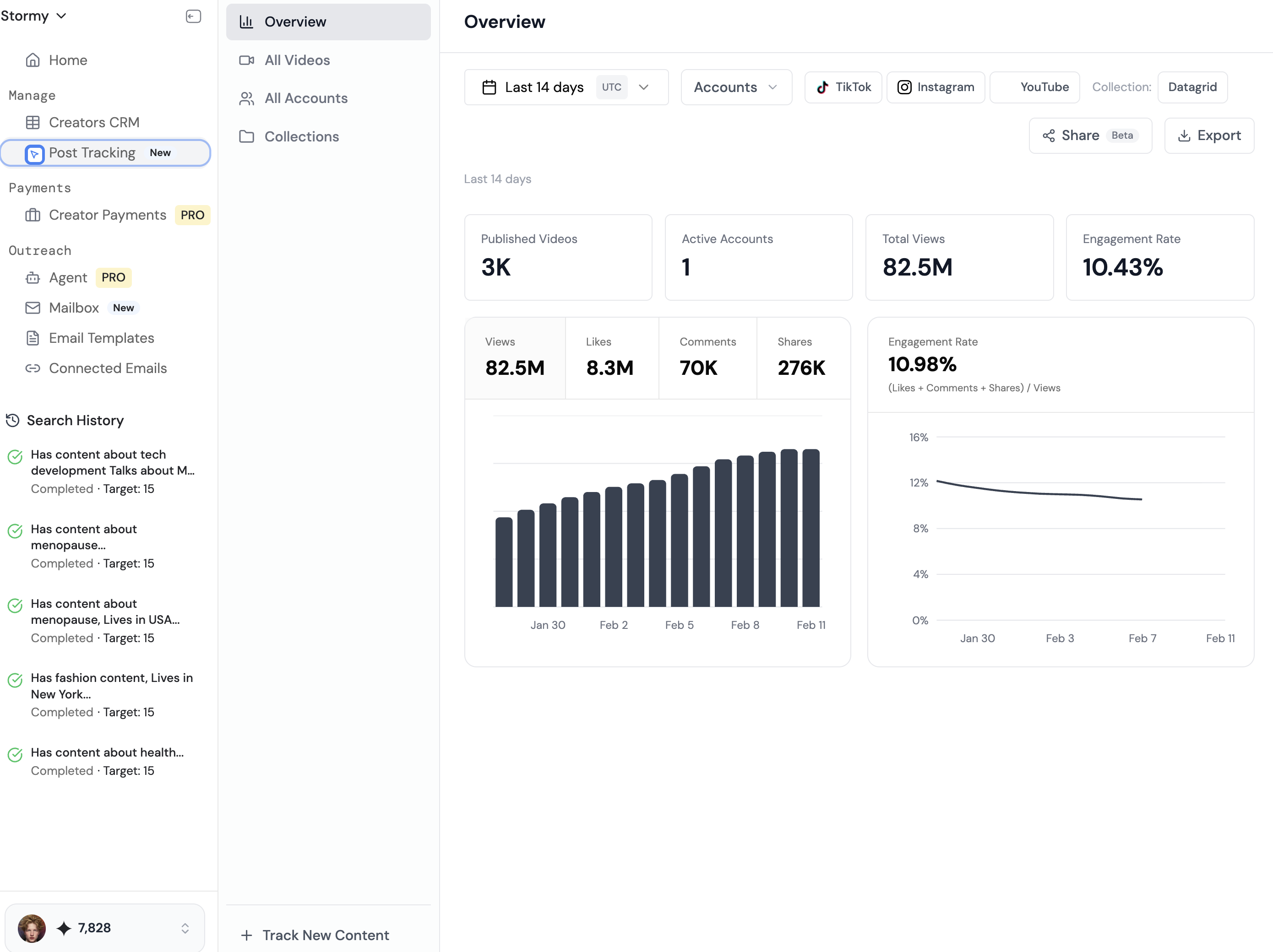
To reach $100k MRR, you must stop being just a developer and start being a scientist. You need to monitor specific levers in your post-tracking analytics. The most important metric is often Weekly Active Paying Users (WAPU). This combines acquisition volume, activation rate (the speed of onboarding), and weekly retention.
Keep a close eye on your K-factor (how many new users each existing user brings in) and your LTV/CAC ratio. A healthy consumer app should aim for an LTV (Lifetime Value) over CAC (Customer Acquisition Cost) of at least 3, as outlined in a16z's startup metrics guide [source]. Use tools like Apple Search Ads and Meta Ads Manager to scale once you have validated your organic loops.
Conclusion: Your 30-Day Launch Plan
Building a profitable mobile app in today’s market is about speed and specificity. Step 1: Define your narrow wedge habit. Step 2: Validate demand on Reddit and TikTok. Step 3: Build a MVP (Minimum Viable Product) that provides a 'win' in under 60 seconds. Step 4: Use automated platforms like Stormy AI to source creators and drive organic installs. By focusing on a 'painkiller' problem and a daily habit, you create a product that users don't just like—they depend on. Start small, iterate fast, and focus on the levers that drive retention. The opportunity in consumer AI is wider than ever; it’s time to ship.