The next decade of wealth won't be built by those who discover new physics, but by those who spot the friction in how we use new technology. We are currently living through a gold rush where the shovels are made of code and the gold is hidden in plain sight on your social media feeds. Most aspiring entrepreneurs wait for a lightning strike of inspiration, but the most profitable SaaS ideas 2024 are actually discovered through a systematic observation of digital tension. It is about finding the gap between what a tool can do and what the market allows it to do.
Take the story of Joseph, a solopreneur who turned a $150 domain investment into a $2 million AI application. He didn't have a computer science degree from Stanford; he had a curiosity for the tension rising between AI generation and AI detection. By following a specific set of frameworks—from the TikTok Research Method to the 'Problem-Pissed-Off' framework—he was able to identify an ai market gap and scale it to $200,000 in Monthly Recurring Revenue (MRR) in just 15 months. This article breaks down exactly how you can replicate that process to find ai business opportunities in any niche.
The TikTok Research Method: Reverse Engineering Digital Tension


Most people use TikTok for entertainment, but for an entrepreneur, the algorithm is a sophisticated market research tool. Joseph’s breakthrough for his product, StealthGPT, came from a single video served to him on his timeline. The video discussed GPTZero, an AI detector that claimed to identify AI-generated content with 99% accuracy. In that moment, Joseph spotted a rising tension: as ChatGPT dominated content creation, there would be a massive, immediate counter-need for content that could bypass detection.
To find your own ai market gaps, you must train your algorithm to show you these friction points. Follow creators who discuss new AI tools on the TikTok Creative Center, then look at the comments and related videos. You are looking for 'The Reaction.' If Tool A does X, look for the people complaining about X or the people building Tool B to stop X. This 'arms race' dynamic is where the most profitable saas ideas 2024 are born. You aren't just looking for a cool tool; you are looking for a conflict that needs a resolution.
When you are deep in the research phase, identifying which creators are actually driving the conversation is key. Using Stormy's AI search across TikTok, YouTube, and Instagram, you can filter for influencers in the AI and SaaS space to see what their audiences are struggling with. Instead of guessing, you can use natural language prompts like "AI productivity creators with high engagement" to find the communities where the next big problem is being voiced daily.
The 'Problem-Pissed-Off' Framework: How to Vet Your Niche
Identifying a trend is only half the battle; you also need to know how to find a business niche that has staying power. Joseph suggests a visceral approach: look for things that genuinely piss you off, waste your time, or waste your money. If a task feels like a repetitive slog, or if a software solution feels unnecessarily complex, you have found a potential product. Friction is the ultimate indicator of market demand.
Vetting for Personal Friction
Before building StealthGPT, Joseph spent years learning to code by building things he actually wanted—like a bot for RuneScape gold farming. This taught him the importance of utility over complexity. When vetting your idea, ask yourself: Does this solve a problem I deal with every day? If you are your own first customer, you have a massive advantage in understanding the user experience (UX) requirements. You don't need a pedigree; you just need a laptop, Wi-Fi, and a willingness to solve a nuisance.
The Broad Market Litmus Test
A common mistake in saas ideation frameworks is going too niche. While 'riches are in the niches' is a popular saying, Joseph argues that for a high-growth AI business, you should solve a problem for as broad an audience as possible. StealthGPT didn't just target students; it targeted anyone producing content—marketers, bloggers, and businesses. If your solution is so specialized that only 100 people need it, you aren't building a billion-dollar gap-filler; you're building a hobby.
Critiquing Your Own Ideas: Avoiding the Hype Trap
It is easy to get high on your own supply when you think you've found a 'genius' idea. However, Joseph warns that you must be your own harshest critic. After a previous failure in the crypto space that resulted in a $400,000 settlement with the CFTC, he learned that market reality doesn't care about your enthusiasm. You must honestly ask: Will people actually pay for this, or am I just hyping myself up?
One way to critique your idea is to look at the 'one-click' potential. If your solution requires the user to go through a complex 10-step setup, you haven't solved the problem; you've just moved it. Modern users want to upload a file or paste text and get an immediate result. If you can't envision a one-click solution for the problem, the idea might not have 'legs' in the current fast-paced AI market. Use tools like Futurepedia to see if others are already attempting your solution and, more importantly, how they are failing to satisfy their users.
The 15-Month Timeline: Velocity Over Perfection
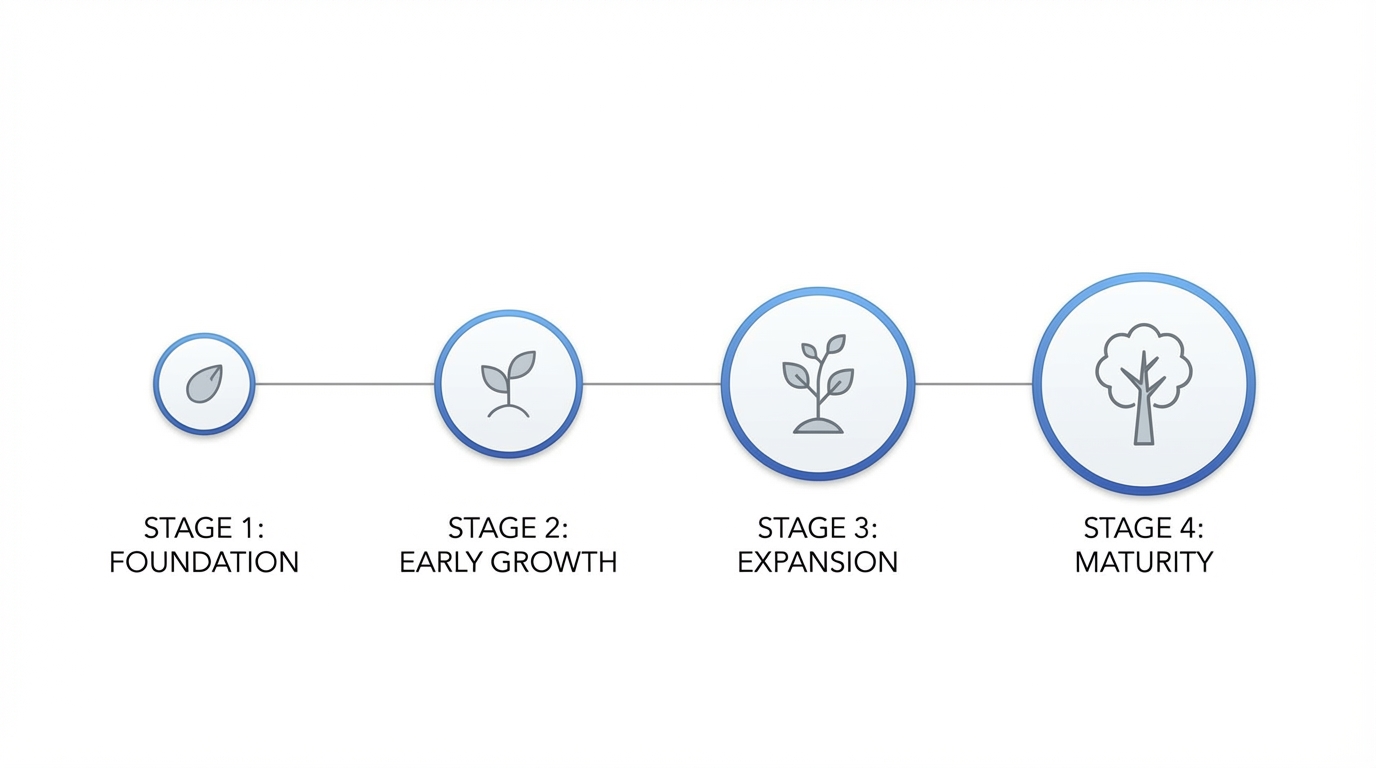

One of the most striking parts of Joseph's journey is the speed of execution. He bought the domain for $150 in February and had paying customers by March. In the world of AI, profitable saas ideas 2024 have a short shelf life because the technology evolves so rapidly. If you spend six months building in a cave, the market gap you identified will likely be closed by the time you launch.
Step 1: The 30-Day MVP
Your goal should be to get a functional version of your product online within 30 days. Joseph used a modern stack consisting of Next.js and React, deployed via Vercel, with Supabase handling the database. This stack allows for rapid iteration and 'one-click' deployments. Don't worry about a perfect UI; worry about whether the core engine solves the 'pissed-off' problem you identified.
Step 2: Early Distribution
Joseph didn't wait for a marketing team. He listed StealthGPT on directory sites and immediately caught the attention of influencers. One TikTok creator named Phil mentioned the product, and that single organic mention sparked the initial wave of customers. This is why distribution is the lifeblood of SaaS. If you aren't posting your progress on X (Twitter) or TikTok, you are invisible.
To accelerate this, you can use Stormy's AI email outreach to find and contact influencers who are already talking about AI market gaps. Instead of manually emailing hundreds of creators, Stormy’s AI agent can handle the discovery and personalized outreach while you focus on refining the product. This ensures that by the time your 30-day MVP is live, you already have a shortlist of creators ready to test it.
Scaling with UGC and Google Ads
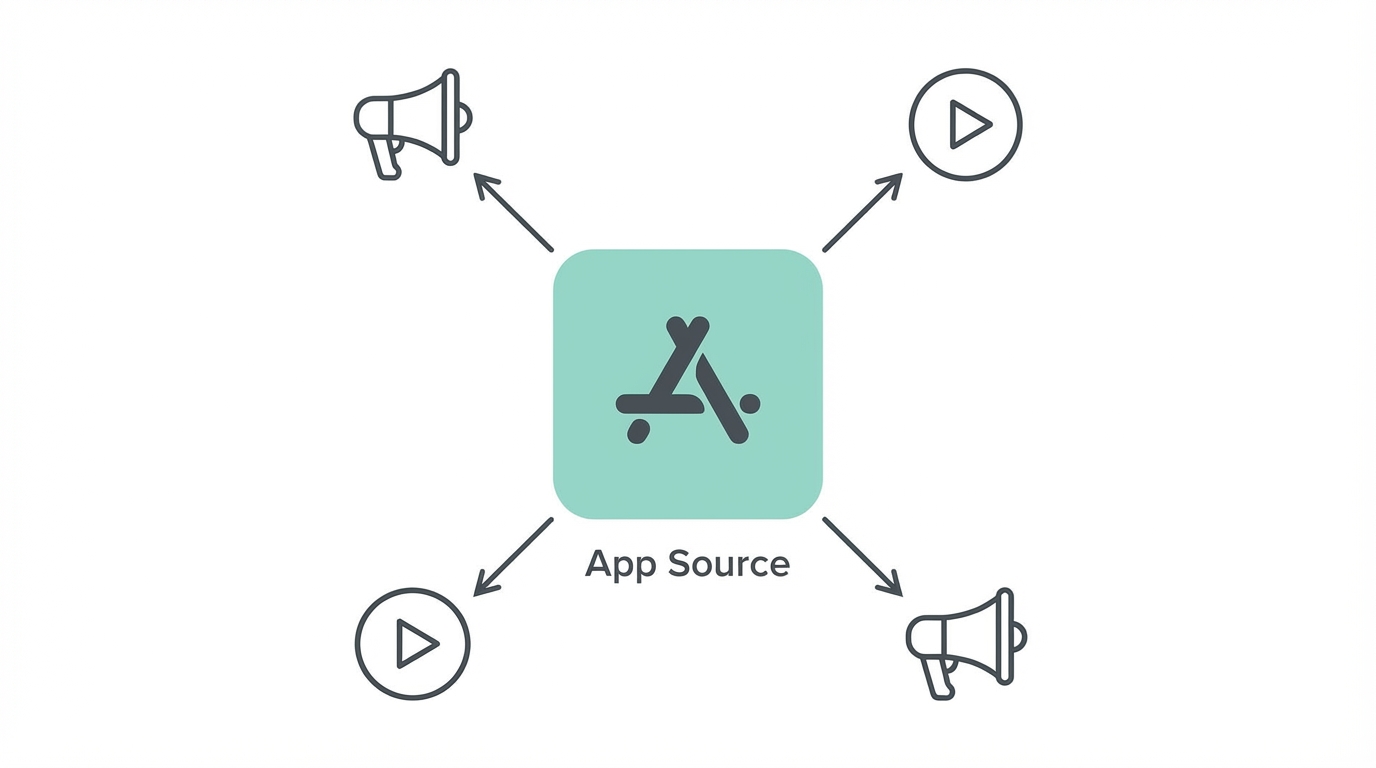
Once you have validated the idea with your first 100 customers, the focus shifts from ideation to scaling. Joseph used a two-pronged strategy: User-Generated Content (UGC) and Google Ads. UGC acts as the 'social proof' that educates the market on why they need your specific solution. Since 'AI-humanizer' tools were a new category, he had to show people why they needed it through video demonstrations on TikTok and Instagram.
Once the educational phase was working, he poured gasoline on the fire using Google Ads. By targeting high-intent keywords, he was able to achieve a cost per conversion of $10-$20 in the early days. This allowed him to reinvest profits back into the business, eventually reaching a marketing spend of nearly $100,000 per month. Scaling isn't about doing new things; it's about doing more of what worked during validation.
Managing this growth requires a robust system. Stormy's creator CRM is designed to help founders manage these relationships as they scale. When you're dealing with dozens of influencers and thousands of dollars in ad spend, having a central hub to track deal stages and collaboration history is the difference between a disorganized side project and a professional $2M operation. Additionally, you can use Stormy's post tracking to monitor the performance of every UGC video to see which creators are actually driving signups.
Conclusion: Your 30-Day Challenge
The gap between a $150 domain and a $200k MRR business is smaller than you think, but it requires a shift in how you view social media. Stop scrolling for dopamine and start scrolling for friction. Look for the tensions between new AI capabilities and the gatekeepers trying to regulate them. Use the 'Problem-Pissed-Off' framework to ensure you are solving a real pain point, and build for a broad audience to maximize your upside.
Your actionable takeaway: Spend the next 48 hours auditing your TikTok and X timelines. Identify three instances where users are complaining about a limitation of a current AI tool. Use Stormy's AI vetting and analysis to see if the creators mentioning these problems have an engaged audience that would pay for a solution. Then, commit to a 30-day build. In the age of AI, the only real failure is waiting too long to start. The tools are free, the stack is fast, and the market gaps are wider than ever. Go find yours.