By the time 2026 arrived, the traditional freelancing landscape had undergone a radical transformation. The days of trading hours for dollars, competing in race-to-the-bottom bidding wars, and suffering through the feast-or-famine cycle are effectively over. Modern entrepreneurs have realized that scalability isn't found in more hours; it's found in better systems. One of the most compelling examples of this shift is the story of Nick Buzz, an anonymous designer who scaled his design subscription agency, 'Baked,' from a side project to a staggering $160,000 monthly recurring revenue (MRR).
His journey, documented by Starter Story, serves as a masterclass for any creator or agency owner looking to break free from the freelance trap. This guide breaks down the actionable playbook for building a productized service business model that delivers high-margin results without the typical burnout associated with high-growth firms.
The Death of the Freelance Hourly Rate (2026)
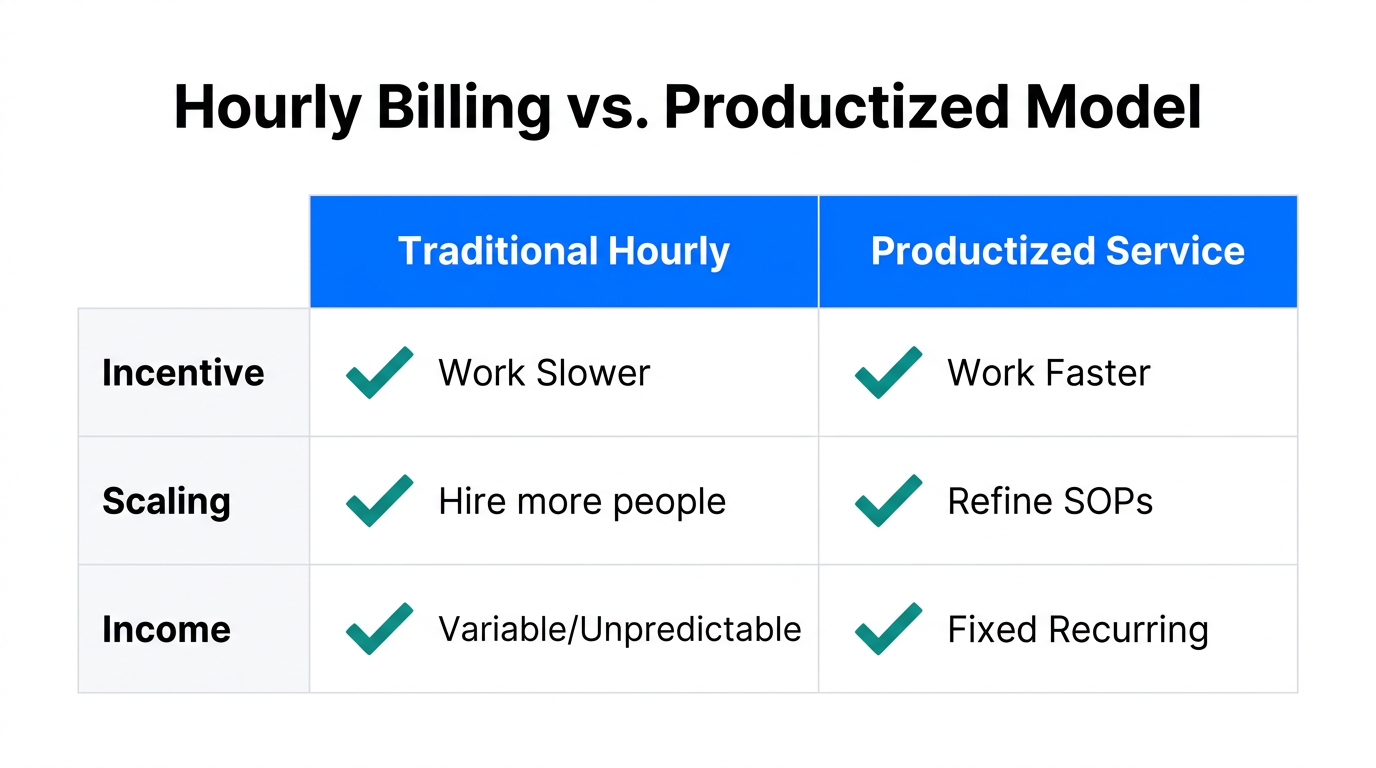
In the current 2026 market, efficiency is the most valuable currency. However, in the old-school hourly billing model, efficiency is actually punished. If you get better and faster at your job, you make less money. Nick Buzz experienced this firsthand. Starting in India, he participated in over 200 logo design contests, often winning a mere $200 after weeks of work. This model required him to work 16 to 20 hours a day just to sustain a basic lifestyle in Canada after he emigrated at age 17.
The transition to a subscription-based model is the primary driver for scaling a design agency in 2026. When you move from a project-based fee to a recurring subscription, you provide the client with predictable costs and yourself with predictable revenue. This predictability is what allowed Nick to move from struggling to pay for a haircut to paying $5,000 a month for a nanny without a second thought.
"I was making around $80,000 or $90,000 a year doing freelancing, but I was burnt out. I was working 16 to 20 hours a day with no friends and no personal life. I didn't like the direction I was going in."
Understanding the Productized Service Business Model
Learn how Nick transitioned into a recurring revenue model earning $48,000 monthly.
The productized service model takes a traditionally custom service and packages it like a software product. For Nick and his agency, Baked, this meant offering a high-ticket design subscription. Instead of quoting every new landing page or UI element individually, clients pay a flat monthly fee for a set number of active requests.
This model succeeds because it removes the friction of sales. Once a client is in the ecosystem, there are no more proposals, no more invoices for small tweaks, and no more scope creep. Everything is handled within the subscription framework. To validate this model, many founders look to the Starter Story database, which tracks thousands of these types of businesses, showing that the monthly recurring revenue for creators is most stable when the service is essential and the pricing is transparent.
| Feature | Traditional Freelancing | Productized Service (2026) |
|---|---|---|
| Pricing | Hourly or Per-Project | Flat Monthly Subscription |
| Sales Cycle | Heavy (Proposals/Calls) | Light (Landing Page/Checkout) |
| Predictability | Low (Feast or Famine) | High (Recurring Revenue) |
| Scalability | Linear (Limited by Hours) | Exponential (Leveraged via Systems) |
The Psychology of High-Ticket Sales: From $200 to $5,000
One of the hardest mental shifts for designers is moving from the "commodity" mindset to the "partner" mindset. When Nick was winning $200 contests, he was a commodity. When he started charging $4,317 per month for Baked, he became a strategic partner. High-ticket client acquisition in 2026 relies on the perception of scarcity and specialized expertise.
Nick’s breakthrough came when he realized that clients at the $5,000/month level aren't just paying for pixels; they are paying for the elimination of a headache. They want a reliable design partner they can rely on without having to manage a full-time employee. By positioning his service at a premium price point, he filtered out the difficult, low-budget clients and attracted high-growth startups and B2B tech companies.
For those managing these relationships, using a dedicated Creator CRM helps track these high-value interactions and ensures that no client feels neglected, which is critical when they are paying five figures annually.
The Twitter Funnel: Leveraging "Tiny UI" and Social Proof
See how simple social media posts transformed into high-value leads and clients.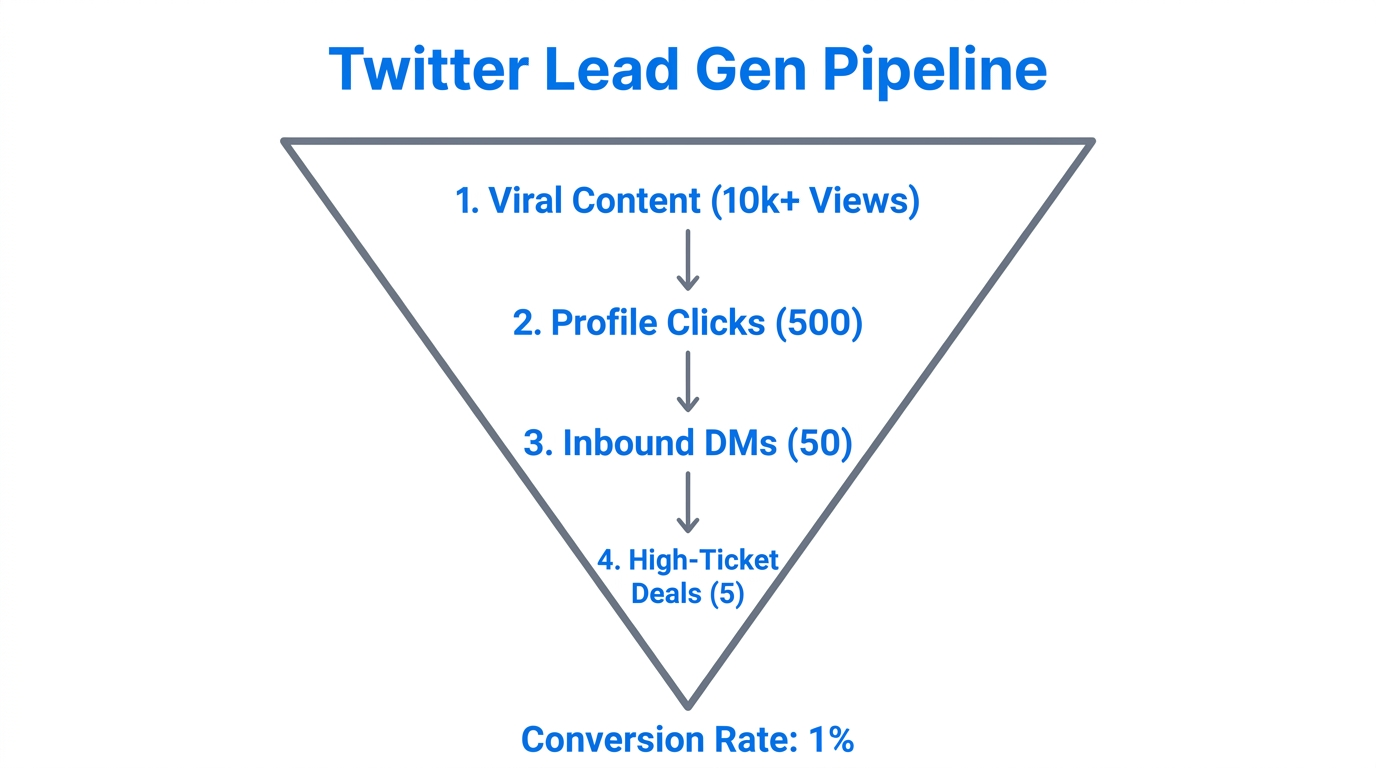
Nick Buzz's strategy for social media sales funnels was unique: he chose to remain anonymous. In an era of personal branding, he proved that you could still scale to $160K MRR without showing your face. His primary engine was Twitter (now X), where he focused on two specific types of content:
- Tiny UI Posts: Small, high-quality snippets of design work that showcased immediate skill without requiring a massive portfolio.
- The "Roast" Strategy: Nick would take existing landing pages, quote-tweet them with design improvements, and show—rather than tell—his expertise.
This aggressive, authentic marketing style created a consistent flow of leads. One specific "Tiny UI" post—which Nick initially thought was his worst product—ended up landing his first $4,000+/month client. The lesson here is that consistency in the public eye beats perfection in private.
To automate this process in 2026, many agencies are now using Stormy AI to identify high-growth accounts on Twitter and TikTok that are currently hiring or scaling their marketing efforts. By finding these leads through AI-powered social search, agencies can target their "roasts" or UI suggestions toward companies that actually have the budget to hire a $5,000/month agency.
Operational Scaling: Hiring for Quality of Life
Discover the moment the business started hiring to manage rapid growth and operations.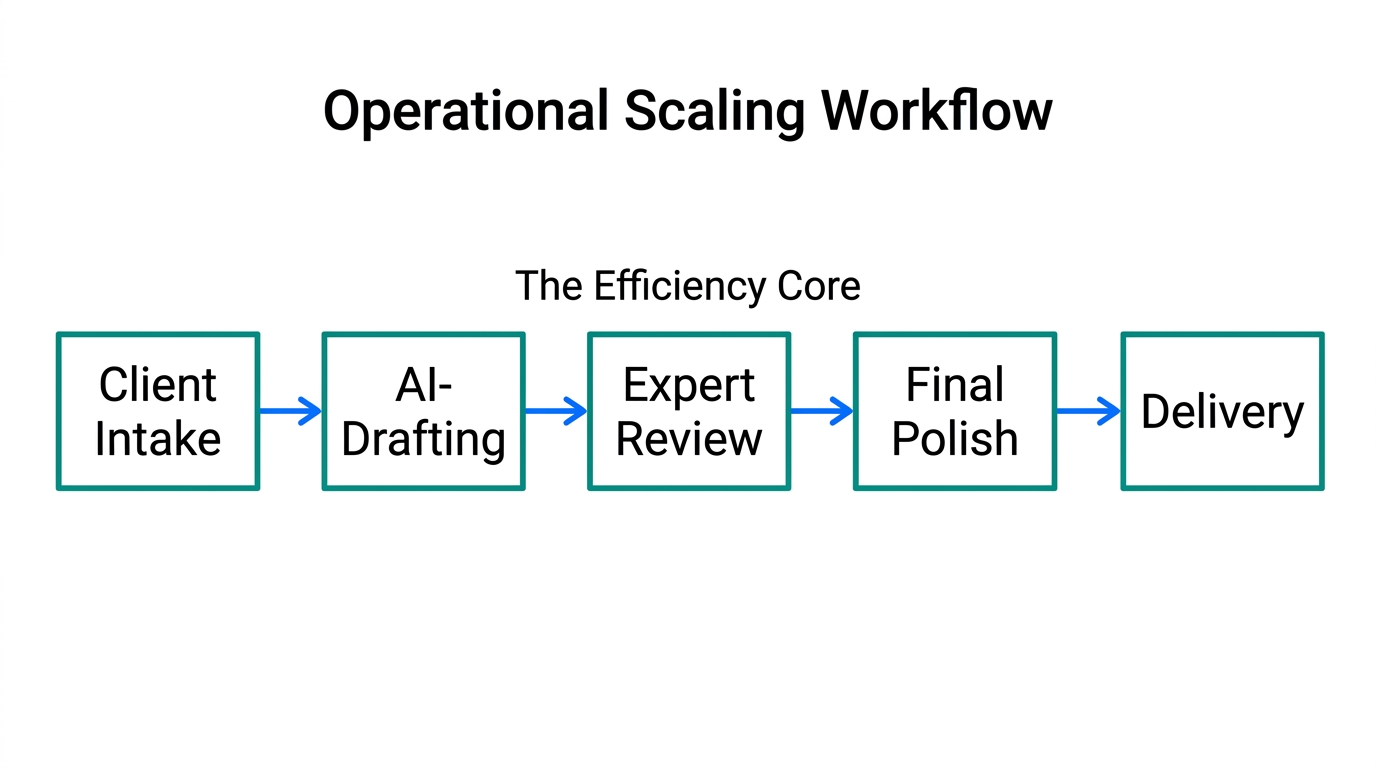
As Baked scaled from $24,000 to $160,000 MRR in just a few months, Nick hit a wall. Managing 12+ projects simultaneously led to working 20-hour days. Scaling a design agency in 2026 requires a shift from being the "doer" to being the "director."
Nick’s operational playbook involved a lean team structure managed in tools like Notion:
- Core Team: Two founders (Nick and Alex) handling high-level strategy and initial delivery.
- Full-Time Support: One full-time designer to handle the bulk of subscription requests using modern tools like Framer and Figma.
- Scalable Layer: A roster of part-time freelancers to handle overflow during peak months.
This structure allowed him to maintain a high quality of life. Instead of being trapped by the business, the business now funds his life, allowing him to hire help and spend time with his newborn child. This is the ultimate goal of the productized service business model: decoupling your income from your personal time.
Market Validation: Using the Starter Story Database
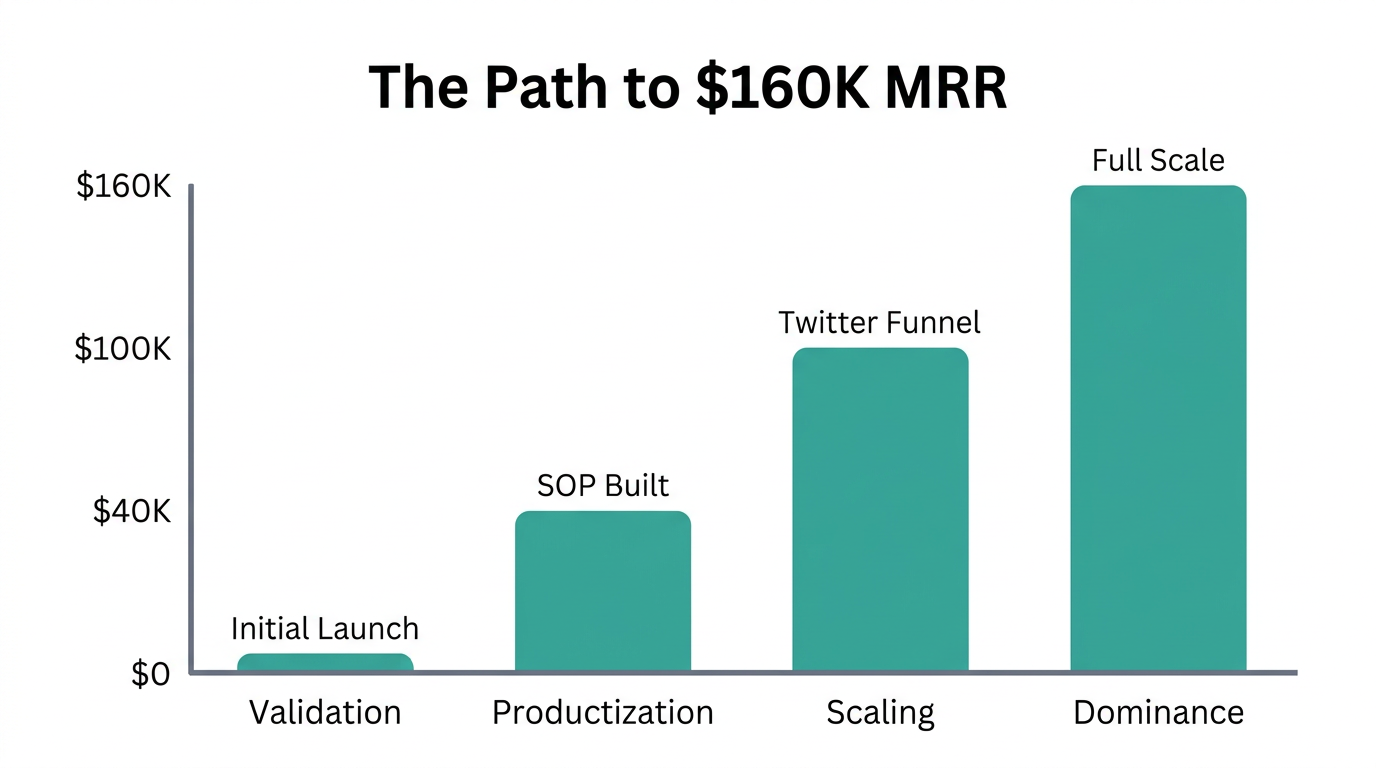
Before launching Baked, Nick was skeptical. He didn't believe the market needed another design subscription agency. However, market validation isn't about finding a "gap" where no one is working; it's about finding a proven model with high demand. By analyzing successful cases on Starter Story, founders can see that the design subscription space is massive and can support hundreds of specialized players.
In 2026, the best way to validate an idea is to look at the data of what is already working. If people are paying $5,000/month for a generalist design agency, they will likely pay $7,000/month for one specialized in FinTech UI. Use resources like Crunchbase or Starter Story to study the pricing, tech stacks, and acquisition channels of your competitors before you write a single line of code or design a single logo.
The 2026 Playbook Summary
Scaling to $160K MRR isn't an overnight feat, but the path is clearer than ever. By following Nick Buzz’s lead and the data provided by platforms like Starter Story, you can build a business that serves your life rather than consumes it.
Step 1: Stop billing by the hour. Package your expertise into a productized service business model with a clear, high-ticket price tag.
Step 2: Build a social media sales funnel by providing value in public. Whether it's "roasting" landing pages on X or sharing UI tips on LinkedIn, show your work daily.
Step 3: Use AI tools to find and vet leads. Platforms like Stormy AI can help you discover which brands are growing and likely need your high-ticket services, saving you hours of manual prospecting.
Step 4: Scale your operations through a mix of full-time talent and flexible freelancers. Support your growth with a newsletter platform like Beehiiv to maintain long-term audience ownership.
As Nick's father—who once doubted that "scribbles" could make money—now understands, design is a powerful business lever. In 2026, the only limit to your agency's growth is the systems you choose to build. Trust the process, stay authentic (even if you're anonymous), and take the leap into the world of productized services.