In 2026, the dream of building a software-as-a-service (SaaS) company is more alive than ever, but the path to success has fundamentally shifted. Gone are the days when you could simply "build it and they will come" or rely on bloated venture capital rounds to figure out your product-market fit. The most successful founders this year aren't starting with code; they are starting with services. This is the era of the productized SaaS business model—a strategy that allows you to validate your idea, generate immediate cash flow, and build a $1M+ ARR company without giving away a single percentage of equity.
A prime example of this strategy is List Kit, a platform that provides verified B2B lead lists. Founded by Andre Heckle Jr. and his team, List Kit achieved a staggering $1 million ARR within just 87 days of its official software launch. But as Andre recently shared in an interview with Starter Story, this was not an overnight success. It was the result of a calculated 7-year journey from manual lead generation to a high-scale tech platform. This guide breaks down the exact blueprint you can follow to replicate this saas go-to-market plan 2026.
The Productized SaaS Advantage: Why Services Come First
Understand the core benefits of a SaaS model that allows for faster, cheaper builds.
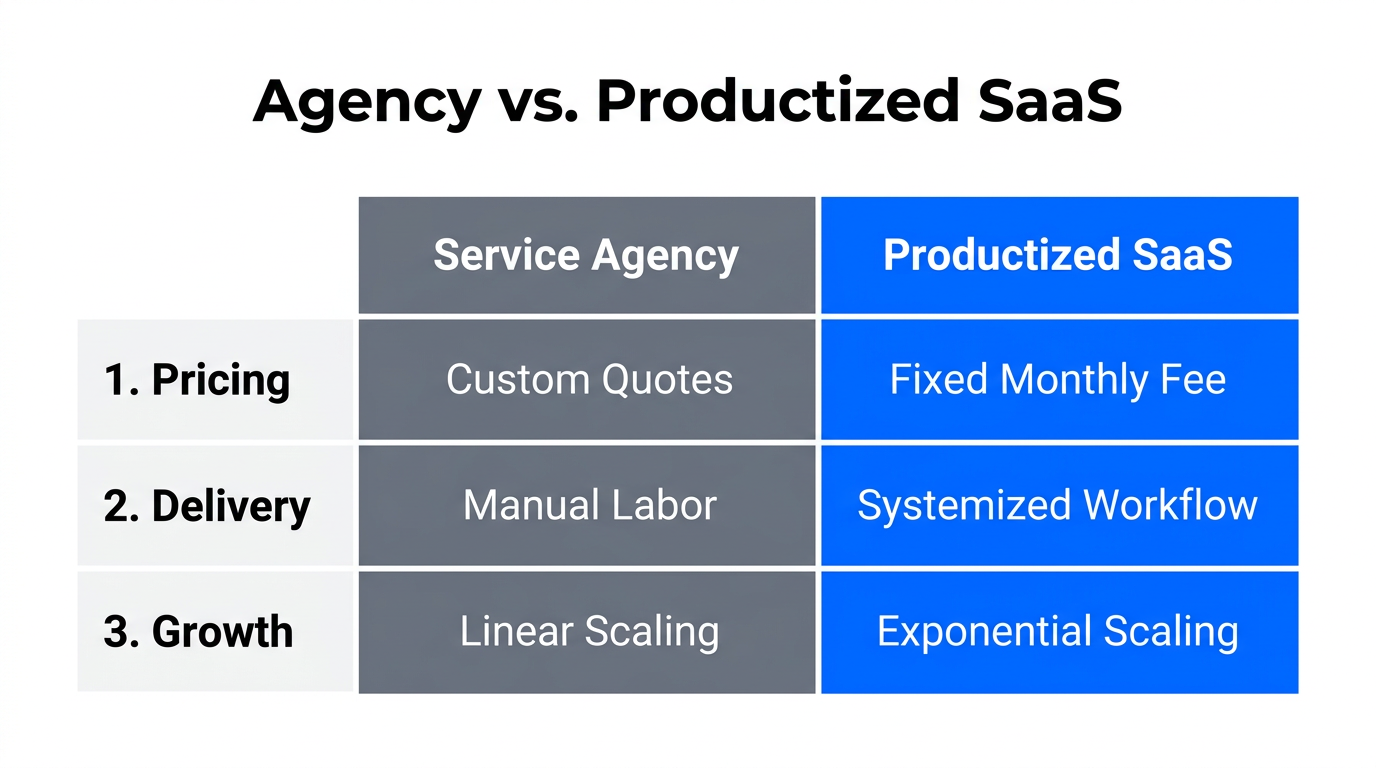
Before diving into the technical roadmap, it is crucial to understand what a "productized SaaS" actually is. In the early stages, the front-end of your business looks like a software platform—customers visit a landing page, select a pricing tier, and purchase a solution. However, the back-end is fulfilled manually by a team rather than an automated algorithm. This approach, which Andre and his co-founders mastered, offers three distinct advantages for the bootstrap saas roadmap:
- Zero Initial Development Cost: You don't need to spend $50,000 on developers to see if people want your product. You use a simple landing page and a manual fulfillment process.
- Deep Market Research: Manual fulfillment forces you to see exactly what users struggle with. You identify the bottlenecks in existing solutions like Apollo or ZoomInfo before you ever write a line of code.
- Immediate Cash Flow: Instead of burning through personal savings, you use the $5,000 to $10,000 in monthly profits from your service to fund your eventual software development.
"The way we built SAS is the way I think everyone should build a SAS: find something that's already proven... and find out what don't people like about them? Where are the bottlenecks?"Phase 1: The Manual Agency Foundation
The first step in the List Kit journey was not software; it was a high-ticket lead generation agency. Andre and his partners, including Daniel Fazio (known as Co-Wizard), grew an agency to $100k per month by doing manual cold email outreach for clients. This phase is critical because it builds domain expertise. You cannot automate a process that you haven't mastered by hand.
During this stage, the team was essentially a laboratory. They realized that the biggest pain point in cold email wasn't the writing of the emails—it was the quality of the data. They found that many leads from legacy platforms were unverified, leading to high bounce rates and burned domains. This insight became the foundation for their saas go-to-market plan 2026. If you are starting today, look for similar gaps in industries like creator marketing. For instance, while platforms like Stormy AI have revolutionized AI-powered creator discovery, many agencies still struggle with the manual vetting of influencer quality—a perfect opportunity for a productized service.
Phase 2: Transitioning to a Productized Service
Learn how starting as a productized service provided the foundation for scaling their software.Once you have a service that works, the next step in the agency to saas transition is to "productize" it. This means removing the custom, high-ticket proposals and replacing them with standardized packages. In the case of List Kit, they stopped offering full-service agency management and started offering "Lead Lists" as a standalone product. The customer would go to their site, order 1,000 leads for a flat fee, and receive a CSV file within 24 hours.
| Feature | Traditional Agency | Productized Service | Full SaaS |
|---|---|---|---|
| Onboarding | Custom sales calls | Standardized web form | Self-serve dashboard |
| Pricing | Variable/Retainer | Fixed price per unit | Monthly Subscription |
| Fulfillment | Customized strategy | Manual standardized process | Automated via API/Code |
| Scalability | Low (needs more experts) | Medium (needs more VAs) | High (needs more server capacity) |
This phase allows you to build a waitlist of eager buyers while generating the capital needed for technical development. Andre notes that they reinvested $5k to $10k per month from their productized service directly into developers. However, this is where many founders fail. Andre himself spent months burning money on developers who couldn't deliver a functional product until he found the right technical partner.
Phase 3: The 87-Day Sprint to $1M ARR
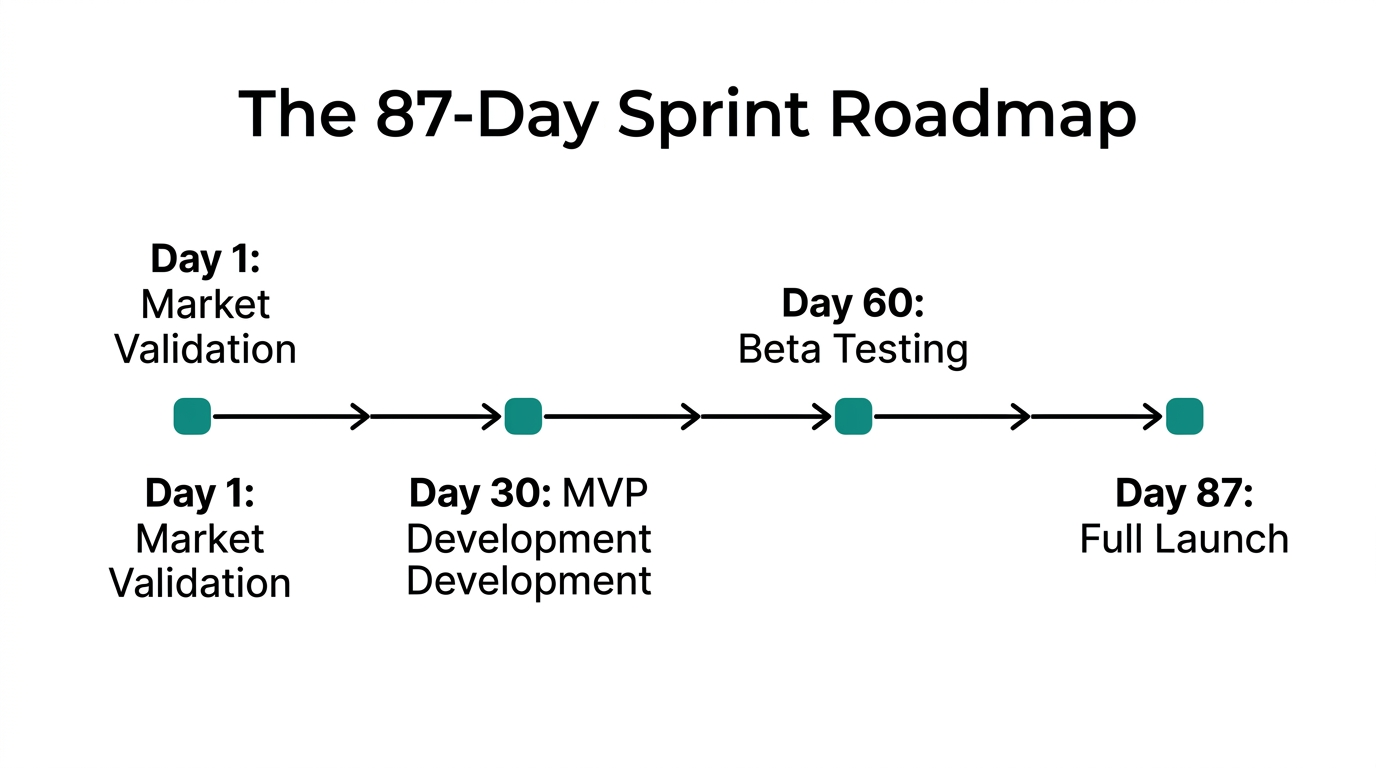
The transition from a productized service to a $1M ARR SaaS happened in a whirlwind 87 days, but only because the foundation was indestructible. By the time they launched the actual software, they already had a massive advantage: an existing customer base. When they relaunched List Kit as a self-serve platform, they didn't have to look for customers. They just had to convert their service clients into software users.
Step 1: The Community Feedback Loop
Before writing the final code, they stayed in constant contact with their service customers. They asked: "What do you want to see in the dashboard?" and "What features from our competitors do you hate?" By involving the community in the build, they created pre-launch hype. Their story of struggle—burning money on bad developers—made the final launch a human triumph that their audience wanted to support.
Step 2: Pricing for Profitability
Andre’s team avoided the "free trial" trap. Instead of attracting "freebie seekers," they implemented a money-back guarantee on a low-ticket $97/month starter plan. This allowed them to collect cash upfront while still offering a risk-free experience. In the 2026 SaaS landscape, cash flow is king. If your software solves a real pain point, people will pay for it from day one.
"I just think a free trial attracts the wrong buyer... they're not a buyer, you're attracting freebie seekers. Instead, we added a money-back guarantee... we could still frame it like a free trial but collect money right away."The Growth Engine: How to Scale Past the First Million
Deep dive into the advertising and marketing strategies that act as a primary growth engine.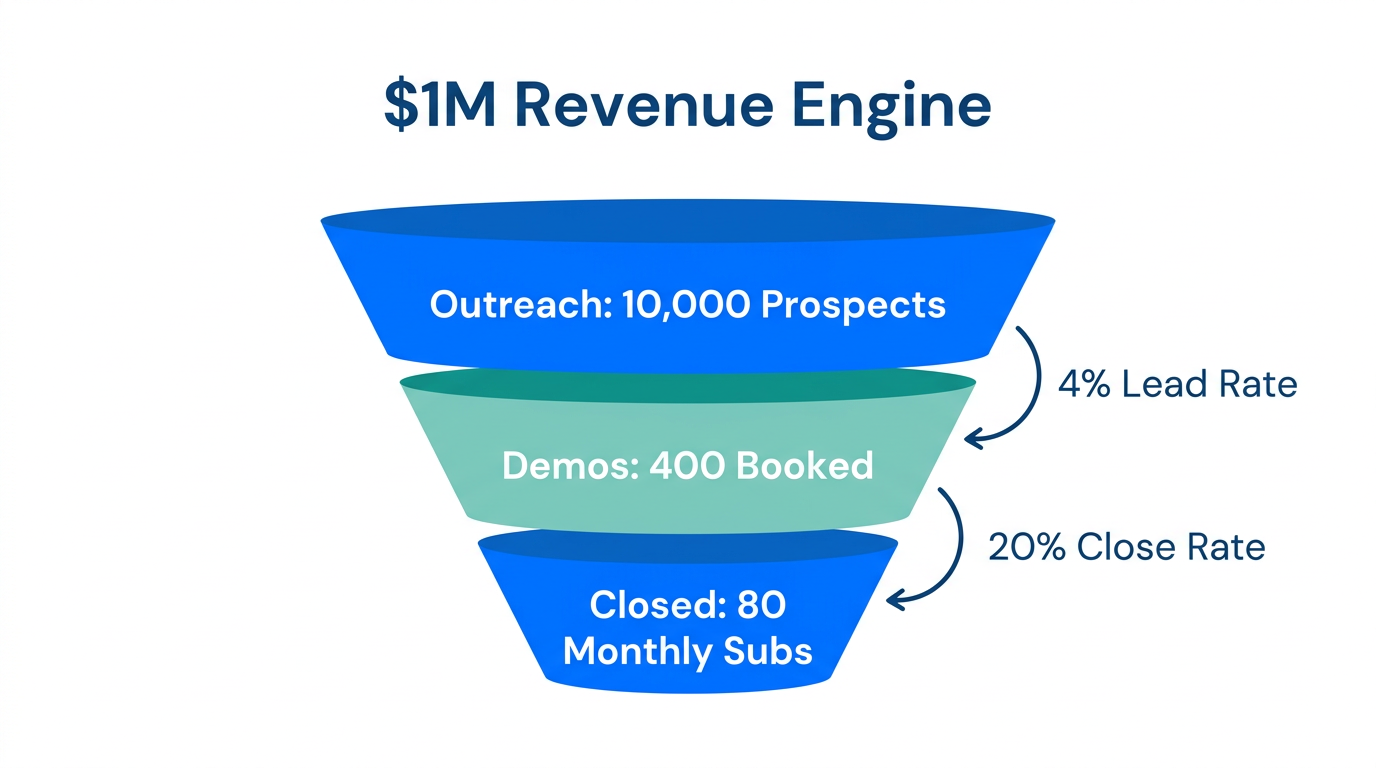
Scaling a SaaS to $200k MRR requires a multi-channel growth engine. For List Kit, this was a combination of cold email lead magnets and aggressive paid advertising. They didn't just sell the software; they sold the result.
- The Lead Magnet Strategy: Instead of asking people to buy software, their cold emails offered "50 free leads." If the leads were high quality, the customer naturally wanted to sign up for the platform to get more.
- Paid Ads & Creative Volume: As they scaled to $150k+ in monthly spend, they realized that ad fatigue is real. They now test 20 new creatives every week—10 static images and 10 videos—using platforms like Meta Ads Manager and TikTok Ads.
- Ecosystem Marketing: They leveraged their other businesses, like Client Ascension, to funnel high-intent users into the software.
For founders in the creator economy space, this growth model can be mirrored by using tools like Stormy AI to identify high-growth influencers and then using that data as a lead magnet for a specialized outreach service. By 2026, the integration of AI discovery and manual outreach is the winning formula for B2B growth.
The Operational Secret: Global Talent & Co-Founder Synergy
One of the most striking parts of the List Kit growth strategy is their team structure. While they have over 40 team members, they maintain profitability by hiring global talent. By utilizing developers in Ukraine and customer success representatives in Lebanon, they access world-class talent at a fraction of US costs—paying $1,000 to $2,000 a month for full-time roles that would cost $8,000 in the States.
Furthermore, Andre emphasizes that his co-founder team is his biggest secret weapon. To build a million-dollar SaaS, you need four distinct pillars of expertise:
- The Team Leader (CEO): To set the vision and align the team (Andre).
- Marketing Geniuses: To handle funnels, ads, and content (Daniel and Christian).
- The Sales Powerhouse: To lead the sales team and close enterprise deals (Dan).
- The Technical Architect (CTO): To ensure the product actually works (Oliver).
Conclusion: Your 2026 Roadmap to SaaS Success
Closing advice and actionable steps for entrepreneurs aiming for success in the 2026 market.Building a million-dollar SaaS in 2026 doesn't require a $10M seed round or a 100-person engineering team. It requires patience, domain expertise, and a productized approach. The List Kit story proves that the most sustainable way to build software is to solve the problem manually first, build a cash-flowing service front-end, and then automate the solution once you have proven the demand.
If you are ready to start your journey, remember Andre’s advice: it is an inputs game. You cannot control the market, but you can control how many leads you scrape, how many ads you test, and how many customers you talk to. Stay consistent, reinvest your profits, and look for the bottlenecks in the tools people already use. Whether you are building the next lead-gen giant or using Stormy AI to dominate the influencer marketing space, the blueprint remains the same: Service first, Software second, Scale third.