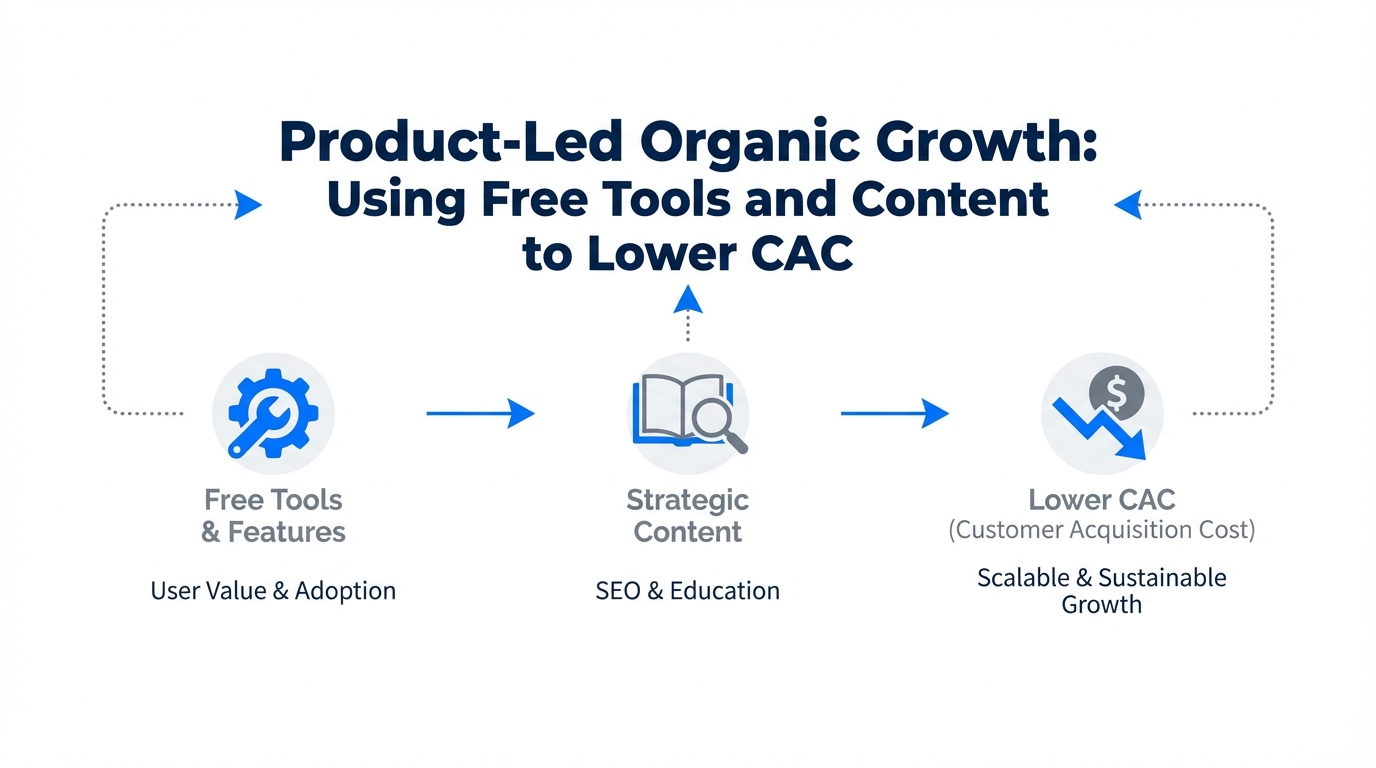
In an era where digital noise has reached a deafening crescendo, the traditional playbook of throwing money at paid search is failing. Customer Acquisition Costs (CAC) for paid search have skyrocketed by 60% over the last five years, forcing growth leads to rethink their entire saas user acquisition model. The future of sustainable growth isn't found in the next ad hack; it’s found in Product-Led Organic Growth. By transforming your product’s utility into a magnet for high intent organic traffic, you can build a self-sustaining engine that lowers CAC while increasing lead quality.
The New Economics of Acquisition: Why Organic Wins
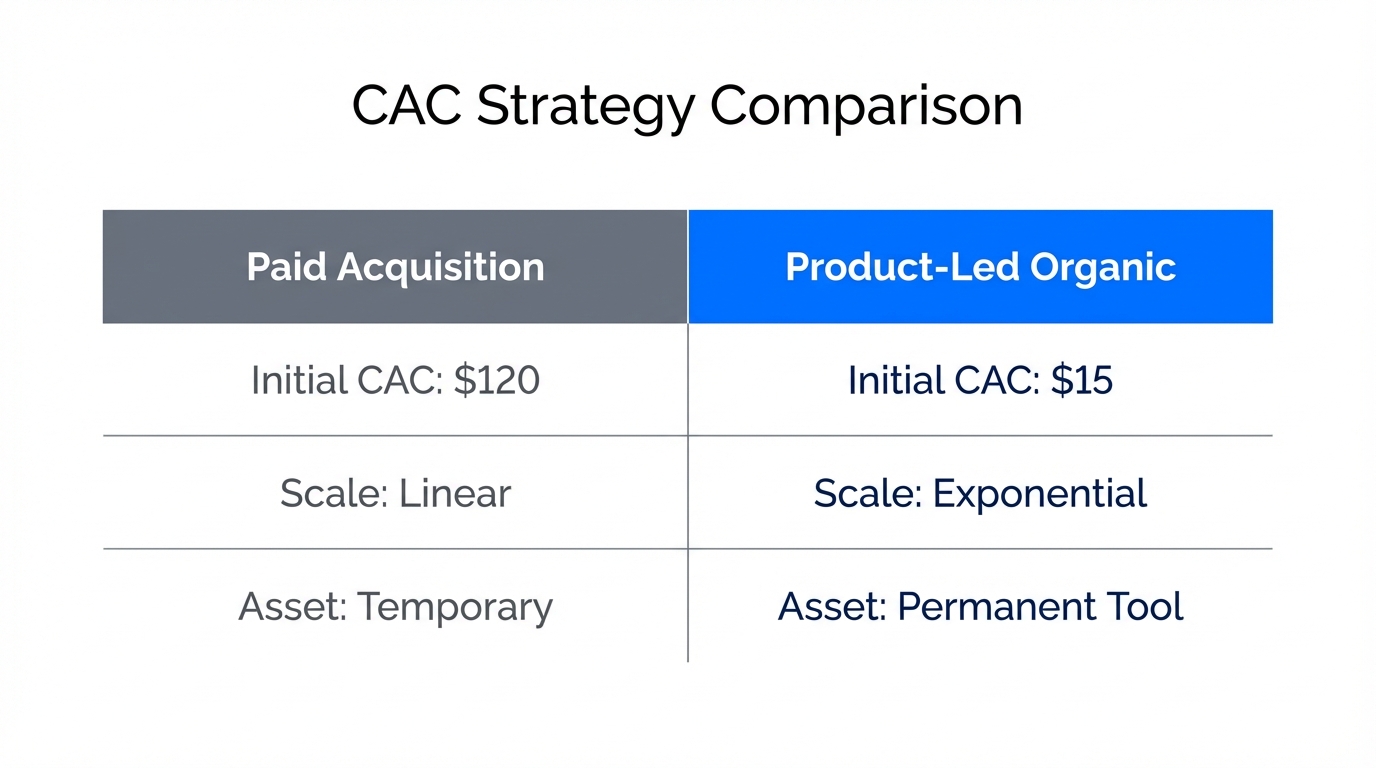
The gap between organic efficiency and paid performance has never been wider. While paid ads offer immediate feedback, they lack the compounding returns inherent in a robust inbound marketing playbook. According to recent benchmarks from First Page Sage, organic SEO in the Financial Services sector converts at 7.3x the rate of PPC. This isn't just an outlier; even in competitive industries like Real Estate, the conversion gap remains a staggering 3.5x.
This efficiency stems from the psychological state of the user. A user searching for a solution is in an active problem-solving mode, whereas a user seeing an ad is often in a passive consumption mode. When you align your content with that active search intent, your content marketing ROI scales significantly. On average, content marketing generates $3 for every $1 invested, nearly double the $1.80 returned by paid advertising channels according to industry benchmarks.
The Inbound Ecosystem Model: Free Tools as Lead Magnets
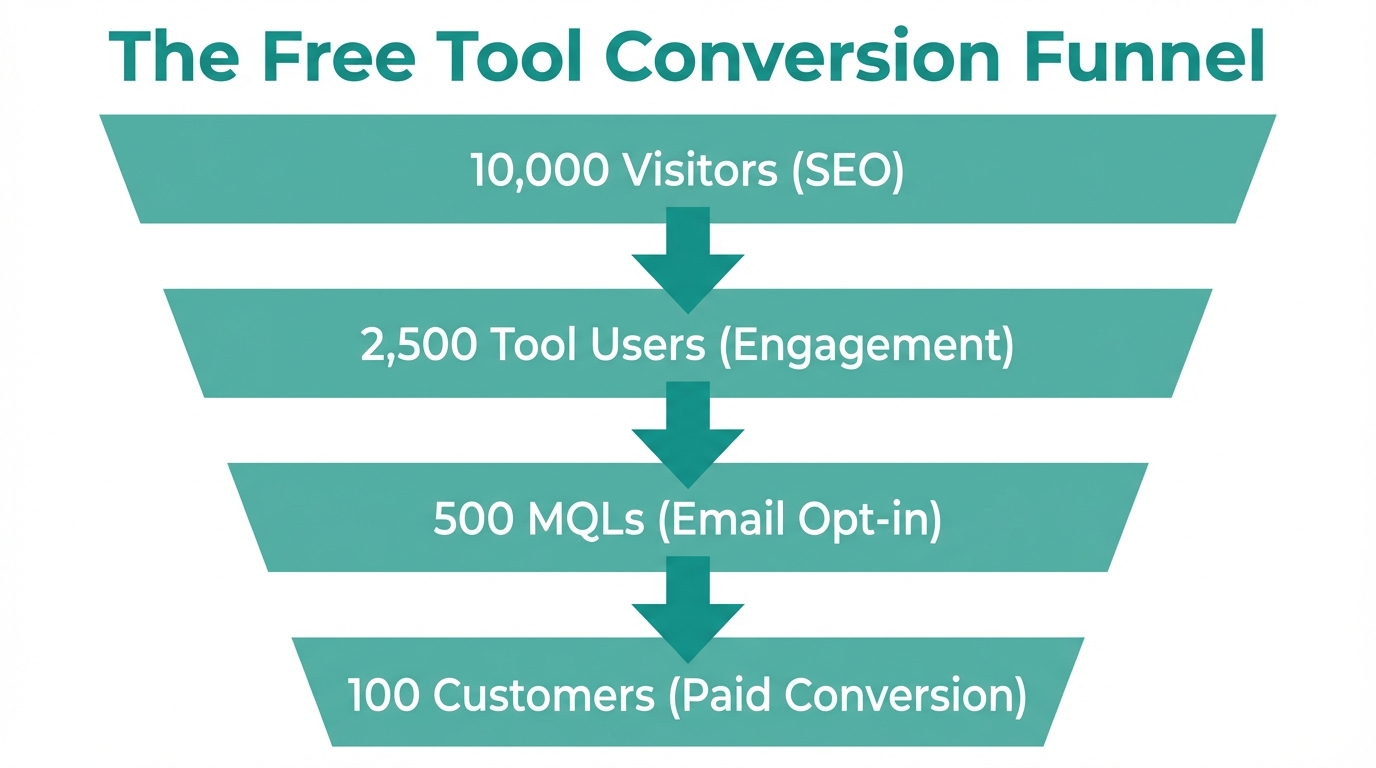
Early pioneers in the SaaS space didn't just build software; they built an entire ecosystem of free tools that solve micro-problems for their target audience. This is the gold standard for a product led growth strategy. Whether it’s a Website Grader, an Email Signature Generator, or comprehensive educational hubs, these tools act as high-value entry points into the sales funnel.
"Your content shouldn't just talk about the problem; it should provide a functional slice of the solution before the user ever enters a credit card."
By offering utility-based content, you capture users at the top of the funnel (ToFu) and move them toward the middle of the funnel (MoFu) with zero friction. For a SaaS company, this might look like a ROI calculator, a technical audit template, or a compliance checklist. These assets are "evergreen"—once built, they continue to attract traffic for years with minimal maintenance. This strategy is particularly effective because it satisfies the search engine’s desire for high-utility, original content while providing the user with immediate value.
| Strategy Type | Primary Goal | Typical ROI Expectation |
|---|---|---|
| Paid Search (PPC) | Immediate Lead Gen | $1.80 per $1 spent |
| Content Marketing | Authority & Trust | $3.00 per $1 spent |
| Product-Led (Free Tools) | High Intent Capture | Exponential / Compounding |
SaaS Case Study: How Tallyfy Reached 200k Monthly Visitors
Scaling from zero to 200,000 monthly organic visitors isn't a matter of luck; it's a matter of systematic competitor analysis. Tallyfy achieved this by identifying "easy win" long-tail terms that their larger competitors had neglected. Instead of trying to outrank incumbents for massive, generic keywords, they focused on highly specific user queries and competitor comparisons.
By using a long-tail competitor analysis approach, they created pages that directly addressed the frustrations users had with legacy tools. This "Search Everywhere" mindset allows smaller players to dominate niche verticals. For businesses today, this means looking beyond Google. Up to 40% of Gen Z now uses TikTok or Instagram for search, making it vital to distribute these insights across multiple platforms to ensure your brand is discovered where the user already lives.
Bridging the Gap Between Informational and Transactional
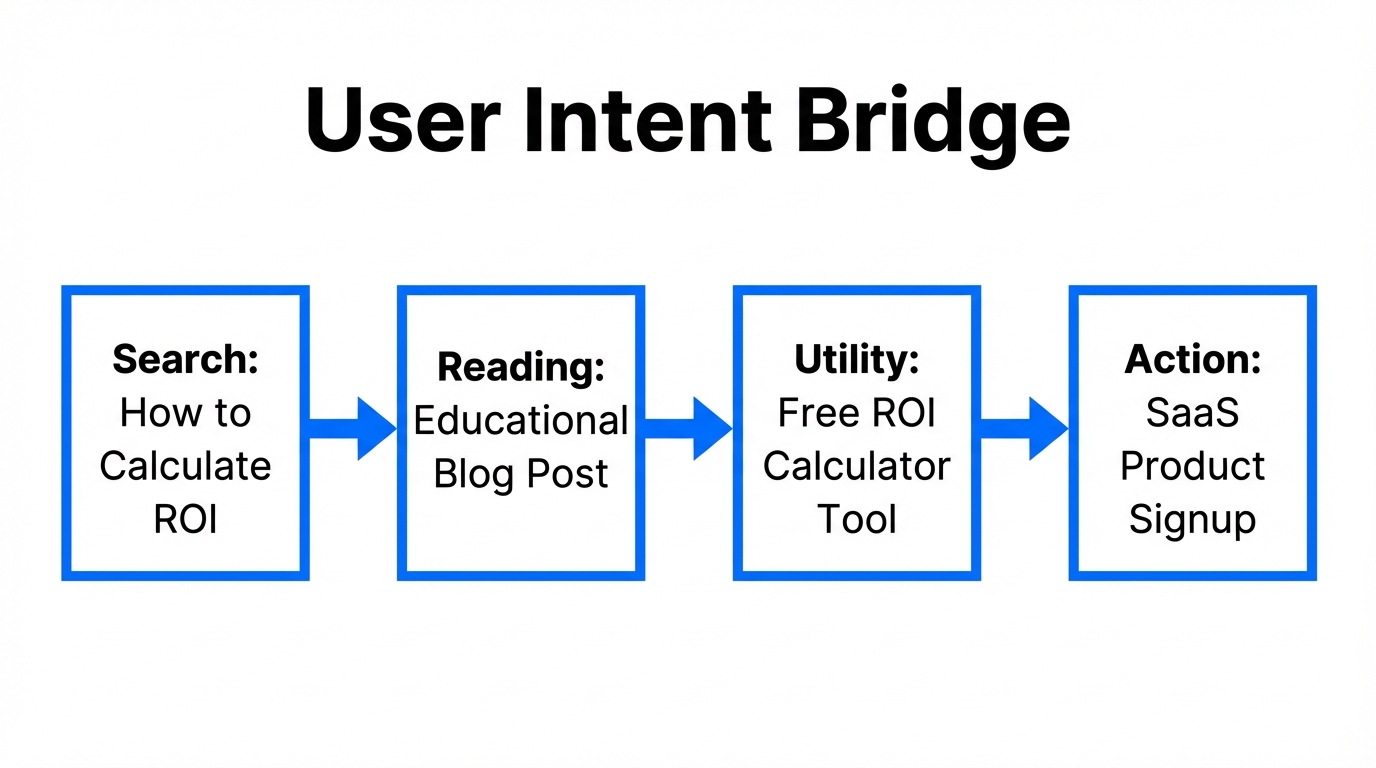
A common pitfall in organic growth is intent mismatch. This occurs when a brand creates informational content (e.g., "What is a CRM?") for a user who has transactional intent (e.g., "Best CRM for startups"). If you provide a 1,000-word essay to someone looking for a pricing table, they will bounce instantly. Conversely, self-promotional content on informational keywords is often ignored by modern AI-driven search engines because it doesn't solve the user's specific problem.
The Role of User-Generated Content (UGC)
In the transition from informational search to transactional trust, human authenticity is the new currency. As AI-generated text saturates the internet, users are hungry for "Lived Experience" (E-E-A-T). This is where platforms like Stormy AI become invaluable for brands. By sourcing authentic UGC creators and managing those relationships via an AI-powered CRM, brands can generate content that feels human because it is human. This authenticity is a primary ranking signal in the "Search Everywhere" era, where a Reddit thread or a TikTok review often carries more weight than a corporate blog post.
Technical SEO Infrastructure: The Silent Killer
You can have the best inbound marketing playbook in the world, but if your site is slow, your organic growth will stall. Technical SEO infrastructure—specifically Core Web Vitals—is the silent killer of organic traffic. Factors like Largest Contentful Paint (LCP) and Cumulative Layout Shift (CLS) are now direct ranking factors. A poor mobile experience can lead to a significant drop in visibility, especially since mobile app downloads reached 136 billion in 2024 and mobile-first indexing is the standard.
For brands operating in the mobile app space, organic growth isn't just about web SEO. It includes strategies like OEM & Dynamic Preloads. By partnering with manufacturers like Samsung or Xiaomi, apps can achieve conversion rates of 10% to 40% during initial device setup. This is organic growth at the hardware level, bypassing the competitive noise of the App Store altogether (AVOW).
Navigating the AI Search Revolution (GEO)
The rise of AI-driven search, or Generative Engine Optimization (GEO), is fundamentally changing how we define saas user acquisition. Gartner predicts a significant reduction in traditional search engine volume, but there is a silver lining. Traffic originating from AI assistants currently converts at a higher rate than traditional search for many high-intent niches.
"We are moving from an era of ranking for keywords to an era of being cited by entities. Your goal is to become the trusted source that the AI chooses to reference."
To succeed in this environment, brands must optimize for Answer Engine Optimization (AEO). This involves creating snippet-ready summaries, using structured Schema data, and maintaining a high-authority presence on platforms like Reddit and YouTube. Leveraging Stormy AI to discover and collaborate with niche creators can help build the external signals and "social proof" that AI engines look for when determining entity authority.
Essential Tools for Organic Growth
Building a product-led engine requires a tech stack that can measure more than just clicks. You need to understand the entire user journey, from the first search query to the final conversion.
| Category | Recommended Platforms |
|---|---|
| SEO & Discovery | Ahrefs, Semrush, SearchAtlas |
| Analytics & Attribution | AppsFlyer, Mixpanel, Contentsquare |
| Content & Social | Buffer, CoSchedule, Optimizely |
| Mobile Growth | Zoomd, Singular |
The Product-Led Playbook: Summary and Next Steps
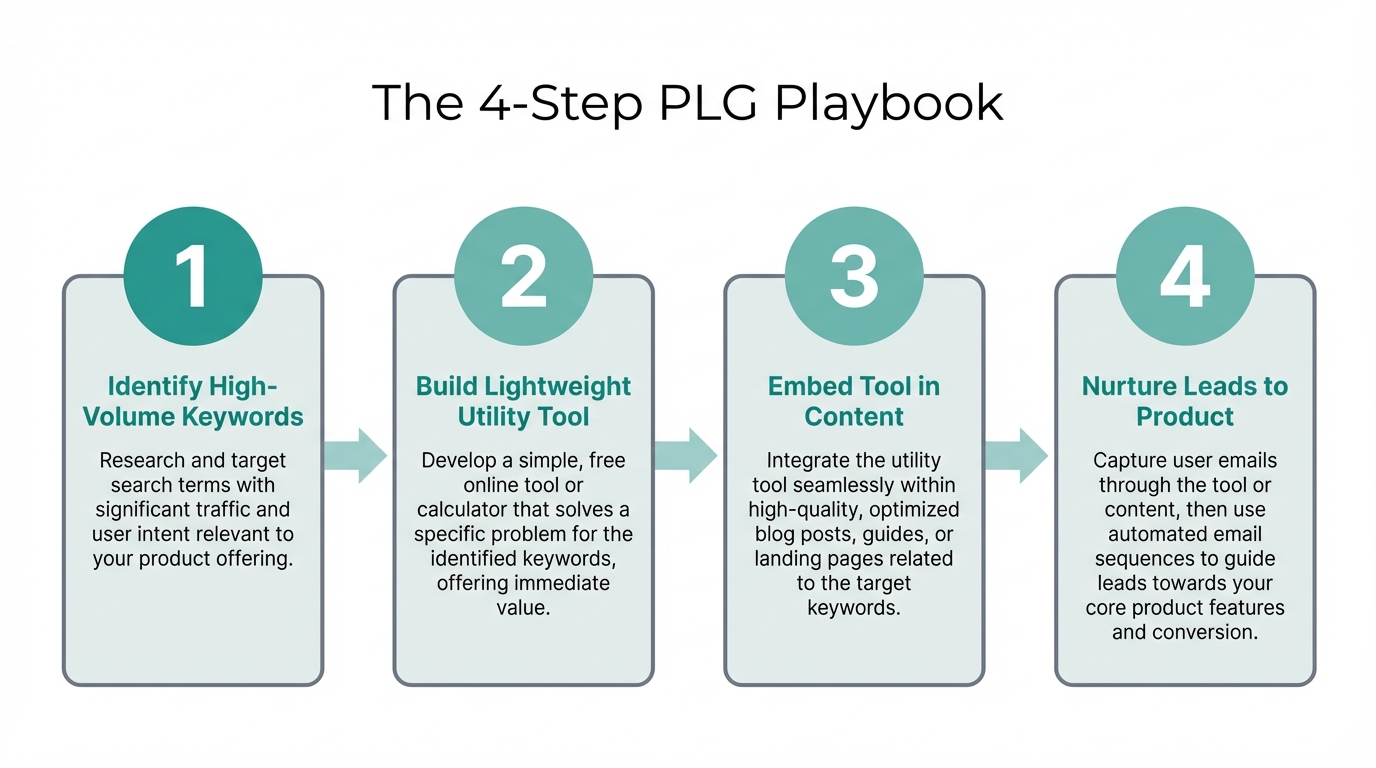
Lowering your CAC in 2026 requires a departure from the "pay-to-play" mentality. By implementing a product led growth strategy, you create assets that have inherent value, regardless of your ad budget. Start by auditing your current content for intent mismatch and identifying one "micro-tool" you can build to help your audience solve a specific problem.
Remember that organic growth is no longer a set-it-and-forget-it project. It requires a quarterly audit cycle to refresh statistics, update links, and re-map intent based on shifting search patterns (InstaServ). By focusing on utility, authenticity, and technical excellence, you can dominate the top of the funnel and turn high intent organic traffic into your most profitable acquisition channel.