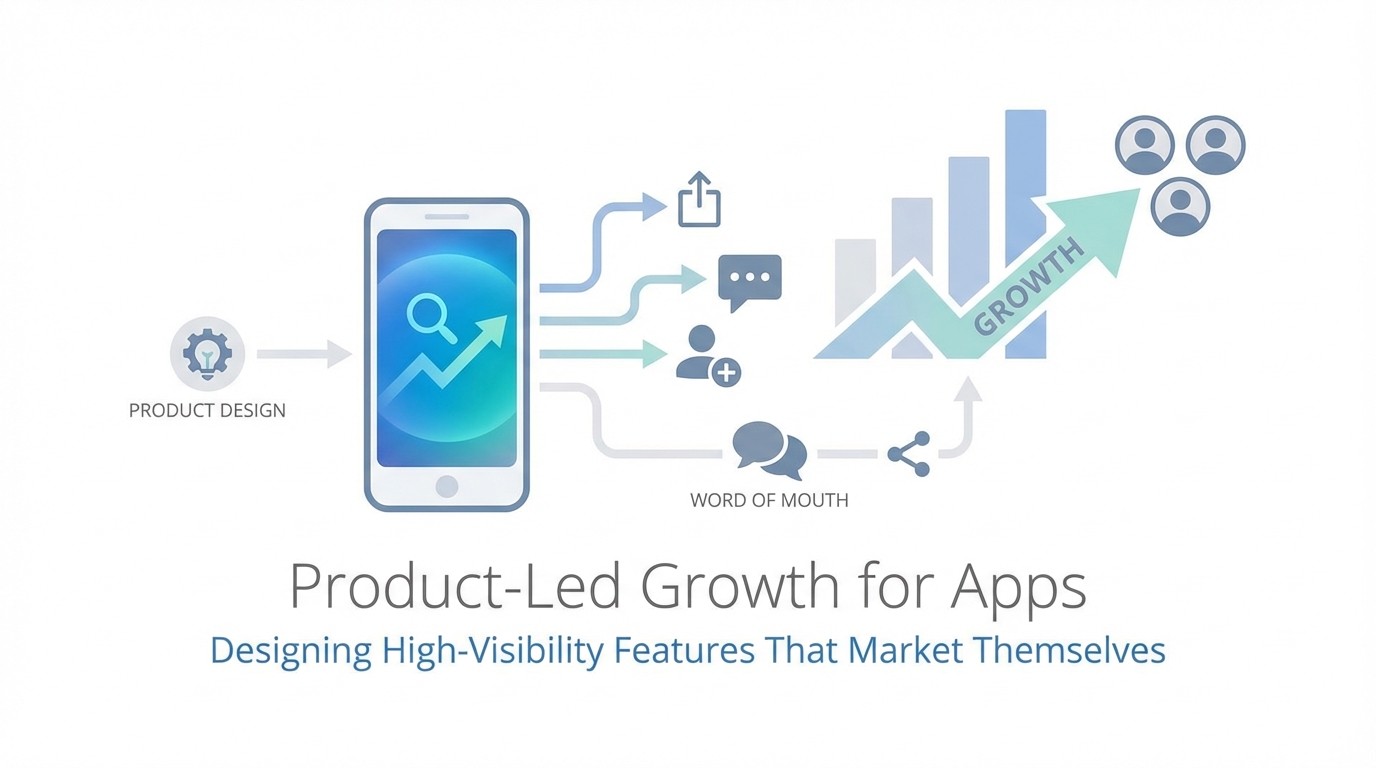
In the modern app economy, where "vibe coding" allows competitors to clone a basic utility in a matter of days, the traditional moat of functionality is evaporating. To survive, developers must shift from building mere tools to creating visual engines of organic growth. This strategy, often referred to as product-led growth (PLG), relies on the product itself to handle the heavy lifting of mobile app user acquisition. Instead of pouring every dollar into paid Meta Ads, top-tier founders are designing features that are inherently shareable, visually arresting, and status-driven.
The Commodity App Trap: Why Features Aren't Enough
The fitness industry is perhaps the most saturated category in the App Store. Most workout trackers are commodities—digital versions of a pen and paper. If your value proposition is just "tracking sets and reps," you are competing on price and UI polish alone. To escape this trap, the founders of the Stronger app realized they needed a gamification marketing strategy that turned raw data into social currency. By moving away from generic lists and toward high-visibility features, they managed to scale to over 1.2 million users and $600,000 ARR while remaining bootstrapped.
A successful product-led growth strategy starts with the realization that your app's UI is your most potent marketing asset. Every screen should be evaluated based on its "screenshot potential." If a user achieves a milestone, is the visual representation of that achievement cool enough to post on their Instagram Story? If not, you are leaving organic growth on the table.
Designing for the Screenshot: The Power of Shareable UI

One of the most effective product-led growth examples is the muscle heatmap. Instead of a text-based summary of a workout, the Stronger app uses an anatomical diagram that highlights muscle groups in bright, heat-mapped colors. This feature serves two purposes: it provides immediate utility to the user and acts as a perfect visual hook for shareable UI design.
When users see a visual representation of their "Elite Chest" or "Novice Legs," they feel a sense of pride or a drive to improve. This is social status quantified. Platforms like Stormy AI are often used by brands to find UGC creators who can take these specific visual elements and turn them into high-performing video content. Stormy AI is an AI search engine across TikTok, Instagram, and YouTube that allows you to find matching influencers instantly using natural-language prompts. The goal is to create curiosity. When a viewer sees a colorful heatmap on their feed, their first instinct isn't "this is an ad," but rather, "what app is that?"
The 'Strava for X' Model: Leveraging Social Status
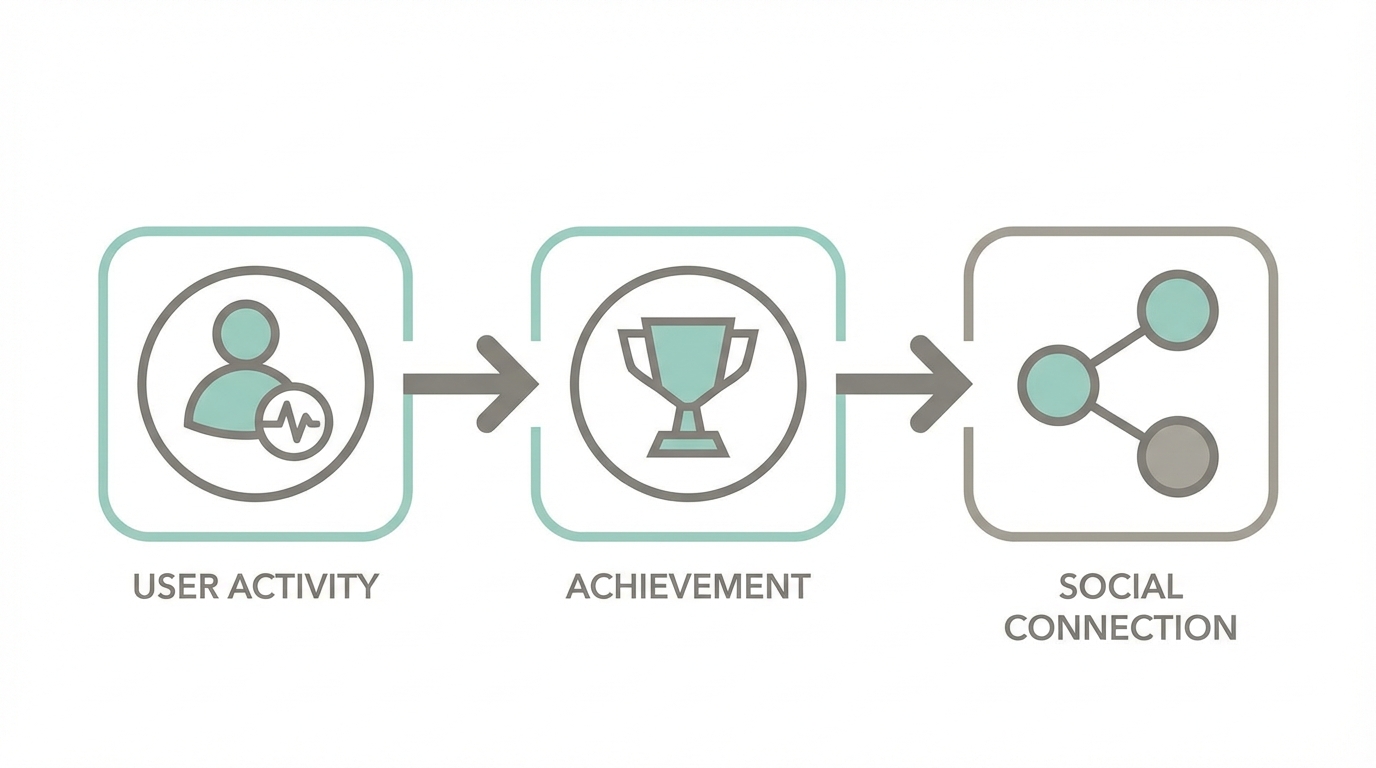
The "Strava for X" model is a powerful framework for app feature design for growth. Strava succeeded because it turned the solitary act of running or cycling into a competitive social network. For a workout tracker, this means moving beyond the individual and into the community. By allowing users to compare their physique and strength levels to others of the same body weight, you create a ranking system that mirrors competitive gaming environments like League of Legends.
Status is a universal motivator. When designing your app, consider how you can assign ranks or badges that represent a user's progress. However, you must be careful with the implementation. As the Stronger founders noted, heavy gamification works exceptionally well for the 15-23 age demographic, but it can feel "childish" to users over 30. To capture the more profitable 30-40+ market, your gamification marketing strategy should lean more toward sophisticated data visualization and lifestyle branding, similar to how Runna positions itself as a premium community for runners.
Building a Visual Moat: Preventing the Copy-Paste

In a world of AI-powered development, a simple feature can be replicated in a weekend. Your moat must be either technical, social, or brand-based. Visual storytelling through milestones is one way to build this moat. Instead of telling a user they lifted 10,000 lbs this month, tell them they lifted the equivalent of a Boeing 747 or the Empire State Building. These milestones turn abstract data into relatable, shareable achievements.
Furthermore, by creating unique internal tools to generate these visuals, you stay ahead of the curve. For instance, the Stronger team built internal tooling to mass-produce "fade-in" videos—a format that starts black and fades into a high-contrast app screenshot. This specific format generated over 300 million views because it hacked the watch-time algorithms. Since the average person watches these videos twice to catch the details of the heatmap, the TikTok algorithm pushes them to a wider audience. Brands looking to discover creators who can execute these high-growth strategies can leverage Stormy AI for finding UGC creators and automating outreach with hyper-personalized AI emails and automated follow-ups.
The Viral Growth Playbook: Turning Product Features into Viral Assets

If you want to replicate this success, you need a scientific approach to content and product design. Follow this 3-step playbook:
Step 1: Identify the 'Education vs. Entertainment' Hook
Content must either teach something or entertain. For a mobile app, this could mean providing scientific workout tips (Education) or leveraging "Jim Bro" humor (Entertainment). Use Figma to design UI elements that serve both. Your shareable UI design should be clear enough that even without a caption, the viewer knows they are looking at a progress-tracking app.
Step 2: Horizontal Scaling with Micro-Adjustments
Once you find a winning video format—like a specific screenshot of your app’s ranking system—don't just post it once. Scale it horizontally. Create 10 iterations with slight micro-adjustments: change the background from dark to light mode, swap the hook text, or use a different trending sound. AI tools make this process significantly faster, allowing you to flood the algorithm without being flagged as spam.
Step 3: Measure the Funnel, Not Just the Views
High views are a vanity metric if they don't convert to downloads. Track your mobile app user acquisition funnel from view to click to install. Use Apple Search Ads to protect your brand name from copycats who will inevitably try to bid on your keywords once you go viral.
From Virality to Revenue: The Hard Paywall Win
Going viral is useless if your monetization is broken. Many founders fear that a "hard paywall" will hurt their K-factor (the rate at which users invite others). However, the reality for subscription apps is often different. The Stronger founders discovered that moving to a hard paywall—where users must start a free trial to access core features—increased their revenue by 25% overnight.
Using tools like Superwall for paywall management allows you to AB test these macro-changes. Instead of tweaking button colors, test the entire offer. Does a 7-day trial with a hard gate perform better than a limited freemium model? For most utility apps, the answer is yes. If you give people an excuse not to pay, they won't. By forcing the trial, you ensure that the users who stay are the ones who truly value the product.
Lifestyle Branding: The Ultimate Retention Tool
Finally, to move from a $600k ARR app to a multi-million dollar brand, you must transition from a product to a lifestyle. Brands like Represent or Runna succeed because they sell a fulfilled life, not just a product. This is where community-led growth takes over. Branded events, meetups, and ambassador programs turn your users into a volunteer marketing army.
When users feel a human connection to the founders—perhaps through "founder-led" content where you reply to comments with video stitches—they become loyal advocates. This human element is something AI-cloned apps cannot replicate. In an era of faceless automation, showing the faces of the engineers behind the code is a massive competitive advantage.
Conclusion: Build to be Seen
Product-led growth isn't about hope; it's about intentional design. By focusing on shareable UI design, quantifying social status, and treating your marketing as a scientific testing process, you can break out of the commodity trap. Don't just build a better mousetrap—build one that looks incredible in a screenshot. For those looking to accelerate their growth through influencer collaborations and AI-driven insights, Stormy AI provides the tools needed to find creators and monitor campaign performance with its built-in post tracking and analytics dashboard.