The digital marketing landscape is currently navigating a seismic shift. As third-party cookies crumble and regulatory bodies sharpen their focus on data sovereignty through GDPR and CCPA, the era of sending every byte of customer data to centralized cloud servers is drawing to a close. For growth marketers and media buyers, the challenge is no longer just about performance—it is about performance within a secure, private perimeter. Enter OpenClaw, an open-source, local-first AI agent platform that has rapidly become the gold standard for privacy-first marketing. In this guide, we explore how these autonomous agents are redefining secure marketing automation and how you can deploy them to future-proof your ad operations.
The Rise of Agentic Marketing: Beyond Simple Chat
The industry is moving aggressively from "AI that helps me write" to "AI that helps me ship." This transition to agentic marketing operations means moving beyond basic chatbots to systems that can research, draft, publish, and measure campaigns autonomously across platforms like Google Ads and Meta Ads Manager. Originally known as Clawdbot and Moltbot, OpenClaw transitioned to its current name in early 2026 to double down on its open-source roots, and the growth has been nothing short of explosive.
According to recent tracking data, OpenClaw is one of the fastest-growing open-source projects in history, skyrocketing from 9,000 to over 200,000 GitHub stars in under three months during early 2026. This surge represents a community of 300,000 to 400,000 active users, including independent media buyers and sophisticated agency teams. Gartner predicts that by 2025/2026, 75% of new AI solutions will emulate the agentic model pioneered by this platform. These local-first AI agents aren't just a trend; they are a response to a world where data privacy is the ultimate currency.
"OpenClaw is the most incredible sci-fi takeoff-adjacent thing currently in AI." — Andrej KarpathyWhy Local-First AI is Essential for Modern Privacy Laws
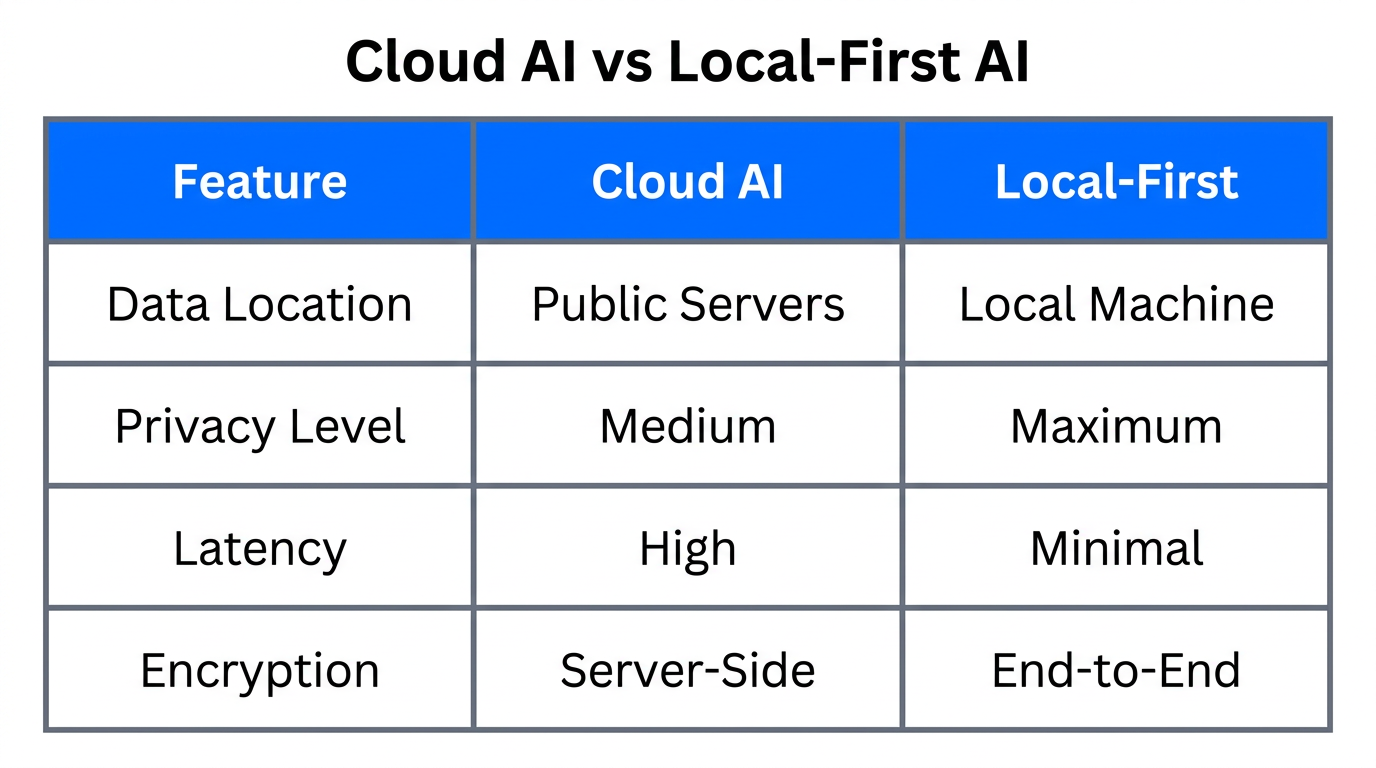
Traditional AI tools often require you to upload customer lists, pixel data, and proprietary strategy documents to third-party clouds. Under strict regulations like GDPR, this creates a massive liability. Local-first AI agents solve this by processing data on your own machine—whether that is a dedicated Mac Mini or a private virtual server.
By keeping the "brain" of the operation local, you eliminate the risk of cloud-based data leaks. Furthermore, the rise of the Model Context Protocol (MCP) allows OpenClaw to pull live data directly from GA4 and Meta Ads APIs via secure connections without ever needing to export sensitive CSV files manually. This ensures that your secure marketing automation remains truly private, satisfying the most rigorous compliance audits.
| Feature | Cloud AI Assistants | OpenClaw (Local-First) |
|---|---|---|
| Data Ownership | Shared with Provider | 100% User-Owned |
| Privacy Compliance | Complex (DPA required) | Built-in (Local Processing) |
| Execution Ability | Read-only / Basic Text | Autonomous Action (Agents) |
| Cost Control | Fixed Monthly/Usage | Variable API + Infrastructure |
The Deployment Playbook: VPS and 24/7 Operations
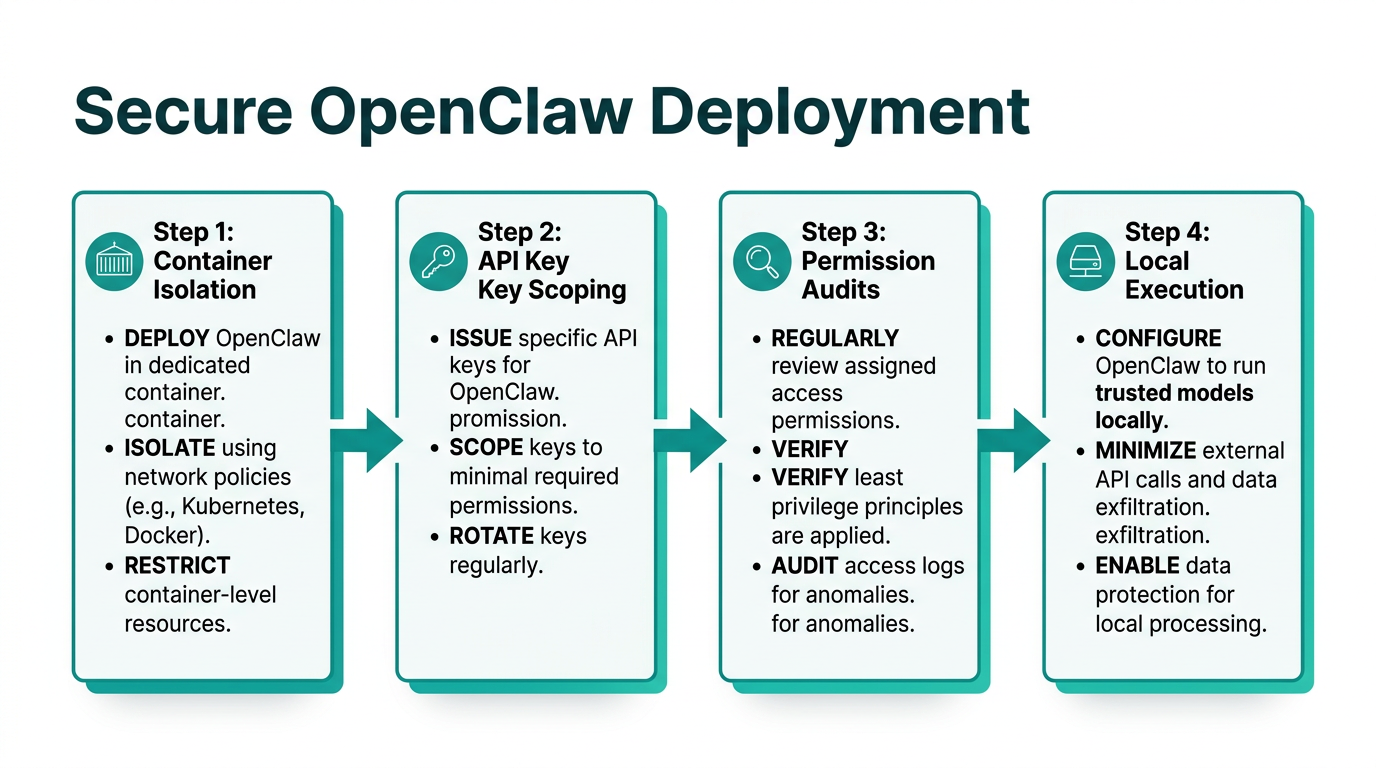
While you can run OpenClaw on a laptop, professional media buyers prefer 24/7 reliability. To maintain constant monitoring of your ad spend and creative performance without risking your primary workstation, follow this deployment playbook:
Step 1: Choose a Secure Host
Avoid consumer-grade laptops for heavy automation. Instead, host OpenClaw on a $5–20/month VPS like DigitalOcean. This ensures your agent stays online for scheduled cron jobs, such as checking for budget overruns at 3:00 AM.
Step 2: Initialize the Ad Context Protocol
To give your agent the ability to act on your ad accounts, utilize the Ad Context Protocol (AdCP). This allows you to launch campaigns using natural language: "Launch a $5k display campaign targeting tech professionals in California."
Step 3: Establish Human-in-the-Loop Gating
Never grant "write" access to your ad budgets without a gating mechanism. Use messaging interfaces like WhatsApp, Telegram, or Discord as your control surface. Your agent should message you: "I recommend increasing the budget on Campaign X by 20%. Reply YES to execute."
"The agentic shift is about moving from AI that talks to AI that works. OpenClaw is the first step toward a fully autonomous marketing department." — Peter SteinbergerNavigating Security Risks: ClawHub and Malicious Scripts
With great power comes significant openclaw security risk. The platform features over 13,700 community-built skills on its public registry, ClawHub. However, not all skills are created equal. Security researchers at Microsoft and Malwarebytes have issued warnings, noting that the "ClawHavoc" malware campaign in early 2026 infected over 1,100 skills designed to steal API tokens via the Atomic macOS Stealer.
To protect your infrastructure, you must vet every skill before deployment. Platforms like Ryze AI offer managed, vetted versions of OpenClaw for paid media teams who cannot afford the security overhead of manual vetting. Always check the source code for scripts that attempt to access ~/.ssh directories or send data to unrecognized external domains.
Advanced Marketing Strategies with OpenClaw
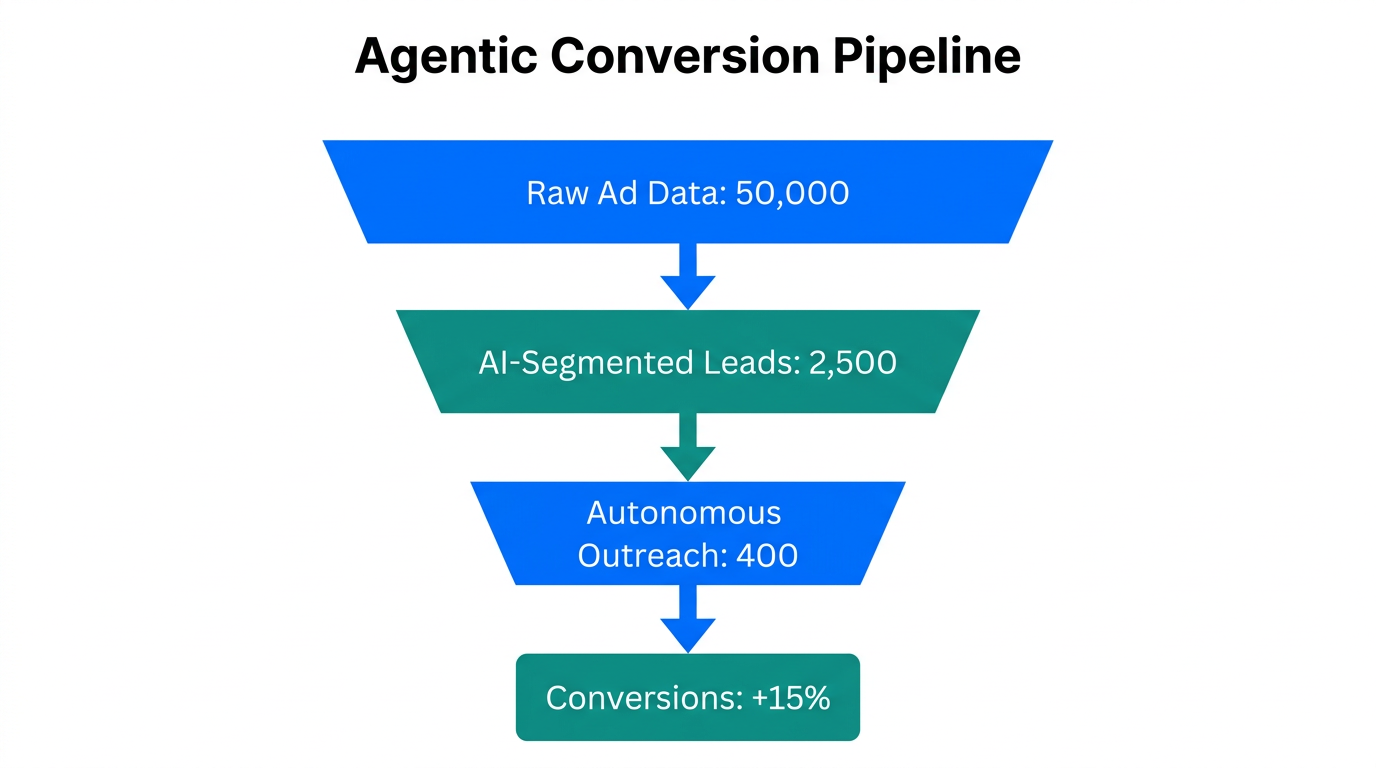
Once your secure environment is established, you can deploy high-leverage skills to gain a competitive edge. One popular use case is competitor research. By using the Meta Ads Library skill, you can instruct your agent to scrape every ad a competitor is running, visit their landing pages with tools like Decodo, and generate a complete funnel breakdown.
For those managing large-scale UGC (User Generated Content) campaigns, the coordination can become overwhelming. While OpenClaw handles the technical ad operations, platforms like Stormy AI streamline creator sourcing and outreach, ensuring that your automated funnel is always stocked with high-quality, high-converting content. By combining Stormy AI's creator discovery with OpenClaw's autonomous ad management, you create a closed-loop growth machine that requires minimal human intervention.
The "Context Compaction" Trap and Budgeting for Tokens
Even the most advanced agents have limitations. One critical risk is the "Context Compaction" trap. As an agent's session length increases, it must summarize its memory to fit within the model's context window. During this process, the agent may "forget" original constraints, such as a strict budget cap or a command to always ask for approval before spending.
Additionally, high-frequency tasks like constant browser scraping can lead to massive API bills. If you are using top-tier models like Claude 3.5 Sonnet without cost caps, you could easily see bills exceeding $500 per day. To mitigate this, use cost-saving strategies like:
- Implementing hard token limits in your OpenClaw configuration.
- Using smaller, local models for basic data cleaning tasks.
- Setting up Creative Fatigue Monitoring that only triggers every 24 hours rather than every hour.
Conclusion: Securing the Future of Growth
The transition to privacy-first marketing is not just a hurdle—it is an opportunity to build more resilient, efficient marketing stacks. By adopting local-first AI agents like OpenClaw, you gain the ability to run 24/7 autonomous operations without compromising customer privacy or data security. Whether you are using a customized skill set from ClawHub or managing a fleet of UGC creators with a CRM, the future belongs to those who own their data and their execution.
Start by deploying a single "Ad Performance Audit" agent. Set it to monitor your target ROAS and flag fixes. Once you witness the power of an autonomous agent that never sleeps, the shift from assistant to agent will be the most profitable move your marketing team makes this year.