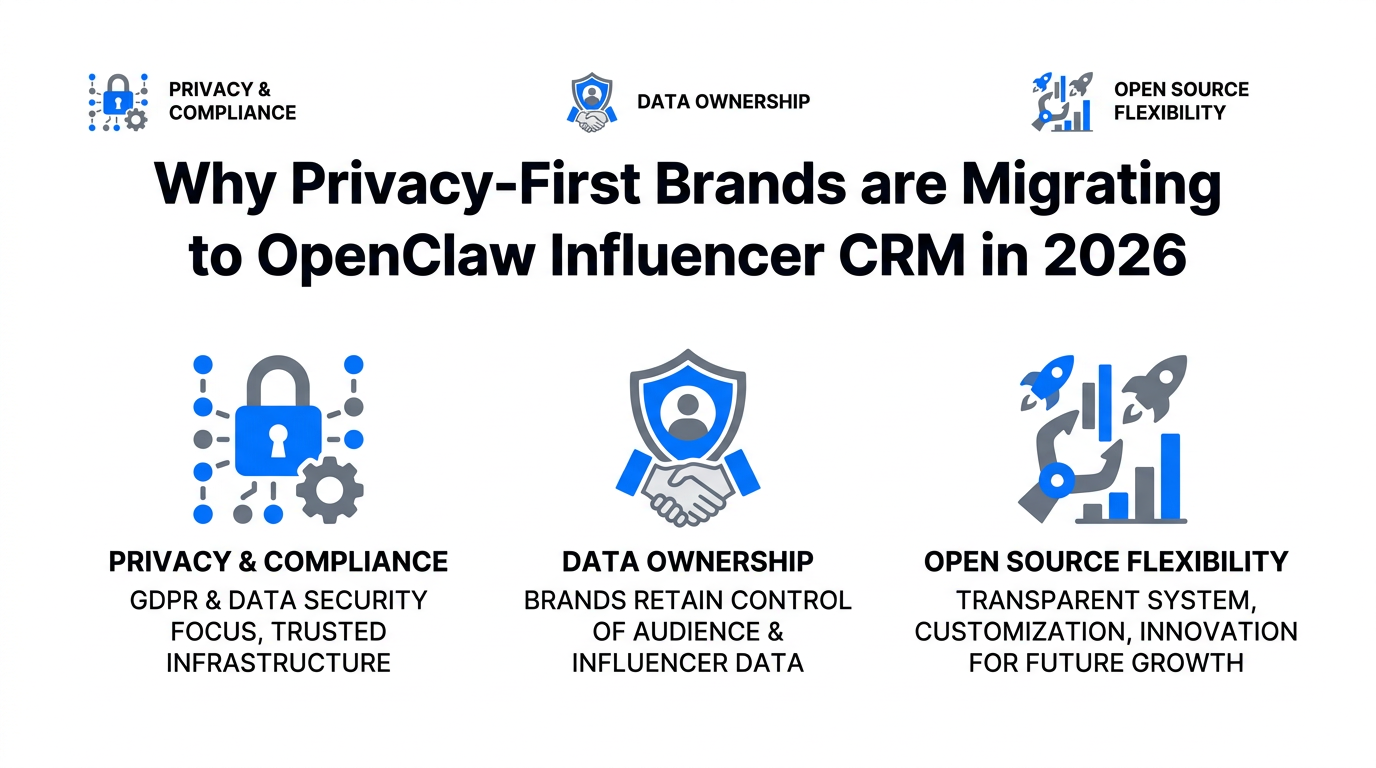
As we navigate through 2026, the landscape of digital marketing has shifted from "growth at all costs" to "growth with absolute privacy." The global influencer marketing industry has matured into a $34.1 billion powerhouse, according to Charle Agency, yet this explosion in value has brought a new set of challenges. Brands are no longer willing to trust their most valuable asset—their creator relationships and proprietary data—to third-party cloud platforms that are increasingly prone to data leaks and regulatory scrutiny.
The solution emerging this year is the migration toward self-hosted influencer CRM infrastructure. Privacy-first brands are ditching the traditional SaaS model in favor of OpenClaw Influencer CRM (formerly known as Clawdbot). This pivot represents a fundamental change in how marketing teams view influencer data ownership: as a core piece of intellectual property that must be kept behind the company's own firewall.
The Shift from Cloud-Based CRMs to Local-First Data Ownership
For the last decade, brands were content to host their influencer lists, contract terms, and communication logs on multi-tenant cloud servers. However, in 2026, the risk profile has changed. Data regulations have tightened globally, and a single breach of an influencer’s private contact information can lead to millions in fines and irreparable brand damage. This is why privacy-first marketing is no longer a niche preference—it is a business requirement.
By moving to a local-first model, brands ensure that their data never leaves their controlled environment. This migration is fueled by the realization that when you use a standard cloud CRM, you are effectively paying to help that CRM train its own models on your relationship data. OpenClaw changes the game by allowing brands to run their entire influencer operation on private hardware or a virtual private cloud like Tencent Cloud.
OpenClaw: The Private 'Command Center' for Modern Outreach
One of the primary reasons OpenClaw has reached over 214,000 GitHub stars this year is its ability to act as a unified "Command Center." In 2026, creators are increasingly unreachable via traditional email, which has become a graveyard for neglected pitches. Today's top influencers live in messaging apps. OpenClaw allows brands to merge Telegram, WhatsApp, and Slack into a single private hub.
This integration prevents "communication decay"—the phenomenon where a campaign stalls because a manager misses a WhatsApp message from a high-value creator. By centralizing these channels in a self-hosted influencer CRM, teams can maintain the personal touch of messaging with the organizational power of a CRM, all while keeping the communication logs encrypted and private.
"The future of influencer management is HITL (Human-in-the-Loop), where AI agents handle 90% of the repetitive outreach, leaving humans for creative strategy." — Peter Steinberger, Creator of OpenClaw.
Cloud CRM vs. OpenClaw: Which is Right for Your Brand?
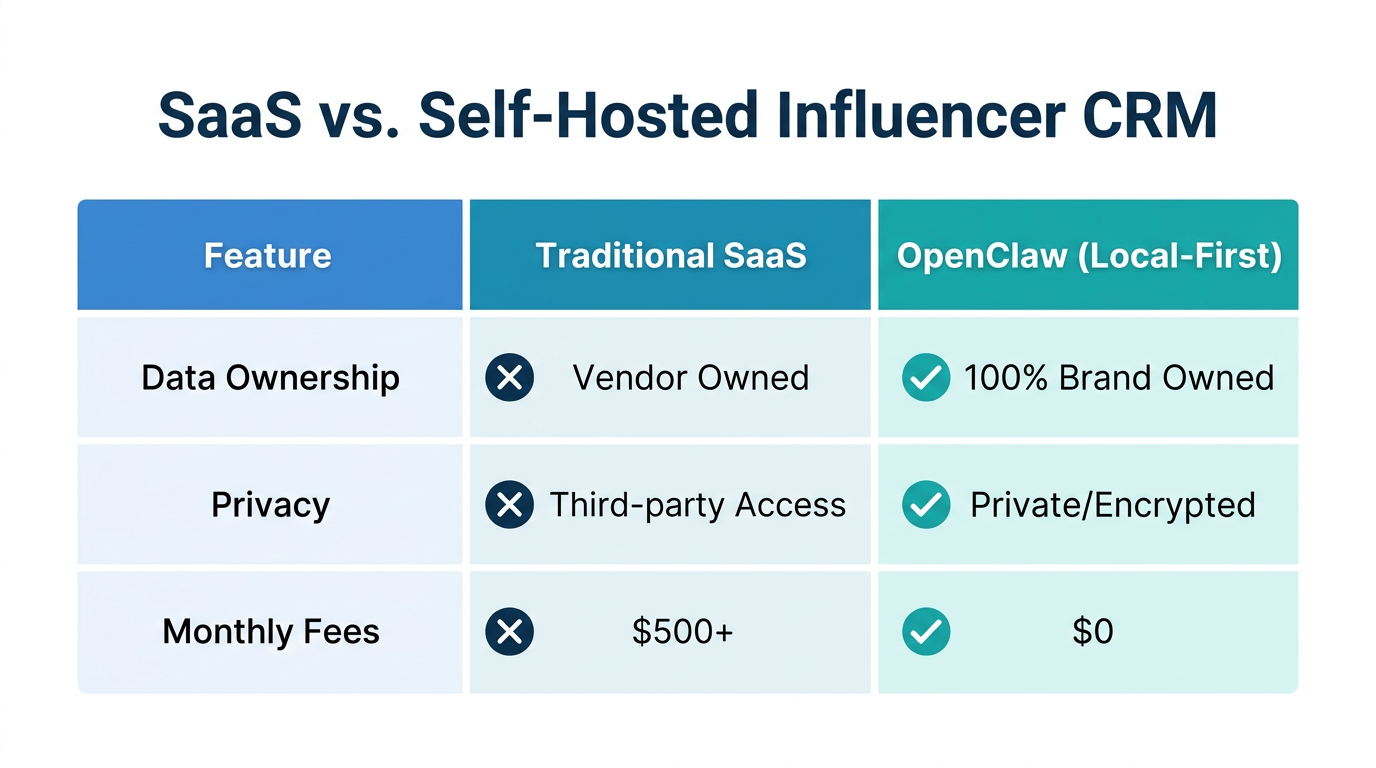
While legacy tools still exist, the 2026 market demand for influencer data ownership has made OpenClaw the gold standard for enterprise-level privacy. Below is a breakdown of how these models compare in the current landscape:
| Feature | Traditional Cloud CRM | OpenClaw Influencer CRM |
|---|---|---|
| Data Location | Third-party servers | Private Hardware / VPC |
| API Key Security | Stored on CRM's server | Stored locally (No external access) |
| AI Autonomy | Prompt-based only | Agentic (Browser & API Control) |
| Platform Integration | Pre-built connectors only | Direct WhatsApp/Telegram/Slack |
| Data Leak Risk | High (Multi-tenant risk) | Minimal (Zero-trust architecture) |
From "Tools" to "Digital Employees": The Agentic Marketing Revolution
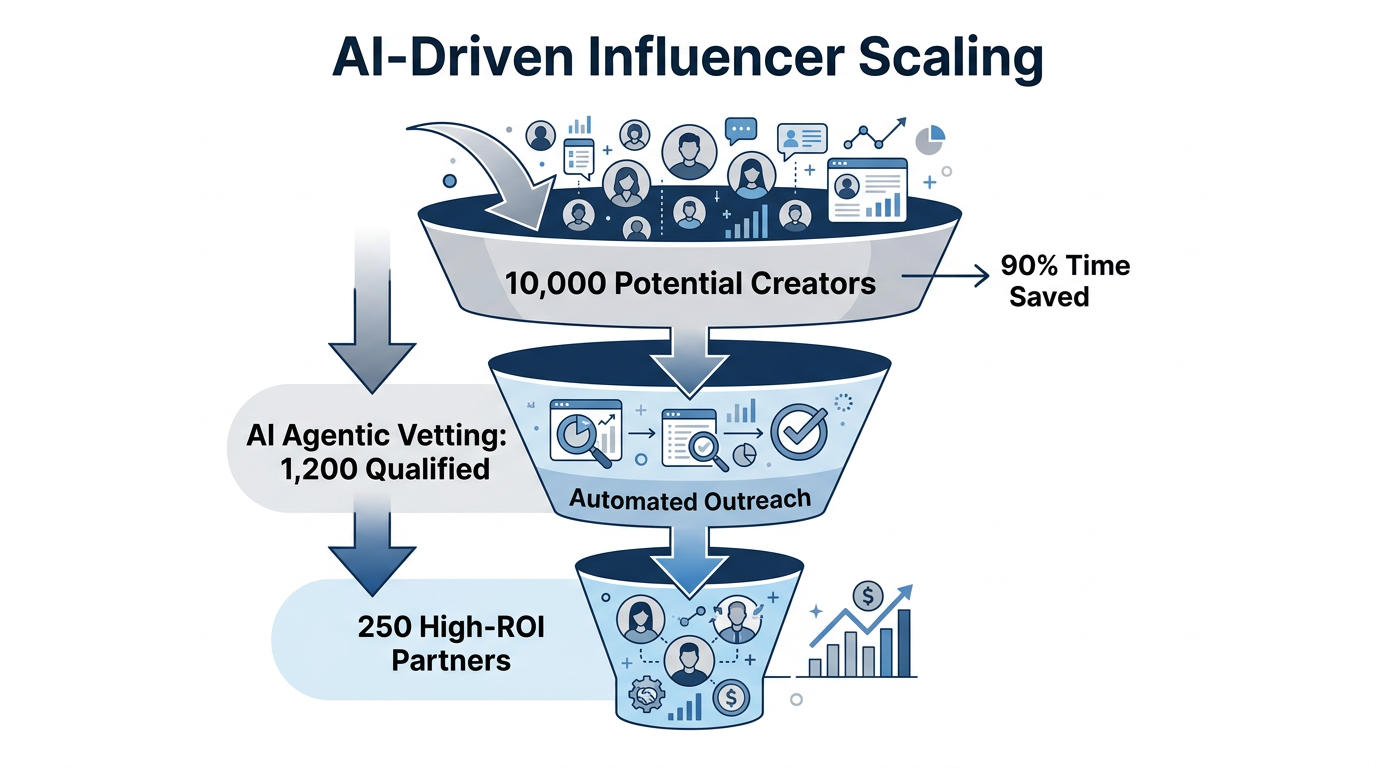
In 2026, we have moved beyond simple automation. We are now in the era of Agentic Marketing. As Robert Lukoszko, CEO of Stormy AI, notes, performing manual influencer outreach at the scale required for modern commerce is now "mathematically impossible." Brands are using OpenClaw not just as a database, but as an autonomous workforce.
These AI agents, powered by protocols like SOUL.md, can vet creators, check engagement rates via automated vetting tools, and even handle initial price negotiations based on pre-set budget guardrails. This allows a single marketing manager to oversee a network of thousands of creators—something that previously required a massive agency team.
"Efficiency gains from agentic marketing platforms have reached 55%, allowing brands to scale revenue while reducing marketing costs by over 35%."
Case Study: Blueland’s $129k Surge in Amazon Seller Rank
The power of a well-managed creator CRM is best seen in real-world results. The eco-friendly brand Blueland recently implemented a micro-influencer strategy focused on Amazon growth. By utilizing a high-velocity seeding strategy, they were able to boost their Amazon seller rank by 6.3x in just three months.
According to data from Stack Influence, this micro-influencer push added an incremental $129,000 in revenue. The key was not chasing "mega-influencers" with millions of followers, but rather building a robust community of nano-influencers (1k–10k followers) who maintain an incredible 10.3% engagement rate on TikTok. By managing these relationships through a private CRM, Blueland ensured they owned the data on which creators drove the highest ROI without leaking their strategy to competitors.
Your 2026 Playbook: How to Migrate to a Privacy-First CRM
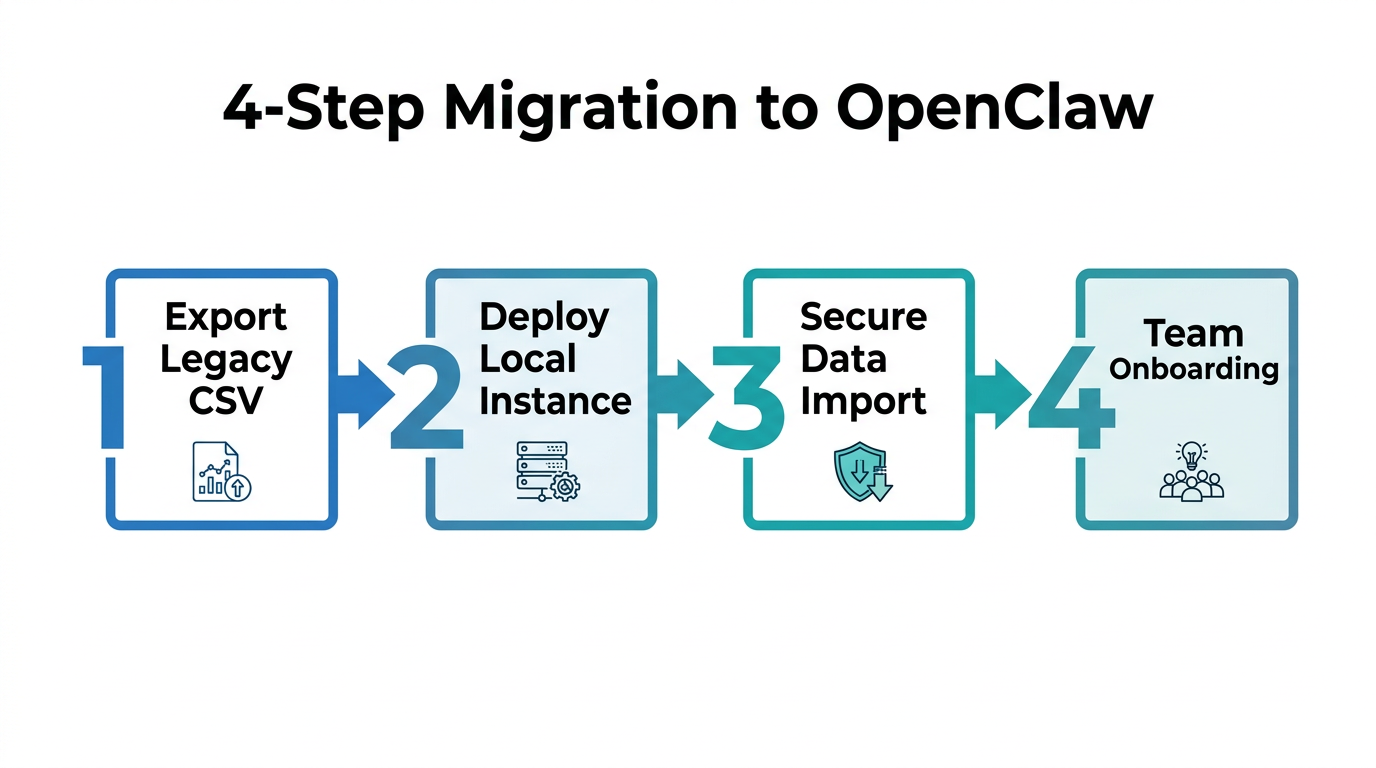
If your brand is ready to take back control of your data, follow this step-by-step playbook to transition to open source marketing tools like OpenClaw.
Step 1: Audit Your Current Data Surface Area
Identify every third-party platform that currently has access to your influencer contact lists, contract values, and payment details. This audit often reveals a massive "data sprawl" that increases your risk of a breach.
Step 2: Set Up Your Private Environment
Deploy OpenClaw on your own internal servers or a dedicated cloud instance. Since OpenClaw is local-first, you keep your API keys and internal workflows on private hardware, ensuring they are never exposed to the public internet.
Step 3: Integrate Your Discovery Pipeline
While OpenClaw manages the relationship, you still need a high-quality discovery engine. Use Stormy AI to find creators who fit your niche, then export that data directly into your private OpenClaw instance for outreach.
Step 4: Deploy Your AI Agents
Configure your agents to handle the "busy work." This includes checking for engagement fraud, sending follow-up messages on Discord, and tracking post-performance in real-time. This "always-on" strategy ensures your brand is constantly seeding products without adding headcount.
Common Mistakes in Privacy-First Influencer Marketing
- Chasing Follower Count: A million followers mean nothing if engagement is below 1%. Always prioritize engagement over raw numbers.
- The "Email Graveyard": Failing to meet influencers on their preferred platforms (Telegram, WhatsApp) leads to a 40% drop in response rates.
- Transactional Thinking: Don't treat creators as one-off ads. Use your CRM to build a "Creator Community" that offers long-term brand equity.
- Micromanaging Creative: Brands that restrict creative freedom see a 30% drop in engagement. Provide the brief, then step back.
"In 2026, the brand that owns the relationship owns the market. Privacy is the foundation of that ownership."
The Bottom Line: Ownership is the Only Security
As we move deeper into 2026, the migration to OpenClaw Influencer CRM and other self-hosted influencer CRMs is a clear indicator that the industry is maturing. Brands are realizing that earning $5.78 for every $1 spent, as reported by Influencer Marketing Hub, is only sustainable if the data driving those returns is secure.
By prioritizing influencer data ownership and leveraging AI-powered agents, your brand can scale its creator network 10x without increasing its data footprint or risk profile. Whether you are an e-commerce giant or a boutique startup, the message for 2026 is clear: stop renting your relationships on the cloud and start owning them on your own terms. For discovery and initial outreach that feeds your private CRM, explore how Stormy AI can streamline your growth today.