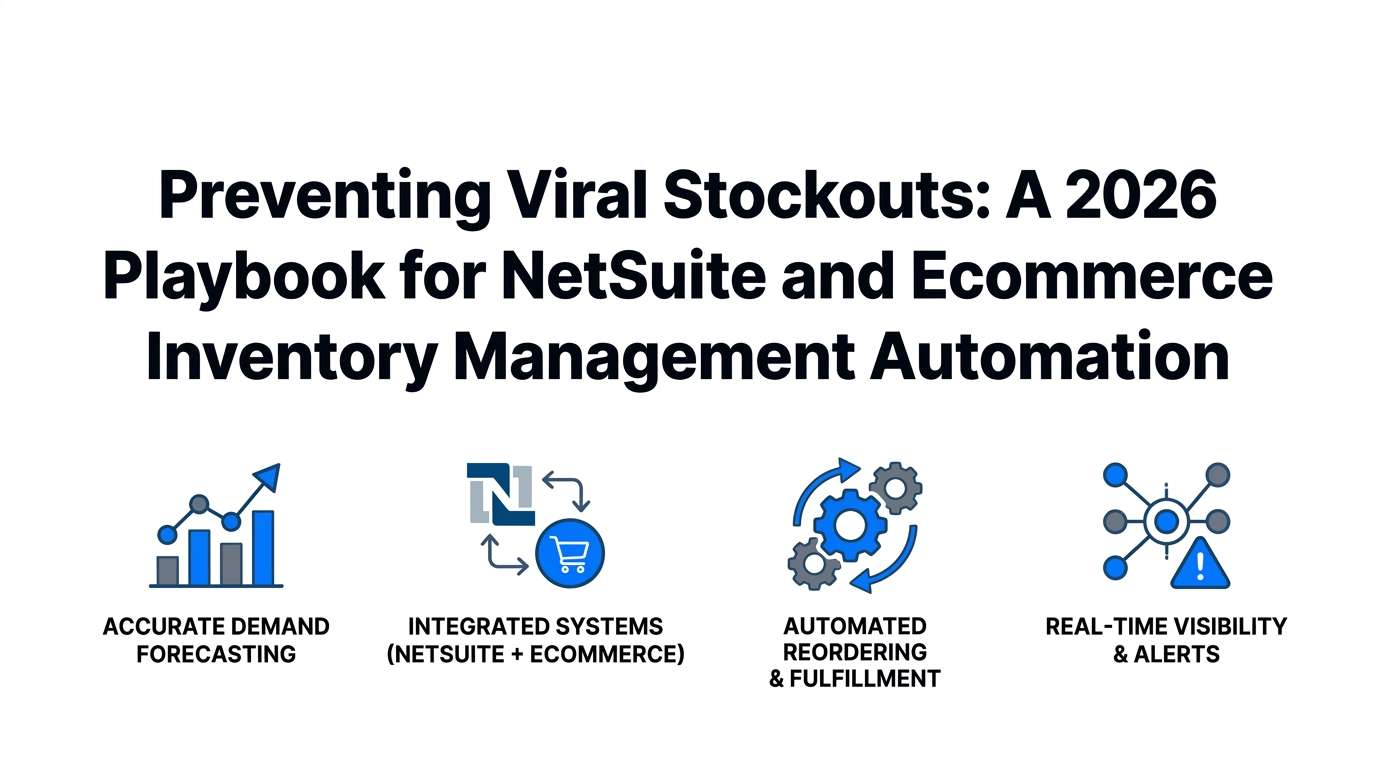
In the rapid-fire world of 2026 commerce, a single mention from a top-tier creator can send a brand from obscurity to sold-out in less than sixty minutes. While 'going viral' is the dream for many marketers, for operations teams, it often feels more like a nightmare. Without a robust system for NetSuite ecommerce inventory management automation, that sudden influx of traffic often results in the dreaded 'Out of Stock' banner, leading to lost revenue and damaged brand reputation. In fact, latest data suggests that inventory mismanagement contributes to 43% of lost sales in online retail.
As we navigate this year's landscape, the gap between success and failure is defined by how well your back-end systems talk to your front-end social buzz. It is no longer enough to just 'have stock'; you need a system that anticipates demand spikes before the first comment is even posted on a viral video. By leveraging AI-powered tools and enterprise-level ERPs like NetSuite, high-growth brands are shifting from reactive to proactive scaling.
The High Cost of the Viral Dream: Why Visibility Matters
In 2026, the global warehouse automation market is projected to skyrocket toward $42.25 billion. This isn't just about fancy robots; it's about the precision of data. Manual inventory environments typically hover around 63–65% accuracy, which is essentially a coin flip when you are trying to manage a viral campaign. Automated systems using RFID and IoT, however, achieve 95–99%+ accuracy, allowing brands to fulfill orders with confidence.
When a product goes viral, the 'stockout cascade' begins. Customers who find a product sold out on your site rarely wait; they move to a competitor or, worse, associate your brand with unreliability. To prevent ecommerce stockouts in 2026, brands must move toward Unified Commerce—a single source of truth where the Order Management System (OMS) acts as the strategic engine for all stock across 3PLs, retail stores, and dark stores.
"The key insight for 2026 is that operational maturity is the new competitive advantage. If your marketing outpaces your supply chain, you aren't growing—you're breaking."
Transforming NetSuite into a Reactive Engine
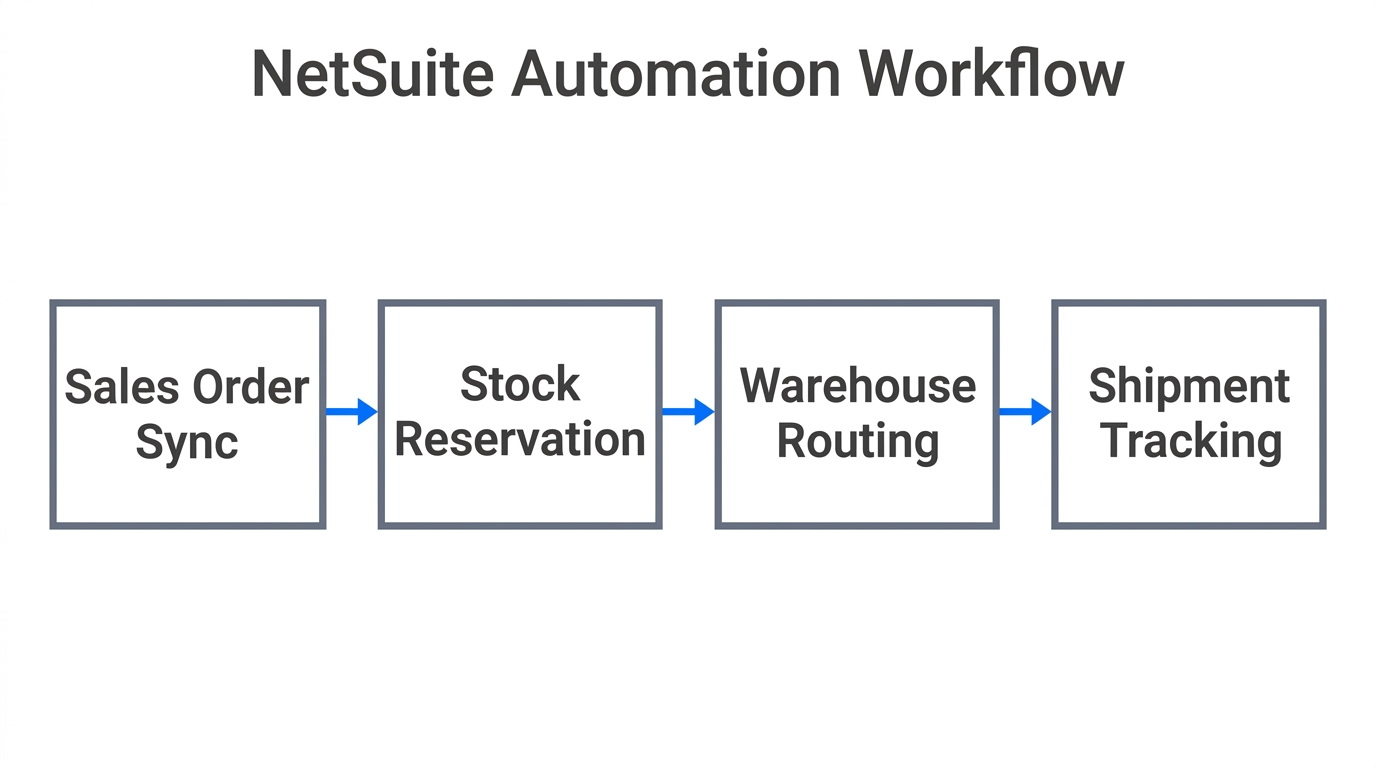
NetSuite remains the gold standard for scaling online retail operations, but its true power lies in its automation capabilities. Static reorder points are a relic of the past. In 2026, your system must dynamically adjust based on real-time data. This involves setting up Lead-Time Automation, where reorder thresholds shift based on actual supplier performance and seasonal shipping delays rather than optimistic estimates.
| Feature | Manual (Spreadsheets) | Automated (NetSuite + AI) |
|---|---|---|
| Inventory Accuracy | 63-65% | 99%+ |
| Reorder Logic | Static / Gut feeling | Dynamic / Lead-time adjusted |
| Demand Forecasting | Historical only | AI-driven / Predictive |
| Error Rate | ~5% compounded monthly | Near-zero |
To implement this, brands are increasingly connecting their NetSuite instances to specialized forecasting tools like Cogsy or Netstock. These integrations allow for Agentic Commerce, where AI agents not only predict demand but can autonomously negotiate with suppliers and execute purchase orders when stock hits a critical 'buffer' level. This is vital when working with platforms like Stormy AI to find influencers; once you've identified 50 creators for a launch, your inventory system should already be calculating the expected lift.
Implementing AI-Driven ABC Analysis
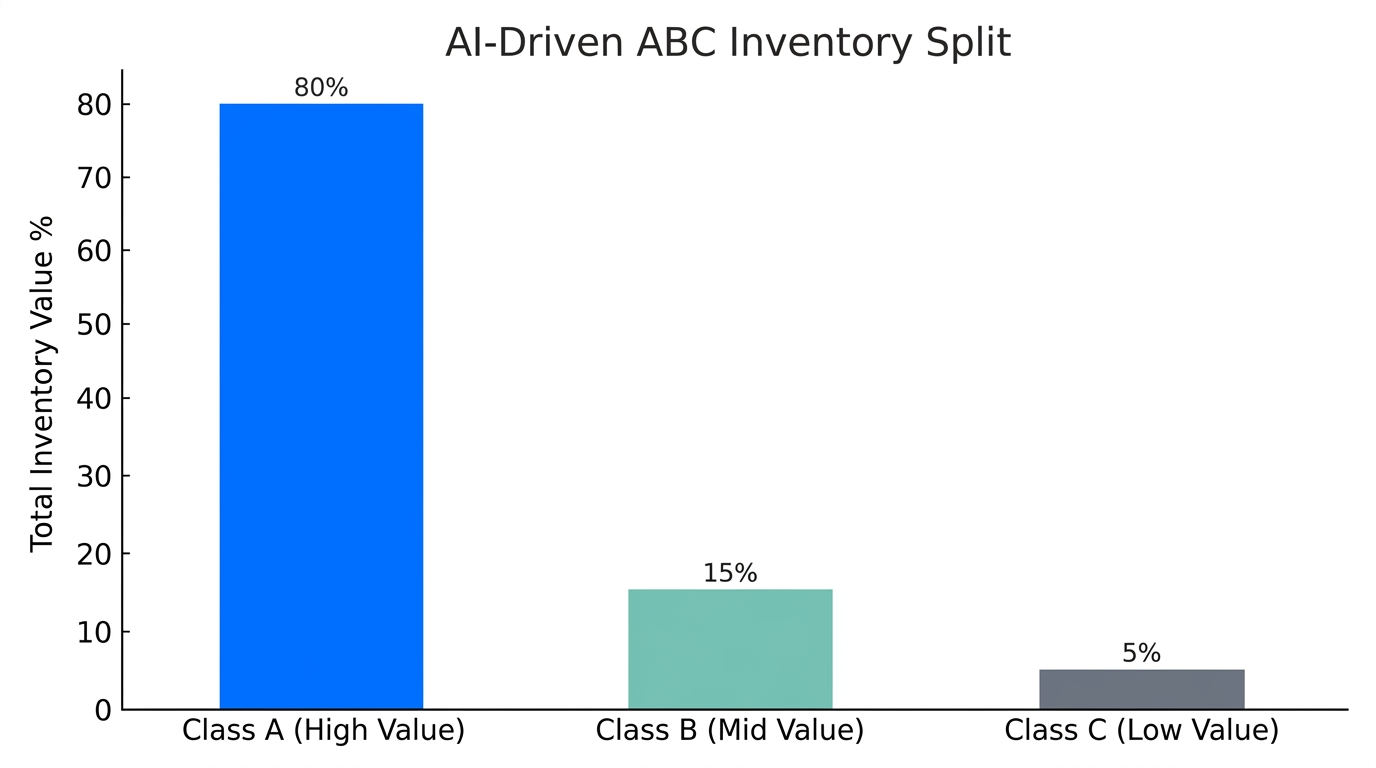
Not all products are created equal. Using AI to perform an automated ABC Analysis ensures that your capital is deployed where it matters most. This strategy categorizes products into three tiers:
- 'A' Items: The top 20% of products driving 80% of revenue. These require the tightest automated reorder points and the highest safety stock levels.
- 'B' Items: Middle-tier products with moderate sales frequency.
- 'C' Items: Long-tail products that move slowly but are necessary for catalog depth.
By automating this categorization via AI-driven merchandising tools, NetSuite can automatically prioritize 'A' category shipments at the warehouse level. If a viral spike hits a 'B' item, the system can instantly reclassify it as an 'A' item, triggering an emergency replenishment sequence before the existing stock hits zero.
"Inventory is just frozen cash. AI-driven ABC analysis turns that ice back into liquid capital by ensuring you never over-invest in the wrong SKUs."
Case Study Analysis: How Caraway Prevents Stockout Cascades
The cookware brand Caraway serves as a masterclass in influencer marketing inventory planning. Known for their aesthetically pleasing ceramic pans that frequently go viral on TikTok and Instagram, Caraway cannot afford to have a disconnected supply chain.
They utilize real-time monitoring to prevent what experts call a "stockout cascade." This occurs when one popular color (like 'Cream') sells out, causing customers to flood the next best option ('Sage'), which then also sells out due to unplanned volume. By using a unified data layer, Caraway can see these trends in real-time. If one SKU starts moving at 5x its normal velocity, their system can automatically adjust digital storefronts to highlight other available colors or trigger Hyper-Personalized Merchandising—automatically stopping paid ads for low-stock items to preserve inventory for organic viral traffic.
The 2026 Playbook: Connecting Marketing to Replenishment
To truly prevent ecommerce stockouts, your marketing calendar must be the primary input for your inventory forecasting model. Here is the step-by-step roadmap for 2026:
Step 1: Discover and Vet Creators Early
Use an AI search engine like Stormy AI to identify creators in your niche. By vetting their audience quality and engagement rates early, you can estimate the potential reach of a campaign. If you are hiring ten creators with a combined reach of 5 million, your 'Expected Demand' field in NetSuite should reflect this upcoming surge.
Step 2: Sync the Marketing Calendar to NetSuite
Don't keep your campaign dates in a siloed spreadsheet. Use tools like Zapier or Make to push campaign launch dates directly into your ERP. This allows the system to set 'Promotional Safety Stock' levels—an additional buffer specifically for the campaign duration.
Step 3: Automated 'Low-Stock' Triggers
Set up an automated flow between NetSuite and your marketing tools (like Klaviyo or Meta Ads Manager). When stock for a specific SKU drops below 10%, the system should automatically:
- Pause high-spend ad sets for that SKU.
- Switch the 'Buy Now' button to a 'Pre-Order' or 'Notify Me' flow.
- Send a 'Low Stock' alert to the supplier via an automated purchase order.
"The spreadsheet is where growth goes to die. In 2026, if your inventory isn't talking to your ads, you're burning money."
Common Mistakes to Avoid in Inventory Automation
Despite the available technology, many brands still fall into the Spreadsheet Trap. Relying on manual entry once you exceed 50 SKUs or multiple sales channels introduces an estimated 5% error rate that compounds monthly. Another common pitfall is Over-Customization. Many businesses try to force a new automated system like ShipBob or NetSuite to copy old, inefficient manual workflows. The rule for 2026 is: standardize first, then automate.
Finally, do not ignore Landed Costs. Many businesses automate quantity but forget to automate cost. Failing to include freight, duties, and insurance in your automated valuation via tools like Skywork leads to 'phantom profits'—where you appear to be making money on a viral product, but your actual margins are being eaten by expedited shipping costs to restock.
Conclusion: The Future is Automated
Survival in the 2026 ecommerce landscape requires a radical shift in how we view the relationship between marketing and operations. The 'viral moment' is no longer a random stroke of luck; it is a measurable, predictable, and manageable event for those with the right tech stack. By implementing NetSuite ecommerce inventory management automation and leveraging AI-driven discovery tools like Stormy AI, you ensure that when the world notices your brand, you are ready to deliver.