In the fast-paced digital landscape of 2026, the window to capture viral attention has shrunk from days to mere minutes. Traditional social media strategies—where a team brainstorms, drafts, and approves content over a week—are becoming relics of the past. Today, the most successful growth hackers are leveraging agentic AI to move at the speed of the algorithm. At the center of this revolution is OpenClaw, an autonomous framework that has transitioned from a developer tool into a full-scale infrastructure for automated content distribution.
By March 2026, OpenClaw reached a staggering 27 million monthly site visitors and 2 million monthly active users. This isn't just another chatbot; it is a workforce. Organizations using agentic platforms are already seeing a 55% increase in operational efficiency. If you want to dominate social media distribution this year, you need to move beyond "talking to AI" and start "working with agents."
"The marketer’s role is shifting from a creator to a conductor. You set the tempo; the agents play the instruments." — Jon Hyman, CTO at Braze
The Framework for Predictive Trend-Jacking
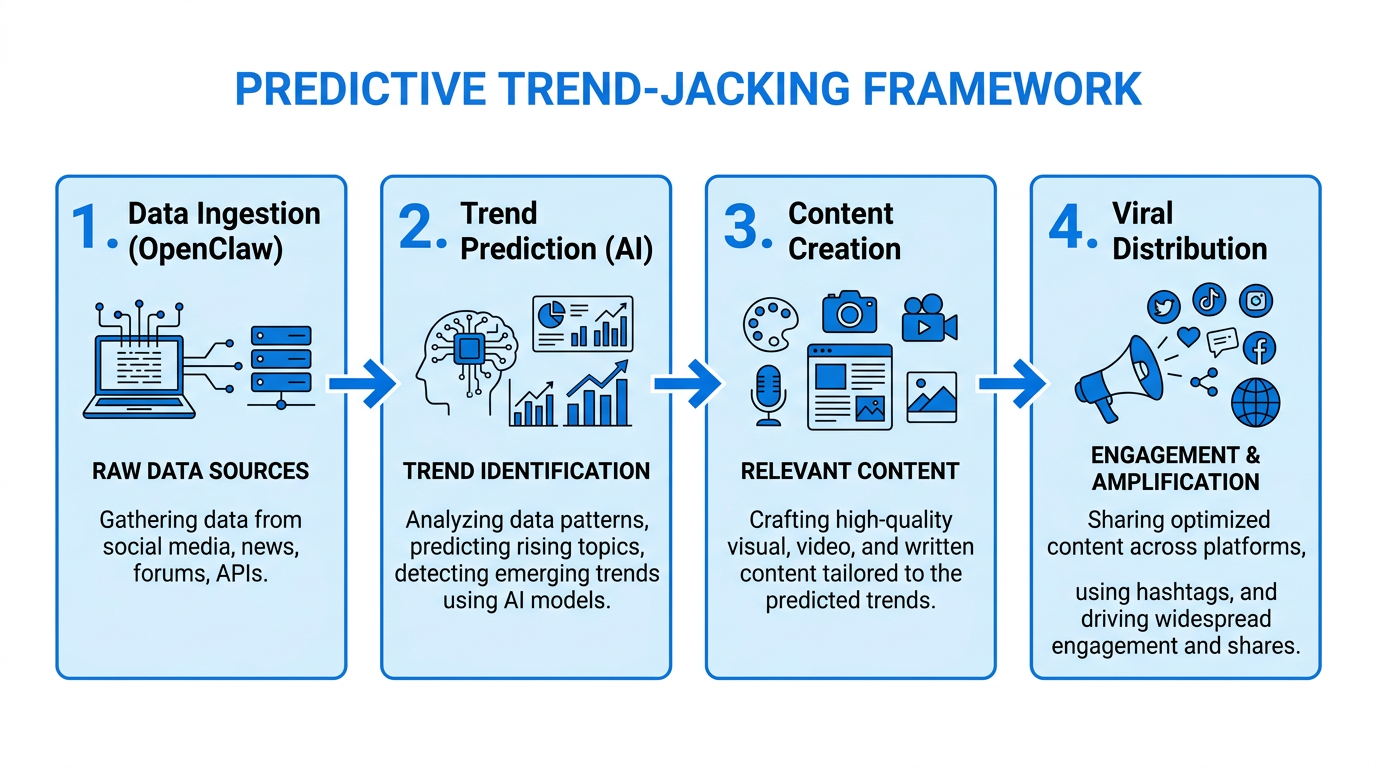
Trend-jacking is no longer about being clever; it's about being first. To achieve viral marketing automation, top-tier agencies are connecting NewsWhip Spike with OpenClaw. NewsWhip acts as the sensory organ, detecting viral triggers—content that is gaining momentum faster than the baseline—while OpenClaw acts as the hands, executing the distribution.
This "Predictive Trend-Jacking" model follows a simple logic: when a specific keyword or topic hits a velocity threshold on NewsWhip, it triggers an OpenClaw agent. The agent then analyzes the sentiment, drafts a data-backed response or original post, and distributes it across TikTok, X, and LinkedIn before the trend even peaks. This real-time response capability is why OpenClaw saw a 925% month-over-month growth in early 2026.
The 'Lobster' Strategy: Training Agents for Niche Dominance
In international markets, particularly China, OpenClaw has been nicknamed "the lobster" due to its distinctive logo. The trend of "raising a lobster" involves users meticulously training their AI agents to handle hyper-specific niches. Instead of a generalist bot, growth hackers are deploying specialized agents that "live" in specific subreddits, Discord servers, or industry forums.
These agents don't just post; they listen. They identify pain points in real conversations and suggest your product or service as a solution in a natural, helpful way. This is the foundation of social media growth in 2026: move away from broadcasting and toward autonomous, high-frequency engagement.
| Feature | Manual Social Management | OpenClaw 'Lobster' Agents |
|---|---|---|
| Response Time | 2-8 Hours | < 5 Minutes |
| Coverage | Work Hours Only | 24/7 Global Presence |
| Content Variety | Limited by Staff Energy | Infinite Iterations |
| Cost per Post | High (Human Salary) | Near-Zero (API Costs) |
The AI Content Repurposing Machine
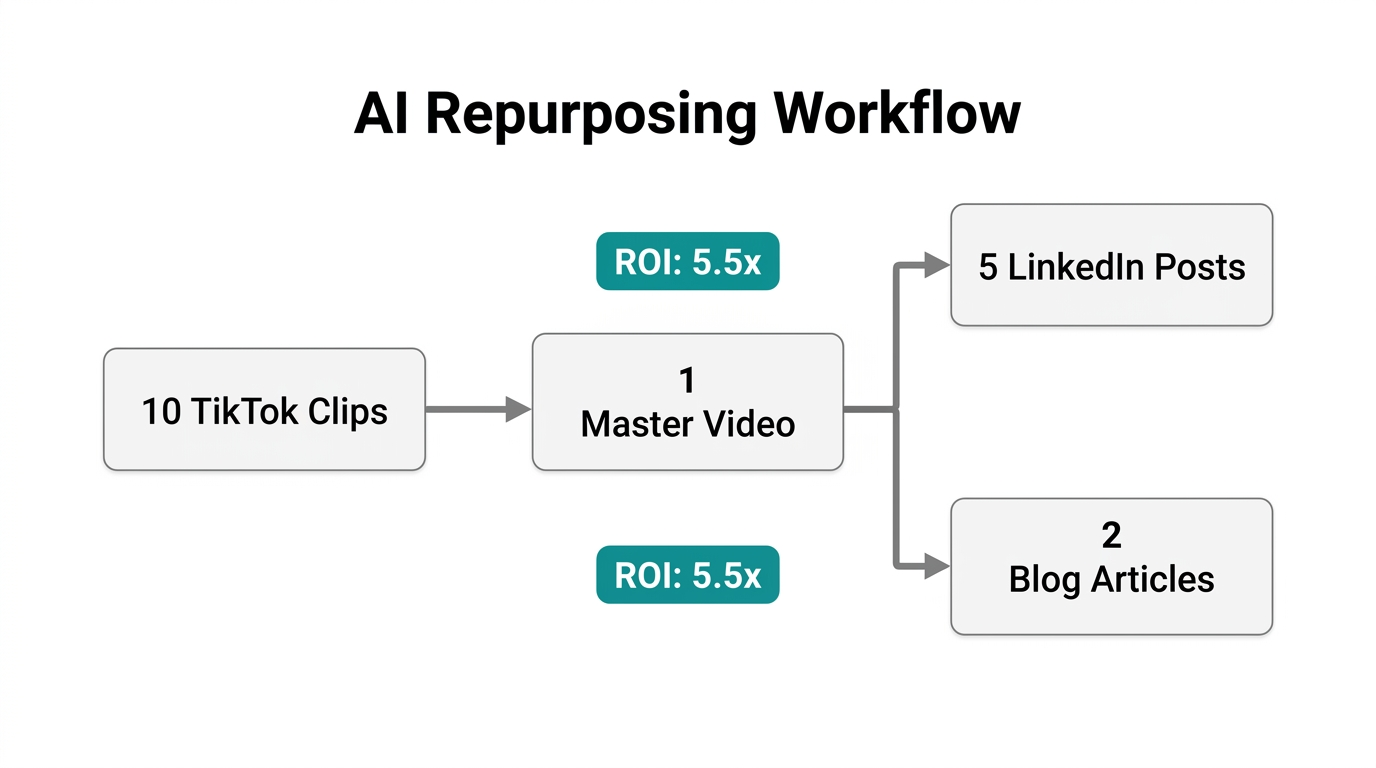
One of the most powerful AI content repurposing workflows involves turning a single high-quality asset—like a YouTube video—into a cross-platform distribution machine. In 2026, creators are using OpenClaw to monitor their own YouTube channels. The moment a video goes live, the agent triggers a multi-step sequence:
- Transcription: The agent pulls the transcript from the video.
- Blog Synthesis: It drafts a 1,500-word SEO-optimized article.
- Social Slicing: It creates a 10-post thread for X, a summary for LinkedIn, and a script for 3-4 TikTok clips.
- Auto-Publishing: Using Buffer or Metricool, it schedules these posts across the week.
This allows a solo creator to have the output of a 10-person social media team. As Julian Goldie demonstrates, the goal is to maximize the "surface area" of every piece of content with zero manual effort.
"OpenClaw is the AI that actually does things, marking the end of the 'talking to AI' era and the start of the 'working with AI' era." — Kipp Bodnar, CMO at a global CRM leader
Leveraging Instagram Intelligence via MCP
Data-backed distribution is no longer a luxury. By connecting Adzviser to OpenClaw via the Model Context Protocol (MCP), marketers can analyze Instagram Insights directly within their agentic workflows. Instead of looking at a dashboard once a week, your OpenClaw agent can query your Instagram Intelligence every hour.
If the agent detects that a specific type of Reel is getting higher-than-average saves, it can autonomously decide to create more content in that style or increase the ad spend via Meta Ads Manager. This level of closed-loop automation is what separates the winners from the losers in 2026.
Scaling a 'Content Farm' for Lead Generation
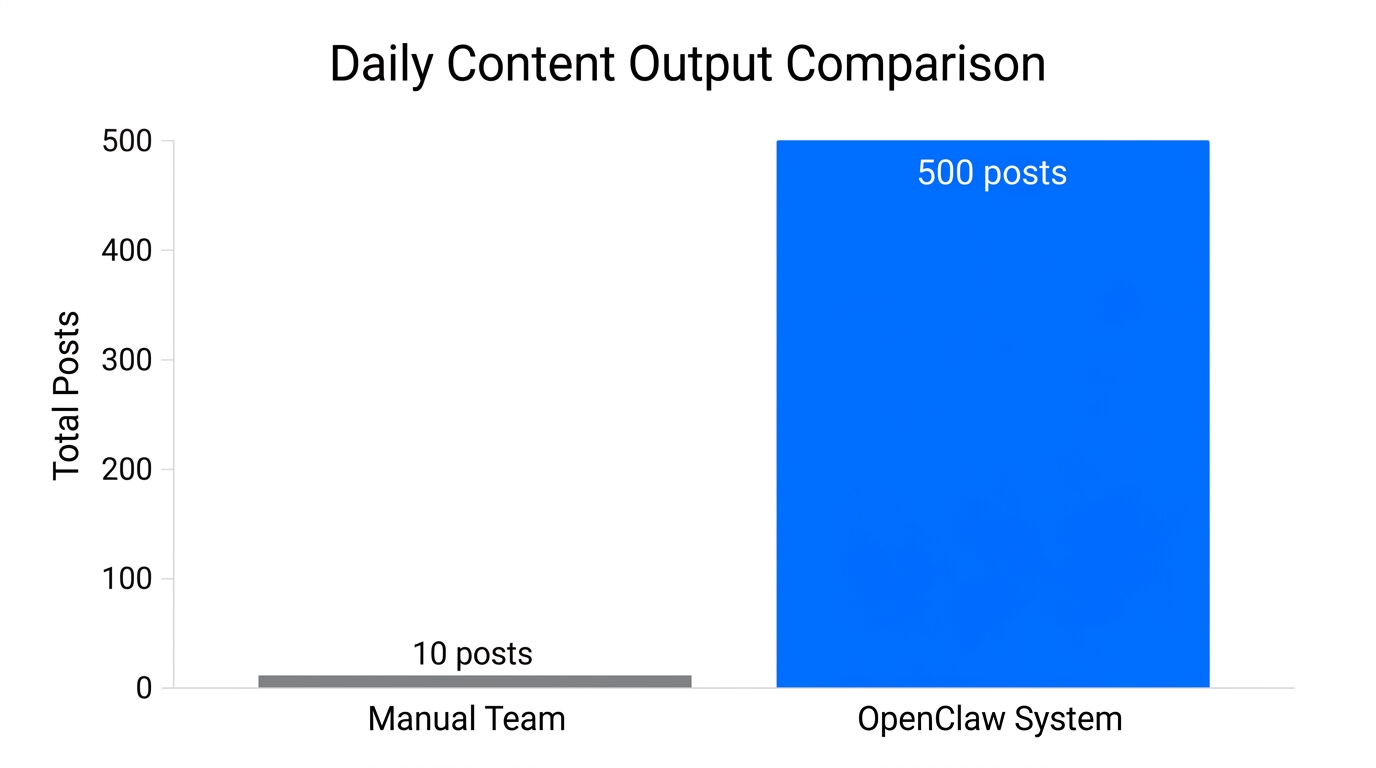
Entrepreneur George Zhang recently made headlines by using OpenClaw to build an automated content farm on WeChat. By aggregating AI news and generating daily reports, he drove massive lead generation for his consulting business. This model is easily replicable for B2B and SaaS brands.
When you combine these content farms with creator outreach, the results are exponential. For instance, brands can use Stormy AI to identify micro-influencers who are already talking about these trends, then use OpenClaw to handle the initial outreach and negotiation. This allows agencies to scale their creator network 10x without adding any headcount, leading to a 4x revenue increase in just one quarter.
Common Mistakes and Security in 2026
With great power comes significant risk. The "lethal trifecta" of risks identified by Microsoft Security—system access, external communication, and untrusted content—means you must be careful with how you deploy OpenClaw.
- Avoid Full System Access: Never run OpenClaw with administrative privileges on your primary machine. Use Docker to isolate the agent.
- Monitor Token Burn: Agents can sometimes enter logic loops, leading to monthly API bills exceeding $150 if not capped.
- Prune Your Memory: Regularly clean your memory files to prevent the agent from becoming sluggish or confused by irrelevant past context.
Conclusion: The Era of Agentic Distribution
The transition from manual social media management to automated content distribution is not just a trend—it's an evolution. By the end of 2026, brands that do not have an agentic layer in their marketing stack will struggle to compete with those who have "lobsters" working for them 24/7.
Start by identifying one repetitive distribution task—perhaps repurposing your blog into LinkedIn posts—and delegate it to an OpenClaw agent. As you gain confidence, platforms like Stormy AI streamline creator sourcing and outreach to build a truly autonomous growth engine. The tools are here; the only question is whether you will be the conductor or just another member of the audience.