Master Predictive Growth: AI Competitor Analysis for E-commerce Strategy Signals in 2026
Master predictive competitor intelligence in 2026. Learn how to track digital footprints, ad iterations, and hiring signals to stay ahead in e-commerce strategy.
In 2026, the e-commerce landscape is no longer about who has the largest ad budget, but who has the most sophisticated predictive competitor intelligence. The era of reactive monitoring—simply checking if a rival lowered their prices or launched a new product—is dead. Today, top-tier retailers are utilizing "Agentic Intelligence" to decode the digital footprints of their rivals before they even make a move. By the time a competitor announces a new line, the market leaders have already adjusted their inventory, ad hooks, and supply chains to counter it.
With the global AI-enabled e-commerce market projected to reach $22.6 billion by 2032, growing at a CAGR of 14.6%, the window for manual analysis has closed. Success this year hinges on your ability to transform raw competitor data into actionable strategy signals. This guide breaks down the sophisticated ecommerce strategy tracking methods that are defining 2026.
Digital Footprint Monitoring: The New Standard
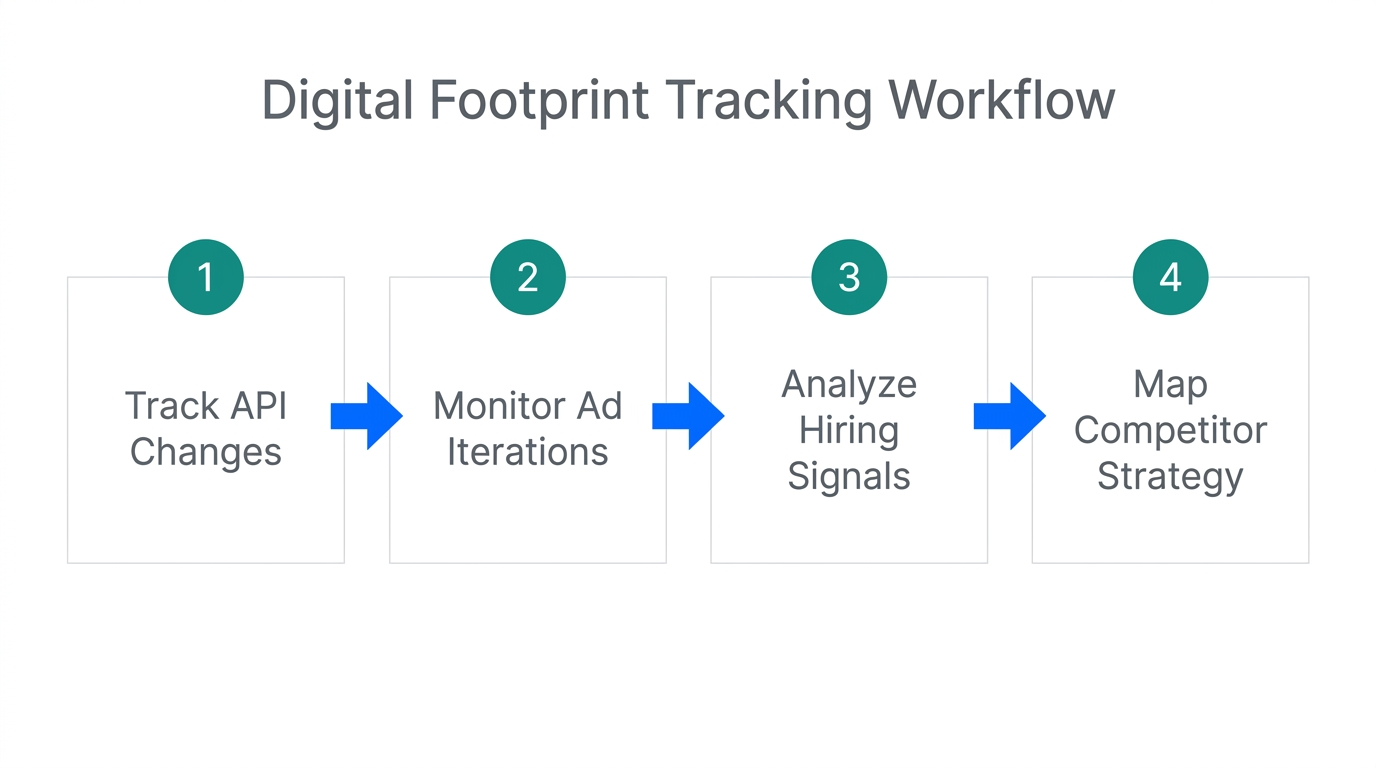
The concept of a competitive digital footprint has expanded far beyond a brand's homepage. To understand a rival's true trajectory, you must look at the structural changes happening behind the scenes. AI agents can now monitor specific "strategy signals" that indicate long-term shifts in business models. For example, setting up AI alerts for hiring patterns is a high-leverage move. If you see a direct-to-consumer rival suddenly posting multiple roles for "Enterprise Sales Leads" or "B2B Account Managers," it is a clear signal they are preparing to move up-market.
- Hiring Spikes: Large-scale recruitment in logistics or R&D often precedes a new category launch.
- Patent Filings: Monitoring patent filings provides a 12-to-24-month lead time on a competitor's technological innovations.
- Ad Copy Iteration: Tracking how quickly a brand changes its messaging hooks reveals what is actually converting.
Tools like Crayon provide real-time movement alerts, allowing you to see these shifts as they happen. By analyzing the speed of ad copy iteration, you can identify which messaging hooks are currently winning for rivals. If a competitor test ten different headlines and settles on one for the next month, they have done the market research for you. You can take that winning hook and adapt it for your own dynamic pricing AI strategy or content plan.
"In 2026, the most valuable data isn't what your competitor is doing today, but the hiring and patent signals that tell you what they'll do next year."
Beyond the "Price-Only Trap"
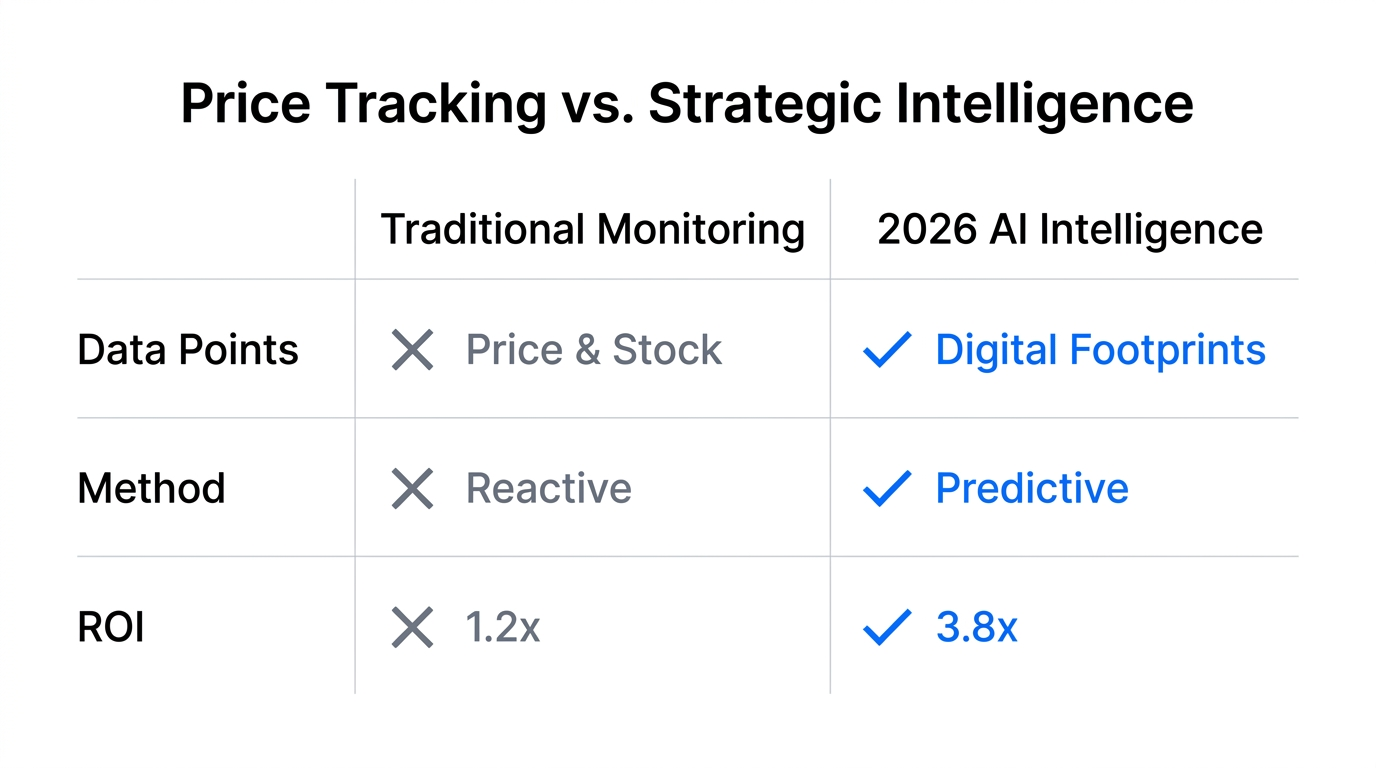
One of the most dangerous mistakes an e-commerce brand can make in 2026 is focusing solely on undercutting competitors. This "Price-Only Trap" erodes margins and ignores a fundamental shift in consumer behavior. Data from Veridion suggests that 70% of consumers now switch brands based on quality or service signals rather than just the lowest price.
| Strategy Component | Reactive Approach (Old) | Predictive Approach (2026) |
|---|---|---|
| Pricing | Manual price matching | Dynamic AI pricing based on demand |
| Inventory | Restock when low | Predictive stocking based on rival trends |
| Marketing | Copy rival ads | Sentiment clustering to fix rival flaws |
Instead of racing to the bottom, smart brands use AI to monitor quality and service signals. This involves using Review Clustering to scrape a competitor's 1-star reviews. By using LLMs to analyze thousands of complaints, you can find structural flaws that the competitor is ignoring. If customers consistently complain that a rival's battery dies after two months, you can launch a targeted campaign with "Double Battery Life" as your primary value proposition. This is how you win on value rather than margin-killing discounts.
Searchless Discovery and BrandRank
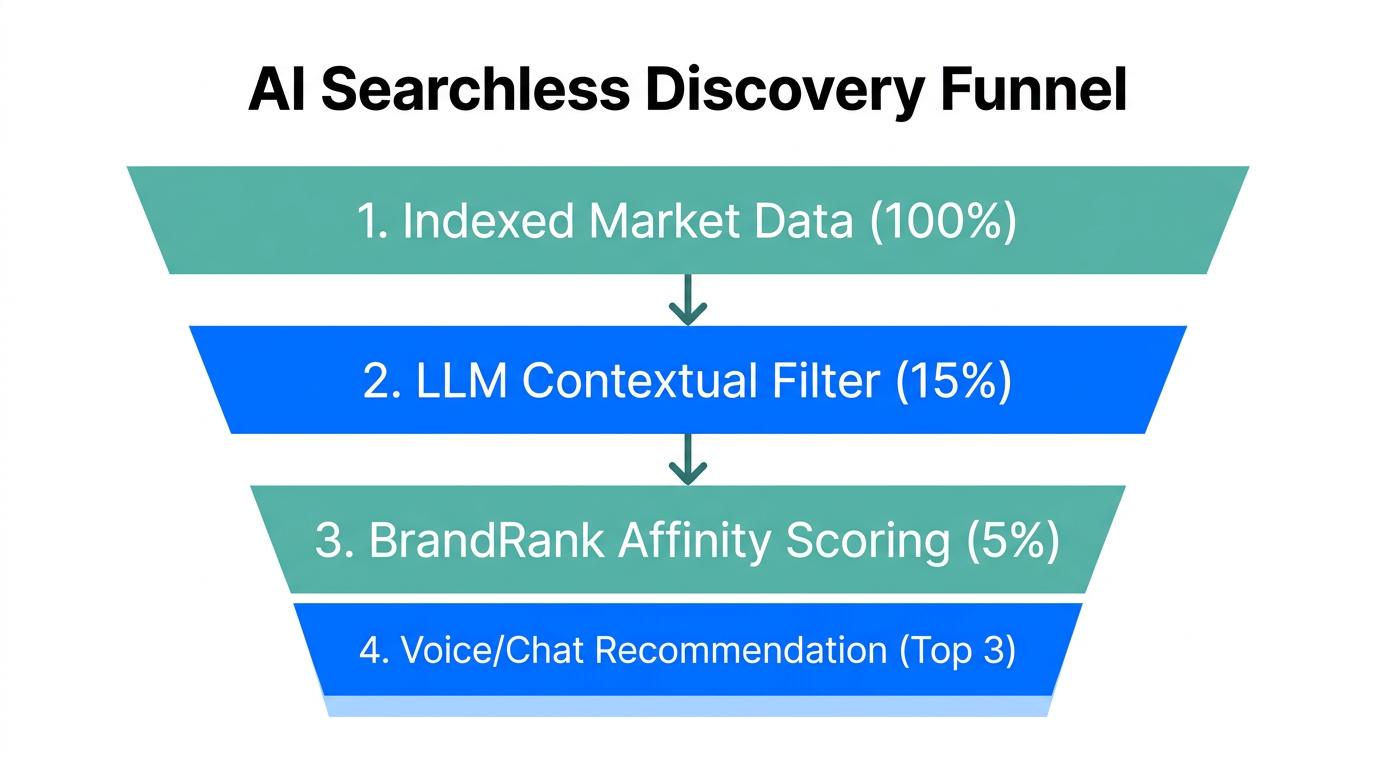
The way consumers find products has fundamentally changed. In 2026, referral traffic from AI platforms like ChatGPT, Gemini, and Perplexity has grown by 109%. Shoppers are moving away from traditional search bars toward "AI assistants" like Amazon Rufus. This has given birth to a new metric: BrandRank.
BrandRank measures how often an AI assistant recommends your brand over a rival. It’s no longer just about SEO; it’s about LLM sentiment. Platforms like TrackMyBusiness allow brands to monitor their reputation within these AI models. If an AI assistant tells a user that your competitor has "faster shipping but lower quality," that sentiment is now your primary competitive hurdle. Schema Stagnation is a major risk here; if your structured data is stale while a competitor's is fresh, AI agents will likely skip your listing in favor of theirs.
Tracking Indirect Competitors and Substitute Models
In the age of AI, your biggest threat might not be the brand selling the same product as you. It might be a substitute model or an indirect disruptor. For example, a new AI-powered styling app might reduce the need for traditional fashion retailers by helping users "remix" their existing wardrobes. Using B2B data tools like Veridion is essential for identifying these indirect disruptors before they eat your market share.
This is where social signals become vital. Integrating creator-led data is a key part of modern competitive analysis. Brands are increasingly using platforms like Stormy AI to discover which influencers are driving the most engagement for rival brands. By tracking which creators are successfully moving product for your competitors, you can pivot your outreach strategy to capture that same audience with a more compelling offer. Stormy AI's ability to analyze creator quality ensures you aren't just following a rival into a trap of fake engagement.
"Competitive intelligence is no longer a department; it's a real-time AI loop that connects hiring, ads, and sentiment into a single growth engine."
Predictive Pricing Strategies
Dynamic pricing is no longer just about matching a competitor's discount. In 2026, it requires a balance of competitor rates, real-time inventory, and localized demand levels. Advanced retailers use AI to set rules that protect margins while staying competitive. For instance, if a rival is running out of stock on a key item, AI can automatically raise your price to maximize profit, knowing the competitor can't fulfill the demand.
Tools like AtTheRate.ai consolidate multi-platform ad data to provide a holistic view of the market's pricing health. This allows for a 10–12% average revenue increase by ensuring you aren't leaving money on the table during high-demand periods or overspending on ads when a competitor is aggressively undercutting you.
The Human Element: "What" vs. "Why"
Despite the rise of Agentic Commerce, human judgment remains the final filter. AI is exceptional at identifying what happened—a price drop, a new hire, a keyword shift. However, humans are still required to determine why it matters. Is a rival dropping prices because they are winning, or because they are desperately clearing failing inventory? Distinguishing between a position of strength and a position of weakness is what separates a great strategist from an average one.
By combining AI-driven predictive competitor intelligence with a deep understanding of brand value, e-commerce leaders in 2026 are building businesses that are resilient to market shifts. They don't just react to the market; they anticipate it.
Conclusion: Your 2026 Playbook
To master predictive growth this year, your strategy must move beyond the surface level. Stop obsessing over daily price fluctuations and start monitoring the competitive digital footprint that reveals a rival’s true intentions. Set up AI alerts for hiring spikes, analyze the speed of ad copy iterations, and use sentiment clustering to find the structural flaws in your competitors' products.
Remember that quality and service signals now outweigh price for the majority of consumers. By utilizing tools like Semrush for keyword gaps and Stormy AI for creator-led market insights, you can build a comprehensive view of your competitive landscape. The brands that win in 2026 will be those that use AI not just to see the present, but to map the future.