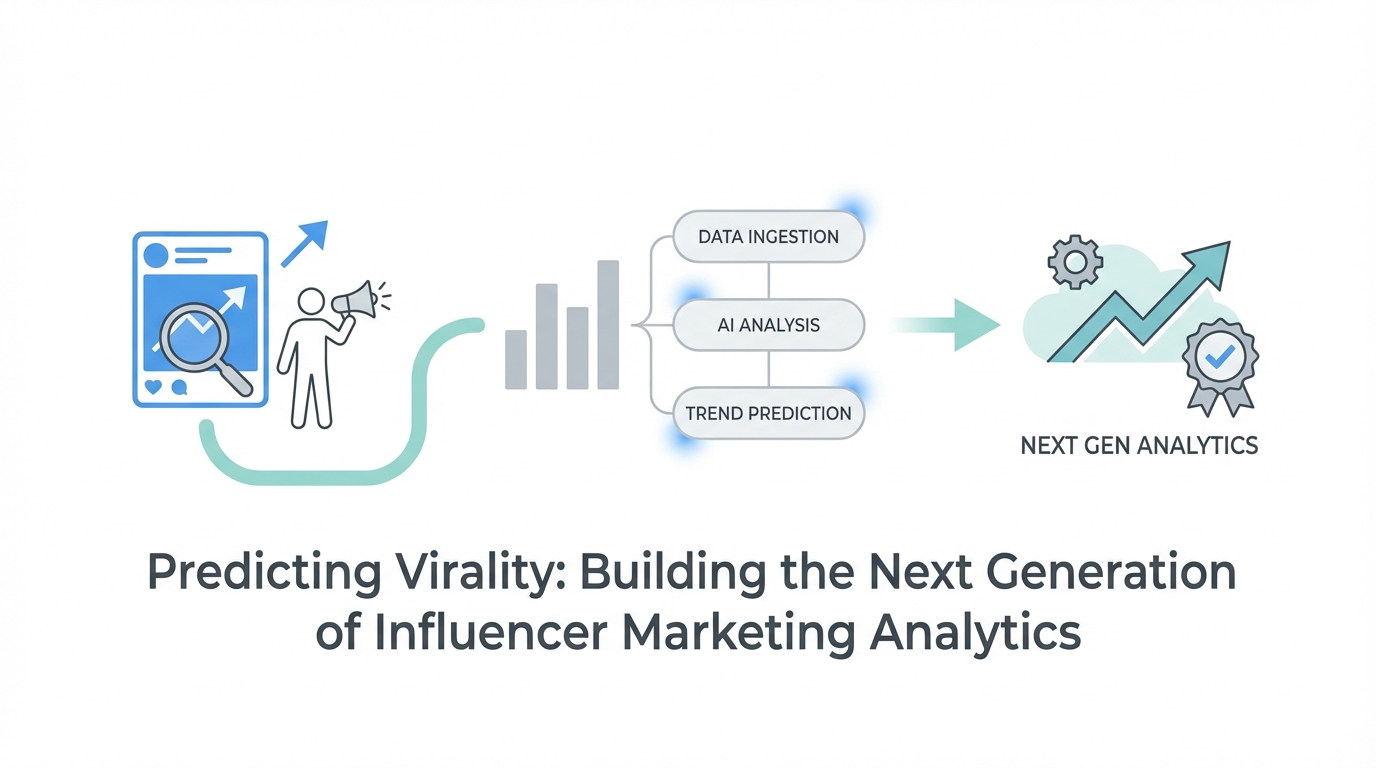
For years, the creator economy has operated on a high-stakes gamble often referred to as "post and pray." Creators spend dozens of hours scripting, filming, and editing, only to cross their fingers and hope the social media viral algorithm smiles upon them. In the world of high-performance marketing, this level of uncertainty is no longer acceptable. The industry is shifting from retrospective reporting—looking at what happened last month—to predictive influencer marketing analytics that tell you what will happen before you even hit the "publish" button. As we move through the major influencer marketing trends 2024, the ability to simulate audience reactions is becoming the ultimate competitive advantage for brands and creators alike.
The Gap in Current Influencer Marketing Analytics
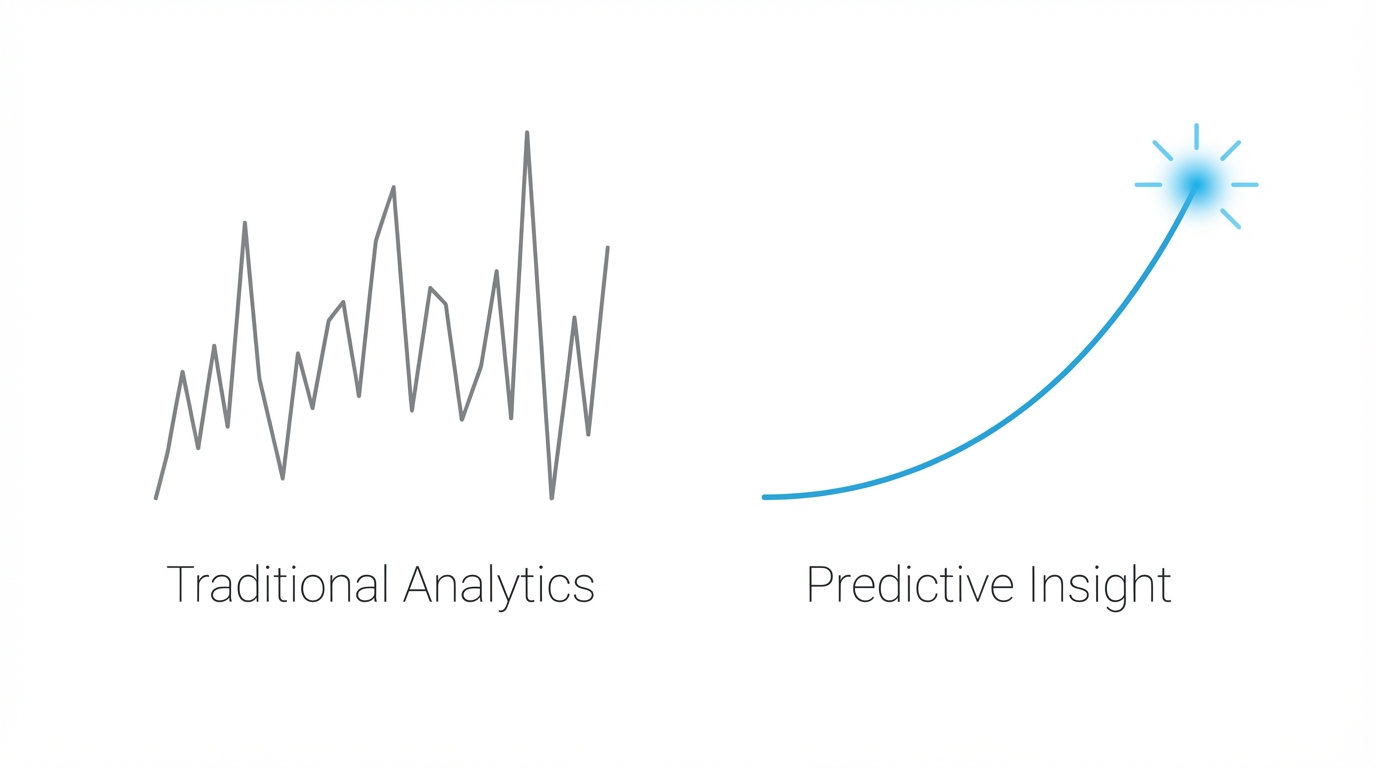

Most influencer marketing analytics platforms today act like a rearview mirror. They provide detailed metrics on engagement rates, follower growth, and audience demographics based on past performance. While this data is essential for vetting creators, it fails to solve the creator's most pressing problem: "Is this specific video going to flop?" Traditional tools can tell you that a creator's average view count is 50,000, but they cannot tell you if changing a thumbnail from a "surprised face" to a "serious face" will increase that number to 100,000.
The limitation of retrospective data is that it doesn't account for the subtle psychological triggers that drive clicks in real-time. To bridge this gap, a new wave of predictive analytics for creators is emerging. These tools don't just look at who follows a creator; they analyze the content itself—the pixels in the thumbnail, the sentiment of the title, and the pacing of the first ten seconds—to forecast engagement. By using large language models and vision AI, these platforms can simulate how thousands of theoretical users might react to a piece of content, providing a "virality score" before the post goes live.
Case Study: The TubePredict Concept and AI-Simulated Virality
The concept of TubePredict, a theoretical YouTube engagement predictor, highlights a multi-million dollar opportunity in the SaaS space. The idea, popularized by innovators like those at Startup Empire, involves building an algorithm that simulates audience behavior. Imagine a tool where you upload two different thumbnail options and three title variations. The AI then runs a simulation, much like a digital focus group, and tells you which combination is most likely to trigger the YouTube algorithm.
This isn't science fiction. Developers are already using advanced AI design tools like Polymet.ai and V0 by Vercel to rapidly prototype these interfaces. In a recent experiment, product designers used these tools to create "glassmorphic" dashboards—a design trend involving frosted glass aesthetics and deep blur effects—to visualize cumulative engagement charts and statistical confidence intervals for predicted video performance. By leveraging AI to build the tool that analyzes AI, the speed of innovation in creator tech is reaching a fever pitch.
Step-by-Step Playbook: Optimizing Engagement Before You Post
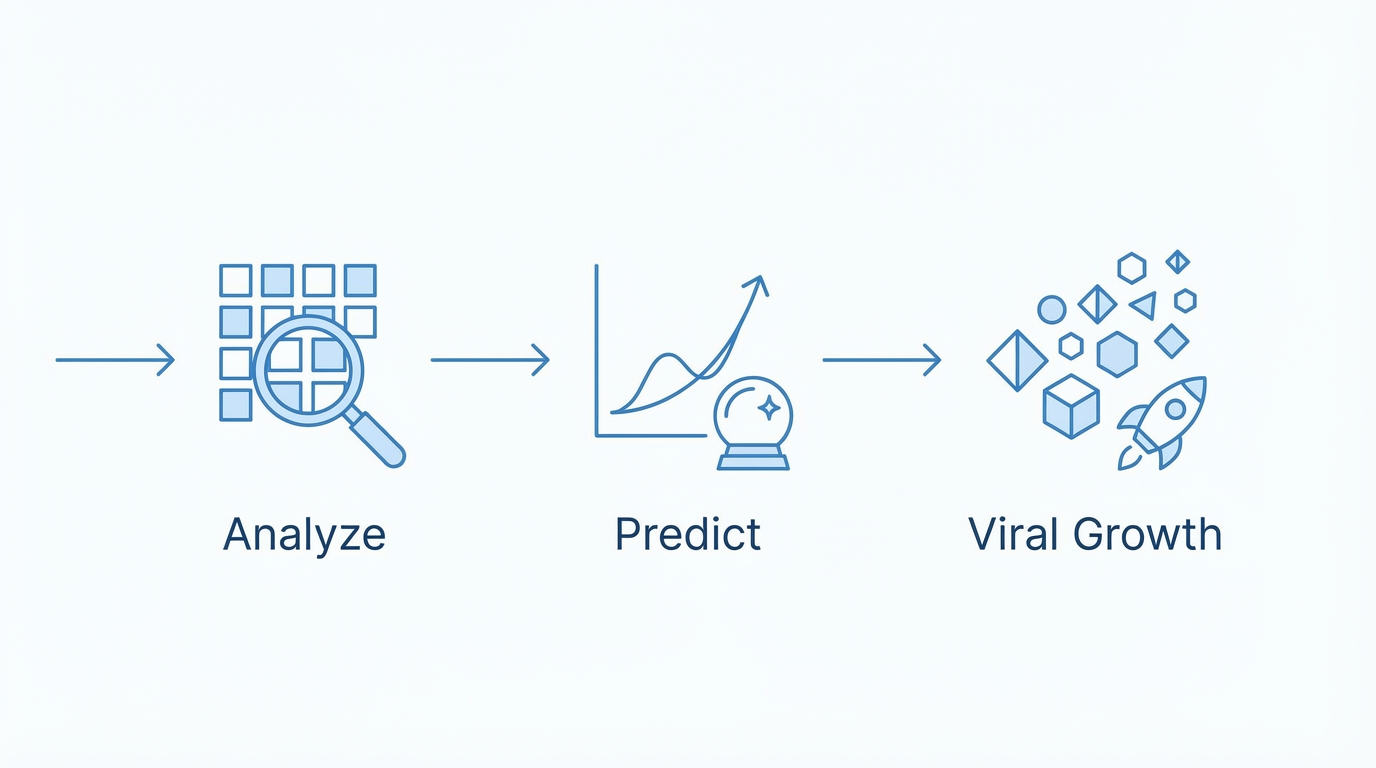
If you are a brand manager or a high-growth creator, you don't have to wait for the perfect software to start applying predictive logic. Here is a playbook for optimizing your social media viral algorithm strategy today:
Step 1: Perform Sentiment Analysis on Titles
Before finalizing a title, use tools like Perplexity to analyze the "click-through sentiment" of your top five ideas. Does the title evoke curiosity, fear, or urgency? AI can help you categorize these and predict which emotional trigger resonates best with your specific niche based on historical viral trends.
Step 2: Visual A/B Testing with AI Designers
Instead of just guessing which thumbnail works, use a tool like V0 by Vercel to mock up different UI layouts for your content. Visual hierarchy matters. By placing your "hook" in the upper left quadrant of a thumbnail (where the eye naturally starts), you can increase the probability of a click. Predictive tools analyze these heatmaps to give you a pre-upload score.
Step 3: Leverage Creator Management Tools
Once you have a content strategy, you need the right partners to execute it. Modern tools like Stormy AI allow you to discover creators who already have high "quality scores" and low "spam follower" ratios. By combining a high-quality creator with a predictively optimized content plan, you effectively double your chances of virality. Using an AI-powered creator CRM ensures that every step of the collaboration—from outreach to payment—is as optimized as the content itself.
Building a Competitive Moat in Creator SaaS

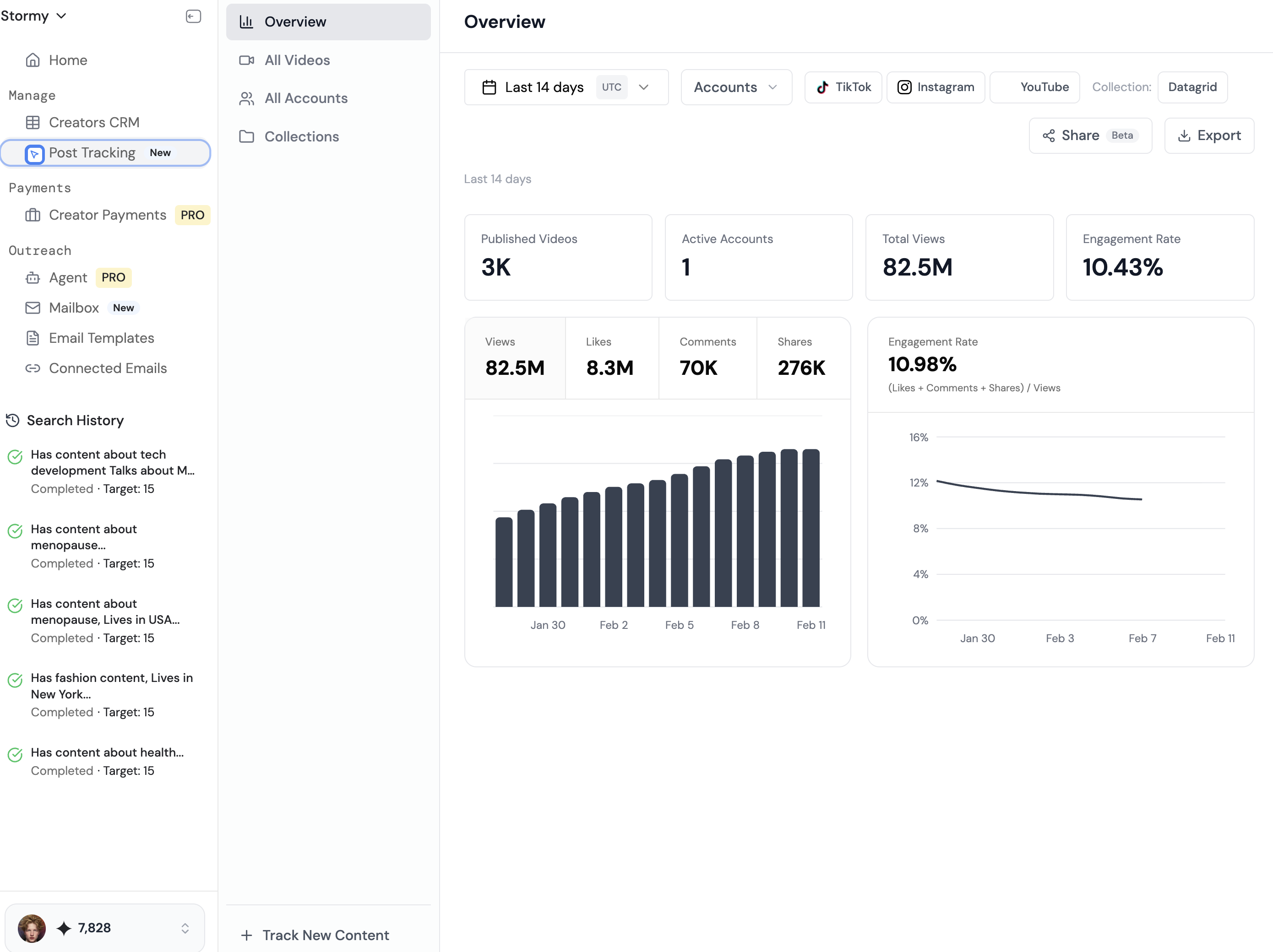
For entrepreneurs looking to build the next big thing in influencer marketing analytics, the "moat" is no longer just having a database of influencers. Anyone can scrape a social media platform. The real value lies in proprietary predictive analytics for creators. If your SaaS can accurately predict a 10% increase in views, you aren't just a utility; you are a revenue generator.
Building this requires a focus on engagement modeling. While legacy tools like impact.com or Tagger provide excellent tracking for affiliate links and basic metrics, they often lack the "vibe-check" capabilities of modern AI. A competitive moat is built by integrating the AI-personalized outreach and discovery found in platforms like Stormy AI with deep-learning simulations that forecast the performance of specific assets. This holistic approach—finding the creator, managing the relationship, and predicting the outcome—is what will define the market leaders in 2024 and beyond.
The Future: Predictive UI and Autonomous Agents
We are entering an era where influencer marketing trends 2024 will be dominated by autonomous AI agents. These agents won't just find influencers; they will act as 24/7 creative directors. They will monitor social media viral algorithms in real-time, identify a burgeoning trend on TikTok, and automatically suggest a YouTube engagement predictor score for a creator to pivot their content strategy before the trend peaks.
This shift toward "predictive UI" means that creator dashboards will become proactive. Instead of a stagnant list of numbers, creators will see an "Actionable Insights" panel powered by AI. "Your audience is currently responding 20% better to outdoor settings; we suggest filming your next video at the beach," is the type of advice we can expect. This level of granularity transforms predictive analytics for creators from a luxury into a necessity for anyone serious about scaling their digital presence.
Conclusion: Seizing the Predictive Edge
The era of influencer marketing analytics that only look backward is ending. As the cost of content production rises and the competition for attention becomes fiercer, the only way to stay ahead is to embrace predictive analytics for creators. Whether you are using a YouTube engagement predictor to fine-tune your thumbnails or leveraging an AI-powered discovery engine to find the perfect partner, the goal is the same: eliminate guesswork.
For brands and creators ready to take the next step, start by integrating tools that offer deep vetting and intelligent sourcing. Platforms like Stormy AI provide the essential infrastructure for discovery and outreach, allowing you to focus your energy on the creative optimizations that drive virality. The "multi-million dollar idea" isn't just a specific app; it's the mindset of using AI to simulate success before it happens. Don't just post and pray—predict and perform.